Books Like Interview with the Vampire: Gothic Horror
Anne Rice's Louis — a vampire who actually feels guilt, who mourns his humanity, who asks the interviewer for absolution — transformed the vampire from monster to melancholy aristocrat. These books share its Gothic atmosphere, its existential weight, and the immortal who has lived too long.
Anne Rice’s Interview with the Vampire was published in 1976 and it changed everything. Rice wrote it in the aftermath of her daughter’s death from leukemia — a fact that makes Louis’s grief-saturated voice, his inability to find meaning in a world that keeps going despite the loss of what he loved, feel less like Gothic atmosphere and more like something genuine. The vampire, in Rice’s hands, is not a monster to be destroyed but a consciousness that has survived too long and cannot forgive itself for surviving.
Louis de Pointe du Lac sits across from a young journalist in San Francisco and tells the story of two centuries: his making by the flamboyant and amoral Lestat, their creation of the child vampire Claudia, the catastrophe in Paris, and the long afterward that brought him to this room with this need to be heard. The interview structure is brilliant because it frames the whole story as a kind of confession — Louis wants someone to understand what he has done and been, even if understanding is not the same as forgiveness. The journalist at the end wants a different kind of story: he wants to be a vampire himself. Louis’s response to that request is one of the most precise endings in modern horror.
The books below were chosen for readers who responded to Rice’s particular combination: Gothic atmosphere, existential weight, the beautiful figure who cannot die and cannot live cleanly, and the question of what remains of a person when everything mortal has been stripped away.
More Anne Rice and Vampire Fiction
#1 — The Vampire Lestat by Anne Rice
Lestat de Lioncourt wakes from a long sleep to discover that his story has been told — by Louis, in an interview, in a book — and he doesn’t recognize himself in it. Rice’s second Chronicle is Lestat’s rebuttal: faster, more theatrical, more interested in rock music and the pleasures of power than in Louis’s suffering. Reading both back to back is the ideal experience, because they tell the same events from perspectives that are genuinely incompatible. Lestat doesn’t feel guilty; he feels alive. That difference is the heart of the Chronicles.
#2 — Dracula by Bram Stoker
The source. Count Dracula travels from Transylvania to England, and the novel that documents his arrival and defeat is assembled from journals, letters, and newspaper clippings by the people trying to stop him. Stoker’s monster is not brooding or conflicted — he is pure predatory will, and the novel treats him as such. Reading Dracula after Rice clarifies exactly what Rice was doing: she took Stoker’s inhuman evil and gave it a conscience. The structure of Dracula — epistolary, multiple perspectives, the monster glimpsed rather than explained — remains one of the most effective in horror fiction.
#3 — The Historian by Elizabeth Kostova
A young woman discovers a mysterious book and a cache of letters in her father’s library and begins to trace their origin through archives across Eastern Europe, slowly uncovering evidence that Dracula may be very much alive and that her father’s scholar-mentor has disappeared in the course of his own investigation. Kostova’s novel is the intellectual vampire book — leisurely, archival, deeply interested in history and how myths embed themselves in the historical record. It is long and patient, and rewards readers who want the vampire legend taken seriously as a cultural artifact.
Gothic Horror and the Beautiful Monster
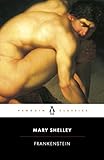
#4 — Frankenstein by Mary Shelley
Victor Frankenstein creates life and immediately abandons it, and his creature — eloquent, suffering, and ultimately murderous — is forced to understand its own existence without a maker willing to acknowledge it. Shelley’s 1818 novel is the Gothic figure Rice re-made as Louis: the being that wants to be loved and cannot be, that turns to violence not from nature but from rejection. Louis’s grief and the creature’s grief rhyme across a century and a half. Both novels are really about the creator’s responsibility to what he has made, and both find the creator wanting.
#5 — The Picture of Dorian Gray by Oscar Wilde
Dorian Gray, a beautiful young man in Victorian London, has his portrait painted and wishes that it would age instead of him. His wish is granted: the portrait rots while Dorian stays young, and over the decades he pursues pleasure and moral corruption knowing that only the canvas suffers the consequences. Wilde’s novel is the aesthete’s bargain that prefigures Rice’s vampires — the beauty preserved, the moral cost deferred onto something else, the horror that accumulates out of sight. Lord Henry’s philosophy — that experience is everything and suffering is for those without taste — is essentially Lestat’s, and Dorian’s ending is what Lestat refuses to allow himself.
#6 — Carmilla by J. Sheridan Le Fanu
A young woman living in an isolated Austrian castle receives a mysterious houseguest: Carmilla, beautiful and languorous and oddly familiar, who has an unsettling effect on the women around her. Le Fanu’s 1872 novella is the original female vampire story, predating Dracula by twenty-five years, and it carries a strikingly modern sensibility: Carmilla’s relationship with the narrator is explicitly romantic, the vampire as seducer rather than monster, and the horror is inseparable from desire. It is the source for almost everything that followed, including Rice’s understanding of what the vampire wants from its victims.
#7 — I Am Legend by Richard Matheson
Robert Neville is the last uninfected human in a world where everyone else has become a vampire — or, as he comes to understand, a new kind of being for which the vampire mythology is an inadequate description. Matheson’s 1954 novel inverts the mythology entirely: Neville is the monster, the last remnant of the old world that the new world fears and destroys. It is a horror novel that ends as a tragedy about the cost of survival when the world has moved on without you — which is, at its deepest level, Louis’s problem too.
Immortality and Its Costs
#8 — Never Let Me Go by Kazuo Ishiguro
Kathy H. and her friends at Hailsham know from an early age that they will not live long — they are clones, raised to donate their organs until they die. Ishiguro’s novel approaches the vampire’s condition from the opposite direction: not too much life, but too little, and the terrible awareness of a predetermined ending. But the emotional resonance with Rice is precise — Louis’s grief is for the humanity he lost; Kathy’s is for the life she will never have. Both are elegies for what cannot be recovered, and both are told by someone who has survived long enough to understand the full shape of what was lost.
#9 — The Invisible Life of Addie LaRue by V.E. Schwab
In 1714 France, a desperate young woman makes a bargain with a god of darkness: she will live forever, but everyone she meets will forget her the moment she leaves their sight. Three centuries of invisibility follow — of leaving no mark, of being unable to love or be loved without the love dissolving by morning. Schwab’s novel is the vampire’s loneliness in a different form: immortality as isolation, the price of living paid by everyone who cannot remember you. Louis’s immortality makes him alien to the humans around him; Addie’s makes her invisible. Both conditions are forms of the same grief.
#10 — The Little Stranger by Sarah Waters
A country doctor in postwar England becomes drawn into the slow deterioration of a formerly grand house and the family living in it — haunted, it seems, by something that feeds on grief and resentment. Waters’s novel is Gothic atmosphere at its most controlled: less supernatural horror than psychological unease, the past refusing to release the present, the beautiful decaying thing that will not let go. It shares with Rice not the vampire mythology but the underlying feeling — of beauty rotting, of a world that has passed and left behind only the shapes of what it was.
How to Choose Your Next Read
If you want the rebuttal to Louis’s version: The Vampire Lestat — same world, opposite temperament.
If you want the original source: Dracula — the monster before Rice made him sympathetic.
If you want the most literary vampire novel: The Historian — academic, archival, deeply serious.
If you want the Gothic figure Rice inherited: Frankenstein — the creature who wants love and cannot find it.
If you want immortality from the other direction: The Invisible Life of Addie LaRue — too much life, not enough being seen.
For the Best Horror Books
For the definitive guide to horror fiction — from King and Poe to contemporary horror — see our Best Horror Books of All Time list.
More Horror and Gothic Fiction Guides
- The Shining vs IT: Which Stephen King Novel to Read First?
- Dean Koontz Books in Order: Complete Guide
Affiliate disclosure: Links to Amazon on this page are affiliate links. We earn a small commission at no extra cost to you. This does not influence our editorial recommendations.
Frequently Asked Questions
What makes Interview with the Vampire different from earlier vampire fiction?
Bram Stoker's Dracula and the Gothic tradition before Rice treated the vampire as a monster — seductive, dangerous, ultimately to be destroyed. Rice gave the vampire interiority. Louis genuinely suffers his condition; he feels guilt about killing, mourns his lost humanity, and uses the interview as a form of confession. The vampire as existential protagonist — immortal, beautiful, and inconsolable — was largely Rice's invention, and it reshaped the entire genre. Every brooding vampire since, from Lestat to Edward Cullen, is working in her shadow.
Do I need to read the Vampire Chronicles in order?
Interview with the Vampire stands alone completely and is the best entry point. The Vampire Lestat is the natural next step, but it retells many of the same events from Lestat's very different perspective — knowing Interview first makes Lestat's version richer. Queen of the Damned introduces the mythology of the vampire race and is more plot-heavy. The later Chronicles become increasingly mystical and are more divisive. Most readers are satisfied with the first two or three novels.
What are the best vampire novels for readers who want something literary?
The Historian by Elizabeth Kostova is the most literary of the major vampire novels — it is structured as an academic mystery with Dracula at the center, and it takes the mythological and historical underpinnings of the vampire legend seriously. Carmilla by J. Sheridan Le Fanu is the Victorian original that predates Dracula and has a strikingly modern sensibility. For something contemporary, let The Historian or the original Dracula anchor your reading; both reward close attention in ways that most popular vampire fiction does not.