The Shining vs IT: Which Stephen King Novel to Read First?
The Shining and IT are Stephen King's two most celebrated novels. Here's how they differ, what each does best, which to read first, and what the comparison reveals about King's range as a writer.
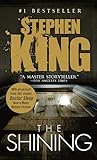
The Shining (1977) and IT (1986) are the two Stephen King novels most recommended to readers new to his work, and the most frequently cited by longtime readers as his finest achievements. They share a broad subject — the horror that comes from inside people and communities rather than from external supernatural threat — but they operate at entirely different scales and in different registers.
The simplest distinction: The Shining is about one man, one family, and one building. IT is about a town, a generation, and the question of what evil persists when childhood is left behind. Understanding how they differ makes both novels more readable — and helps clarify which to approach first.
At a Glance
| The Shining | IT | |
|---|---|---|
| Published | 1977 | 1986 |
| Length | ~447 pages | ~1,138 pages |
| Setting | The Overlook Hotel, Colorado | Derry, Maine |
| Protagonist | Jack Torrance (and Danny) | The Losers’ Club (ensemble) |
| Central horror | Psychological deterioration, haunting | Childhood trauma, the nature of evil |
| Tone | Claustrophobic, sustained dread | Expansive, episodic, emotionally wide |
| Pacing | Tight, relentless | Long, layered |
What The Shining Is About
Jack Torrance, a recovering alcoholic and failed writer, takes a job as winter caretaker of the Overlook Hotel in the Colorado mountains — isolated, snowed in, with his wife Wendy and their young son Danny. Danny has the shining: a form of psychic perception that makes him aware of the hotel’s history and the evil that saturates it. As winter closes in, Jack’s sobriety cracks and his sanity follows.
King has said that The Shining is the most autobiographical of his novels — that Jack Torrance’s alcoholism, his violence, and his relationship with his son drew directly from his own struggles during the period he was writing it. This gives the psychological horror an authenticity that straightforward monster-based horror cannot achieve. Jack is not simply possessed; he is enabled. The Overlook finds what is already there.
The confined space — one hotel, one family, one winter — is not a limitation but the source of the novel’s power. The horror has nowhere to go and neither do the characters. The pacing is relentless in a way that IT’s scope does not permit.
What IT Is About
In Derry, Maine, a shapeshifting entity that most often appears as Pennywise the Dancing Clown has been killing children in a cycle that recurs every twenty-seven years. In 1958, seven children — the Losers’ Club — face it for the first time. In 1985, as adults, they are called back to do it again.
The dual timeline is the novel’s central structural decision, and it is about more than plot mechanics. King is writing about what survives childhood and what doesn’t — the intensity of adolescent experience, the clarity of moral vision that children have and adults lose, the way trauma shapes identity across decades. Pennywise is the vehicle for these ideas, but the heart of the novel is the seven children and what they carry into their adult lives.
IT is King’s most ambitious novel in terms of scope — not just length but in the range of themes it attempts: friendship, fear, sex, race, violence, the nature of evil, and the geography of small-town America across three decades. It does not always succeed at the level of every individual element; at 1,100 pages, it could not. But what it achieves across its length is a different order of accomplishment from the tighter achievement of The Shining.
Key Differences
Scale of ambition. The Shining is a precision instrument. IT is an attempt to write an entire mythology. Both succeed at their respective scales, but they are not comparable achievements of the same type.
The nature of the monster. The Overlook’s evil is specifically located in Jack Torrance — it is his violence, his alcoholism, his failure as a father that the hotel amplifies. Pennywise is a more abstract evil, genuinely external to the characters, which gives IT a more traditional horror structure but makes its emotional impact less personal than The Shining’s.
How fear is generated. The Shining generates dread through atmosphere and psychological deterioration — the horror accumulates. IT generates fear through specific set pieces (the drain, the projector, the shower) that are brilliant individually but separated by long stretches of backstory and character work. Different kinds of frightening.
The ending. The Shining’s conclusion is among King’s most controlled. IT’s ending is famously contested — the resolution of the adult storyline is divisive, and the sexual metaphysics of the conclusion are difficult for many readers. This is worth knowing going in.
Which to Read First
Read The Shining first.
It is shorter, more controlled, and establishes King’s psychological method — the way he uses character damage to make supernatural horror feel earned — that IT then scales up. Reading The Shining first also means that IT’s length and ambition land as an expansion rather than an endurance test. The Losers’ Club’s relationship with fear is more interesting after you have seen what fear does to an adult in The Shining.
If you want to explore King beyond both novels, our Stephen King books in order guide covers his full catalogue with recommended reading sequences for new and returning readers.
What to Read After Both
- Pet Sematary — King’s own assessment of his most disturbing novel; a completely different kind of horror from either
- Misery — King’s most controlled and arguably most technically accomplished novel
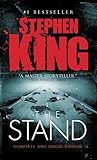
- The Stand — IT’s scale applied to an apocalyptic setting; equally ambitious, more consistently sustained
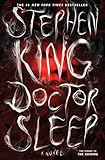
- Doctor Sleep — the direct sequel to The Shining, following Danny Torrance as an adult
- Carrie — King’s first published novel; the shortest and most stripped-down of his work, and the one that established all the themes he returned to
For the Best Horror Books
For the definitive guide to horror fiction — from King and Poe to contemporary horror — see our Best Horror Books of All Time list.
More Horror Reading Guides
Also Recommended
Affiliate disclosure: Links on this site are affiliate links. We earn a small commission at no extra cost to you. This does not influence our editorial recommendations.
Frequently Asked Questions
Should I read The Shining or IT first?
Read The Shining first. It is shorter (around 450 pages versus IT's 1,100+), more concentrated in its horror, and establishes King's psychological method — the way fear emerges from character rather than event — that IT then scales up. The Shining is also the more accessible entry point; IT rewards patience that The Shining builds.
Which is scarier, The Shining or IT?
Both generate horror differently. The Shining is more claustrophobically frightening — the confined space, the winter isolation, and the gradual deterioration of Jack Torrance create sustained dread. IT is more viscerally horrifying in specific moments and more thematically ambitious, but its length means the horror is intermittent rather than sustained. Most readers report The Shining as the more unsettling reading experience.
Is IT better than The Shining?
They are great in different ways. The Shining is the more controlled novel — tighter, more focused, and arguably more frightening within its specific frame. IT is more ambitious: its scope is larger, its themes more explicitly about the loss of childhood and the persistence of evil, and its emotional register wider. Many readers love IT more; most horror critics consider The Shining the more accomplished technical achievement.
How long is IT compared to The Shining?
The Shining is approximately 447 pages. IT is approximately 1,138 pages — more than twice as long. IT's length is part of its design: King is creating a world and a mythology, not just a horror plot. But it is a significant commitment that The Shining does not require.
What should I read after The Shining and IT?
After both, the natural progression within King is Pet Sematary (his most disturbing novel, by his own assessment), Misery (his most controlled), and The Stand (his most ambitious in scope). For a direct sequel to The Shining, Doctor Sleep follows Danny Torrance as an adult. Our Stephen King books in order guide covers the full catalogue with recommended reading sequences.