Stephen King Books in Order: The Complete Reading Guide (2026)
Stephen King has published over 65 novels. This guide covers where to start, which order to read the Dark Tower series, and how to navigate King's connected universe.
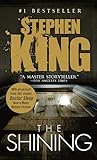
Stephen King has been publishing novels since 1974. By any count, he has produced over 65 novels, nearly 200 short stories, and several non-fiction books — under his own name and as Richard Bachman. If you’re wondering where to start or what order to tackle the King catalogue, you are not alone. It is one of the most frequently searched reading order questions on the internet.
The answer depends on what you want from King’s work. Some readers want to start with his most celebrated novels. Some want to understand the “Stephen King Universe” — the connected fictional world in which many of his books exist. Some want to follow the Dark Tower series, which is the spine of that universe. Characters and events from Carrie, The Stand, It, Salem’s Lot, and many other King novels are explicitly referenced or woven into the Dark Tower mythology — Roland Deschain’s quest to reach the Tower touches virtually every corner of King’s fiction. And some simply want to know which books are best and which can be skipped.
This guide covers all of it.
Quick answer: Start with The Shining or Misery for most readers. For epic scope: It or The Stand. The Dark Tower series is best approached after you’re already a King fan — begin with The Gunslinger.
Key Stephen King Novels at a Glance
| Title | Year | Genre | Standalone? |
|---|---|---|---|
| Carrie | 1974 | Horror | Yes |
| The Shining | 1977 | Horror | Yes |
| The Stand | 1978 | Post-apocalyptic | Yes |
| The Dark Tower I: The Gunslinger | 1982 | Fantasy / Horror | Series (8 books) |
| It | 1986 | Horror | Yes |
| Misery | 1987 | Psychological thriller | Yes |
| The Green Mile | 1996 | Drama / Fantasy | Yes |
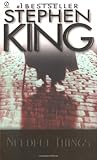
| Needful Things | 1991 | Horror | Yes |
| Pet Sematary | 1983 | Horror | Yes |
| On Writing | 2000 | Memoir / Craft | Yes |
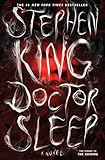
| Doctor Sleep | 2013 | Horror | Shining sequel |
| The Outsider | 2018 | Crime / Horror | Yes |
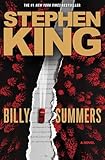
| Billy Summers | 2021 | Crime | Yes |
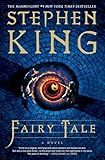
| Fairy Tale | 2022 | Fantasy | Yes |
The Complete Stephen King Reading List
Every Stephen King novel in chronological order. Titles with links have full reviews.
1970s
| Year | Title | Notes |
|---|---|---|
| 1974 | Carrie | Debut novel |
| 1975 | ’Salem’s Lot | Vampire horror; Castle Rock universe |
| 1977 | The Shining | Best literary horror |
| 1977 | Rage (as Richard Bachman) | Out of print by King’s choice |
| 1978 | The Stand | Post-apocalyptic epic |
| 1979 | The Dead Zone | Psychological thriller |
| 1979 | The Long Walk (as Richard Bachman) | Dystopian novella |
1980s
| Year | Title | Notes |
|---|---|---|
| 1980 | Firestarter | Government experiment gone wrong |
| 1981 | Cujo | Psychological horror |
| 1981 | Roadwork (as Richard Bachman) | Literary fiction |
| 1982 | The Dark Tower I: The Gunslinger | Dark Tower series begins |
| 1982 | The Running Man (as Richard Bachman) | Dystopian game show |
| 1983 | Christine | Possessed car horror |
| 1983 | Pet Sematary | His most frightening novel |
| 1984 | Thinner (as Richard Bachman) | Curse horror |
| 1984 | The Talisman (with Peter Straub) | Portal fantasy |
| 1986 | It | Most beloved King novel |
| 1987 | The Eyes of the Dragon | Medieval fantasy |
| 1987 | The Dark Tower II: The Drawing of the Three | |
| 1987 | Misery | Best-constructed King novel |
| 1987 | The Tommyknockers | Alien horror |
| 1989 | The Dark Tower III: The Waste Lands |
1990s
| Year | Title | Notes |
|---|---|---|
| 1991 | Needful Things | Final Castle Rock novel |
| 1992 | Gerald’s Game | Single-room psychological horror |
| 1993 | Dolores Claiborne | Linked to Gerald’s Game |
| 1994 | Insomnia | Dark Tower connections |
| 1995 | Rose Madder | Mythological horror |
| 1996 | The Green Mile | Death Row drama |
| 1996 | Desperation | Desert horror |
| 1997 | The Dark Tower IV: Wizard and Glass | Roland’s backstory |
| 1998 | Bag of Bones | Ghost story |
| 1999 | The Girl Who Loved Tom Gordon | Wilderness survival |
| 1999 | Hearts in Atlantis | Dark Tower connections |
2000s
| Year | Title | Notes |
|---|---|---|
| 2000 | On Writing | Memoir and craft; essential |
| 2001 | Dreamcatcher | Alien invasion |
| 2001 | Black House (with Peter Straub) | Dark Tower connections |
| 2002 | From a Buick 8 | Supernatural car |
| 2003 | The Dark Tower V: Wolves of the Calla | |
| 2004 | The Dark Tower VI: Song of Susannah | |
| 2004 | The Dark Tower VII: The Dark Tower | Original series conclusion |
| 2006 | Cell | Zombie-adjacent horror |
| 2006 | Lisey’s Story | Marriage and grief |
| 2008 | Duma Key | Art and the supernatural |
| 2009 | Under the Dome | Small-town trapped community |
2010s
| Year | Title | Notes |
|---|---|---|
| 2011 | 11/22/63 | Time travel; JFK assassination |
| 2012 | The Dark Tower VIII: The Wind Through the Keyhole | Read between books 4–5 |
| 2013 | Doctor Sleep | The Shining sequel |
| 2013 | Joyland | Carnival mystery |
| 2014 | Mr. Mercedes | Crime thriller; Bill Hodges trilogy #1 |
| 2014 | Revival | Frankenstein-inspired horror |
| 2015 | Finders Keepers | Bill Hodges trilogy #2 |
| 2016 | End of Watch | Bill Hodges trilogy #3 |
| 2017 | Sleeping Beauties (with Owen King) | Women fall asleep and don’t wake |
| 2018 | The Outsider | Crime-horror hybrid |
| 2018 | Elevation | Short; small-town novella |
| 2019 | The Institute | Children with psychic powers |
2020s
| Year | Title | Notes |
|---|---|---|
| 2021 | Later | Hard-boiled noir with a twist |
| 2021 | Billy Summers | Crime fiction; no supernatural |
| 2022 | Fairy Tale | Portal fantasy |
| 2023 | Holly | Holly Gibney returns |
| 2024 | You Like It Darker | Short story collection |
Short story collections worth reading: Night Shift (1978), Different Seasons (1982), Skeleton Crew (1985), Nightmares and Dreamscapes (1993), Everything’s Eventual (2002), Full Dark No Stars (2010).
Where to Start: The Best Entry Points
If you’ve never read King before
Start with The Shining or Misery. Both are self-contained, among his most controlled novels, and accessible to readers who aren’t sure they want to commit to 1,000-page doorstoppers.
The Shining (1977) is King’s third novel and the first that feels fully realised as a work of literary horror. The Torrance family — Jack, Wendy, and young Danny — arrive at the Overlook Hotel to serve as winter caretakers. What follows is an exploration of alcoholism, creative failure, domestic violence, and supernatural malice that is more psychologically complex than most horror fiction. Stanley Kubrick’s film adaptation is excellent but significantly different; read the novel first.
Misery (1987) may be the most perfectly constructed King novel. Bestselling author Paul Sheldon crashes his car in a Colorado snowstorm and is “rescued” by Annie Wilkes, his self-proclaimed number one fan. The novel’s claustrophobic setting — a single bedroom, a typewriter, an increasingly dangerous captor — generates almost unbearable tension. It also contains King’s most honest writing about the writer’s life, addiction, and creative servitude.
The Essential King Novels
It by Stephen King
King’s most ambitious novel, at over 1,100 pages. The Losers Club — seven children in Derry, Maine — confront a shape-shifting entity that most often appears as Pennywise the Dancing Clown. The story alternates between 1958 (the children’s encounter) and 1985 (their adult return). Beyond the horror, It is a serious novel about childhood, friendship, memory, and the way the past lives in the body. It is King’s most emotionally resonant major work.
Pet Sematary by Stephen King
King has said this is the book that frightened him most — the one he seriously considered not publishing. A family moves to rural Maine; behind their house is a pet cemetery, and beyond it, land with darker properties. The novel is an unflinching examination of grief, parental love, and the monstrous things we might do if we could. It contains one of the most disturbing endings in American horror fiction.
Carrie by Stephen King
King’s first published novel (1974) established several of his recurring concerns: outsider status, the cruelty of small towns and social hierarchies, and the point at which repressed pain becomes destructive power. Carrie White — a bullied teenager with telekinetic abilities — reaches her breaking point at the high school prom. The novel is short (about 200 pages) and reads in a single sitting.
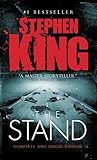
The Stand by Stephen King
A superflu kills 99% of the world’s population. The survivors are drawn together into two camps: one gathering around the elderly Mother Abigail in Colorado, one around the dark figure of Randall Flagg in Las Vegas. At over 1,100 pages (in the uncut edition), The Stand is one of the longest novels in popular American fiction — and one of the most fully realised. It is King’s most explicitly moral and religious work, structured as a traditional good-versus-evil narrative at civilisational scale.
Misery by Stephen King
Covered above under entry points — it belongs on any list of essential King novels. For readers who come to King primarily for psychological horror rather than supernatural, Misery is as good as the genre gets.
The Green Mile by Stephen King
Originally published in six monthly instalments in 1996, The Green Mile is set on Death Row in a Southern prison in 1932. John Coffey — an enormous, gentle man convicted of the murder of two young girls — arrives on the block, and corrections officer Paul Edgecombe gradually discovers that Coffey possesses extraordinary powers. King’s most sentimental major work, and also one of his most morally complex meditations on justice and capital punishment.
Needful Things by Stephen King
A mysterious antique shop opens in Castle Rock, Maine. The proprietor, Leland Gaunt, sells each customer their deepest desire — for a price that isn’t money. Needful Things is King’s final major Castle Rock novel and one of his darkest comedies: the small town tearing itself apart through accumulated resentment is a devastating portrait of how communities fail. Gaunt is one of King’s most effective devil figures.
The Dark Tower Series: Reading Order
The Dark Tower is the backbone of Stephen King’s connected universe. The Gunslinger Roland Deschain pursues the Man in Black across a post-apocalyptic world called Mid-World toward the Dark Tower — a nexus of all realities. Over eight primary novels, the series becomes increasingly explicit about how King’s other books connect to it.
Read in this order:
- The Dark Tower I: The Gunslinger — Short, atmospheric, the beginning of Roland’s quest. The famous opening line (“The man in black fled across the desert, and the gunslinger followed”) is one of the best in genre fiction.
- The Dark Tower II: The Drawing of the Three — Roland recruits his ka-tet (companions) from our world.
- The Dark Tower III: The Waste Lands
- The Dark Tower IV: Wizard and Glass — Roland’s backstory; his doomed love affair with Susan Delgado.
- The Dark Tower V: Wolves of the Calla
- The Dark Tower VI: Song of Susannah
- The Dark Tower VII: The Dark Tower — The original ending.
- The Dark Tower VIII: The Wind Through the Keyhole — Can be read between books 4 and 5; a standalone story within the series.
For readers who want to understand how the Dark Tower connects to King’s wider universe, the main touchpoints are: It, The Stand, Insomnia, Black House, and Hearts in Atlantis. References to Roland’s world also appear in Salem’s Lot, The Shining, and dozens of other novels.
King’s Later Novels (2000–Present)
King’s post-2000 output is more consistent than his reputation for prolific quality might suggest.
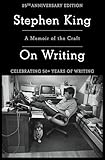
On Writing by Stephen King
Technically a memoir and craft book rather than fiction — but essential reading for anyone interested in King’s work. The first half covers his life from childhood to near-death (he was struck by a car in 1999 and wrote this during recovery); the second half is one of the most practical and honest books about the craft of fiction available. His advice on adverbs alone is worth the price.
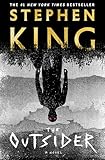
The Outsider by Stephen King
A little league coach is accused of the brutal murder of a child. Incontrovertible evidence places him at the scene — and equally incontrovertible evidence places him elsewhere simultaneously. The Outsider begins as a crime novel and gradually reveals its supernatural dimensions, combining King’s procedural instincts with his horror DNA. One of his best later novels.
Doctor Sleep by Stephen King
The sequel to The Shining, set 40 years later. Danny Torrance — now adult, alcoholic, and struggling with the psychic abilities that nearly destroyed him — becomes “Doctor Sleep,” comforting the dying in a New Hampshire hospice. When a young girl with extraordinary abilities attracts the attention of a group of predators who feed on psychic energy, Danny must confront his past. More emotionally resolved than The Shining, and more optimistic than most King novels.
Billy Summers by Stephen King
Not horror but crime fiction: a hitman who only takes contracts on “bad people” takes one last job and discovers he’s been set up. King writes Billy Summers as a literary novel with thriller mechanics, and the character — a decorated Iraq War veteran who writes literary fiction as a cover — allows King to explore questions about violence, trauma, and storytelling.
Fairy Tale by Stephen King
A high school boy inherits a shed containing a portal to a dying fantasy world, and a dog who knows the way. Fairy Tale is King at his most overtly genre-playing — a deliberate fairy-tale structure in the tradition of Tolkien and Grimm — and also among his most genuinely hopeful novels. The fantasy world of Empis is fully realised over 600 pages.
The Bachman Books: King Under a Pseudonym
In the late 1970s and 1980s, King published five novels as “Richard Bachman” — partly as an experiment to see if his success was talent or marketing, partly to publish more than his contract permitted. When the pseudonym was exposed in 1985, the books were republished under his real name.
The most notable Bachman books are:
- The Running Man — A dystopian game show in a near-future America; not quite the Schwarzenegger film.
- Thinner — A lawyer struck by a Romani curse begins wasting away.
- Rage (now out of print by King’s own choice) — A school shooting, written before King understood its potential harm.
Short Story Collections Worth Reading
King’s short fiction deserves attention alongside his novels. Different Seasons (four novellas including the sources for The Shawshank Redemption and Stand by Me) is the best entry point. Night Shift (his first collection) contains many of the stories that became films: Children of the Corn, Sometimes They Come Back, Quitters Inc.
Frequently Asked Questions
What is the best Stephen King book to read first?
For most readers: The Shining or Misery. Both are self-contained, relatively compact, and among his most technically controlled novels. For readers who want King’s signature epic scope, It is the better entry point despite its length.
Do you have to read The Dark Tower in order?
Yes. The Dark Tower series builds cumulatively — each novel picks up directly from the previous one’s ending, and character arcs only make sense in sequence. Start with The Gunslinger.
Are all Stephen King books connected?
Many are, particularly those set in the fictional Maine towns of Castle Rock and Derry, and those that contain references to the Dark Tower. However, the connections are largely supplementary — you don’t need to read every connected novel to understand any individual one.
Is Stephen King worth reading if you don’t like horror?
Yes. King’s best work transcends genre. The Green Mile is as much drama as horror. Billy Summers is crime fiction. On Writing is memoir. It is as much a coming-of-age novel as a horror story. Readers who bounce off the overtly supernatural King often find a way in through Misery, The Green Mile, or On Writing.
For the Best Horror Books
For the definitive guide to horror fiction — from King and Poe to contemporary horror — see our Best Horror Books of All Time list.
For the full Stephen King bibliography, reviews, and biography, visit the Stephen King author page on Editors Reads.
Affiliate disclosure: Links on this site are affiliate links. We earn a small commission at no extra cost to you. This does not influence our editorial recommendations.
Frequently Asked Questions
What is the best Stephen King book to start with?
The best Stephen King starting points are The Shining (his most literary horror novel), The Stand (his most ambitious), or It (his most beloved). For shorter introductions, try Carrie or Misery. The Dark Tower series is best saved until you are already a King fan.
Do Stephen King books need to be read in a specific order?
Most Stephen King novels are standalone and can be read in any order. The exception is The Dark Tower series, which has a specific reading order and connects to many other King works. King has published a suggested reading order for The Dark Tower connections on his website.
How many Stephen King books are there?
Stephen King has published over 65 novels and nearly 200 short stories as of 2025. He has also published under the pen name Richard Bachman. His bibliography spans horror, thriller, science fiction, fantasy, and literary fiction.
Are Stephen King books connected to each other?
Many Stephen King books share characters, locations, and references. The fictional town of Castle Rock appears in multiple novels. The Dark Tower series is the most explicit connection point, with characters and elements from Carrie, The Stand, It, and many others appearing within or referencing the Tower mythology.
What is the best Stephen King book of all time?
The most consistently cited Stephen King novels are It (his most beloved and emotionally resonant), The Shining (his most literary and psychologically precise), and Misery (his most technically controlled). The Stand is the favourite for readers who want epic scale. Pet Sematary is widely considered his most frightening. The answer depends on what kind of reader you are.
What Stephen King book should I read if I don't like horror?
Readers who don't enjoy horror often find a way into King through Misery (psychological suspense, minimal supernatural), The Green Mile (prison drama with fantasy elements), On Writing (memoir and craft), or Billy Summers (crime fiction). King's range goes well beyond haunted houses and monsters.