Dean Koontz Books in Order: Odd Thomas, Jane Hawk & Complete Guide (2026)
Dean Koontz books in order: the complete Odd Thomas series, Jane Hawk, Frankenstein, and a guide to his best standalone thrillers — with recommendations for new readers.
Dean Koontz has been frightening readers since 1968, and in the half century since he has developed into something more interesting than a simple horror writer. His best work operates at the intersection of suspense, supernatural fiction, and what can only be described as a theology of ordinary goodness — a sustained argument, made most clearly in the Odd Thomas series, that decency is not sentimental but is in fact the most powerful force available to a person navigating a world of genuine darkness.
This is not the Koontz of the early career. The novels he published in the 1970s and early 1980s, often under pen names, are workmanlike genre fiction — capable, sometimes genuinely frightening, but primarily interested in mechanics of plot and tension. The Koontz who emerged in the late 1980s with Watchers and Intensity is a different proposition: a writer who had learned to build character and emotional stakes alongside his considerable technical abilities, and whose novels began to accumulate thematic weight beyond the requirements of the genre.
The Odd Thomas series, which began in 2003, is where that development reached its fullest expression. Odd Thomas is a young short-order cook in a small California desert town who can see the dead. He uses this ability not for profit or power but because the dead need his help, and because the alternative — ignoring suffering when you have the capacity to address it — is not something Odd can do. The series is simultaneously Koontz’s most commercially successful work, his most emotionally affecting, and his most unambiguously good-natured — which in Koontz’s world means it also contains some of the most devastating moments he has written.
Odd Thomas Series at a Glance
| # | Title | Year |
|---|---|---|
| 1 | Odd Thomas | 2003 |
| 2 | Forever Odd | 2005 |
| 3 | Brother Odd | 2006 |
| 4 | Odd Hours | 2008 |
| 5 | Odd Apocalypse | 2012 |
| 6 | Deeply Odd | 2013 |
| 7 | Saint Odd | 2015 |
Best starting point: Odd Thomas — straightforward, joyful, and heartbreaking in equal measure.
Jane Hawk Series at a Glance
| # | Title | Year |
|---|---|---|
| 1 | The Silent Corner | 2017 |
| 2 | The Whispering Room | 2017 |
| 3 | The Crooked Staircase | 2018 |
| 4 | The Forbidden Door | 2018 |
| 5 | The Night Window | 2019 |
Frankenstein Series at a Glance
| # | Title | Year |
|---|---|---|
| 1 | Prodigal Son | 2004 |
| 2 | City of Night | 2005 |
| 3 | Dead and Alive | 2009 |
| 4 | Lost Souls | 2010 |
| 5 | The Dead Town | 2011 |
Essential Standalones
| Title | Year | Why Read It |
|---|---|---|
| Watchers | 1987 | Golden retriever with enhanced intelligence; Koontz’s breakout |
| Intensity | 1995 | Single-location thriller; relentless pacing |
| Phantoms | 1983 | Early classic; monster in a mountain town |
| Strangers | 1986 | Group of strangers connected by shared amnesia |
| Lightning | 1988 | Time travel and Nazi Germany; thriller with heart |
| Whispers | 1980 | Psychological thriller; early Koontz at his darkest |
| The Bad Place | 1990 | Horror-thriller hybrid; one of his most inventive plots |
| Cold Fire | 1991 | Journalist investigates a man who keeps saving strangers |
| Hideaway | 1992 | Near-death experience and psychic connection to a killer |
| Dragon Tears | 1993 | Two LAPD detectives and a supernatural threat |
| Sole Survivor | 1997 | A man who lost his family in a plane crash investigates the impossible |
| False Memory | 1999 | Phobia, psychology, and manipulation |
| From the Corner of His Eye | 2000 | Multiple storylines converge; Koontz at his most ambitious |
| The Face | 2003 | Celebrity’s son threatened; estate security thriller |
| Velocity | 2005 | A note left on a windshield sets a bartender against a killer |
| The Husband | 2006 | An ordinary man’s wife is kidnapped for a ransom he cannot pay |
| The Darkest Evening of the Year | 2007 | Dog rescue and dark pursuit; for animal lovers |
| Your Heart Belongs to Me | 2008 | Heart transplant and its psychological aftermath |
| Breathless | 2009 | Mystery creatures appear in a Colorado forest |
The Odd Thomas Series in Depth
#1 — Odd Thomas
Odd Thomas is twenty years old. He cooks breakfast at a diner in the fictional town of Pico Mundo, California. He can see the dead — not communicate with them, only see them — and uses this ability to help them resolve unfinished business, usually by finding their killers. He keeps this gift secret from almost everyone. His girlfriend Stormy Llewellyn knows. His friends know he is unusual without knowing exactly why. The local police chief knows and relies on him unofficially.
The novel begins when a man Odd has never seen before comes to eat at the diner, followed by an unusual number of bodachs — dark spirit-creatures that gather wherever violence is about to occur. Odd knows something terrible is coming to Pico Mundo. He has days to figure out what it is. The novel builds to an ending that is genuinely shocking and that recontextualises everything that has come before. It is one of the most effective endings in Koontz’s work, and it makes the six sequels feel like a different kind of story than the one you thought you were reading.
#2 — Forever Odd
Three months after the events of the first novel, Odd Thomas is still in Pico Mundo, still grieving, still seeing the dead. A childhood friend goes missing, and the investigation leads Odd to a casino resort under construction in the Mojave Desert. Forever Odd is a more contained novel than its predecessor — largely a single-location thriller — and Koontz uses the isolation to force Odd into extended confrontations that develop his character in ways the first novel’s pacing did not allow. The villain, a woman named Datura, is among the most genuinely unsettling antagonists in the series.
#3 — Brother Odd
Odd has taken refuge in a remote monastery in the Sierra Nevada, seeking peace and clarity after the losses of the previous two novels. He finds neither: the dead arrive in the monastery’s special-needs school, and something far older and more dangerous follows. Brother Odd introduces Brother Knuckles, one of the series’ best supporting characters, and achieves a tonal balance between genuine dread and dark comedy that is characteristic of Koontz at his most assured. The monastery setting — its rhythms, rituals, and enclosed community — is rendered with unusual specificity.
#4 — Odd Hours
Odd has left the monastery and is living by the Pacific coast, dreaming of events that have not yet happened and trying to understand what they mean. A nuclear threat and a conspiracy involving figures in apparent positions of civic authority. Odd Hours is the most politically engaged novel in the series and the most explicitly thriller-oriented of the seven books — less supernatural horror, more race-against-time procedural. The ocean setting, with its particular atmosphere of cold and salt and fog, gives the novel a distinct texture within the series.
#5 — Odd Apocalypse
Odd is the guest of a reclusive billionaire at his Napa Valley estate, accompanied by the ghost of a young woman he has promised to protect. The estate has a long and dark history, and events from the past are bleeding into the present in ways that threaten everyone on the property. Odd Apocalypse is the series’ most explicitly weird-fiction entry — Koontz draws on time-distortion and estate-as-haunted-space tropes in ways that owe more to Henry James than to genre horror. The result is the most atmospherically dense of the Odd Thomas novels.
#6 — Deeply Odd
Odd intercepts a truck driver who is transporting children toward a horrific fate, and the chase that follows takes him through the California landscape to a confrontation with something that feels genuinely apocalyptic. Deeply Odd is the most road-novel-like of the series — much of its action takes place in transit — and Koontz uses the momentum of pursuit to counterbalance the increasingly cosmic stakes. The novel is also the point at which the series’ theological concerns become most explicit.
#7 — Saint Odd
The series finale returns Odd to Pico Mundo for the conclusion of the arc established in the first novel. It is impossible to discuss Saint Odd without spoiling the earlier books, but Koontz was clearly writing toward this ending across all seven novels, and the resolution rewards readers who have followed Odd from the beginning. The final novel is both the shortest and the most emotionally concentrated of the series, and it ends in a way that is entirely consistent with everything Odd has believed and acted on throughout.
The Jane Hawk Series: Koontz’s Contemporary Thriller
The Jane Hawk series, beginning with The Silent Corner (2017), represents Koontz in a purely contemporary thriller mode. Jane Hawk is a former FBI agent who goes rogue after her husband — seemingly the latest victim in a series of inexplicable suicides — is revealed to have been murdered using nanotechnology that allows external control of human behaviour.
The series is Koontz’s most overtly political and technologically engaged work. The conspiracy at its centre involves a cabal of powerful figures using nano-implant technology to create a network of controlled “Manchurian candidates.” Jane operates alone, a fugitive hunted by the very institutions she once served, protecting her young son and trying to dismantle a conspiracy with global implications.
The Silent Corner is the best entry point and a strong standalone thriller even without commitment to the series. Koontz draws on contemporary anxieties about surveillance, technological manipulation, and the vulnerability of democratic institutions in ways that feel genuinely contemporary rather than formulaic. Jane Hawk herself — brilliant, physically capable, emotionally disciplined without being cold — is one of his most fully realised protagonists.
What to Read After Koontz
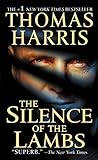
- The Silence of the Lambs — for readers drawn to the psychological thriller elements of Koontz’s work; Harris’s FBI procedural shares the interest in the pathology of violent minds
- Gone Girl — for Koontz readers who enjoy the domestic thriller mode; Flynn’s construction of unreliable domestic space has thematic connections to Koontz’s interest in deceptive surfaces
- The Girl with the Dragon Tattoo — for Jane Hawk readers looking for another lone investigator against a systemic conspiracy; Larsson’s Lisbeth Salander shares Jane’s outsider-with-exceptional-skills profile
Frequently Asked Questions
What order should I read the Odd Thomas books?
Read the Odd Thomas books in publication order: Odd Thomas, Forever Odd, Brother Odd, Odd Hours, Odd Apocalypse, Deeply Odd, and Saint Odd. The series follows a continuous timeline and character arc, and the emotional payoff of the final novel depends significantly on everything that has come before. The novellas and shorter works set in the same world are best read after completing the main series.
What is the best Dean Koontz book to start with?
Odd Thomas is the best entry point for readers new to Koontz. It is warm, propulsive, and emotionally generous in a way that his earlier work often is not — a good introduction to the writer at his most accessible. Readers who prefer pure thriller tension over the supernatural should try Intensity or Watchers as an alternative starting point. Both are standalone novels that demonstrate Koontz’s range as a technician of suspense.
Do Dean Koontz books need to be read in order?
The Odd Thomas series should be read in order — it follows a continuous story across seven novels. The Jane Hawk series also works best read sequentially, as the plot builds across all five books. Koontz’s standalones, which make up the majority of his output, can be read in any order. His early horror and thriller work from the 1970s and 1980s is entirely independent of his later series.
How many books has Dean Koontz written?
Dean Koontz has published over 105 novels under his own name, plus dozens of early works written under pen names including Brian Coffey, Deanna Dwyer, K.R. Dwyer, and Leigh Nichols, among others. He began publishing in 1968 and has had more than a dozen number-one New York Times bestsellers. His total output, including pseudonymous work, exceeds 150 books.
For the Best Horror Books
For the definitive guide to horror fiction — from King and Poe to contemporary horror — see our Best Horror Books of All Time list.
More Horror and Thriller Reading Guides
Affiliate disclosure: Links to Amazon on this page are affiliate links. We earn a small commission at no extra cost to you. This does not influence our editorial recommendations.
Frequently Asked Questions
What order should I read the Odd Thomas books?
Read the Odd Thomas books in publication order: Odd Thomas, Forever Odd, Brother Odd, Odd Hours, Odd Apocalypse, Deeply Odd, and Saint Odd. The series follows a continuous timeline and character arc, and the emotional payoff of the final novel depends significantly on everything that has come before. The novellas and shorter works set in the same world are best read after completing the main series.
What is the best Dean Koontz book to start with?
Odd Thomas is the best entry point for readers new to Koontz. It is warm, propulsive, and emotionally generous in a way that his earlier work often is not — a good introduction to the writer at his most accessible. Readers who prefer pure thriller tension over the supernatural should try Intensity or Watchers as an alternative starting point. Both are standalone novels that demonstrate Koontz's range as a technician of suspense.
Do Dean Koontz books need to be read in order?
The Odd Thomas series should be read in order — it follows a continuous story across seven novels. The Jane Hawk series also works best read sequentially, as the plot builds across all five books. Koontz's standalones, which make up the majority of his output, can be read in any order. His early horror and thriller work from the 1970s and 1980s is entirely independent of his later series.
How many books has Dean Koontz written?
Dean Koontz has published over 105 novels under his own name, plus dozens of early works written under pen names including Brian Coffey, Deanna Dwyer, K.R. Dwyer, and Leigh Nichols, among others. He began publishing in 1968 and has had more than a dozen number-one New York Times bestsellers. His total output, including pseudonymous work, exceeds 150 books.