Books Like Frankenstein: Science & Hubris Classics
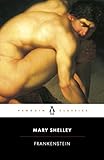
Mary Shelley's creature — abandoned by his creator, denied love, driven to revenge — is the founding figure of science fiction and the most enduring parable about what we owe to what we make. These books share its warning about the costs of creation without care.

Mary Shelley was nineteen years old when she wrote Frankenstein, and she was responding to a specific conversation. She and Percy Shelley, Lord Byron, and John Polidori were staying at the Villa Diodati near Geneva during the ‘Year Without a Summer’ of 1816, when volcanic ash from Tambora had darkened the skies across Europe. Byron proposed that each of them write a ghost story. Shelley’s became the foundational text of science fiction and one of the most philosophically persistent novels in the English language.
The creature — famously unnamed, commonly called Frankenstein by mistake — is the first truly modern monster because he is sympathetic. He is articulate, he reads Paradise Lost, he wants to be loved, and when he is denied love he explains with perfect lucidity why he has decided to make his creator suffer as he has suffered. This is not the horror of the incomprehensible Other. It is the horror of the self in the mirror: a consciousness that needed care and was abandoned to become dangerous, precisely because it was left alone. The novel’s ethical argument has never been more relevant.
The books below share Frankenstein’s central preoccupation: what do we owe to what we create? They range from the dystopias that ask what happens when the state creates people to serve its purposes, to the Gothic doubles that explore the shadow self, to the science fiction that takes Shelley’s warning into biotech, AI, and the redesign of humanity.
The Ethics of Creation
#1 — Brave New World by Aldous Huxley
Huxley’s 1932 dystopia is Frankenstein writ large: a world in which human beings are manufactured on the Bokanovsky Process, decanted from bottles in the Central London Hatchery and Conditioning Centre, engineered for specific social functions and conditioned not to want anything outside those functions. The Controller Mustapha Mond is a civilised Victor Frankenstein — intelligent, reflective, and entirely at peace with what he has built — and the novel’s horror is that the creatures here do not rebel. They are too well-made to want to. The savage John is the novel’s stand-in for the reader, the person who insists that humanity requires the freedom to suffer, and his fate is the bleakest argument Huxley makes.
#2 — Never Let Me Go by Kazuo Ishiguro
Kathy H., Tommy, and Ruth grow up at Hailsham, an English boarding school that feels slightly off from the first page. The novel releases its secret gradually: the students are clones, created to donate their organs when they reach adulthood. What makes Ishiguro’s novel so devastating is not the revelation but what surrounds it — the way the students accept their fate with a compliance that is both entirely human and deeply wrong. Unlike Shelley’s creature, who rages against his creator, Ishiguro’s characters simply live within what was decided for them. The question the novel leaves with you — why didn’t they run? — is unanswerable in the way the best moral questions are.
#3 — Oryx and Crake by Margaret Atwood
Snowman may be the last human being alive. Margaret Atwood’s 2003 novel, told in flashback from a ruined post-pandemic world, follows Jimmy and Crake, his brilliant, disaffected friend who eventually redesigns the human species — creating a peaceful, herbivorous, genetically optimised replacement for Homo sapiens and releasing a plague to clear the ground for them. Crake is the most direct literary heir to Victor Frankenstein: the scientist who decides he knows better than the world, who creates a new being, and who engineers his own removal from the picture. Where Shelley’s monster was an accident of ambition, Crake’s is a deliberate act of species-level hubris.
Gothic Horror and the Uncanny
#4 — Dracula by Bram Stoker
Bram Stoker’s 1897 novel is the other great Victorian monster, and reading it alongside Frankenstein reveals the two poles of the Gothic tradition’s anxiety. Where Shelley’s monster is created — assembled from corpses, animated by science — Stoker’s is eternal and aristocratic, a figure of ancient power whose danger is contagion rather than abandonment. Both novels use their monsters to examine what the body means: Frankenstein asks what we owe to what we assemble from matter; Dracula asks what it means for the self to be invaded and transformed. Both are, at root, novels about the transgression of natural limits and the violence that follows.
#5 — The Picture of Dorian Gray by Oscar Wilde
Dorian’s portrait is Frankenstein’s creature in miniature: a created thing that takes on independent life and bears the consequences of the creator’s choices. Basil Hallward paints it; Lord Henry creates the philosophy that allows Dorian to use it; Dorian uses it to escape the ageing and corruption his pleasures should produce. The Gothic horror that develops — the portrait growing more monstrous as Dorian stays young — is Wilde’s version of the creature in the attic, the created thing that must be kept hidden because it tells the truth. Where Shelley’s creature eventually confronts his creator, Dorian’s portrait simply waits, accumulating the evidence.
#6 — The Strange Case of Dr Jekyll and Mr Hyde by Robert Louis Stevenson
Stevenson’s 1886 novella is the most direct predecessor to Frankenstein in the Gothic tradition of the scientist who creates his own destruction. Jekyll believes he can separate the good and evil elements of his personality; the experiment instead produces Hyde, who is not a purified version of either quality but a regression — smaller, younger, more violent, the self without conscience. The double here is not an Other but the self’s shadow, which is why the story has never lost its power: Shelley’s question about what we create in the laboratory, Stevenson translates into the question of what we create within ourselves when we stop watching.
#7 — Rebecca by Daphne du Maurier
Rebecca is dead before the novel begins, but her presence at Manderley is so absolute that she functions as a created double — a woman constructed by the obsessive memory of Mrs. Danvers, whose devotion has produced something that possesses the living. Du Maurier’s Gothic here works differently from Shelley’s: the creator is grief itself, and what it creates is not a creature but an atmosphere, an inhabiting presence that the second Mrs. de Winter cannot escape. For readers who want Frankenstein’s theme of the created thing that overwhelms its creator, but translated into psychological Gothic rather than scientific horror.
Science, Hubris, and What We Owe
#8 — Flowers for Algernon by Daniel Keyes
Charlie Gordon, a man with an IQ of 68, becomes the subject of an experimental surgery that raises his intelligence to genius level — and the novel traces, through his journal entries, both the rise and the fall. Keyes’s 1966 novel is the most emotionally direct version of the Frankenstein question on this list: what do we owe to someone whose nature we have altered? The scientists who operate on Charlie treat him with the same mixture of good intentions and fundamental disregard that Victor shows his creature, and the result is the same — a being made more than he was meant to be, then abandoned to manage the consequences alone. The journal entries as Charlie’s intelligence rises, peaks, and fades are among the most affecting pages in American fiction.
#9 — The Island of Doctor Moreau by H.G. Wells
Wells’s 1896 novella sends a shipwrecked Englishman to a remote island where a disgraced scientist named Moreau has been using vivisection to transform animals into a semblance of human beings. The Beast People walk upright, speak a few words, and live under the Law — Moreau’s set of prohibitions designed to suppress their animal natures — but the law is fear, not understanding, and it does not hold. Wells is Shelley’s most explicit literary heir: the scientist who plays God, the created beings who fail to be what he intended, the island that becomes a charnel house. For readers who want Frankenstein in a more nakedly allegorical form.
#10 — The Remains of the Day by Kazuo Ishiguro
Stevens the butler devoted his life to serving Lord Darlington, whose career was spent advocating for appeasement with Nazi Germany. Stevens did not judge, did not question, did not allow himself to consider whether the house he served so faithfully was building something catastrophic. Ishiguro’s novel is Frankenstein transposed into the moral register of complicity: the question of what we owe to what we help create, even when — especially when — we are only a small part of the mechanism. Stevens’s great dignity, his professional excellence, his pride in service: these are Victor Frankenstein’s intellectual ambition, the qualities that made the creation possible and the acknowledgment of responsibility unnecessary.
How to Choose Your Next Read
If you want the most direct dystopian heir: Brave New World — the state as Frankenstein, manufacturing beings for specific purposes.
If you want the most emotionally devastating: Never Let Me Go — Ishiguro’s clones who accept their fate with a compliance more disturbing than rebellion.
If you want the Gothic double tradition: The Strange Case of Dr Jekyll and Mr Hyde — Stevenson translates Shelley’s laboratory into the human psyche.
If you want the biotech version: Oryx and Crake — Atwood’s Crake is the most deliberate and most contemporary Frankenstein.
If you want the question of complicity: The Remains of the Day — what we owe to what we help build, even from the position of servant.
For the Best Horror Books
For the definitive guide to horror fiction — from King and Poe to contemporary horror — see our Best Horror Books of All Time list.
Affiliate disclosure: Links to Amazon on this page are affiliate links. We earn a small commission at no extra cost to you. This does not influence our editorial recommendations.
Frequently Asked Questions
Is Frankenstein science fiction or horror?
Frankenstein is both, and the fact that it is both is part of why it has lasted. Mary Shelley grounded her monster not in the supernatural — not in black magic or divine curse — but in scientific experiment, which made the horror rational and therefore more disturbing. Victor Frankenstein's mistake is not that he dabbled in the forbidden; it is that he succeeded and then refused to take responsibility for what he created. That move — the creation without care, the scientist who walks away from his own experiment — is the founding gesture of science fiction as a genre, the moment when literature began asking what technology makes possible and whether possibility and wisdom are the same thing.
Who is the real monster in Frankenstein?
This question has been the centre of *Frankenstein* criticism since the novel was published. The creature is physically monstrous and commits real violence, but Shelley makes his motivation comprehensible at every step: he was abandoned at birth, denied education, rejected by every human he approached, and finally refused the one thing he asked for — a companion. Victor, by contrast, is given every advantage, acts from vanity, and then spends the rest of the novel fleeing the consequences of his own creation. Most careful readers conclude that the moral weight of the novel falls on Victor: the creature's crimes are the direct consequence of his abandonment, and Shelley ensures we understand this.
What does Frankenstein have to say about modern science and technology?
More than almost any novel written in the two centuries since it was published. The questions Shelley raised in 1818 — what are the limits of scientific inquiry? what do we owe to what we create? what happens when the created thing develops a will of its own? — are now asked about artificial intelligence, genetic engineering, cloning, and the algorithms that shape social behaviour. Frankenstein is not a Luddite novel: Shelley is not against science. She is against science practised without ethical reflection, without care for consequence, without acknowledgment of obligation. That argument is more urgent now than it was in 1818.