Books Like Good Omens: 11 Comic Fantasy Novels
If Good Omens made you laugh at the apocalypse and root for an angel and a demon, these books deliver the same warmth, wit, and mythic scope.
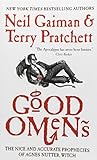
Terry Pratchett and Neil Gaiman’s Good Omens is one of the great collaboration novels: a book that somehow sounds like both of its authors at once, and like neither of them alone. On one level it is a comedy about the apocalypse being inconveniently scheduled on a Saturday, featuring an angel named Aziraphale who runs a rare bookshop and a demon named Crowley who caused the M25 motorway. On another level it is a deeply felt novel about friendship across impossible differences, about whether Heaven and Hell have any more moral authority than Earth, and about the persistent human capacity to muddle through.
What the book delivers that nothing else quite replicates is that specific combination of Pratchett’s humanist warmth — his belief that ordinary decency is rarer and more important than cosmic significance — and Gaiman’s instinct for mythic weight and genuinely dark corners. The footnotes are jokes. The theology is nonsense that turns out to be serious. The two main characters have been friends for six thousand years and are only now admitting it. The books below approach that territory from different angles, depending on which element of Good Omens you loved most.
For Readers Who Loved the Pratchett Side: Warm, Satirical, Humanist
#1 — Small Gods by Terry Pratchett
The god Om has a problem: he has been reduced to the form of a tortoise, because almost no one in his own church actually believes in him anymore. The only true believer is Brutha, a simple novice with a perfect memory and no guile at all. Small Gods is the Discworld novel that most directly addresses what Good Omens circles around — the gap between divine institutions and actual goodness, the absurdity of bureaucratic religion, and the question of whether gods deserve worship. It is also one of Pratchett’s most compassionate books. Readers who loved Good Omens for its theological comedy will find this indispensable.
#2 — Going Postal by Terry Pratchett
Moist von Lipwig is a con man who is given a choice by the Patrician of Ankh-Morpork: death, or the reconstruction of the city’s postal service, which has been defunct for thirty years and may be haunted by its undelivered letters. Pratchett at his most Pratchett: the satire is of capitalism and monopoly and institutional inertia, but the human center is a story about whether a person defined by taking things from others can learn to build something instead. The wit here is as sharp as anything in Good Omens, and the warmth is the same.
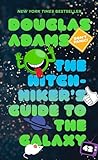
#3 — The Hitchhiker’s Guide to the Galaxy by Douglas Adams
Arthur Dent’s house is about to be demolished to make way for a bypass. The Earth, it turns out, faces a similar problem. Adams’s novel is the other great text of British comedic science fiction and fantasy — the book that established the mode that Good Omens perfected. The humor operates at the level of the sentence and the footnote (or, in Adams’s case, the digression), and the underlying theme — that the universe is vast, indifferent, and absurd, but that tea and friendship are still worth something — maps directly onto what Pratchett and Gaiman were doing.
For Readers Who Loved the Gaiman Side: Mythic, Dark, Atmospheric
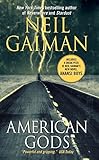
#4 — American Gods by Neil Gaiman
Shadow Moon is released from prison to find his wife has died and the life he planned is over. He takes a job with a man called Wednesday, who turns out to be Odin — and who is assembling the old gods of immigrant America for a war against the new gods of media and technology. American Gods is Gaiman’s most ambitious solo novel, a road-trip through the American interior that reads as a meditation on belief, identity, and what happens to stories when people stop telling them. It shares Good Omens’s theological seriousness and its interest in what gods actually are, but the tone is darker and the scale is larger.
#5 — Neverwhere by Neil Gaiman
Richard Mayhew stops to help an injured girl on a London street and falls through the surface of the world into London Below — a hidden city populated by the people and concepts that have fallen through the cracks. Gaiman’s first solo novel has the same quality as Good Omens’s portrait of Aziraphale’s bookshop: a sense that the familiar world has an underside that is stranger and more dangerous and somehow more real. The humor is quieter here, but the mythology and the atmosphere are pure Gaiman, and the central relationship between Richard and the Door is the same kind of reluctant companionship that makes Good Omens work.
#6 — The Ocean at the End of the Lane by Neil Gaiman
A man returns to his childhood home for a funeral and finds himself remembering events he had entirely forgotten: a lodger’s suicide, a door in the world, a family of women at the end of a lane who may have been there since the beginning of everything. Gaiman’s most personal novel is short, swift, and quietly devastating. It does not have Good Omens’s comedy, but it has the same mythic architecture and the same sense that ordinary people are entangled in forces too large to comprehend. The relationship between the narrator and Lettie Hempstock is the closest Gaiman has come, alone, to the found-family center of Good Omens.
#7 — Anansi Boys by Neil Gaiman
Fat Charlie Nancy has always been embarrassed by his father. When his father dies, he discovers two things: that his father was Anansi, the spider god of stories, and that he has a brother. Anansi Boys is Gaiman’s funniest solo novel and the one that most deliberately shares the comedic register of Good Omens. The sibling relationship between Fat Charlie and Spider is a different kind of unlikely partnership than Aziraphale and Crowley, but equally compelling — two people defined by their differences who turn out to need each other. The mythology is West African and Caribbean rather than Judeo-Christian, and Gaiman handles it with the same lightness and respect.
British Comedic Fantasy and the Wider Tradition
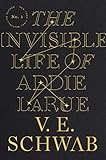
#8 — The Invisible Life of Addie LaRue by V.E. Schwab
In 1714, a young French woman makes a desperate bargain with a god of darkness and is cursed to be forgotten by everyone she meets — forever. The Invisible Life of Addie LaRue is a slower, more melancholy book than Good Omens, but it shares the same deep interest in what happens when a human and a supernatural being develop feelings they were not supposed to have. The relationship between Addie and the darkness she bargained with accumulates the same kind of weight as Aziraphale and Crowley’s six-thousand-year friendship: a connection that neither party fully acknowledges until it becomes impossible to ignore.
#9 — Vicious by V.E. Schwab
Victor Vale and Eli Cardale are college roommates who become obsessed with the science of people who have survived near-death experiences and developed abilities. Their experiment succeeds, and then destroys everything. Vicious is darker and more morally complicated than Good Omens — both central characters are doing things that are genuinely wrong — but the relationship at its core has the same quality of two people who are each other’s greatest adversary and only equal. Schwab writes antagonists who care about each other in ways they find inconvenient, which is essentially what Pratchett and Gaiman did with an angel and a demon.
#10 — The Magicians by Lev Grossman
Quentin Coldwater discovers that the magical land from his favorite childhood books is real, and that reality is more complicated and more dangerous than the stories suggested. Grossman’s novel is the literary fantasy that most directly interrogates what it means to want magic to be real — and what it costs when it is. The tone is darker than Good Omens and the humor is drier, but the underlying move is the same: take the conventions of a beloved genre seriously enough to ask what they actually imply, and follow those implications honestly.
#11 — Mortal Engines by Philip Reeve
In a distant future, entire cities move on enormous wheels, hunting smaller towns and consuming them for resources. Tom Natsworthy, a low-ranking apprentice historian on the city of London, falls off the edge of his city in pursuit of a scarred girl who tried to assassinate the city’s chief engineer. Mortal Engines is a different kind of British comedic-dark fantasy: the humor is quieter, the worldbuilding is enormous, and the relationship at its center — between Tom and Hester Shaw — has the same quality of two very different people who are worse separately than they are together. Reeve has Pratchett’s gift for building a satirical world with genuine human consequences.
How to Choose Your Next Read
If you loved the Pratchett voice and the theological satire: Small Gods first, then Going Postal.
If you loved the Gaiman voice and the mythic darkness: Neverwhere for atmosphere, American Gods for scale, Anansi Boys for comedy.
If you want the British comedy tradition that Good Omens belongs to: The Hitchhiker’s Guide to the Galaxy.
If you want the found-family dynamic between a supernatural being and a human: The Invisible Life of Addie LaRue or Anansi Boys.
If you want the morally complicated central relationship taken further: Vicious by V.E. Schwab.
For the Best Fantasy Books
For the definitive guide to fantasy fiction — from Tolkien and Le Guin to Brandon Sanderson and George R.R. Martin — see our Best Fantasy Books of All Time list.
More Fantasy and Comic Fiction Guides
- Discworld Books in Order: How to Read Terry Pratchett
- Books Like The Hitchhiker’s Guide to the Galaxy
Also by Neil Gaiman
Affiliate disclosure: Links to Amazon on this page are affiliate links. We earn a small commission at no extra cost to you. This does not influence our editorial recommendations.
Frequently Asked Questions
Where should I start with Terry Pratchett's Discworld if I loved Good Omens?
If you loved the humor and humanism of Good Omens, the best Discworld entry points are Small Gods (a standalone that skewers religious bureaucracy with the same satirical warmth) and Going Postal (the story of a con man forced to rebuild the postal service, which is as funny and as compassionate as anything Pratchett wrote). Guards! Guards! works well too if you want the full city-watch cast. Avoid starting at the very beginning — the first two Discworld novels are weaker than what followed.
Where should I start with Neil Gaiman's solo work if I loved Good Omens?
If you loved the mythic darkness and British atmosphere of Good Omens, start with Neverwhere — a London civil servant falls through a crack in the world and discovers a hidden city beneath the streets. American Gods is the larger, more ambitious choice: a road novel about forgotten deities fighting for survival in modern America. The Ocean at the End of the Lane is shorter and more personal, and many readers find it the most emotionally devastating thing Gaiman has written.
Is Good Omens better as a book or as the TV show?
The book and the TV adaptation are different pleasures. The novel is denser, funnier on the sentence level, and packed with footnotes that are jokes in themselves — a Pratchett signature that no screen adaptation can replicate. The show expands the plot considerably, adding backstory and scenes the book doesn't contain, and the casting of Michael Sheen and David Tennant is widely considered definitive. Most readers who love the book also love the show, but the novel's voice — that particular blend of Pratchett's warmth and Gaiman's melancholy — is irreplaceable.
What books have the same found-family feeling between very different characters?
Books with the same unlikely-friendship-as-found-family dynamic include Anansi Boys by Neil Gaiman, Vicious by V.E. Schwab (whose central relationship is antagonistic but equally codependent), The Hitchhiker's Guide to the Galaxy by Douglas Adams, and the Discworld City Watch novels by Terry Pratchett. The Invisible Life of Addie LaRue by V.E. Schwab captures the same quality of two people who should not work together discovering that they are each other's most important relationship.