Books Like The Hitchhiker's Guide to the Galaxy
If Douglas Adams convinced you the universe is absurd and that's somehow comforting, these comedic SF and fantasy novels speak the same language.
Douglas Adams’s The Hitchhiker’s Guide to the Galaxy begins with Earth being demolished to make way for a hyperspace bypass. The planning documents, we are told, have been on display at Alpha Centauri for fifty years, in the local planning office — which is only four light years away. If you had wanted to lodge a complaint, you had plenty of time. This is the novel’s fundamental posture: the universe does not care about you, does not notice you, and when it finally does acknowledge your existence, it is only to inconvenience you on behalf of some administrative project you were never informed about. Arthur Dent, in his dressing gown, is the last surviving human. The stars are magnificent and indifferent. The answer to Life, the Universe, and Everything is forty-two. No one knows what the question was.
What Adams gave readers is something rarer than it looks: a novel that uses comedy as its primary instrument of philosophy. The jokes are not decoration applied to an SF story — they are the argument. The digressive footnotes, the preposterous bureaucracies, the fact that Vogon poetry is the third-worst in the universe (not the worst, just the third-worst), the towel as the most useful object a hitchhiker can own — all of these are Adams saying that the universe is too large and too strange for human seriousness to survive contact with it, and that the appropriate response is something between laughter and awe. Marvin the Paranoid Android, depressed beyond all capacity for expression, is somehow both comic and genuinely affecting. That combination — absurdist humor carrying real emotional weight — is what the best books on this list share.
The novels below are grouped by what kind of laugh they are after. Some are pure British comedic SF in Adams’s mode. Others use humor to ask questions as serious as Adams’s. A few are simply SF that refuses to treat the universe with the reverence the genre sometimes demands. All of them would be at home on the shelf next to Arthur Dent’s battered paperback.
The Rest of the Hitchhiker’s Trilogy (All Five Books)
#1 — The Restaurant at the End of the Universe by Douglas Adams
The second book picks up precisely where the first ends and does not slow down. Arthur, Ford, Zaphod, and Trillian reach Milliways — the Restaurant at the End of the Universe, built at the literal end of time so diners can watch the universe collapse over their meal. The plotting is looser than the first book but the invention is if anything more reckless, and several of the sequences here — the Haggunenons, the Total Perspective Vortex, the planet Magrathea’s purpose — rank among Adams’s best work. Read it immediately after the first book, because it essentially continues the same story.
#2 — Life, the Universe and Everything by Douglas Adams
The third book was adapted from an unproduced Doctor Who script Adams had written, and the seams show a little — the plot is more conventionally SF, involving an ancient weapon and the surprisingly unpleasant people of Krikkit. It is still funnier than almost anything else published in its year and contains the Sirius Cybernetics Corporation’s Nutrimatic Drinks Dispenser sequence, which is Adams at his most precise. If the first two books were perfect, this one is merely excellent.
British Comedic Fantasy: Pratchett and Adams’s Natural Inheritors
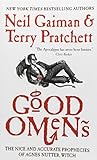
#3 — Good Omens by Terry Pratchett and Neil Gaiman
The angel Aziraphale and the demon Crowley have been on Earth since the beginning and have grown rather fond of it. When the Antichrist is accidentally misplaced at birth and Armageddon approaches, neither of them is particularly keen on the apocalypse happening. Good Omens is the most natural companion to Adams on this list: it has the same affection for digression, the same willingness to write footnotes that are better than the main text, and the same fundamental warmth beneath the cosmic joke. Pratchett and Adams were friends, and the influence runs in both directions. The novel’s theology is as casually subversive as anything in the Hitchhiker’s series.
#4 — Small Gods by Terry Pratchett
The Discworld novel most like Adams in philosophical ambition: the great god Om has been reduced to inhabiting the body of a tortoise because his believers no longer genuinely believe. His only true worshipper is a novice named Brutha. What follows is a novel about faith, doubt, the nature of divinity, and the way institutions calcify into something that serves themselves rather than their stated purpose. Pratchett is funnier in a different register than Adams — broader, warmer, more invested in his characters — but Small Gods is the Discworld book that most directly argues a position, and the position is recognizably Adamsian: that certainty is dangerous and genuine inquiry is sacred.
SF That Takes Comedy as Seriously as Science
#5 — The Martian by Andy Weir
Mark Watney is stranded alone on Mars with limited supplies, a broken communication system, and an unshakeable tendency to make jokes. The Martian is technically hard SF — the science is painstakingly accurate — but its soul is comedic: Watney’s voice, narrating his survival through log entries, is the book’s engine, and his humor is a coping mechanism that the reader adopts alongside him. The novel shares with Adams a belief that intelligence and wit are the appropriate human responses to an indifferent universe, and that laughing at your own situation is not a failure of seriousness but a form of it.
#6 — Red Dwarf by Rob Grant and Doug Naylor
The novelization of the BBC series that most directly inherits Adams’s comedic SF tradition. Dave Lister is the last human alive, three million years into deep space on a mining ship populated by a hologram, a creature who evolved from his cat, and a neurotic android. The setup is pure Adams — characters adrift in an absurd cosmos, the comedy entirely dependent on how ridiculous it all is — and the execution is better than most novelizations of anything. Grant and Naylor were writing British SF comedy in Adams’s wake and knew it; Red Dwarf wears the influence openly while finding its own tone, which is more interested in class and laziness than Adams’s cosmic scale.
Satire Using the Universe as Its Target
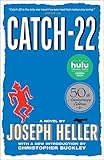
#7 — Catch-22 by Joseph Heller
Catch-22 is not SF, but it is one of the books Adams cited most directly as an influence, and reading it makes the debt clear. Yossarian is a bombardier in World War Two who does not want to fly any more missions and is surrounded by institutional logic that makes survival structurally impossible. Heller’s novel is built on exactly the same comedic mechanism Adams uses: the bureaucracy that cannot be argued with, the rule designed to prevent its own circumvention, the universe (here, the military) as a system indifferent to human life. The jump from Heller’s war to Adams’s galaxy is not a large one. Catch-22 is the great prototype for the kind of comedy both novels are doing.
#8 — Brave New World by Aldous Huxley
Less funny than the others on this list and more dystopian, but relevant because Adams’s satire on human civilization — the Vogons and their bureaucracy, Earth as a computer program, the planet Magrathea and its luxury planet-building — is in direct conversation with Brave New World’s vision of a society optimized for comfort at the expense of meaning. Huxley’s World State is a joke that has stopped being funny. Adams would have recognized the type. Readers who want the philosophical argument beneath Adams’s comedy, stated more directly and without the laughs, will find it here.
The Dirk Gently Companion
#9 — Dirk Gently’s Holistic Detective Agency by Douglas Adams
Adams’s other novel series, and the best of his post-Hitchhiker’s work. Dirk Gently is a private detective who operates on the principle of the fundamental interconnectedness of all things — which means he will follow whoever looks most interesting and bill the client for whatever he uncovers. The mystery involves Coleridge, a ghost, a time machine, and an Electric Monk (a device for believing things so you don’t have to). Adams’s prose is as good here as anywhere in the Hitchhiker’s series, and the metaphysics are more sophisticated. Readers who loved Hitchhiker’s and want to see what Adams did when he was less constrained by the need to keep Arthur Dent in one piece will find this essential.
For Readers Who Want More Scale and Less Satire
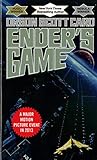
#10 — Ender’s Game by Orson Scott Card
Not a comedic novel at all — the tonal opposite of Adams in many ways — but included because Ender’s Game asks the same central question: what does it mean to be a small, uncertain human creature in a universe that is very large and not necessarily structured around human welfare. Card’s answer is bleaker and more earnest than Adams’s, but the shock of scale is the same. Readers who came to SF through Adams and want to see the genre at its most serious about similar themes will find Ender’s Game a productive contrast.
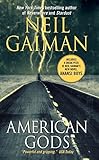
#11 — American Gods by Neil Gaiman
Neil Gaiman is the writer most capable of operating in Adams’s register — Good Omens demonstrates this — but American Gods is the novel that shows what he does when the comedy recedes and the mythology takes over. Shadow Moon is released from prison and drawn into a war between the old gods and the new. The novel is large, strange, and melancholy, with an America as alienating and absurd as Adams’s universe, even when it is not played for laughs. For readers who want the cosmic scale of Hitchhiker’s in a darker key, American Gods is the natural destination.
How to Choose Your Next Read
If you want to continue the story immediately: The Restaurant at the End of the Universe — read it as part one of the first book.
If you want the closest tonal match: Good Omens — it is the only book on this list where the authors were working in genuinely the same mode.
If you want more Douglas Adams: Dirk Gently’s Holistic Detective Agency — his most mature standalone work.
If you want the philosophical argument made explicit: Catch-22 — the direct ancestor of Adams’s comedy.
If you want SF that uses humor as its primary voice: The Martian or Red Dwarf.
If you want the Pratchett side of things: Small Gods — the Discworld novel that argues hardest.
For the Best Science Fiction Books
For the definitive guide to science fiction — from Asimov and Herbert to Andy Weir and Ursula K. Le Guin — see our Best Sci-Fi Books of All Time list.
More Fantasy and Comic Fiction Guides
- Discworld Books in Order: How to Read Terry Pratchett
- Books Like Good Omens: Divine Comedy and Cosmic Chaos
Affiliate disclosure: Links to Amazon on this page are affiliate links. We earn a small commission at no extra cost to you. This does not influence our editorial recommendations.
Frequently Asked Questions
How many books are in The Hitchhiker's Guide to the Galaxy series?
There are five books in Douglas Adams's Hitchhiker's Guide series, which Adams famously called 'a trilogy in five parts.' They are: The Hitchhiker's Guide to the Galaxy, The Restaurant at the End of the Universe, Life, the Universe and Everything, So Long and Thanks for All the Fish, and Mostly Harmless. A sixth novel, And Another Thing..., was written by Eoin Colfer and published in 2009, but it is not by Adams and is generally treated as optional.
What order should I read Douglas Adams?
Start with The Hitchhiker's Guide to the Galaxy, then read The Restaurant at the End of the Universe, Life, the Universe and Everything, So Long and Thanks for All the Fish, and Mostly Harmless in order. Once you finish the Hitchhiker's series, Dirk Gently's Holistic Detective Agency is the best next step — it is a standalone (with one sequel, The Long Dark Tea-Time of the Soul) that shares Adams's sensibility but applies it to detective fiction and the interconnectedness of all things.
Is the rest of the Hitchhiker's series as good as the first book?
The second book, The Restaurant at the End of the Universe, is excellent and essentially continues the first without missing a beat — many readers treat them as a single story. Life, the Universe and Everything is strong but a step down. So Long and Thanks for All the Fish is a significant tonal shift, quieter and more romantic, and divides readers sharply. Mostly Harmless is the darkest entry and famously ends on a note Adams himself expressed ambivalence about. The honest answer is that the first two books are the peak, and each subsequent volume is a little harder to love.
What is the meaning of 42 in The Hitchhiker's Guide to the Galaxy?
In the novel, a civilization builds a supercomputer called Deep Thought to calculate the Answer to the Ultimate Question of Life, the Universe, and Everything. After seven and a half million years of computation, Deep Thought delivers its answer: 42. The joke is that no one actually knows what the Question is — so an answer, however precise, is useless. Adams said the number has no deeper meaning; he simply wanted something 'ordinary' and 'small.' The gag works because it satirizes the human tendency to want a final, tidy answer to existence — and the likelihood that even if one existed, we would not know how to interpret it.