Books Like Piranesi: Labyrinthine, Mysterious Worlds
Susanna Clarke's Piranesi lives in a House with infinite halls full of statues and tides, and doesn't understand how he got there. These books share its dreamlike logic, its patient unfolding mystery, and the uncanny feeling that reality is much stranger than the people inside it know.
Susanna Clarke’s Piranesi was published in 2020 and is one of the most precisely achieved novels in recent British fiction — a book that does exactly what it intends and nothing else, sustained over 272 pages with almost no waste. Its narrator, who calls himself Piranesi after the eighteenth-century artist famous for engravings of impossible prisons, lives in a House of infinite halls full of classical statues and flooding tides. He does not know how he got there. He does not remember that there is anywhere else. He is perfectly at home in a place that should be terrifying.
The novel works as a mystery — the reader understands before Piranesi does that something has been done to him, that the man who visits him twice a week called “the Other” is not what he claims to be, and that the journal entries Piranesi himself wrote before a certain date have become incomprehensible to their author. But the mystery is only the mechanism. What Clarke is really interested in is the question of what remains of a person when their past has been taken from them, and whether a world that is not real can nonetheless be genuinely beautiful and genuinely home.
The books below were chosen for readers who responded to that combination: the dreamlike logic of a world with different rules, the mystery that unfolds from inside the narrator’s own unreliability, and the uncanny feeling that the House is somehow more real than the ordinary world the reader inhabits. They are grouped by which aspect of Piranesi they most closely echo.
More Susanna Clarke
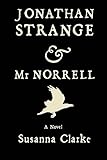
#1 — Jonathan Strange & Mr Norrell by Susanna Clarke
In an alternate England where magic was once practiced and is now only theoretical, Gilbert Norrell — the last practicing English magician — emerges from obscurity to assist the war effort against Napoleon, and soon acquires an apprentice, Jonathan Strange, whose talents will eventually surpass his own. Clarke’s debut novel is the full-length version of the world her sensibility inhabits: dense, footnoted, written in the style of a nineteenth-century historical document, deeply interested in the Other Worlds of English fairy mythology that underlie Piranesi’s House. It took Clarke ten years to write and it shows — the weight of it is extraordinary — but readers who want more of her uncanny imagination will find it rewarding.
Labyrinthine Worlds and Strange Logic
#2 — House of Leaves by Mark Z. Danielewski
A family moves into a house in the American suburbs and discovers that its interior is larger than its exterior — by a fraction of an inch at first, then by rooms that should not exist, then by a hallway that opens onto a darkness with no bottom. Danielewski’s 1999 novel is the academic nightmare version of Piranesi’s House: the same architectural impossibility, but treated as horror rather than wonder. The novel is formally experimental — footnotes within footnotes, pages with single words, an academic apparatus that may or may not be reliable — and the effect is a sustained disorientation that mirrors the book’s content. Where Piranesi finds the House beautiful, the family in House of Leaves finds it lethal.
#3 — If on a winter’s night a traveler by Italo Calvino
You, the reader, buy a novel called If on a winter’s night a traveler and discover that it is misprinted — the first chapter is followed by the first chapter of a different novel. Your pursuit of the complete text leads you through ten different beginnings of ten different novels, none of which can be finished, and a metafictional plot about the nature of reading itself. Calvino’s 1979 novel plays with the same self-referential structure that Piranesi uses more subtly — the journals that Piranesi cannot understand are his own, the text that reveals and conceals simultaneously — and both books are interested in the experience of a reader who is also a character inside the narrative.
#4 — The Master and Margarita by Mikhail Bulgakov
The devil arrives in 1930s Moscow with his retinue — including a giant, chess-playing black cat — and proceeds to expose the corruption and cowardice of Soviet society through a series of increasingly catastrophic magic shows. Bulgakov’s novel, written in secret and unpublished until after his death, interweaves the Moscow story with a version of Pontius Pilate’s encounter with Jesus in first-century Jerusalem. The two worlds coexist with the same logic Piranesi applies to the House and the ordinary world: one is stranger than the other, but they are equally real, and the border between them is permeable.
#5 — Gormenghast by Mervyn Peake
The castle of Gormenghast is so enormous that entire wings have been forgotten, servants have lived and died without ever leaving their designated corridors, and the Earl’s household conducts its rituals with no memory of what they were originally for. Peake’s mid-century trilogy is Piranesi’s House in Gothic mode: the architecture as a world unto itself, the inhabitants shaped by the building rather than the other way around, and the whole thing operating by a logic that is perfectly consistent within its own terms and incomprehensible from outside. Peake’s prose is more grotesque and more languorous than Clarke’s, but the sensibility is deeply related.
Reality That Won’t Behave
#6 — The Raw Shark Texts by Steven Hall
Eric Sanderson wakes up with no memory of his past in a house that is not his, and begins to receive letters from a previous version of himself warning him about a Ludovician: a conceptual shark that hunts through meaning rather than water, pursuing people through language, photographs, and memory traces. Hall’s 2007 novel thinks like Piranesi — the world as a system with rules that are almost comprehensible, the narrator reconstructing themselves from the evidence of their own past, the horror that arrives not through violence but through the dissolution of identity. It is the thriller version of Piranesi’s mystery.
#7 — Never Let Me Go by Kazuo Ishiguro
Kathy H. narrates her childhood at Hailsham, a quiet English boarding school, with a precision and warmth that slowly reveals itself to be the precision of someone who has known for a long time what she is and what will happen to her. The reader understands Kathy’s situation before she articulates it — the same dramatic irony Clarke uses with Piranesi — and the disorientation of living inside a world whose rules you only partly understand, in a reality shaped for purposes other than your own, is the same in both novels. Ishiguro’s tone is less fantastical, but the underlying experience — inhabiting a place that turns out to be a kind of elaborate enclosure — is identical.
#8 — The Unconsoled by Kazuo Ishiguro
A famous pianist named Ryder arrives in a Central European city to give a concert he cannot quite remember agreeing to, and finds the city organized around his visit in ways that don’t follow the rules of space, time, or social logic: rooms connect to other rooms impossibly, conversations restart without acknowledgment, and the emotional weight of every interaction is enormous but never explained. Ishiguro’s 1995 novel is his most explicitly Kafkaesque work and the one that most closely mirrors Piranesi’s spatial uncanniness — the sense of moving through a world that is internally consistent but following rules the protagonist has not been given access to.
#9 — The Buried Giant by Kazuo Ishiguro
An elderly couple in post-Arthurian England set out to visit their son in a village they cannot quite remember, in a country where no one can remember the recent past. The mist that covers the land is not meteorological; it is the collective amnesia of a people who survived a war by agreeing to forget it. Ishiguro’s 2015 novel shares Piranesi’s interest in memory as the medium of identity — the question of who Piranesi is when his past has been taken from him is the same question the novel asks about an entire civilization. It is gentler than most of Ishiguro’s work and more overtly fantastical, and it approaches the same territory from a different angle.
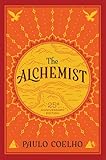
#10 — The Alchemist by Paulo Coelho
Santiago the shepherd travels from Andalusia to the Egyptian pyramids following a recurring dream, and the novel he inhabits reads the landscape as a system of signs — the world as a text in which meaning is available to those who know how to look. Coelho’s fable shares with Piranesi the sense of a world that has a logic beneath the surface, a logic that the attentive protagonist can gradually learn to read. Where Piranesi catalogs statues and tides, Santiago reads omens and encounters; both are cartographers of a world that rewards careful attention.
How to Choose Your Next Read
If you want more Susanna Clarke: Jonathan Strange & Mr Norrell — denser, longer, equally uncanny.
If you want the architectural horror version: House of Leaves — the same impossible building, treated as nightmare.
If you want the Ishiguro that mirrors it most closely: The Unconsoled — spatial and temporal rules that don’t apply.
If you want the metafictional version: If on a winter’s night a traveler — the reader as character, the text as labyrinth.
If you want the Gothic mode: Gormenghast — the castle as an entire world, with politics.
For the Best Fantasy Books
For the definitive guide to fantasy fiction — from Tolkien and Le Guin to Brandon Sanderson and George R.R. Martin — see our Best Fantasy Books of All Time list.
More Fantasy Reading Guides
- Books Like Good Omens: Divine Comedy and Cosmic Chaos
- Discworld Books in Order: How to Read Terry Pratchett
Also Recommended
Affiliate disclosure: Links to Amazon on this page are affiliate links. We earn a small commission at no extra cost to you. This does not influence our editorial recommendations.
Frequently Asked Questions
What is Piranesi actually about?
Piranesi is a mystery novel dressed as a fantasy. A man known only as Piranesi lives in an infinite labyrinthine House, cataloguing its statues and recording the behaviour of its tides, apparently content. The novel's engine is the gradual revelation of how he came to be there and what the House actually is — and that revelation arrives through a series of clues in his own journals that he has stopped understanding. It is about memory, identity, and the way people construct reality to make their situation bearable, which makes it something closer to literary fiction than genre fantasy.
Do I need to read Jonathan Strange and Mr Norrell first?
No. Piranesi is entirely independent and makes no reference to Clarke's earlier novel. Jonathan Strange and Mr Norrell is set in an alternate Napoleonic England and is much longer and denser; Piranesi is short, intimate, and structurally nothing like it. Some readers find that reading Jonathan Strange first enriches their sense of Clarke's recurring interest in the Other Worlds of English fairy mythology, but it is not necessary and Piranesi works perfectly as a standalone.
What makes Piranesi's narrative voice so distinctive?
Piranesi narrates his own journals, which means the reader understands his situation differently than he does — the dramatic irony is persistent and careful. His voice is earnest, precise, and genuinely without guile; he catalogs the House with the devotion of a scientist and the reverence of a worshipper. The gap between what Piranesi believes and what the reader gradually understands creates a sustained unease that is different from conventional horror: it is not frightening, exactly, but deeply strange, and the strangeness sharpens as the mystery resolves.