Books Like The Song of Achilles: 11 Reads for the Devastated
If The Song of Achilles broke your heart, these books offer the same mix of myth, fierce love, and grief that lingers long after the last page.

Madeline Miller’s The Song of Achilles is a love story narrated by Patroclus — an unlikely prince, uncertain of his place in the world — about the man he has loved since boyhood. Achilles is golden and destined for glory, and Patroclus narrates their years together with a clarity that makes the reader understand, before Patroclus does, exactly what is at stake. The Trojan War arrives not as the point of the novel but as the thing that will end it. The book’s final pages are among the most devastating in contemporary fiction, and many readers report finishing them in the early hours of the morning with a specific kind of grief that is hard to name and harder to shake.
What Miller achieves is rare: a novel in which the mythology is fully present and the love story is fully present, and neither is reduced to a vehicle for the other. Patroclus’s voice is intimate and modern without being anachronistic; the world he inhabits is ancient and strange and completely believable. The tragedy works because Miller has made you care so thoroughly before she begins to take things away.
The books below were chosen for readers who come away from The Song of Achilles wanting more of what it gave them — which is not simply Greek mythology or historical fiction, but a particular combination of beautiful prose, romantic devotion, and grief handled with precision. Some are mythological retellings. Some are literary love stories set in other eras. All of them understand that the most devastating stories are the ones that make you love before they make you mourn.
More Madeline Miller
#1 — Circe by Madeline Miller
The obvious next read, and it earns the recommendation. Circe tells the story of the witch from the Odyssey — daughter of Helios, exiled to an island, transformed from minor god to something more formidable by centuries of solitude and practice. Miller’s prose is the same luminous instrument as in The Song of Achilles, and the mythological world is equally vivid. The emotional register is different: Circe is a novel about becoming rather than about losing, and it ends with something closer to hope. Readers who need a rest from devastation after The Song of Achilles should start here.
#2 — Galatea by Madeline Miller
A novella, and brief, but worth seeking out. Miller retells the myth of Galatea — the ivory statue brought to life by Pygmalion — from Galatea’s perspective, as a story about a woman who never asked to be created and has been given no meaningful life since. The prose is as controlled as Miller’s longer work, and the novella’s concentrated form suits the single devastating irony at its heart. An hour’s reading that stays with you disproportionately long.
The Trojan War from Other Angles
#3 — The Silence of the Girls by Pat Barker
Where Miller gives Patroclus the narration, Pat Barker gives it to Briseis — the captive woman passed between Achilles and Agamemnon as a prize of war. Barker’s Trojan War is brutal and unglamorous, a siege that has gone on too long and dehumanized everyone inside it. Achilles here is seen from the outside, which makes him more frightening and less comprehensible than Miller’s version. The novel is not a love story, but it is essential reading for anyone who wants to understand what the Iliad looks like from the perspective of those it does not choose to name.
#4 — A Thousand Ships by Natalie Haynes
Natalie Haynes assembles a chorus of women from the Trojan War — Penelope, Hecabe, Cassandra, Calypso, the Muses themselves — and gives each of them a voice in turn. The structure is fragmented and deliberate, building a picture of the war from the perspectives most often reduced to footnotes. Haynes writes with wit and controlled anger, and the cumulative effect is considerable. The contrast with Miller is instructive: where The Song of Achilles zooms in to a single perspective with total intimacy, A Thousand Ships zooms out to recover everything the traditional telling left behind.
#5 — Troy by Stephen Fry
Stephen Fry retells the entire myth cycle leading up to and through the Trojan War — from the judgment of Paris to the fall of the city — in his characteristic style: warm, digressive, enormously knowledgeable, and consistently entertaining. Troy is not a novel in the way Miller’s books are; it is closer to a performed retelling, and it does not attempt Miller’s emotional depth. What it does provide is comprehensive mythological context, which makes it an excellent companion volume. Readers who finished The Song of Achilles wanting to know more of what happened before and after the events of the novel will find it here.
#6 — Ariadne by Jennifer Saint
Jennifer Saint’s debut novel tells the story of Ariadne — daughter of King Minos of Crete, who helps Theseus kill the Minotaur and is abandoned on an island for her trouble — and then pivots to follow her sister Phaedra through the disastrous consequences of her own entanglement with Theseus. Ariadne is structurally similar to The Song of Achilles: a myth retold from the perspective of a woman or figure who loves the legendary hero, watching him become his legend at her expense. The emotional core is different — betrayal rather than grief — but the intimacy of perspective is the same.
The Source Material
#7 — The Iliad by Homer
If you have never read it, the Emily Wilson or Caroline Alexander translation makes the entry easier than you might expect. The Iliad is not primarily a story about heroes winning glory — it is a poem about Achilles’ grief, first over Briseis and then, overwhelmingly, over Patroclus. The central emotional fact of the poem is the same central emotional fact of Miller’s novel, which is why The Iliad reads differently after The Song of Achilles: you recognize in its formal structure the feelings Miller has already given you in full. The scene in which Achilles receives the news of Patroclus’s death is one of the most powerful passages in all of literature, and Miller’s novel is in many ways an extended preparation for it.
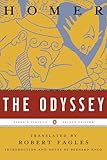
#8 — The Odyssey by Homer
Less immediately relevant than the Iliad, but The Odyssey rewards reading for what it reveals about the aftermath of the war and about Achilles’ fate. The brief appearance of Achilles’ shade in the underworld — telling Odysseus that he would rather be the lowliest of the living than king of the dead — carries a particular weight for readers who have come to know him through Miller. Penelope’s devotion and the cost of Odysseus’s long absence create a different kind of love story, one measured in years of waiting rather than years together.
Tragic Love Stories in Literary Fiction
#9 — Atonement by Ian McEwan
Atonement is not a myth and not a retelling, but it belongs on this list because it is one of the most precisely constructed novels about love, war, and irrevocable loss in the English language. Briony Tallis’s misidentification of a man she saw through a window destroys two lives she was too young to understand. The novel moves from an English country house in the 1930s to Dunkirk to a final section in which McEwan reveals the true structure of what the reader has been reading. The love between Cecilia and Robbie is rendered with the same quality of devoted attention that Miller gives to Patroclus and Achilles, and the ending achieves a similar kind of beautiful devastation.
#10 — A Little Life by Hanya Yanagihara
A warning, and a recommendation. A Little Life is the longest and most emotionally demanding novel on this list. It follows four friends from college through the decades of their adult lives, with Jude St. Francis — the most wounded of them, the one whose history is slowly and deliberately revealed — at its center. The love between these men, and especially the love that Willem develops for Jude, is handled with the same directness and gravity that Miller brings to Patroclus. The novel is more harrowing and less consoling than The Song of Achilles, and readers should approach it knowing that. It is, for those who can bear it, one of the most serious treatments of love and suffering in contemporary fiction.
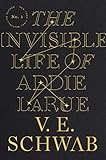
#11 — The Invisible Life of Addie LaRue by V.E. Schwab
Addie LaRue makes a deal with the devil to live forever — and is cursed to be forgotten by everyone she meets the moment they part. She has lived three hundred years without being remembered. Then someone remembers her. The Invisible Life of Addie LaRue is a love story built around an impossible situation and a question about whether love is worth the grief it costs. The prose is more commercial than Miller’s but the emotional ambition is comparable, and the novel shares with The Song of Achilles an understanding that the most moving stories are the ones in which love and loss are inseparable from the beginning.
How to Choose Your Next Read
If you want more Madeline Miller: Circe is the natural next step, and Galatea is worth reading in an afternoon.
If you want the Trojan War from another angle: The Silence of the Girls for the darkest realism, A Thousand Ships for the widest perspective, Ariadne for the closest structural similarity.
If you want the source material: The Iliad first, with Emily Wilson’s translation as the recommended entry point.
If you want literary fiction with the same emotional weight: Atonement for something more controlled, A Little Life for something more devastating.
If you want something a little more hopeful: The Invisible Life of Addie LaRue — it ends better than it should, which is not a complaint.
For the Best Fiction Books
For the definitive guide to fiction — the greatest novels across literary fiction, classics, and contemporary writing — see our Best Fiction Books of All Time list.
More Mythological Fiction Guides
- Books Like Circe: Mythological Retellings and Female Power
- Books Like American Gods: Dark Mythological Fantasy
Affiliate disclosure: Links to Amazon on this page are affiliate links. We earn a small commission at no extra cost to you. This does not influence our editorial recommendations.
Frequently Asked Questions
Is The Song of Achilles a romance?
Yes, essentially. The novel is narrated by Patroclus and follows his love for Achilles from their first meeting in boyhood through the Trojan War and beyond. The Trojan War is the backdrop; the relationship between the two men is the subject. Readers who come for the Greek mythology stay for the love story, and readers who come for the love story get the mythology as a bonus.
Do you need to know Greek mythology before reading The Song of Achilles?
No. Madeline Miller provides everything you need within the novel itself. Familiarity with the Iliad will deepen your reading — you will catch foreshadowings that first-time readers miss — but it is not required. Many readers come to Homer only after finishing Miller, drawn back to the source by what the novel made them feel.
How does The Song of Achilles compare to Circe?
Both novels are by Madeline Miller and share the same lyrical prose and deep engagement with Greek myth, but they are different in emotional register. The Song of Achilles is more romantically devastating — it is a love story that ends in grief, and the ending is one of the most affecting in contemporary fiction. Circe is a coming-of-age story about power and identity, with a more hopeful conclusion. Most readers find The Song of Achilles the harder of the two to recover from.
What should I read immediately after The Song of Achilles?
If you want to stay with Miller, read Circe next — it shares the prose style but offers something closer to catharsis. If you want the original source, the Iliad is surprisingly accessible in Emily Wilson's translation. If you want another novel that combines romantic devastation with historical setting, Atonement by Ian McEwan is the most natural next step.