Books Like Circe: 11 Novels of Myth, Magic, and Female Power
If Madeline Miller's Circe captivated you with its lyrical prose and feminist retelling of Greek myth, these novels belong on your shelf.

Madeline Miller’s Circe begins with a god’s daughter who has no power worth speaking of — a minor child of the sun, with a mortal woman’s voice in a palace full of immortals. By the end she has taught herself witchcraft, survived monsters, outlasted heroes, and chosen her own fate. That arc, from powerlessness to self-possession, is the reason Circe found so many millions of readers who thought they did not much care for Greek mythology. The myth is the vehicle; the subject is what it costs to become yourself.
What Miller does that distinguishes Circe from other mythology retellings is the quality of attention she brings to the margins. Circe encounters Prometheus, Daedalus, Medea, the Minotaur, Odysseus, and Telemachus — figures familiar from other texts — and each time Miller asks what the canonical version omits. Her Odysseus is clever and exhausting, a man who cannot stop performing. Her Medea is terrifying and completely comprehensible. The novel is a meditation on what it means to be written about rather than writing, and it answers that question with one of the most convincing female interior lives in recent literary fiction.
The books below share something essential with Circe: a woman at the center of a myth, a lyrical approach to ancient material, or the same quality of solitude and self-transformation that makes Miller’s novel linger. They are organized by what they share with her work, so you can find the element you most want to follow.
Madeline Miller’s Other Work
#1 — The Song of Achilles by Madeline Miller
Patroclus, exiled from his own kingdom, becomes the companion of Achilles — the most beautiful and the most deadly of the Greek heroes. Miller tells the Trojan War entirely through Patroclus’s eyes, which means it is a love story first and a war story second. Where Circe is about solitude, self-discovery, and the slow accumulation of power, The Song of Achilles is about devotion and loss, and it ends exactly as the myth demands. The prose has the same luminous quality, the research the same depth, and the emotional register is entirely different — grief rather than triumph. Essential reading for any Circe admirer, in whichever order you choose.
The Feminist Mythology Retelling
#2 — Ariadne by Jennifer Saint
Ariadne is the daughter of King Minos of Crete, sister of the Minotaur, and the woman who gave Theseus the thread that let him survive the labyrinth. In every version of the myth she has ever appeared in, she is a tool for another character’s heroism. Saint gives her back the story. Ariadne is structured in two halves — Ariadne’s perspective and her sister Phaedra’s — and together they form a portrait of what it is like to be used by men the world calls heroes. The most direct companion to Circe on this list, written in the same spirit and to the same standard.
#3 — The Silence of the Girls by Pat Barker
Briseis is a queen. When Achilles sacks her city and kills her husband and brothers, she becomes a slave — his prize, the object of his quarrel with Agamemnon, and the reason the greatest Greek hero sulks in his tent while his companions die. Barker, one of the finest living war novelists, gives Briseis the account she was always owed. The prose is less lyrical than Miller’s and more clinical, but that restraint is deliberate: Briseis has no room for beauty in her situation, and Barker respects that. A devastating, important novel that asks what the Iliad looks like from the inside of the sacked city.
#4 — A Thousand Ships by Natalie Haynes
Haynes, a classicist and broadcaster, tells the entire Trojan War through the women who were present for it — not one woman but dozens, including Penelope, Hecuba, Cassandra, Calypso, and the goddess Eris, who started the whole thing. The structure is deliberately fragmented, moving between perspectives and timeframes, and the effect is cumulative: by the end you have a complete account of the war from which the standard narrative has systematically excluded the people who suffered most. Witty, erudite, and angry in the same productive way as Circe.
#5 — Ithaca by Claire North
While Odysseus spends twenty years away from home, Penelope holds his kingdom together against a hundred suitors who treat it as their property. North’s Penelope is shrewd, furious, and very funny — a woman who has had to be cleverer than everyone around her for two decades and is tired of pretending otherwise. Where Circe’s Odysseus is one of the novel’s most unsettling portraits, North’s Penelope is a direct answer to him: the person left behind who is every bit as interesting as the wanderer. The tone is lighter than Miller’s, with a dry wit, but the feminist intelligence is just as sharp.
#6 — The Women of Troy by Pat Barker
Barker’s direct sequel to The Silence of the Girls, following Briseis from the fall of Troy through the long, wind-stalled wait on the beach while the Greeks try to sail home. The Greek heroes behave with the casual brutality of people who have won and see no further need for self-restraint. Briseis navigates pregnancy, captivity, and the social dynamics of women who were queens and are now prizes. Less tightly plotted than its predecessor but perhaps more powerful — by this point Barker trusts the reader to see exactly what she is doing.
Ancient Texts at the Source
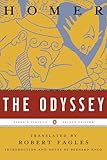
#7 — The Odyssey by Homer
Circe is in extended conversation with the Odyssey — Miller’s Circe hosts Odysseus for a year, and her account of him is drawn in loving, skeptical detail against the Homeric original. Reading the Odyssey alongside or after Circe is not required, but it changes both books: you see precisely what Miller has kept, what she has expanded, and what she has quietly corrected. Emily Wilson’s 2017 translation is the one to read — the first by a woman, the most accurate to Homer’s actual register, and written in a plain, propulsive English that makes the Odyssey feel immediate rather than archaic.
#8 — The Iliad by Homer
The war that precedes Circe’s world and shapes everything in it — the origin of the grudges, the glory, and the grief that fill Miller’s novel. The Iliad is the text that Barker, Haynes, and Miller are all responding to, and reading it makes those responses richer. Again, Wilson’s translation is the best available entry point for readers coming from Circe. The famous wrath of Achilles that opens the poem is the starting point for The Song of Achilles, and the two together — Homer and Miller — form a complete picture of the world Circe observes from her island.
Lyrical Fiction About Solitude and Time
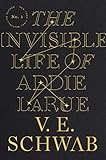
#9 — The Invisible Life of Addie LaRue by V.E. Schwab
In 1714, a young French woman makes a bargain with a god of darkness: she will live forever, but everyone she meets will forget her the moment she leaves their sight. Three centuries later, a man in a New York bookshop remembers her name. Schwab’s novel shares Circe’s fundamental subject — a woman who exists outside of time, accumulating knowledge and solitude in roughly equal measure, trying to understand what kind of freedom she has actually been given. The prose is more contemporary than Miller’s, and the setting moves across centuries of European and American history. One of the best fantasy novels of the past decade.
#10 — A Gentleman in Moscow by Amor Towles
Count Alexander Rostov is sentenced by a Bolshevik tribunal to house arrest in the Metropol Hotel in Moscow, where he will spend the next thirty-two years. Towles’s novel is about what it means to build a life within radical constraint — how a person who cannot leave a building can still grow, love, and act on the world. The comparison to Circe is not superficial: both novels are about a figure confined to one place who transforms that confinement into something else entirely. Towles writes with an elegant precision that rewards slow reading, and the novel accumulates emotional weight in the same gradual way as Miller’s.
For Readers Who Want the Myth Itself
#11 — The Name of the Rose by Umberto Eco
A different kind of ancient world — medieval rather than classical, a monastery in 1327 rather than the Aegean in the age of heroes — but Eco’s novel shares Circe’s quality of making a vanished world feel fully inhabited. Brother William of Baskerville arrives at an Italian abbey to attend a theological debate and finds himself investigating a series of mysterious deaths. The Name of the Rose is a detective story, a philosophical novel, and an act of profound historical imagination. Readers who loved Circe’s sense of being inside a world that no longer exists will find the same experience here, executed with different methods and to different ends.
How to Choose Your Next Read
If you want the most direct companion: Ariadne by Jennifer Saint or The Song of Achilles by Madeline Miller.
If you want more women reclaiming the Trojan War: The Silence of the Girls or A Thousand Ships.
If you want lyrical fantasy with a similar emotional register: The Invisible Life of Addie LaRue.
If you want the source texts: the Odyssey first, then the Iliad, in Emily Wilson’s translations.
If you want literary fiction about confinement and self-transformation: A Gentleman in Moscow.
For the Best Fiction Books
For the definitive guide to fiction — the greatest novels across literary fiction, classics, and contemporary writing — see our Best Fiction Books of All Time list.
For the Best Fantasy Books
For the definitive guide to fantasy fiction — from Tolkien and Le Guin to Brandon Sanderson and George R.R. Martin — see our Best Fantasy Books of All Time list.
Affiliate disclosure: Links to Amazon on this page are affiliate links. We earn a small commission at no extra cost to you. This does not influence our editorial recommendations.
Frequently Asked Questions
Should I read Circe or The Song of Achilles first?
Either order works, but many readers recommend starting with The Song of Achilles and moving to Circe. Song of Achilles is a tragedy — a love story that ends in grief — and reading it first makes the world of Circe feel both familiar and freshly expansive. Circe is the more mature and structurally ambitious of the two novels, and coming to it after Song of Achilles lets you appreciate how much Miller's prose deepened between books. That said, Circe stands entirely alone and requires no prior knowledge of Miller's other work.
What other Greek myth retellings are worth reading after Circe?
The strongest Greek myth retellings to read after Circe are Ariadne by Jennifer Saint, which gives the same feminist treatment to the women of Crete and the Minotaur myth; A Thousand Ships by Natalie Haynes, which tells the Trojan War from the perspective of every woman involved; and The Silence of the Girls by Pat Barker, which places Briseis — Achilles's slave — at the center of the Iliad. For a more playful and satirical take, Ithaca by Claire North gives Penelope her own voice while Odysseus is away. All four are excellent.
Is Circe appropriate for younger readers?
Circe is an adult novel but not an explicit one. The violence is mythological in scale — transformations, monsters, battles — rather than gratuitous. There are references to sexual violence, handled with restraint and seriousness rather than graphic detail, as Miller uses them to illuminate how power operates in a world hostile to women. Most thoughtful readers aged sixteen and above will handle the material without difficulty. It is far more appropriate for younger adult readers than many contemporary thrillers or fantasy novels, and its literary quality makes it an excellent choice for confident teenage readers.
What should I read if I loved Circe's lyrical prose style?
For the same quality of prose applied to different subject matter, try A Gentleman in Moscow by Amor Towles for elegant, precise literary fiction with a confined protagonist who transforms through intellect rather than magic, or The Invisible Life of Addie LaRue by V.E. Schwab for lyrical fantasy about a woman who escapes a bargain only to find a different kind of imprisonment. Both share Circe's quality of making you slow down to read sentences twice.