Books Like American Gods: 11 Mythological Fantasies
If Neil Gaiman's road trip through a forgotten America hooked you, these dark and mythological fantasies will pull you just as deep.
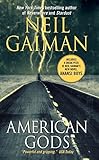
Neil Gaiman’s American Gods begins with a simple premise: a man named Shadow Moon is released from prison and hired as a bodyguard by a con man named Mr. Wednesday. What follows is a road trip through the forgotten backroads and dying towns of America — truck stops, roadside attractions, small cities nobody has heard of — and a slow reveal that Wednesday is Odin, and that the old gods brought to America by immigrants are fighting for survival against new gods born from screens, highways, and credit cards. It is not a novel that moves quickly. Gaiman is doing something more ambitious than plot: he is writing a meditation on belief, on what gods actually are, on what America has always done to the things people carry here from other places.
The books on this list share something with American Gods: mythological weight, dark and dreamlike atmosphere, a sense that the world beneath the visible world is stranger and older than anything on the surface. Some are other Gaiman novels, because if American Gods is what you are looking for, more Gaiman is usually the right answer. Others are literary fantasies by writers working in the same tradition — books where myths are not decoration but the structural material of the story. None of them are light reads. All of them leave a mark.
A note on tone: American Gods is a slow burn, literary and dense. If you loved that quality, lean toward Jonathan Strange and Mr Norrell, Circe, or Neverwhere. If you found American Gods too heavy and want to stay in Gaiman’s world but with more air in it, Anansi Boys is the right next step.
Other Neil Gaiman Novels
#1 — Neverwhere by Neil Gaiman
Richard Mayhew is an ordinary Londoner who stops to help an injured girl on the pavement — and wakes up the next morning invisible to everyone he knows. The girl, Door, belongs to London Below: a parallel city beneath the streets, populated by people who have fallen through the cracks of the world above, and by monsters, angels, and ancient powers that do not care about the surface. Neverwhere was Gaiman’s first solo novel and establishes the template he would refine in American Gods: an ordinary man dragged into a mythological underworld, a road-trip structure, dark humor alongside genuine dread, and a final act that earns its emotional weight.
#2 — Anansi Boys by Neil Gaiman
Fat Charlie Nancy has always been embarrassed by his father — a loud, charming, irresponsible man who turns out, at his death, to have been the spider god Anansi. Then Fat Charlie’s brother Spider arrives, and things begin to unravel. Anansi Boys is set in the same world as American Gods but reads nothing like it: this is a comedic novel, warm and propulsive, drawing on Caribbean and West African folklore rather than the cold Norse and Slavic mythology that dominates the earlier book. Readers who found American Gods too slow often find Anansi Boys irresistible. Readers who loved American Gods find a different, lighter pleasure.
#3 — The Ocean at the End of the Lane by Neil Gaiman
A middle-aged man returns to his childhood home for a funeral and finds himself remembering a strange and terrifying summer he had largely suppressed: a lodger who did something monstrous, a family of women at the end of the lane who were older than they appeared, and a darkness that entered the world through his own foot. Gaiman’s shortest novel is also his most personal, and many readers consider it his best. It shares American Gods’s sense that the supernatural is always present and always threatening, and that ordinary people have very little protection from it.
#4 — Norse Mythology by Neil Gaiman
Gaiman retells the Norse myths — the creation of the world, the stories of Odin, Thor, and Loki, and the inevitable slide toward Ragnarok — in his own voice, finding the comedy and the tragedy that has always been there in the source material. This is not a novel but a collection of retellings, and it is the most direct companion to American Gods on this list. Wednesday is Odin. Shadow encounters figures from this mythology throughout the novel. Reading Norse Mythology deepens every scene in American Gods where these figures appear, and it is a pleasure in itself: Gaiman understands these stories as stories, not as academic material.
Mythology Retold as Literary Dark Fantasy
#5 — Circe by Madeline Miller
Circe is the daughter of Helios, born without her father’s brilliance or her mother’s beauty — a minor goddess who discovers she has a gift for witchcraft that the Olympians consider a threat. Miller’s novel follows her through centuries of exile on the island of Aiaia, her encounters with Odysseus, Daedalus, and other figures from Greek myth, and her gradual movement from isolation toward power and choice. Where American Gods asks what gods are when belief in them fades, Circe asks what a god becomes when she chooses to become something else. Miller writes with extraordinary sensory clarity, and the mythological world feels completely inhabited rather than borrowed.
#6 — The Song of Achilles by Madeline Miller
The Trojan War, told from the perspective of Patroclus — the prince who becomes Achilles’s companion, his closest friend, and eventually his reason for everything. Miller’s first novel is more intimate and more heartbreaking than Circe, focused entirely on two people inside a myth that is larger than they are. It shares with American Gods the quality of making immortal figures feel genuinely dangerous — the gods here are not symbols but presences, and their interest in Achilles is the source of the novel’s tragedy. One of the few retellings that earns its emotional ending completely.
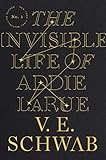
#7 — The Invisible Life of Addie LaRue by V.E. Schwab
Addie LaRue makes a desperate bargain with a god of darkness in 1714 France: she will live forever, but no one will remember her. For three hundred years she moves through history, leaving no trace, until a bookshop clerk in present-day New York looks at her and says he remembers. Schwab’s novel shares American Gods’s preoccupation with gods, bargains, and what it costs to exist outside ordinary human time. It is more romantic and more lyrical than Gaiman’s work, but the central darkness — a deal made in desperation with something that does not operate by human rules — is recognizably the same territory.
Old Magic in Modern and Historical England
#8 — Jonathan Strange and Mr Norrell by Susanna Clarke
England during the Napoleonic Wars has forgotten that magic is real — until Mr. Norrell emerges from Yorkshire to prove it isn’t. Jonathan Strange becomes his student and then his rival. Clarke’s novel is enormous, unhurried, and written in the style of a nineteenth-century novel with extensive footnotes documenting a mythological history of English magic. It is the novel most often mentioned alongside American Gods as a fantasy that refuses to simplify its own world, that takes the weight of old things seriously, and that builds toward a conclusion through accumulation rather than conventional plot momentum. If you have the patience for it, it is one of the great fantasy novels in English.
#9 — The Buried Giant by Kazuo Ishiguro
Post-Arthurian Britain: Axl and Beatrice are an elderly couple who set out on a journey to visit their son in a distant village. A strange mist lies across the land, making everyone forget. The mist has a source, and it has been maintained deliberately. Ishiguro’s only fantasy novel is built around the same question that drives much of American Gods: what happens when old gods and old magics begin to fade, and what is lost when they do. It is quieter and more elegiac than Gaiman’s work, but the thematic overlap is striking, and Ishiguro’s prose is among the finest on this list.
Dark Fantasy With Literary Ambition
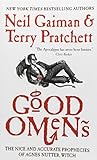
#10 — Good Omens by Neil Gaiman and Terry Pratchett
An angel and a demon have been stationed on Earth since the Beginning and have, over millennia, grown rather fond of it. Neither is especially enthusiastic about the upcoming Apocalypse. Good Omens is a comedy, and a very funny one — Pratchett’s comic timing and Gaiman’s mythological instincts combine into something neither could have written alone. It shares American Gods’s sense that divine powers are not necessarily in control of what they have set in motion, and its affection for the small human world that cosmic forces keep threatening to destroy. It is a much lighter read, and a good one to follow American Gods when you want to stay in Gaiman’s world without the weight.
#11 — Vicious by V.E. Schwab
Victor Vale and Eli Cardale were college roommates who discovered that near-death experiences could generate superhuman abilities. A decade after Victor goes to prison for what happened when they tested this theory, he gets out and goes looking for Eli. Schwab’s novel is a superhero story told as a dark literary thriller, and it shares American Gods’s interest in what power costs the people who hold it and what people are willing to believe in. It is faster and more plotted than Gaiman’s work, but the moral ambiguity — neither Victor nor Eli is a hero in any straightforward sense — puts it in the same literary tradition.
How to Choose Your Next Read
If you want more Gaiman, immediately: Neverwhere is the closest in atmosphere and structure; Anansi Boys if you want something lighter.
If you want mythological depth in a different tradition: Circe or The Song of Achilles for Greece; Norse Mythology to understand American Gods more deeply.
If you want the most ambitious literary fantasy: Jonathan Strange and Mr Norrell — clear your schedule.
If you want the most emotionally affecting: The Ocean at the End of the Lane or The Buried Giant.
If you want something faster and more plotted: Vicious or The Invisible Life of Addie LaRue.
For the Best Fantasy Books
For the definitive guide to fantasy fiction — from Tolkien and Le Guin to Brandon Sanderson and George R.R. Martin — see our Best Fantasy Books of All Time list.
More Dark Fantasy Reading Guides
Also Recommended
Affiliate disclosure: Links to Amazon on this page are affiliate links. We earn a small commission at no extra cost to you. This does not influence our editorial recommendations.
Frequently Asked Questions
Should I read Anansi Boys after American Gods?
Yes, but know that Anansi Boys is a very different experience. It is a companion novel set in the same world, following Anansi's son Fat Charlie — but where American Gods is slow, dark, and meditative, Anansi Boys is comedic, fast-paced, and warm. You do not need to have read American Gods first, but readers who found American Gods too heavy often find Anansi Boys much more accessible and even more enjoyable.
Does American Gods get better as it goes?
Yes. American Gods has a reputation for a slow first third, and that reputation is earned — Gaiman is building a world and a mood rather than a conventional plot. Readers who push through are almost universally rewarded by the final act, which recontextualizes much of what came before. The ending is genuinely moving in a way that the opening chapters do not prepare you for. If you stalled on an early chapter, it is worth returning.
What is the best Neil Gaiman reading order?
There is no strict order required for Gaiman's novels, as they are mostly standalone. A common starting point is Neverwhere or Good Omens (co-written with Terry Pratchett) for readers new to his work. American Gods is best read when you are ready for something long and dense. Anansi Boys works as a companion after American Gods or on its own. The Ocean at the End of the Lane is his shortest and most personal novel, and a good palate cleanser after American Gods.
Is American Gods suitable for readers who don't know mythology?
Completely. Gaiman introduces his gods as characters first, and their mythological backgrounds emerge naturally through the story. You will likely recognize some figures — Odin, Anansi, Czernobog — and encounter others new to you, but the novel rewards both the mythology-literate and the first-timer. Many readers have reported discovering whole traditions of mythology through American Gods and then reading further into them afterward.