12 Books Like Essentialism by Greg McKeown
Loved Essentialism? These 12 books share McKeown's central argument: do less, but better. The best books on focused work, selective commitment, and removing what doesn't matter.
By Lena Fischer
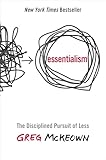
Greg McKeown’s Essentialism (2014) makes an argument that sounds simple but runs against most of how professional life is structured: that the undisciplined pursuit of more — more projects, more commitments, more options — is the primary obstacle to doing anything of significance. The essentialist doesn’t try to do everything better; they try to do the right things, and only the right things.
The books below make versions of the same argument, each from a different angle. Some are more philosophical, some more practical, some more radical in their prescriptions. What connects them is the core insight that capacity is finite and choice is unavoidable — and that making that choice consciously produces better results than allowing it to be made by default.
Quick answer: For the most directly comparable read, Deep Work. For the philosophical version of the same argument, Four Thousand Weeks. For the most irreverent, The Subtle Art of Not Giving a F*ck.
The Closest Parallels
Deep Work by Cal Newport
Newport’s argument — that the ability to focus without distraction on cognitively demanding tasks (deep work) is becoming both rarer and more valuable, and that most knowledge workers waste most of their capacity on shallow, immediately responsive tasks — is the functional complement to Essentialism. Where McKeown argues for choosing what to work on, Newport argues for the conditions under which chosen work is most productively done. Both books converge on the same prescription: fewer, better, more concentrated efforts. Our books like Deep Work guide covers the wider territory.
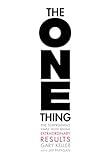
The One Thing by Gary Keller and Jay Papasan
Keller’s version of the essentialist argument is built around a single diagnostic question: “What is the one thing you can do such that by doing it, everything else will be easier or unnecessary?” The focus on a single point of concentration is more extreme than McKeown’s approach — The One Thing explicitly advocates narrowing attention to a single priority above all others — but the underlying logic is the same. Most useful for readers who found Essentialism compelling but wanted a more actionable framework.
Four Thousand Weeks by Oliver Burkeman
The philosophical version of the essentialist argument. Burkeman’s book is grounded in the acceptance of radical finitude — that there will never be enough time to do everything, that the gap between what you want to do and what time permits is not a problem to be solved but a reality to be accepted. The practical consequence of that acceptance (choosing deliberately what to do with the time you have, rather than pretending the constraint can be optimised away) is the same as McKeown’s conclusion, reached by a different route. The most intellectually satisfying book on this list. Our books like Four Thousand Weeks guide covers similar reading.
Cutting the Noise: Digital and Attention
Digital Minimalism by Cal Newport
Newport’s application of the minimalist framework specifically to technology use. His argument — that most digital tools produce negative value when examined against the cost they extract in attention and time, and that a deliberate curation of technology is the prerequisite for a focused life — is Essentialism applied to a specific domain. Practical and well-evidenced, with specific protocols for the kind of digital declutter that most productivity books gestures toward without implementing.
Indistractable by Nir Eyal
Eyal’s framework for becoming indistractable identifies the internal triggers (discomfort, boredom, anxiety) that drive distraction, alongside the external ones (notifications, open browsers), and provides tools for managing both. More mechanistic than McKeown’s approach but compatible with it: once you have identified what is essential (Essentialism), Eyal’s tools help you protect the attention required to do it (Indistractable).
A World Without Email by Cal Newport
Newport’s argument that the always-on, hyper-responsive workflow driven by email and messaging applications is systematically destructive of concentrated work — and his proposed alternatives — extends the Deep Work and Digital Minimalism arguments into organizational and professional practice. Most useful for readers who want to apply essentialist principles at a structural rather than individual level.
The Philosophy of Enough
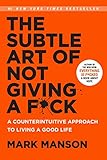
The Subtle Art of Not Giving a F*ck by Mark Manson
The irreverent version of the essentialist argument. Manson’s central prescription — that you have a limited supply of things you can genuinely care about, and that choosing them carefully is more important than caring about everything — is McKeown’s argument in a different register. Funnier, more provocative, and less systematic, but reaching the same conclusion: deliberate selectivity produces a better life than undiscriminated effort. Our books like The Subtle Art guide covers similar territory.
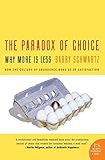
The Paradox of Choice by Barry Schwartz
Schwartz’s research finding — that more choices produce less satisfaction, not more, because the cognitive burden of evaluation and the opportunity cost of each unchosen option increases with the number of alternatives — is the empirical foundation for the essentialist argument. Where McKeown provides a framework for reducing options, Schwartz explains why the reduction itself produces wellbeing. The most academic book on this list but the most rigorously evidence-based.
Creativity and Creative Work
The War of Art by Steven Pressfield
Pressfield’s analysis of “Resistance” — the internal force that prevents creative work from being started or sustained — is the most useful book on this list for readers whose essentialist challenge is not selecting from too many options but beginning the one essential thing. His distinction between amateur (who does the work when it is convenient) and professional (who does it regardless) is a version of the essentialist decision to commit to what matters and reject what doesn’t.
The Implementation Layer
Atomic Habits by James Clear
Clear’s behaviour-change system is the most practical companion to Essentialism. Where McKeown identifies what should be prioritised, Clear provides the mechanism — the habit stack, the environment design, the identity-based change process — for reliably executing on those priorities. Most readers find them most useful together: Essentialism for what, Atomic Habits for how. Our books like Deep Work and books like Four Thousand Weeks guides cover additional practical and philosophical adjacent reading.
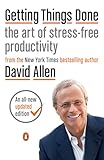
Getting Things Done by David Allen
Allen’s comprehensive system for capturing, processing, and executing tasks is the most systematic productivity methodology on this list. Less philosophical than McKeown and more mechanistic — GTD is fundamentally about eliminating the cognitive overhead of remembering things you need to do, rather than about choosing which things to do. For readers who want to implement essentialist choices with less friction, GTD provides the organisational infrastructure.
For the Full Business Reading List
For the definitive guide to business books across strategy, management, investing, and entrepreneurship, see our Best Business Books of All Time list.
Affiliate disclosure: Links on this site are affiliate links. We earn a small commission at no extra cost to you. This does not influence our editorial recommendations.
Frequently Asked Questions
What books are similar to Essentialism?
The closest books to Essentialism are Deep Work by Cal Newport (focus on what matters, eliminate distraction), The One Thing by Gary Keller (single-point concentration), Four Thousand Weeks by Oliver Burkeman (the philosophical version of the same argument), and The Subtle Art of Not Giving a F*ck by Mark Manson (the irreverent version). All make a version of McKeown's central argument: less is more when the less is deliberate.
What is the main argument of Essentialism?
Essentialism argues that the undisciplined pursuit of more — more commitments, more options, more obligations — is the primary obstacle to a meaningful and effective life. McKeown's central prescription is to apply a more selective standard: to ask not 'can I?' but 'should I?', and to make the trade-off conscious rather than unconscious. The essentialist pursues less but better.
Is Essentialism or Deep Work better?
They address different levels of the same problem. Essentialism is about what to work on — which commitments, projects, and priorities deserve your time. Deep Work is about how to work on them — the conditions (undistracted, focused, sustained) under which the chosen work is most productively done. Most readers find both useful and read them as a pair.
What is the philosophical version of Essentialism?
Four Thousand Weeks by Oliver Burkeman makes the same argument as Essentialism at a deeper philosophical level — accepting finitude as the precondition for genuine commitment, choosing deliberately what to do with the limited time available. Burkeman is more intellectually demanding than McKeown and less practically oriented, but his argument is the more rigorous version of the same core insight.
Is Essentialism good for people who feel overwhelmed?
Yes — Essentialism is one of the most useful books for readers experiencing the specific kind of overwhelm that comes from too many commitments rather than too much work. McKeown's framework for evaluating and declining commitments is directly applicable to anyone who says yes to things they should say no to. For deeper overwhelm rooted in anxiety or burnout, The Body Keeps the Score or Lost Connections addresses different roots.