15 Books Like The Subtle Art of Not Giving a F*ck
Finished The Subtle Art? These 15 books push back on toxic positivity and explore what actually makes life meaningful — with the same honesty and lack of sentiment.
By Lena Fischer
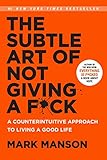
Mark Manson published The Subtle Art of Not Giving a F*ck in 2016 and it spent years on bestseller lists, which is either evidence that the self-help genre had finally produced something worth reading or evidence that a title with an asterisk in it is a reliable commercial formula. The answer is both, and neither should diminish what the book actually does.
What Manson got right — genuinely right, in a way that much of the genre gets wrong — is the diagnosis. The problem is not that people lack motivation, or positive thinking, or gratitude journals. The problem is that modern life generates a continuous pressure to feel good, to optimise for happiness, to treat any negative emotion as a malfunction to be corrected rather than as information to be processed. Manson’s argument is simpler and more confronting: life involves suffering, values determine what you suffer for, and most people have never examined their values carefully enough to know whether the suffering they are enduring is for anything worth the cost.
This is not an original argument. It is, in various forms, the argument of Stoicism, of Viktor Frankl’s existentialism, of Albert Camus. What Manson did was strip away the academic apparatus and say it in language that would get through to someone who would never pick up Meditations. That is a genuine service, and it explains why the book reached people who had bounced off every other personal development book they had tried.
But the service has limits. Manson’s voice is deliberately breezy, and the breeziness occasionally papers over complexity. Several of the ideas he introduces deserve more rigorous examination than a chapter allows. And there is a whole landscape of books — philosophical, psychological, scientific — that cover the same terrain with greater depth, greater evidence, or both.
These fifteen books are what comes next.
Quick answer: If you want the closest philosophical match to Manson’s central argument, start with Man’s Search for Meaning by Viktor Frankl — it is the book Manson is in conversation with throughout, stated with far greater authority. For the same blunt rejection of self-pity with more rigorous psychology behind it, go to The Courage to Be Disliked by Ichiro Kishimi and Fumitake Koga. If what you want is practical rather than philosophical, Essentialism by Greg McKeown applies the “choose what to care about” argument directly to work and daily life.
On Meaning Without Sentiment
The most serious books in this space refuse to offer comfort as a primary good. They insist that meaning is not the same as happiness, that a meaningful life will sometimes feel difficult, and that the attempt to eliminate difficulty is itself a source of suffering. Manson makes this case; the books in this section make it better.
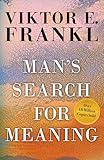
Man’s Search for Meaning by Viktor Frankl
Viktor Frankl was a Viennese psychiatrist who survived Auschwitz, Dachau, and two other concentration camps. He wrote Man’s Search for Meaning in nine days in 1946, and it has sold more than sixteen million copies in a hundred languages. It is the founding document of the argument that Manson makes in a more comfortable register: that suffering is not optional, but the meaning we assign to it is, and that this assignment of meaning is the last and most important freedom a human being possesses.
The first half of the book is a spare, restrained account of the camps — restrained in the sense that Frankl is deliberately not writing a testament of horrors but a psychological study. He observes what distinguishes those who maintain their sense of self from those who collapse, and what he observes is not strength, or luck, or physical health, but purpose. Those who had something to live for — a person waiting for them, a task unfinished, a manuscript hidden — survived psychologically in conditions designed to destroy psychology.
The second half introduces logotherapy, the therapeutic approach Frankl developed from this observation: that the primary human drive is not pleasure (Freud) or power (Adler) but meaning, and that mental illness often results from the vacuum left when meaning is absent. This is a more serious and more humane version of Manson’s argument, and it is where Manson’s readers who want to go deeper should begin.
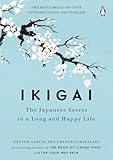
Ikigai by Héctor García and Francesc Miralles
Ikigai is a quieter book than most on this list — it does not argue with you, it does not provoke, it simply describes. The concept it explores is the Japanese word for the reason you get up in the morning: the intersection of what you love, what you are good at, what the world needs, and what you can be paid for. The book is partly a travel narrative (the authors visited Okinawa, where a notable concentration of centenarians live, to understand what they had in common) and partly a philosophical meditation on purpose as a practice rather than an achievement.
What a Manson reader gets from Ikigai is the same argument approached from a completely different cultural direction. Where Manson writes in the rhetorical mode of the American self-help tradition — blunt, confident, occasionally combative — García and Miralles write in a register shaped by Japanese ideas about craft, patience, and the value of small things done well. The book is a useful corrective to the ambient urgency that Manson’s voice can inadvertently produce: the sense that you need to immediately resolve your value hierarchy before something goes wrong.
The Courage to Be Disliked by Ichiro Kishimi and Fumitake Koga
Written as a Socratic dialogue between a philosopher and a sceptical young man, this book introduces the ideas of Alfred Adler — whose psychology Manson draws on without always naming — in a form that is unusually readable for philosophy. Adler’s central argument, which the book develops over five conversations, is that all problems are, at their root, interpersonal problems: that most human suffering comes from the desire for approval, the fear of rejection, and the consequent reluctance to live according to one’s own values rather than the values of one’s social environment.
The title gives you the argument’s punchline: the courage required to live authentically is specifically the courage to accept that some people will dislike you for it, and to stop treating that dislike as evidence of failure. This is Manson’s message about not caring what other people think, stated with more philosophical precision and without the bravado. The dialogue format makes the objections explicit — the young man pushes back at every turn — which means the book earns its conclusions in a way that Manson’s more assertive style sometimes does not.
The Power of Now by Eckhart Tolle
Tolle is a more mystical writer than Manson, and some readers will find The Power of Now too ungrounded for their tastes. But its central argument is a genuine complement to The Subtle Art: that most psychological suffering is generated not by present circumstances but by the mind’s habit of projecting into the future (anxiety) or replaying the past (regret), and that both are forms of resistance to reality as it actually is.
Where Manson argues that you should care about fewer things, Tolle argues that most of the things you care about do not actually exist — that they are mental constructs, stories about the past or worries about the future, that have been mistaken for reality. The practical implication is similar: a kind of radical acceptance of what is, combined with a willingness to act from that acceptance rather than from a state of chronic resistance. Readers who find Manson’s framework intellectually satisfying but want a more experiential complement will find it here.
On Resilience and Difficulty
Manson spends considerable time on the question of why difficulty is not the enemy of a good life but frequently a condition of it. These books take that question further, examining what psychological research and extreme experience reveal about how people sustain effort through hardship.
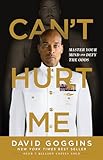
Can’t Hurt Me by David Goggins
David Goggins is an extreme version of every argument Manson makes about discomfort, and reading Can’t Hurt Me after The Subtle Art has the effect of a cold shower after a bracing talk. Goggins grew up in poverty and abuse, failed academically, worked as an exterminator, became morbidly obese, and then transformed himself into one of the most accomplished endurance athletes in history — a Navy SEAL, a long-distance ultramarathoner, a man who broke the world record for pull-ups by doing 4,030 in seventeen hours.
The book is not subtle, and it does not pretend to be. Goggins’s thesis is that the human mind quits long before the body does, and that the mental hardness required to override that quit response is a trained capacity, not an innate trait. He is explicit that what he describes is extreme and not appropriate for everyone. But for Manson readers who want to see the argument about accepting difficulty and choosing hard values applied at maximum intensity, Goggins provides it without flinching. The book’s candour about the cost — his health has been significantly damaged by decades of extreme physical effort — gives it an honesty that flattering self-help narratives lack.
For further reading in this vein, see our guide to books like Can’t Hurt Me.
Grit by Angela Duckworth
Angela Duckworth spent years studying what distinguishes people who succeed in demanding fields — West Point cadets, National Spelling Bee finalists, salespeople, teachers in high-poverty schools — and her answer is, essentially, not talent. The predictor is a combination of passion and perseverance she calls grit: the sustained commitment to long-term goals through failure, setback, and the absence of immediate reward.
The book is more empirical than Manson’s and considerably less provocative, but it makes a closely related argument. Manson’s case is that you should choose your values deliberately and then commit to them; Duckworth’s is that the commitment itself — the willingness to practise and fail and continue, in a direction that genuinely matters to you — is the primary determinant of whether anything meaningful results. The research on high achievers she assembles makes a persuasive case that the romantic notion of natural talent is both empirically weak and psychologically damaging.
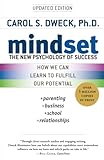
Mindset by Carol Dweck
Carol Dweck’s research on the growth mindset versus the fixed mindset is one of the most influential bodies of work in contemporary psychology, and Mindset is the most accessible account of it. The argument: people who believe their abilities are fixed (the fixed mindset) respond to failure as evidence of their limitations and tend to avoid challenges that might expose those limitations. People who believe their abilities can be developed through effort (the growth mindset) respond to failure as information and tend to seek out challenges.
What makes this relevant to Manson readers is the underlying question of how you relate to your own inadequacy. Manson argues that failure, rejection, and difficulty are not problems to be avoided but necessary components of any life lived according to genuine values. Dweck’s research explains the psychological mechanism that makes this so hard to accept, and what shifts in people who manage it. The book is particularly strong on how fixed-mindset thinking is inadvertently taught — through praise of intelligence rather than effort, through environments that reward only success — which gives it a useful diagnostic edge.
On Acceptance and Letting Go
Several of the most important books adjacent to Manson’s deal with the question of acceptance — not passive resignation, but the active, sometimes demanding practice of engaging honestly with what is true rather than what you wish were true.
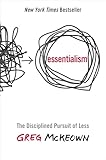
Essentialism by Greg McKeown
Essentialism is the practical extension of Manson’s central idea, applied specifically to the question of where you put your time and energy. McKeown’s argument is that most people drift through their lives doing more than they should — agreeing to more commitments, pursuing more goals, filling more roles — because they have never made a disciplined choice about what actually matters. The result is not more achievement but less: energy and attention spread so thin across so many obligations that nothing receives what it requires.
The solution McKeown proposes is not minimalism for its own sake but the disciplined pursuit of less: identifying the vital few things that matter most and protecting the time and space those things require. The book is full of practical strategies, but its value for Manson readers is primarily philosophical — it provides a framework for implementing the “choose what to care about” argument in the actual texture of a week, a month, a life. The overlap with Manson is direct: both books argue that the attempt to avoid making choices is itself a choice, and usually a bad one.
Daring Greatly by Brené Brown
Brené Brown and Mark Manson make unlikely companions, but they are making a closely related argument from different directions. Brown’s research on vulnerability — based on thousands of interviews with people who described a life of connection and wholehearted engagement — concludes that vulnerability is the prerequisite for the things most people want: love, belonging, creativity, meaningful work. The people who avoid it are not protected but impoverished.
Where Manson argues against the performance of happiness and the avoidance of negative emotion, Brown examines the specific mechanism of that avoidance: shame. Shame is the fear that, if other people could see you clearly, they would find you unworthy of connection. It is the internal voice that makes the performance Manson critiques feel necessary. Daring Greatly gives Manson’s argument about choosing authentic values a psychological substrate: the reason it is hard to live according to your own values is that doing so requires accepting the exposure that comes with being genuinely seen, and that exposure is frightening.
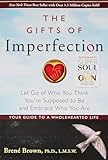
The Gifts of Imperfection by Brené Brown
Brown’s earlier book covers adjacent territory with a slightly different emphasis. Where Daring Greatly focuses on vulnerability in relation to other people, The Gifts of Imperfection is more directly concerned with the individual’s relationship to their own inadequacy. The title is the argument: imperfection is not a deficit to be corrected or concealed but an inherent feature of human life that, accepted rather than resisted, is actually the ground on which a meaningful life is built.
The book’s ten guideposts — cultivating authenticity, self-compassion, a resilient spirit, gratitude, intuition, creativity, play, calm, meaningful work, and laughter — are not a checklist but a description of what Brown found consistently in people who described feeling enough, worthy, connected. For Manson readers who found his argument persuasive but were left wanting more on the emotional architecture of living it — the specific fears and habits of mind that make it difficult — The Gifts of Imperfection provides that.
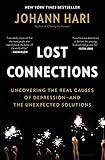
Lost Connections by Johann Hari
Johann Hari’s Lost Connections is the book that most directly challenges the standard narrative about depression and anxiety that Manson’s readers are likely to have absorbed. Hari’s argument, developed through interviews with researchers across the world, is that the dominant explanation of depression as a chemical imbalance to be corrected by antidepressants is at best incomplete and at worst misleading — that the evidence for multiple social and psychological causes of depression is considerably stronger than the evidence for the serotonin hypothesis.
The lost connections Hari identifies — to meaningful work, to other people, to status and respect, to the natural world, to a hopeful future — map directly onto Manson’s argument about values and meaning. If depression and anxiety are at least partly the result of living in ways that are disconnected from what actually matters, then the prescription is not primarily pharmaceutical but existential: finding, building, or returning to the things that give life weight. The book is rigorously reported, genuinely moving, and among the most important books on mental health of the past decade.
On What Psychology Actually Says
The books in this section are more technical than Manson’s, but they are not academic in the dismissive sense. They are well-written, accessible accounts of what the research actually shows about the questions Manson raises — and they are useful precisely because they subject those questions to the rigour that popular self-help often skips.
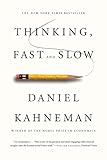
Thinking, Fast and Slow by Daniel Kahneman
Daniel Kahneman spent his career studying the systematic errors human thinking produces, and Thinking, Fast and Slow is the synthesis of that work. The book describes two modes of cognition — System 1, which is fast, automatic, and often wrong, and System 2, which is slow, deliberate, and effortful — and uses this framework to explain a catalogue of cognitive biases: anchoring, availability, the planning fallacy, the focusing illusion, the difference between experiencing and remembering selves.
For Manson readers, the value is diagnostic. Manson argues that people care about the wrong things; Kahneman explains in technical detail why — the cognitive mechanisms that make us systematically misjudge what will make us happy, how we distort our own memories to flatter our self-image, why we are reliably wrong about what we want. The section on the distinction between the experiencing self (who lives through events) and the remembering self (who stores and recalls them) is particularly relevant: it explains why the stories we tell ourselves about our lives often diverge from the lives we actually live, which is the problem Manson diagnoses in different language.
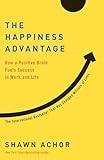
The Happiness Advantage by Shawn Achor
Shawn Achor is a Harvard-trained positive psychologist, which might sound antithetical to Manson’s anti-positivity argument — but The Happiness Advantage is considerably more honest than the genre’s worst offenders. Achor’s research consistently shows that the causality most people assume between success and happiness runs in the wrong direction: it is not success that produces happiness, but a positive psychological state that enables the cognitive resources success requires.
This does not contradict Manson; it specifies the mechanism. Manson argues that the pursuit of happiness as a primary goal is self-defeating. Achor’s research explains why: the brain’s cognitive and creative capacities genuinely expand under conditions of positive emotion and contract under conditions of stress and anxiety. The implication is the same — orient towards meaning rather than the performance of happiness — arrived at through experimental psychology rather than philosophical argument. The book also contains some of the most practically useful material on cognitive reframing to be found in any mainstream self-help title.
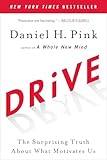
Drive by Daniel Pink
Daniel Pink’s Drive demolishes one of the most pervasive assumptions of modern working life: that people are primarily motivated by external rewards, and that the way to get more out of them is to offer more carrots and more sticks. The research Pink assembles shows the opposite: that external rewards, beyond a threshold sufficient to remove money as a concern, actually undermine the intrinsic motivation that produces excellent work, creativity, and sustained effort.
What motivates people, Pink argues, drawing on Edward Deci and Richard Ryan’s self-determination theory, is autonomy (control over their own work), mastery (the ongoing development of skill in something that matters), and purpose (contribution to something beyond oneself). This maps almost exactly onto Manson’s argument about values: the difference between a life organised around external validation and a life organised around intrinsic worth. Drive gives that argument its most rigorous empirical foundation, and it is particularly valuable for readers who are thinking about work and career as the primary arena in which the question of what to care about gets answered.
Atomic Habits by James Clear
James Clear’s Atomic Habits is not a book about what to want — it is a book about how to build the behaviours that get you what you want once you have decided. In that sense it operates downstream from Manson: it assumes the value-clarification work Manson describes and focuses entirely on the mechanics of implementation. But for many Manson readers, this is precisely what they need.
Clear’s central argument is that the unit of change is not goals but systems — that people do not rise to the level of their intentions but fall to the level of their habits, and that the design of those habits (their cues, cravings, responses, and rewards) determines what a person becomes over time. The book’s most useful idea is the concept of identity-based habits: the most reliable way to change behaviour is to change the self-image from which behaviour flows, to become the person who does the thing rather than the person who is trying to do the thing. This is a different register of the argument Manson makes about authentic values — both are pointing at the gap between the person you perform and the person you actually are.
For more on the broader self-help landscape, our guide to the best self-help books covers the genre’s essential titles with the same critical eye.
How to Use This List
These fifteen books are not a curriculum to be completed in order. They are an ecosystem of related arguments, and the right starting point depends on what The Subtle Art left you wanting.
If Manson’s argument felt philosophically interesting but you wanted more rigour and less swagger, begin with Man’s Search for Meaning and The Courage to Be Disliked. If you found his case about values and meaning persuasive and want to understand the psychological research behind it, go to Mindset, Grit, and Drive. If his critique of toxic positivity resonated and you want to understand what the evidence actually says about well-being, The Happiness Advantage and Lost Connections sit on opposite ends of that question in productive tension.
The through-line is the same in all fifteen: the honest examination of what makes a human life worth living, without the consolations of false optimism or the flattery of being told that what you already want is exactly right. That examination is harder than any self-help formula, and considerably more useful.
For the Best Self-Help Books
For the definitive guide to self-help and personal development — from Atomic Habits to The Power of Now — see our Best Self-Help Books list.
Affiliate disclosure: Some links on this page are Amazon affiliate links. If you purchase through them, we earn a small commission at no extra cost to you. This does not influence our editorial recommendations.
Frequently Asked Questions
What should I read after The Subtle Art of Not Giving a F*ck?
The closest match in tone and argument is The Courage to Be Disliked by Ichiro Kishimi and Fumitake Koga, which uses Adlerian psychology to make the same case for radical self-responsibility without the consolations of self-pity. Man's Search for Meaning by Viktor Frankl is the more demanding version of Manson's central argument: that suffering is not optional, but the meaning we assign to it is. Both reward a reader who has found Manson's blunt directness useful and wants to go deeper.
Is The Subtle Art of Not Giving a F*ck actually good?
It is a genuinely good book with a deliberately provocative title. Manson's core argument — that we have a finite number of things we can care about deeply, and that giving that care to the wrong things is the root of most psychological distress — is philosophically serious and practically useful. The profanity and the breezy voice are partly marketing, but the underlying ideas draw on Stoicism, existentialism, and cognitive behavioural psychology. Readers who find the tone grating but are curious about the ideas will find them stated more soberly in many of the books on this list.
What is the main message of The Subtle Art of Not Giving a F*ck?
Manson's central thesis is that human beings have a limited number of things they can genuinely care about, and that modern culture — with its emphasis on positivity, achievement, and the performance of happiness — encourages us to give that limited attention to things that do not actually matter, leaving us anxious and hollow. The answer is not to stop caring, but to choose deliberately what is worth caring about: values grounded in your own actions rather than in external validation, outcomes, or other people's opinions. The book is, at its core, an argument for living according to your own chosen values rather than the values the culture presses on you.
How does The Subtle Art compare to Atomic Habits?
They address adjacent problems from different directions. Atomic Habits by James Clear is a systems-level book: it assumes you know what you want and focuses on the mechanics of building the behaviours that get you there. The Subtle Art operates at the level of values: it asks the prior question of whether what you think you want is actually worth wanting. Read Manson first if you feel vaguely dissatisfied without knowing why; read Clear after, once you have a clearer sense of what you are trying to build.
Are there books like The Subtle Art that are more research-based?
Yes. Thinking, Fast and Slow by Daniel Kahneman and Mindset by Carol Dweck both cover territory Manson touches — cognitive bias, the psychology of self-worth and failure — with considerably more empirical grounding. Grit by Angela Duckworth addresses the question of why some people sustain effort through difficulty with a similarly research-heavy approach. All three lack Manson's irreverence, but all three have the same lack of interest in flattering the reader.