Books Like Divergent: 13 YA Dystopian Reads
If Divergent's faction society and Tris's fight for identity hooked you, these YA dystopian picks deliver the same action and rebellion.

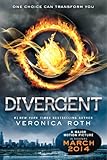
Veronica Roth’s Divergent arrived in 2011 as the third pillar of a YA dystopian wave that also included The Hunger Games and The Maze Runner. Set in a post-apocalyptic Chicago where society has divided itself into five factions — each representing a single virtue — the novel follows sixteen-year-old Tris Prior through the Choosing Ceremony that will define her identity for life. Tris discovers she is Divergent, meaning she cannot be contained by any one faction, and that this makes her dangerous. The faction system works as a sustained metaphor for the pressure adolescents face to conform: the idea that a society might try to solve human complexity by simply eliminating it is both bleak and recognizable. The training sequences in Dauntless are viscerally exciting, the romance with Four is carefully developed, and the revelation of the conspiracy driving the faction war lands with real force.
The Divergent trilogy has a complicated legacy. The first book is among the most propulsive and emotionally effective YA dystopians of its era, and it turned Roth into a major author overnight. The series grew darker and more ambitious with each installment, culminating in an ending that divided its readership sharply — many fans found it genuinely brave, others found it genuinely devastating. That combination of broad appeal and uncompromising choices is rare in YA, and it is part of why the books continue to be discussed long after the film adaptations have faded. The recommendations below are organized around the elements that make Divergent work: the faction-style social structure, the young protagonist forced to choose between identity and survival, the action-forward pacing, and the romance woven through a rebellion plot.
Other YA Dystopian Series
#1 — The Maze Runner by James Dashner
Thomas wakes in a metal elevator with no memory of his life before, rising into a place called the Glade — a self-contained community of teenage boys surrounded on all sides by a shifting, monster-patrolled maze. Dashner’s novel is the purest adrenaline delivery mechanism on this list: the mystery of the maze, the hierarchy among the Gladers, and the gradual revelation that the people running this experiment have motives far darker than anyone inside can understand. If the faction trials in Dauntless were your favorite part of Divergent, The Maze Runner gives you that same combination of physical ordeal and conspiracy-uncovering at sustained intensity. The series is the closest structural sibling to the Divergent trilogy among its YA contemporaries.
#2 — Legend by Marie Lu
In the future Republic of America, fifteen-year-old June is a military prodigy groomed to be the government’s greatest soldier. Day is the Republic’s most wanted criminal, a boy from the slums who has never been caught. When their paths cross through a crime neither of them fully understands, Lu’s dual-perspective structure puts them on a collision course that turns into something more complicated than enemy and target. Legend is the most commonly recommended alternative for Divergent readers who want the same basic architecture — dystopian society, young protagonists caught between loyalty and conscience, romance developing under pressure — executed with tighter plotting and more controlled prose. Lu’s worldbuilding holds together with an internal logic that rewards close reading.
#3 — Matched by Ally Condie
The Society controls everything: what citizens eat, how long they live, and who they will marry. When Cassia is Matched with her best friend Xander, it seems like a perfect result — until she briefly sees another face on her Match card, a boy named Ky who is not supposed to be choosable. Condie’s trilogy is quieter than Divergent and closer in spirit to The Giver, but it shares the same core question: what happens when a young woman begins to understand that the society designed to protect her is actually designed to limit her. The romantic triangle is central, and the writing has a lyrical quality that distinguishes it from the more action-oriented entries on this list.
#4 — Delirium by Lauren Oliver
In this version of America, love has been classified as a disease called amor deliria nervosa, and at eighteen every citizen is cured of it. Lena Haloway is weeks away from her cure and looking forward to the safety it promises when she meets Alex, who is not what he appears to be. Oliver’s premise is one of the more imaginative systemic oppressions in YA dystopia — a government that eliminates not a virtue but an emotion — and the romance carries genuine weight precisely because the stakes are this specific. The series grows into something more politically expansive as it continues, with later volumes pulling back to show the wider resistance movement.
#5 — The Giver by Lois Lowry
The novel that established the template for nearly every YA dystopia that followed it. In a Community that has eliminated pain, conflict, and choice in pursuit of Sameness, twelve-year-old Jonas is selected to receive all the memories of what the world was before. Lowry’s novel is shorter and older than everything else on this list, but reading it alongside Divergent clarifies what Roth was working with and working against: the faction system is in direct conversation with Sameness, and Tris’s rebellion is the action-thriller version of the ethical awakening Jonas experiences. Essential context for anyone trying to understand the genre.
Faction Systems and Class Rebellion
#6 — An Ember in the Ashes by Sabaa Tahir
In a Roman-inspired empire built on slavery and military brutality, Laia is a Scholar girl who infiltrates the Empire’s most fearsome military academy to spy for the resistance after her brother is captured. Elias is a soldier-elite trained from childhood to be a weapon for a regime he has come to hate. Tahir’s dual-perspective structure alternates between these two characters whose circumstances mirror each other: both are trapped by systems that defined them before they could choose, and both are trying to find a way to be human inside institutions designed to strip that out of them. The Trials at Blackcliff — brutal military challenges that echo Dauntless initiation — are among the best set-piece sequences in recent YA fantasy.
#7 — Shadow and Bone by Leigh Bardugo
In a Russia-inspired fantasy world divided by a swath of magical darkness called the Fold, Alina Starkov discovers she has a power that could destroy the Shadow Fold entirely — a discovery that pulls her from the ordinary military ranks into the elite Grisha corps and the attention of its enigmatic leader, the Darkling. Bardugo’s novel shares Divergent’s concern with the discovery of an identity that makes the protagonist both special and targeted, and the world of the Grisha is built around a similarly rigid hierarchy. The romance with the Darkling has a complexity and moral ambiguity that carries through the trilogy, and Bardugo’s prose is among the strongest in contemporary YA fantasy.
#8 — City of Bones by Cassandra Clare
Clary Fray sees a boy murdered at a club — but there is no body, and she is the only one who can see his killers. This discovery pulls her into the Shadowhunter world, a hidden society of half-angel warriors that operates alongside the mundane one. Clare’s series is less dystopian than the other entries here and more urban fantasy, but the core structure — a young protagonist discovering she belongs to a world with strict hierarchies and dangerous internal politics, developing a romance inside a conflict she doesn’t yet fully understand — maps closely onto Divergent’s appeal. The Mortal Instruments is among the longest-running YA series of its era, and its fans are as dedicated as any on this list.
For Readers Ready to Move Toward Adult Dystopia
#9 — Brave New World by Aldous Huxley
The foundational text of the dystopian-society-that-looks-like-utopia genre. Citizens are bred into castes — Alphas, Betas, Gammas, Deltas, Epsilons — conditioned from birth to love their station, pacified by a happiness drug called soma, and shielded from anything that might provoke genuine thought or feeling. Huxley published this in 1932, and its influence on every faction system and caste structure in YA dystopia is direct and acknowledged. Reading it after Divergent makes the lineage of the whole genre visible. The Savage’s confrontation with the World Controllers is still one of the most effective dystopian set-pieces in literature.
#10 — Six of Crows by Leigh Bardugo
A heist novel set in the same Grishaverse as Shadow and Bone, following a crew of six morally complex outcasts tasked with breaking into the most secure prison in the world. The tone is sharper and darker than Bardugo’s earlier work, and the ensemble structure — six distinct characters, each with a specific skill and a specific damage — gives the novel a different energy than the single-protagonist YA entries on this list. For Divergent readers who found the faction-specific training sequences compelling, watching Kaz Brekker assemble and deploy a team of specialists is a natural evolution of that interest. This is where many YA readers cross over into adult-adjacent fantasy.
Continue the Divergent Series
#11 — Insurgent by Veronica Roth (Divergent, Book 2)
Tris and Four are on the run after the attack on Abnegation, navigating the surviving factions while the war between Dauntless and Erudite continues. Roth raises the emotional stakes considerably in the second installment: Tris is dealing with the consequences of choices made at the end of the first book, and the relationship with Four is strained in ways that feel earned rather than manufactured. The ending of Insurgent is one of the more effective reveal structures in the series and sets up the scale shift that makes Allegiant so divisive. Read in order.
YA Fantasy With Romantic Subplots
#12 — The Cruel Prince by Holly Black
Mortal twins Jude and Taryn were taken to Faerie as children after their parents were murdered by their mother’s first husband, and they have grown up as humans in a world where humans are considered inferior. Jude is determined to earn a place of power in Faerie’s brutal court despite being despised for what she is. Black’s faerie court has the same rigid social hierarchy and culture of cruelty as Dauntless at its worst, and Jude’s response — refuse to be broken, learn the rules well enough to subvert them — is recognizably in Tris’s tradition. The romance is adversarial in a way that many Divergent readers will find familiar.
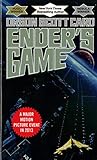
#13 — Ender’s Game by Orson Scott Card
Andrew “Ender” Wiggin is recruited at age six to Battle School, a space station where Earth’s most gifted children are trained as military commanders against an alien threat. Card’s novel is older, technically science fiction rather than dystopian fantasy, and aimed at a slightly different audience, but the overlap with Divergent readers is consistent and well-documented: the rigorous training program designed to test and break young people, the protagonist who turns out to be categorically different from the others, and the revelation that the adults running the program have been lying about its true purpose all along. The ending is as divisive, in its own way, as Allegiant’s.
How to Choose Your Next Read
If you want the closest match in pace and structure: The Maze Runner.
If you want better-developed worldbuilding in the same genre: Legend by Marie Lu.
If you want a romantic faction-style fantasy with sharp prose: Shadow and Bone or An Ember in the Ashes.
If you want the original dystopian class system: The Giver or Brave New World.
If you want to continue the series: Insurgent — go in order.
The Divergent Series in Order
For all five Divergent novels and the complete reading sequence, see our Divergent Books in Order guide.
Hunger Games vs Divergent
For a direct comparison of the two most popular YA dystopian series — which to read first and how they differ — see our Hunger Games vs Divergent guide.
For the Best Dystopian Novels
For the definitive guide to dystopian fiction — from 1984 and Brave New World to contemporary dystopia — see our Best Dystopian Novels list.
Affiliate disclosure: Links to Amazon on this page are affiliate links. We earn a small commission at no extra cost to you. This does not influence our editorial recommendations.
Frequently Asked Questions
Does the Divergent trilogy get darker as the series progresses?
Yes, the Divergent trilogy gets significantly darker with each book. Insurgent raises the stakes around the faction war and Tris's survival, while Allegiant — the most polarizing entry — shifts to a dual-perspective narrative and takes the story in a direction many readers found devastating. The series earns its YA audience in the first book and then challenges them hard by the third.
Are there books like Divergent but considered better written?
For readers who loved Divergent's premise but want prose and plotting that are generally regarded as more sophisticated, Legend by Marie Lu is the most recommended alternative. It shares the same core DNA — dystopian society, two young protagonists on opposite sides of a conflict, action sequences, and romance — but Lu's dual-perspective structure is tightly controlled and her worldbuilding is more internally consistent. An Ember in the Ashes by Sabaa Tahir is another frequent recommendation for readers ready for something more demanding.
What is the best YA dystopian series to read after Divergent?
The Maze Runner by James Dashner is the most natural next series for Divergent readers — it has the same combination of survival trials, a group of young people uncovering a larger conspiracy, and a propulsive pace that makes it hard to stop reading. For something with a stronger romantic subplot and more complex worldbuilding, Legend by Marie Lu or An Ember in the Ashes by Sabaa Tahir are both excellent choices. If you want to move toward YA fantasy rather than pure dystopia, Shadow and Bone by Leigh Bardugo is frequently recommended as a step up in literary ambition.