The Hunger Games vs Divergent: Which Is Better?
Two defining YA dystopian series, one comparison. We break down The Hunger Games and Divergent across themes, characters, endings, and which to read first.

The 2010s produced a wave of young adult dystopian fiction that reshaped the genre and brought millions of reluctant readers to bookstores. At the center of that wave were two series: Suzanne Collins’ The Hunger Games and Veronica Roth’s Divergent. Both arrived within three years of each other, both became film franchises, and both created the template that every YA dystopian series since has tried to replicate. A decade on, the question is not just which is more entertaining — it is which series has actually held up, and why.
This comparison does not declare a winner by scoring points in arbitrary categories. Instead, it takes each series seriously on its own terms, identifies what each does exceptionally well, and helps you decide where to start — or, if you have read one, whether the other is worth your time.
Quick Comparison
| The Hunger Games | Divergent | |
|---|---|---|
| Author | Suzanne Collins | Veronica Roth |
| Books | 3 (+ prequel) | 3 |
| Age Range | 12 and up | 13 and up |
| Central Theme | Political oppression, media spectacle | Identity, belonging, conformity |
| Protagonist | Katniss Everdeen | Tris Prior |
| Tone | Bleak, propulsive, political | Action-forward, introspective |
The Hunger Games: What Makes It Work
The Hunger Games begins with one of the most efficient pieces of world-building in modern fiction. In a few pages, Collins establishes Panem — a North American nation divided into twelve impoverished districts that serve a wealthy Capitol — and the Reaping, the annual lottery that selects two children from each district to fight to the death in a televised spectacle. By the time Katniss volunteers to take her younger sister’s place, you already understand the political logic of a society that would create the Games, and you already care about the family she is leaving behind.
What Collins does exceptionally well is survival writing. The arena sequences in The Hunger Games and Catching Fire are sustained exercises in tactical thinking under mortal pressure, and they work because Katniss is a genuinely competent protagonist whose skills — hunting, tracking, reading terrain — are the exact skills that keep her alive. She does not survive through luck or special powers. She survives because she has been preparing her whole life, without knowing it, for exactly this.
The political commentary is what elevates the series above comparable YA fiction. Collins is writing about the spectacle economy — a society that pacifies itself by consuming the suffering of its underclass as entertainment — and the critique is precise enough to feel journalistic. The Capitol’s residents, who watch children die as sport, are not presented as monsters; they are presented as people who have been so insulated from consequence that they have lost the ability to imagine the world from any perspective but their own. That is a more disturbing argument than outright villainy.
Katniss’s arc across all three books is one of the most fully realized in YA fiction. She begins as a survivor focused entirely on her family and ends as the symbolic face of a revolution she never chose — and Mockingjay takes seriously the cost that transformation extracts from her. The ending is not triumphant. It is the honest portrait of a person who did what she had to do and is living with what it took.
Divergent: What Makes It Work
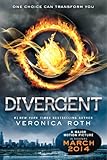
Divergent is built around one of the more imaginative premises in YA dystopia: a post-apocalyptic Chicago where society has attempted to solve human conflict by dividing itself into five factions, each organized around a single virtue. Abnegation values selflessness. Dauntless values bravery. Erudite values intelligence. Amity values peace. Candor values honesty. At sixteen, every young person chooses which faction to join — and those who fail initiation are left factionless, without community or identity.
The faction system is a sustained metaphor for the adolescent experience of social conformity, and Roth deploys it with real insight. The pressure Tris faces is not just physical — it is the pressure to become the kind of person a particular group demands, to reduce the full complexity of who you are into the single quality a faction rewards. Her discovery that she is Divergent — that she cannot be contained by any one virtue — is the premise of the plot, but it is also a statement about what it means to refuse social classification.
The Dauntless initiation sequences are among the most effective set pieces in YA action fiction. The physical trials, the fear simulations, the social dynamics of a group of teenagers competing for a limited number of slots — Roth builds genuine tension from these because the stakes are immediate and personal before they become political. The friendship and rivalry within the initiates is rendered with more social texture than the equivalent sequences in most comparable novels.
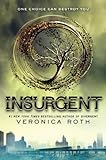
Roth’s portrayal of Tris’s relationship with Four is carefully developed. The romance grows out of mutual recognition — two people who see through each other’s performed identities — and that grounding makes it more emotionally durable than the love triangles that drive comparable YA series. The series grows in ambition with Insurgent and reaches its most controversial point with Allegiant, which makes structural choices that genuinely surprised its audience.
Key Differences
Political Depth vs. Identity Themes. The Hunger Games is fundamentally a political novel. Its central argument is about power: who has it, how they use it to maintain themselves, and what it costs to challenge it. Divergent is fundamentally a novel about identity: who you are versus who you are expected to be, and whether the categories society provides can ever fully contain a person. Neither approach is superior — they are different questions — but readers who want their dystopia to engage with current events will find more in Collins, while readers who want fiction that grapples with the experience of growing up will find more in Roth.
Violence Levels. Both series are more violent than most of what surrounds them in YA publishing, and both earned that violence by making it mean something. The Hunger Games presents violence as spectacle — the point is that the Capitol has made murder entertaining — and the violence in the arena is portrayed with enough clinical detail to remain disturbing rather than exciting. Divergent’s violence is more action-thriller in register; the Dauntless sequences are exciting in a way Collins’s arena sequences are not, because Roth is not trying to implicate the reader in enjoying them. Allegiant, in particular, is significantly darker in its violence than the first two Divergent books.
Endings. Mockingjay takes Katniss to a place of genuine psychological damage and does not offer easy recovery. The ending is controversial among fans but widely respected by critics. Allegiant is more divisive: its structural choices in the final book alienated a significant portion of the readership who felt the ending was not earned by what came before. The Hunger Games ending is harder to read but more thematically consistent; Divergent’s ending is braver but more contested.
Series Consistency. The Hunger Games maintains its quality across all three books, with Mockingjay being the most difficult and most rewarding entry. Divergent has a strong first book, a functional second book in Insurgent, and a third book that attempted something ambitious but divided its readership sharply. If you are someone who needs a satisfying series conclusion, this matters.
Which Should You Read First?
If you have read neither series, start with The Hunger Games.
The reason is not that it is better written — though the prose is more disciplined — but that it is the more complete experience. All three books of the trilogy work as a unified whole, the political argument develops across all three volumes, and the ending, however uncomfortable, arrives at a place that feels true to everything that came before it. You will finish the trilogy with something to think about.
After finishing the trilogy, Divergent is an excellent follow-on. The first book in particular is one of the most propulsive YA reads of the era, and the faction system offers a different kind of intellectual engagement than Collins’s world. Go in knowing that the series is uneven — the first book is the best — and you will have an excellent reading experience without the disappointment that comes from expecting the same consistency.
If you have already read The Hunger Games and are wondering whether Divergent is worth your time: yes, for the first book alone. The premise is original, Tris is a compelling protagonist, and the Dauntless sequences are among the best action writing in YA dystopia. Whether you continue to Insurgent and Allegiant depends on your tolerance for endings that do not go where you expect.
If You Liked These, Read Next
Once you have finished both series, the most natural next reads are the books that both authors were working from and against.
The Maze Runner by James Dashner is the closest structural sibling to both series — a group of teenagers trapped in a system designed to test them, gradually uncovering a conspiracy larger than any of them understood. It shares The Hunger Games’s survival intensity and Divergent’s focus on a young person navigating a hierarchy they did not choose.
1984 by George Orwell is the book The Hunger Games is in direct conversation with. Collins’s critique of media spectacle and state oppression has its deepest roots in Orwell’s account of a government that controls not just behavior but thought. Reading 1984 after The Hunger Games makes the lineage visible and deepens both books.
Brave New World by Aldous Huxley is the direct ancestor of Divergent’s faction system. Huxley’s World State conditions citizens from birth into fixed social castes, pacifies them with pleasure and distraction, and eliminates genuine choice in the name of stability. The Divergent faction system is Huxley’s caste structure seen through the lens of virtue ethics, and Roth’s novel makes far more sense after you have read the text it is responding to.
Frequently Asked Questions
Is The Hunger Games better than Divergent?
Most critics and readers consider The Hunger Games the stronger series overall. Its political commentary is sharper, Katniss’s arc is more fully realized, and the trilogy maintains its quality through all three books. Divergent has a more compelling central metaphor in its first book, but the series loses consistency by Allegiant. That said, Divergent’s opening volume is a genuine page-turner, and many readers prefer it for its focus on identity and belonging — questions that feel more immediately personal than the political argument Collins is making.
Which series has a better ending?
Neither series ends without controversy, but The Hunger Games ending is more widely respected. Mockingjay’s conclusion is bleak and honest about the cost of revolution, which frustrated some readers but earned critical praise for refusing to offer a triumphant resolution. Allegiant’s ending is more sharply divisive: some readers consider it brave and thematically consistent, others found it devastating in ways that felt unearned by the series. Both authors deserve credit for resisting the easy out.
What age is appropriate for The Hunger Games and Divergent?
Both series are generally considered appropriate from around age 12 to 13. The Hunger Games depicts violence in an arena context that is graphic but purposeful, and the themes of state oppression and media spectacle can resonate meaningfully even with younger teenagers. Divergent includes similar action violence and some romantic content. The later books in both series grow significantly darker and more emotionally complex — Mockingjay and Allegiant in particular — and parents of younger readers may want to preview those before passing them along.
What should I read after The Hunger Games and Divergent?
After finishing both series, the most natural progression is to The Maze Runner for more YA survival plotting, then to the classic dystopias that shaped both: 1984 by George Orwell and Brave New World by Aldous Huxley. For readers ready to move into adult dystopia, Red Rising by Pierce Brown is the most frequently recommended bridge — it shares The Hunger Games arena-survival structure but with greater political complexity and adult themes throughout.
The Hunger Games Series in Order
For all five Hunger Games novels and novellas in the correct reading sequence, see our Hunger Games Books in Order guide.
The Divergent Series in Order
For all five Divergent novels and the complete reading sequence, see our Divergent Books in Order guide.
For the Best Dystopian Novels
For the definitive guide to dystopian fiction — from 1984 and Brave New World to contemporary dystopia — see our Best Dystopian Novels list.
Affiliate disclosure: Links on this site are affiliate links. We earn a small commission at no extra cost to you. This does not influence our editorial recommendations.
Frequently Asked Questions
Is The Hunger Games better than Divergent?
Most critics and readers consider The Hunger Games the stronger series overall. Its political commentary is sharper, Katniss's arc is more fully realized, and the trilogy maintains its quality through all three books. Divergent has a more compelling central metaphor in its first book, but the series loses consistency in Insurgent and Allegiant. That said, Divergent's first book is a genuine page-turner and many readers prefer it for its focus on identity and belonging.
Which series has a better ending?
Neither series ends without controversy, but The Hunger Games ending is more widely respected. Mockingjay's conclusion is bleak and honest about the cost of revolution, which frustrated some readers but earned critical praise. Allegiant's ending is genuinely polarizing: some readers consider it brave and thematically consistent, others found it devastating in ways that felt unearned. Both endings reflect their authors' refusal to offer easy resolutions.
What age is appropriate for The Hunger Games and Divergent?
Both series are generally considered appropriate from age 12 to 13. The Hunger Games depicts violence in an arena context that is graphic but purposeful, and the themes of state oppression and media manipulation can resonate even with younger teens. Divergent includes similar action violence and some romantic content, and the later books in both series grow darker and more emotionally complex. Parents of younger readers may want to preview Mockingjay and Allegiant before handing them over.
What should I read after The Hunger Games and Divergent?
After finishing both series, the most natural next reads are The Maze Runner by James Dashner for more YA survival-thriller plotting, and then the classic dystopias that influenced both: 1984 by George Orwell and Brave New World by Aldous Huxley. For readers ready to move into adult dystopia, Red Rising by Pierce Brown is the most frequently recommended bridge — it shares the arena-survival structure of The Hunger Games but with greater political complexity and adult themes.