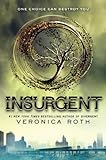
Divergent Books in Order: Complete Veronica Roth Reading Guide (2026)
The complete Divergent series reading order — all 3 Veronica Roth novels plus the Four companion book, with the films and what to read after finishing the trilogy.
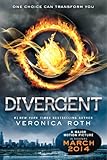
All Divergent Books at a Glance
| # | Title | Year | Type |
|---|---|---|---|
| 1 | Divergent | 2011 | Trilogy — Book 1 |
| 2 | Insurgent | 2012 | Trilogy — Book 2 |
| 3 | Allegiant | 2013 | Trilogy — Book 3 |
| 4 | Four | 2014 | Companion novellas |
Veronica Roth published Divergent in 2011, at the exact peak of YA dystopian fiction. The Hunger Games had just finished its run. Readers were hungry for the next faction-based future society, the next reluctant teenage hero, the next world that made adolescent anxieties literal. Roth delivered all of that — and then, by the time the trilogy was finished, had done something considerably more unsettling with the form than most readers expected.
The reading order for the Divergent series is not complicated. The three novels — Divergent, Insurgent, and Allegiant — tell one continuous story and must be read in order. The only real question is what to do with Four, the companion novella collection published in 2014. The answer: read it after completing the trilogy. It retells key events from Tobias Eaton’s perspective and adds texture to his character, but it does not advance the plot and will make more sense — and reward more — once you know how the trilogy ends.
The Divergent Reading Order
The full series in publication order:
-
Divergent (2011) — Beatrice Prior chooses a new faction at the Choosing Ceremony and enters Dauntless initiation. The world-building is at its most immersive here. This is where the faction premise is established and where the romance between Tris and Four begins. Read first.
-
Insurgent (2012) — The faction system is fracturing. Tris is outside the structure she chose, navigating alliances and betrayals while the Erudite conspiracy moves toward a conclusion. The transitional book of the trilogy — it dismantles what Book 1 built.
-
Allegiant (2013) — The trilogy’s conclusion. The story moves beyond Chicago and beyond the faction world entirely. This is the book everyone wants to discuss when the series comes up, and that conversation almost always begins with the ending. More on that below.
-
Four (2014) — A companion collection of four novellas retelling events from Divergent from Tobias Eaton’s perspective. Not a continuation of the story. Best read after finishing Allegiant.
The Allegiant ending is the thing everyone asks about. Roth makes a narrative choice in the final pages that is one of the most debated in YA fiction. It is addressed in full in the Allegiant section below.
Start With Divergent
Divergent opens in Abnegation, the selfless faction, where sixteen-year-old Beatrice Prior has grown up. Future Chicago is divided into five factions, each representing a different virtue: Abnegation (selflessness), Dauntless (bravery), Erudite (intelligence), Candor (honesty), and Amity (peacefulness). At age sixteen, every citizen takes an aptitude test and then attends a Choosing Ceremony where they select the faction they will belong to for the rest of their lives. Faction before blood.
Tris’s aptitude results are inconclusive — she tests into multiple factions, a condition called Divergent that the testers warn her to keep secret. She chooses Dauntless. The first novel is substantially about her initiation: the physical training, the social dynamics, the violence and courage and cruelty of what Dauntless asks of its recruits, and the relationship that forms between her and her instructor, Four.
The comparison to The Hunger Games is inevitable and not entirely fair. Both series feature teenage girls in dystopian future societies who become reluctant symbols of resistance. But the emotional territory is different, at least in Book 1. The Hunger Games is, from its first pages, about political oppression — about a ruling class extracting entertainment and compliance from an underclass through spectacular violence. Divergent is more interested in identity and belonging. The faction premise is a literalisation of adolescent anxiety: the pressure to define yourself, to commit to a single version of who you are, to choose your tribe and give up the others. The question the first novel is really asking is whether a person can be reduced to a single virtue — and what it costs them to try.
The faction premise has an inherent appeal and an inherent limitation. The appeal is clarity: five distinct cultures, each with its own aesthetic, each with its own logic, each offering readers a clear basis for identification. The limitation is that any serious examination of the premise has to conclude that it is monstrous — that a society built on reducing people to single values would produce exactly the kind of catastrophe the trilogy depicts. Roth understood this and built the deconstruction into the series from the beginning. The faction system is not presented as a utopia under threat. It is presented as a system already failing, held together by the political will of those it benefits.
Insurgent and the Expanding World
Insurgent begins immediately after the climax of Divergent and does not slow down to let readers settle. Tris is traumatised, the faction system is in open conflict, and the Erudite are pursuing an agenda that will reshape the known world.
What Insurgent does structurally is dismantle the premise that made the first book work. Tris is no longer safely inside Dauntless, moving through a legible hierarchy with clear rules. She is factionless — or nearly so — moving between factions, negotiating with the Erudite, encountering the factionless who live outside the system entirely, and gradually uncovering a secret that the faction founders embedded in the city’s origin.
The factionless are the detail that most complicates the clean world of Book 1. In Divergent, they are background figures — people who failed initiation, who fell out of their factions, who exist at the margins of a society designed to exclude them. In Insurgent, they become a political force with their own leadership and agenda. The organisation of the dispossessed is not a simple heroic development; Roth is careful about what it means when those excluded from power take hold of it.
Insurgent is the most transitional book in the trilogy and, for some readers, the most difficult. The clear initiation structure of Divergent is gone. The world expands faster than it can be fully explored. The emotional register is darker and more ambivalent than the first book’s forward momentum. But what Insurgent accomplishes — the systematic undoing of the faction premise, the expansion of the world beyond Chicago’s fence, the revelation that the city was an experiment rather than a civilisation — is necessary preparation for what Allegiant attempts.
Allegiant — the Ending
Allegiant takes the story outside Chicago entirely. Tris and Four and a small group leave the city and discover that the world beyond is not what the faction founders’ recorded history implied. The Bureau of Genetic Welfare runs Chicago as a social experiment. The people inside are divided by “genetically pure” and “genetically damaged” categories that the Bureau has used to justify and maintain the experiment. The faction system was never a civilisation. It was a laboratory.
This is the part of the book that absorbs the first two-thirds: the revelation of the real world, the politics of the Bureau, the question of what Tris and Four owe to the people they left behind in Chicago. Allegiant is the most structurally ambitious entry in the trilogy. It is also the only novel in the series to alternate perspectives between Tris and Four in first person — a decision that, in retrospect, is the most significant signal of what Roth is planning.
The ending: Tris Prior dies.
She volunteers to complete a suicide mission — releasing a memory serum that will reset the Bureau and stop a plan that would erase the memories of every person in Chicago. The mission is designed to be survivable under the right conditions, but those conditions do not hold. She absorbs the death serum protecting the vault. She survives long enough to release the memory serum. She does not survive to leave the vault.
The reaction to this ending, when the book was published in 2013, was immediate and intense. Petitions, angry reviews, social media campaigns. Readers felt betrayed. Some refused to accept it as a legitimate conclusion. The response was large enough that it became part of the book’s reputation — you cannot discuss Allegiant without discussing what happens to Tris, and you cannot discuss what happens to Tris without acknowledging that a substantial portion of the readership considered it a mistake.
Roth has addressed the choice directly in interviews. What she was writing, she has said, was always a story about selflessness — the virtue Tris grew up with in Abnegation, rejected at the Choosing Ceremony, and spent three books working out her relationship to. The ending is, in that reading, the trilogy’s thesis: that the faction system’s demand that people choose a single value was always wrong, that Tris spent three books integrating all the virtues rather than discarding the others, and that her final act is genuinely selfless in a way that her Abnegation upbringing never allowed her to be. The ending is consistent with this reading. It is not a twist. It is a conclusion.
The difficulty is that it is also devastating in a way that YA fiction rarely permits itself to be, and that readers formed a genuine emotional attachment to Tris across three books that Roth is then asking them to relinquish. There is a difference between what an ending earns thematically and what it asks of a reader emotionally. Allegiant earns its ending. It is still a hard thing to read.
The film adaptation — released in two parts, the second of which was never theatrically distributed — changed the ending. Tris survives in the film version. The decision reflects the studio’s calculation about what audiences would accept and is the single most significant departure the film franchise made from the source material.
Four — the Companion Book
Four (2014) collects four novellas — The Transfer, The Initiate, The Son, and The Traitor — that retell events from Divergent from Tobias Eaton’s perspective. The collection also includes the short story Free Four, previously published online, and a new scene set during Insurgent.
Tobias’s history is part of what makes the companion worth reading. His childhood in Abnegation, under a father — Marcus Eaton, a faction leader — who abused him, is the biographical foundation for the character readers meet in Divergent as a Dauntless instructor who chose his faction to escape his family. The Marcus/Tobias relationship — the cycle of abuse, the public face of leadership concealing private violence, Tobias’s complicated mix of fear and contempt and a persistent, defeated desire for his father’s acknowledgment — is sketched in the main trilogy but given more space here.
The Four novellas are not required reading. The trilogy is complete without them, and nothing in Four changes the understanding of the main story in a way that makes the trilogy feel incomplete without it. But for readers who finished Allegiant and want more time in the world, or who found Tobias’s interiority in the dual-perspective sections of Allegiant compelling, the companion rewards the attention.
Read it after Allegiant. Reading it earlier — particularly between Divergent and Insurgent — would be premature; the payoff of Tobias’s backstory lands harder once you know where he ends up.
The Films
The Divergent film series attempted the same franchise trajectory as The Hunger Games: a loyal adaptation of the first book, expanding productions for subsequent entries, a final novel split into two films.
Divergent (2014), directed by Neil Burger and starring Shailene Woodley as Tris and Theo James as Four, is a reasonably faithful adaptation of the first novel. The casting is strong, the initiation sequences are effectively staged, and the faction world translates well visually. It is the most successful film in the series both critically and at the box office.
Insurgent (2015), directed by Robert Schwentke, begins the franchise’s drift from the source material. The box-simulation sequences are expanded and made more literal. The Jeanine Matthews storyline is reframed. The tone is more conventionally action-driven than the book’s more interior concerns.
Allegiant (2016), also directed by Schwentke, covers the first half of the third novel. The expansion of the world beyond Chicago is handled competently, but the Bureau storyline is simplified to the point of losing the genetic purity politics that give the book its most interesting ideas. Tris survives this film because the ending is being held for the second part.
Ascendant — the planned second part of the Allegiant adaptation, which would have concluded the story — was never theatrically released. After Allegiant performed poorly at the box office, Lionsgate announced that the film would be released as a television movie as the pilot of a Divergent television series. Shailene Woodley declined to participate in a TV production. The film was never made in any form. The franchise ended with Tris alive and the story incomplete.
The practical result: the film series does not have an ending. Viewers who follow the films rather than the books arrive at a conclusion that does not exist. The books remain the only complete version of the story.
The Divergent trilogy is, in the end, a more rigorous and more honest piece of work than its genre context suggested it would be. It arrived looking like another faction-based YA dystopia riding the wave that followed The Hunger Games. It ended as something that actively challenged the conventions of that genre — including the convention that a teenage protagonist must survive her own story. Whether or not readers found that satisfying, it was not the safe choice. Roth wrote the ending the story required.
Books Like Divergent
For dystopian YA series with the same faction-based world, chosen-one narrative, and action pacing as Divergent, see our Books Like Divergent guide.
Hunger Games vs Divergent
For a direct comparison of the two most popular YA dystopian series — which to read first and how they differ — see our Hunger Games vs Divergent guide.
For the Best Dystopian Novels
For the definitive guide to dystopian fiction — from 1984 and Brave New World to contemporary dystopia — see our Best Dystopian Novels list.
For the full Veronica Roth bibliography, reviews, and biography, visit the Veronica Roth author page on Editors Reads.
Affiliate disclosure: Links on this site are affiliate links. We earn a small commission at no extra cost to you. This does not influence our editorial recommendations.
Frequently Asked Questions
What order should I read the Divergent books?
Read the trilogy in publication order: Divergent, Insurgent, Allegiant. The three books tell one continuous story and must be read in order. Four (a companion novella collection) retells key events from Divergent from Four's perspective — read it after completing the main trilogy.
Does Allegiant have a controversial ending?
Yes. Allegiant's ending is one of the most discussed in YA fiction — it defies the expectations of the genre. Some readers find it a powerful and honest conclusion; many were deeply upset by it. It is thematically consistent with what the series is actually about, even if it's not what most readers want. The film adaptation changed the ending entirely.
Is Four a necessary part of the Divergent series?
Four is optional — it's a companion collection of novellas that retells parts of Divergent from Tobias Eaton (Four)'s POV. It adds depth to his character and backstory but does not advance the main story. Read it after finishing Allegiant if you want more time in the world.
How do the Divergent films compare to the books?
The first film (2014, Shailene Woodley and Theo James) is a faithful adaptation. Insurgent and Allegiant the films diverge significantly from the books. Allegiant was split into two films; the second (Ascendant) was never theatrically released after poor box office performance. The film franchise ended incomplete.
What should I read after Divergent?
If you liked Divergent's dystopian factions and reluctant hero premise, try The Hunger Games (Suzanne Collins), The Maze Runner (James Dashner), or Red Rising (Pierce Brown) for a more adult take on similar themes. Veronica Roth's later adult sci-fi novel Chosen Ones offers a different tone.