15 Books Like Daring Greatly to Read Next
Finished Daring Greatly? These 15 books on vulnerability, shame, courage, and what it means to live wholeheartedly take Brené Brown's research into new territory.
By Lena Fischer
Brené Brown spent years interviewing people about shame before she understood what her research was actually showing her. She had expected to find that the most deeply connected people had found a way to protect themselves. What she found was the opposite. The people who experienced the most genuine connection were those willing to be vulnerable: to act without certainty of outcome, to show up where failure was possible, to allow themselves to be seen in the parts of themselves they found least acceptable. Shame, she concluded, was the mechanism by which people learned to hide the very parts of themselves that most needed connection.
Daring Greatly, published in 2012, takes those findings into a full argument about how we live, lead, parent, and build organisations. The title comes from Theodore Roosevelt’s “Man in the Arena” speech: the opinion of people who are not in the arena is simply not the relevant measure of a life. Readers who finish the book tend to want to go somewhere: deeper into the psychology of shame, into the social science of disconnection, into memoirs that enact rather than theorise wholehearted living, or into philosophy that approaches the same questions from a different tradition.
Quick answer: Start with The Gifts of Imperfection by Brené Brown — it covers the same research in a more personal form and works best read alongside Daring Greatly. For the social science of disconnection, Lost Connections by Johann Hari is the most directly relevant. For memoir readers, Becoming by Michelle Obama is the most sustained contemporary example of vulnerability enacted rather than theorised.
More Brené Brown: The Gifts of Imperfection
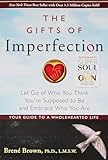
The Gifts of Imperfection by Brené Brown
Brown published The Gifts of Imperfection three years before Daring Greatly, and the two books are best understood as a pair. It is structured around ten guideposts for Wholehearted living, from cultivating authenticity to letting go of perfectionism. Where Daring Greatly extends the vulnerability argument into leadership and organisational culture, The Gifts of Imperfection stays closer to the interior life of the individual — the belief that you are only worthy of connection if you achieve enough, or maintain the appearance of having everything together, described with more granularity than in the later book. Readers who found Daring Greatly too broad will often find this the book that lands more directly.
On Shame, Connection, and What Gets in the Way
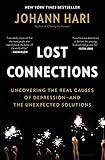
Lost Connections by Johann Hari
Hari’s central argument — that depression and anxiety are responses to disconnection rather than to chemical imbalance — reads as a clinical expansion of Brown’s core insight. He identifies nine forms of disconnection the research consistently associates with psychological distress: from meaningful work, from other people, from values, from a sense of future. Both books argue that the dominant cultural response to psychological suffering misses the underlying mechanism, locating it instead in the quality of connection — to others, to purpose, to the authentic self. Hari is more polemical than Brown, but the territory is closely shared. For a deeper treatment of how disconnection operates at the level of the body, the best books about mental health covers the full range.
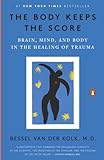
The Body Keeps the Score by Bessel van der Kolk
Van der Kolk’s landmark work on trauma is not an obvious pairing for Daring Greatly, but for readers moved by Brown’s chapters on shame and its physical manifestations — the flush of exposure, the impulse to shrink or disappear — it is the most important book on what those experiences do to the body over time. Brown describes shame as the intensely painful belief that we are flawed and unworthy of connection; van der Kolk describes what happens when that experience becomes chronic: the nervous system rewires itself around the expectation of threat, making authentic self-disclosure feel genuinely dangerous. Readers who felt their experience of shame was more entrenched or physically present than Brown’s framework explained will find van der Kolk the most revealing next step. The books like The Body Keeps the Score covers the broader trauma literature.
The Courage to Be Disliked by Ichiro Kishimi and Fumitake Koga
Kishimi and Koga present Adlerian psychology through a Socratic dialogue between a philosopher and a sceptical young man across five nights. Adler argued that unhappiness is not something that happens to us but something we choose to avoid the risks of genuine engagement — and the book’s central argument, that genuine freedom requires the courage to be disliked, arrives at the same destination as Daring Greatly by a completely different route. The Adlerian concept most directly relevant to Brown’s readers is the “separation of tasks”: the recognition that what other people think of you is their task, not yours, and that conflating the two is the source of much unnecessary suffering. Readers who found Daring Greatly persuasive but wanted more philosophical rigour will find this the most stimulating follow-up.
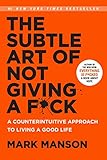
The Subtle Art of Not Giving a F*ck by Mark Manson
Manson’s counter-intuitive self-help book is, beneath its deliberately irreverent surface, a serious argument about values: about choosing what to care about rather than optimising for other people’s approval. Brown argues that shame drives us to perform worthiness for others; Manson argues that the attempt to maintain a positive self-image across all domains is the source of most unnecessary suffering. Brown’s approach is grounded in research and delivered with warmth; Manson’s is blunter about the costs of the alternative. The two books complement each other: Brown explains the mechanism by which we learn to hide; Manson provides the motivational argument for stopping.
On Courage, Resilience, and the Psychology of Growth
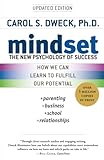
Mindset by Carol Dweck
Dweck’s research produced one of the most genuinely useful frameworks in contemporary psychology: the distinction between a fixed mindset — the belief that worth is innate and fixed — and a growth mindset, in which abilities develop through effort and failure is information rather than verdict. Brown’s armour — perfectionism, the avoidance of situations where failure is possible, achievement as a substitute for worthiness — is the fixed mindset in operation. People who believe their worth is contingent on performance cannot afford to be vulnerable. Mindset explains how the fixed mindset installed itself and how to begin dismantling it — often the precondition for actually enacting Brown’s framework.
Grit by Angela Duckworth
Duckworth’s research addresses a question that runs beneath Daring Greatly but is never quite asked directly: what sustains someone who has chosen to live without armour when the inevitable disappointments arrive? Her answer — that the capacity to endure, which she calls grit, is a trainable trait — is grounded in studies of West Point cadets and professional athletes. Brown’s wholehearted living and Duckworth’s grit both require a clear-eyed commitment to something that matters enough to justify the risk of failure. Where Brown focuses on the emotional architecture of that commitment, Duckworth focuses on the practical side: how passion deepens, how perseverance is built through deliberate practice.
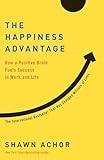
The Happiness Advantage by Shawn Achor
Achor’s positive psychology research arrives at a conclusion that parallels Brown’s from an entirely different direction: the dominant cultural story about achievement has the causality backwards. We tell ourselves that safety comes from performance, that vulnerability is a luxury for those who have already proven their worth. Achor’s research at Harvard consistently shows that positive emotional states are not the reward for performance but its precondition — brains in a positive state are more creative and more socially intelligent than brains operating under chronic threat. For readers who found Brown’s argument about the costs of armour compelling, Achor provides the neurological evidence for why that armour impairs performance rather than enabling it.
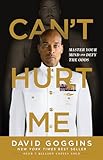
Can’t Hurt Me by David Goggins
Goggins’s memoir sits at the opposite end of the emotional register from Daring Greatly, and placing it here requires explanation. Brown’s framework is about the courage to be seen; Goggins’s is about the courage to push past every limit the mind places on the body. But Can’t Hurt Me is, underneath its intensity, a book about the same fundamental question: what does a person do with the parts of themselves they have been taught to believe are unworthy? Goggins grew up in conditions of real abuse and poverty and spent his early adulthood running from the person he had become. His transformation was achieved not by accepting vulnerability in Brown’s sense, but by refusing the story shame had told him about his capacity. Brown’s readers who understand the framework but cannot move through the fear will sometimes find that Goggins’s uncompromising approach opens a door that warmth and permission cannot.
On Memoirs of Living Honestly
Becoming by Michelle Obama
Obama does not use Brown’s language, but Becoming is organised around the same core questions: how do you show up authentically in spaces that were not designed for you, and what does the effort to do so cost? She is candid about imposter syndrome at Princeton and Harvard, about years of marital difficulty, about the specific tools — therapy, community, a clear sense of personal values — that allowed her to maintain her identity under extraordinary pressure. What distinguishes the book from the genre of inspirational memoir is the refusal to perform a version of the self that is more admirable than true: Obama writes about miscarriage, about the loneliness of the First Lady role, about the ways public life erodes the private self.
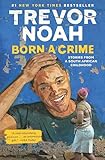
Born a Crime by Trevor Noah
Noah was born in South Africa in 1984, the son of a black Xhosa mother and a white Swiss father, at a time when their relationship was literally criminal under apartheid law. Born a Crime tells that story with warmth and a consistent willingness to be honest about the parts of the experience that do not resolve neatly — the violence of his father, the complicated texture of his mother’s love, the humiliations of growing up without a racial category in a society organised entirely around them. The connection to Daring Greatly is in the quality of the honesty: Noah writes about shame with a directness that demonstrates the courage Brown argues for. Writing without protective irony, without making the difficult parts tidier than they were, is the vulnerability argument in practice.
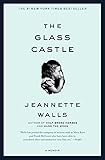
The Glass Castle by Jeannette Walls
Walls grew up with parents who were intellectually alive and genuinely loving but catastrophically unable to provide stability. Her father was a charismatic alcoholic who kept promising to build the family a glass castle he never built; her mother largely refused domestic obligation. Walls eventually made her own way to New York and became a journalist — and then spent years not telling people where she came from. The Glass Castle belongs in this list because of what Brown would recognise as its central act of courage: the decision to stop hiding. Walls spent years maintaining precisely the armour Brown describes as inherently costly, before writing a memoir that holds love and damage in the same breath — not a tidy narrative of healing, but an honest one.
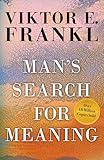
Man’s Search for Meaning by Viktor Frankl
Frankl’s account of surviving four Nazi concentration camps — and the school of psychology he built from the experience — most directly addresses the philosophical foundation beneath Brown’s argument. Frankl’s central claim is that meaning, not pleasure or approval, is the primary human drive, and that the last freedom is the freedom to choose one’s attitude toward unavoidable suffering. That argument is, in different terms, what Daring Greatly is making: that genuine engagement with life — with its uncertainty and its possibility of failure — is the only condition under which meaning is available. The two books share an insistence that the avoidance of vulnerability forecloses precisely the experiences that make life worth living. At roughly 150 pages, it is the shortest book on this list.
The Power of Now by Eckhart Tolle
Tolle’s argument that most human suffering comes from living in mental projections of the past or future approaches Brown’s territory from a contemplative direction. The ego that drives shame — the part of us that monitors how we are perceived and braces for exposure — is precisely the structure Tolle identifies as the source of psychological suffering. Where Brown’s solution is to move through vulnerability rather than around it, Tolle’s is to recognise that the self which fears exposure is not the whole of what we are. For readers who found the shame research compelling but felt it did not account for the contemplative dimensions of their experience, this is the natural complement.
Ikigai by Hector Garcia and Francesc Miralles
Ikigai — the Japanese concept of “reason for being,” the intersection of what you love, what you are good at, what the world needs, and what you can contribute — is shorter and more philosophical than most books on this list, but it addresses the question Brown’s framework eventually forces: wholehearted living in service of what? The Okinawan elders at the heart of Garcia and Miralles’s research did not agonise over worthiness or armour themselves against judgement. They had a settled relationship with purpose, which made others’ approval a secondary concern. Understanding your ikigai does not resolve the shame research, but it gives Brown’s framework a clearer destination.
How to Choose Your Next Read
More Brené Brown: The Gifts of Imperfection — the most personal and practically organised of her books.
Social science of disconnection: Lost Connections by Johann Hari takes the argument into clinical and cultural territory.
Clinical depth on shame and the body: The Body Keeps the Score by van der Kolk; the books like The Body Keeps the Score covers the broader trauma literature.
Philosophy rather than psychology: The Courage to Be Disliked by Kishimi and Koga.
Memoir rather than theory: Becoming or Born a Crime — both enact vulnerability in lived conditions rather than describing it.
For the Best Self-Help Books
For the definitive guide to self-help and personal development — from Atomic Habits to The Power of Now — see our Best Self-Help Books list.
More Self-Help and Personal Development Guides
- Best Books on Leadership: Essential Reads for Managers
- Books Like Outliers: Success, Culture, and Hidden Talent
Affiliate disclosure: Links to Amazon on this page are affiliate links. We earn a small commission at no extra cost to you. This does not influence our editorial recommendations.
Frequently Asked Questions
What should I read after Daring Greatly?
The most natural next read is The Gifts of Imperfection by Brené Brown, which covers the same research on shame and wholehearted living in a more personal and practically organised format. For readers who want to go deeper into the psychology of shame and disconnection, Lost Connections by Johann Hari and The Body Keeps the Score by Bessel van der Kolk both take Brown's central concerns into clinical territory. For memoir readers who want to see vulnerability enacted rather than theorised, Becoming by Michelle Obama and Born a Crime by Trevor Noah are the strongest choices.
Is Daring Greatly a self-help book or a psychology book?
It is both, which is the source of its unusual reach. Brown is a research professor whose work on shame and vulnerability was grounded in qualitative research interviews with thousands of people before it was popularised by her 2010 TED Talk. Daring Greatly translates that research into a framework accessible to a general audience, which means it carries the intellectual rigour of academic psychology with the accessibility of self-help. Readers who want the framework in a more practical form will find The Gifts of Imperfection a useful companion.
What is the central argument of Daring Greatly?
Brown's central argument is that vulnerability — the willingness to show up and be seen without certainty of the outcome — is not a weakness but the birthplace of creativity, belonging, and authentic connection. The book draws on her research into shame to argue that shame thrives on secrecy and silence, and that the antidote is empathy: the willingness to be in connection with others around the parts of ourselves we most want to hide. The title comes from Theodore Roosevelt's 'Man in the Arena' speech, and Brown uses it to argue that the people who live and lead most fully are those who are willing to risk failure and judgement in public.
How does Daring Greatly differ from The Gifts of Imperfection?
The Gifts of Imperfection, published three years before Daring Greatly, is more personal and more practically organised — it is structured around ten guideposts for wholehearted living and reads as a companion guide to Brown's own journey. Daring Greatly is broader in scope, extending the vulnerability and shame research into leadership, parenting, education, and the culture of organisations. If The Gifts of Imperfection is the personal application, Daring Greatly is the systemic argument. Most readers who love one will benefit from the other.
Are there books like Daring Greatly that take a more philosophical approach?
Yes. The Courage to Be Disliked by Ichiro Kishimi and Fumitake Koga presents Adlerian psychology through a Socratic dialogue and arrives at conclusions that rhyme closely with Brown's: that freedom requires the willingness to be disliked, that the approval of others is not a precondition for self-worth, and that genuine connection is only possible between people who are secure enough in themselves not to need it. The Power of Now by Eckhart Tolle approaches the same territory from a contemplative direction, arguing that the ego-driven need for approval and the fear of exposure are products of identification with thought rather than presence.