15 Books Like The Body Keeps the Score to Read Next
Finished The Body Keeps the Score? These 15 books on trauma, healing, resilience, and the relationship between mind and body continue the work of understanding how we carry our history.
By Lena Fischer
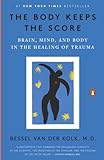
Bessel van der Kolk’s The Body Keeps the Score has done something rare: it has changed the way a generation of ordinary readers understand themselves. Published in 2014, the book spent years quietly passing from hand to hand before breaking into popular consciousness, and by the early 2020s it had become one of the most discussed non-fiction books of its era — not because of a marketing campaign or a celebrity endorsement, but because it named something that millions of people recognised but had never seen articulated clearly.
The central argument is deceptively simple. Trauma is not a story you tell yourself about the past. It is a physiological reality stored in the body — in the nervous system, in muscle memory, in the body’s hair-trigger threat responses — and it cannot be fully resolved by talking about it, no matter how skilled the therapist or how willing the patient. Van der Kolk, a psychiatrist who has spent decades working with trauma survivors, surveys the science of how overwhelming experience reshapes the brain and then turns to a set of interventions — EMDR, yoga, theatre, somatic experiencing, neurofeedback — that operate at the level of the body rather than only the mind. The effect is both liberating and demanding. Liberating because it offers survivors a framework that stops blaming them for their own difficulties. Demanding because it makes clear how deeply the work of healing can run.
Readers come away from The Body Keeps the Score in different states and with different hungers. Some want more science — more on the neurobiology, the nervous system, the mechanisms by which connection and disconnection affect us. Some want practical guidance: what now, what specifically can I do. Some want memoir — the experience of recognising their own history in another person’s account of surviving and continuing. And some want something harder to name: a framework for understanding not just trauma but human resilience more broadly, the capacity to carry difficulty without being destroyed by it.
The fifteen books below are organised around those different directions. They are not all clinical texts. They are not all cheerful. Several of them are, in their own way, as unflinching as van der Kolk. But together they represent a serious, compassionate library for anyone who found The Body Keeps the Score illuminating and wants to continue the work it started.
Quick answer: For more on the neuroscience of trauma and disconnection, start with Lost Connections or Man’s Search for Meaning. For memoir that puts flesh on the clinical, try Educated, The Glass Castle, or Born a Crime. For a research-grounded path towards healing and resilience, Daring Greatly and Mindset are the strongest starting points.
Books Like The Body Keeps the Score at a Glance
| Book | Author | Best for |
|---|---|---|
| Man’s Search for Meaning | Viktor E. Frankl | Anyone confronting meaninglessness, loss |
| Lost Connections | Johann Hari | Anyone experiencing or supporting someone |
| The Power of Now | Eckhart Tolle | Anyone struggling with anxiety, overthinking |
| Can’t Hurt Me | David Goggins | Anyone seeking extreme motivation to push past |
| Daring Greatly | Brené Brown | Readers interested in the psychology of shame |
| The Gifts of Imperfection | Brené Brown | Readers who want a practical, accessible |
| The Courage to Be Disliked | Ichiro Kishimi and Fumitake Koga | Readers interested in self-help |
| Born a Crime | Trevor Noah | Anyone interested in apartheid South Africa |
| Educated | Tara Westover | Anyone interested in memoir, education |
| The Glass Castle | Jeannette Walls | Readers of narrative memoir, especially those |
| Becoming | Michelle Obama | Anyone interested in American political history |
| Mindset | Carol S. Dweck | Parents, teachers, managers, athletes, and anyone |
| Grit | Angela Duckworth | Students, athletes, educators, parents |
| The Subtle Art of Not Giving a F*ck | Mark Manson | Anyone exhausted by relentless optimism culture |
| The Psychology of Money | Morgan Housel | Anyone who earns money and wonders why smart |
On Trauma, the Nervous System, and the Body
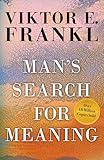
Man’s Search for Meaning by Viktor E. Frankl
Published in 1946, Viktor Frankl’s account of survival in the Nazi concentration camps — including Auschwitz — is one of the founding texts of modern psychology’s engagement with extreme suffering. Frankl was a psychiatrist before his imprisonment; he remained one, in the most rigorous sense, throughout it. The first half of the book documents what he observed in the camps: what happened to people psychologically when everything was stripped away, how meaning-making functioned or failed, and what distinguished those who endured from those who did not. The second half outlines logotherapy, the therapeutic approach he developed in response — the idea that the primary human drive is not pleasure or power but meaning, and that even in the most horrific circumstances, the freedom to choose one’s attitude towards suffering cannot be taken away.
What Frankl offers that van der Kolk does not is a philosophical framework for trauma rather than a neurobiological one. They are not in conflict; they address different dimensions of the same reality. Van der Kolk shows us how trauma lives in the body. Frankl shows us how the mind, even a traumatised one, can reach for something beyond the immediate catastrophe. For readers who found The Body Keeps the Score clarifying but also bleak — who want a view of trauma that includes human agency and transcendence alongside the clinical — Man’s Search for Meaning is essential reading.
It is also, for a book about the Holocaust, a work of remarkable psychological generosity. Frankl does not sentimentalise. He does not minimise. But he refuses to concede that suffering is only suffering, and that refusal has sustained readers in their own much smaller but still genuine difficulties for nearly eighty years.
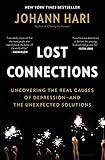
Lost Connections by Johann Hari
Johann Hari’s Lost Connections begins with a question that many readers of The Body Keeps the Score will recognise: if the medical model of depression and anxiety as simple chemical imbalances is insufficient, what is actually going on? Hari’s answer, developed through interviews with researchers across multiple disciplines, is that most depression and anxiety are responses to disconnection — from meaningful work, from other people, from nature, from status and respect, from a secure future, from the values we hold most deeply, and from a sense that our childhood pain has been acknowledged.
This is not, it should be said, a book that dismisses medication or denies the biological dimension of mental distress. It is a book that insists on the social and relational context that van der Kolk also emphasises. The two books sit naturally alongside each other: van der Kolk explains the physiological mechanism; Hari explains the environmental conditions that so frequently produce the distress that then becomes trapped in the body. Together they make a strong case that individual healing, however important, cannot be fully separated from the social conditions that so often produce suffering in the first place.
Hari is a journalist rather than a clinician, and he writes with a journalist’s gift for making research accessible and immediate. Some readers will want more nuance in the scientific claims than he provides; those readers should treat the book as a map rather than a manual and follow the footnotes to the primary sources. As an introduction to the relational theory of mental health, and as a readable companion to van der Kolk’s more clinical account, it is one of the more useful books on this list.
The Power of Now by Eckhart Tolle
Eckhart Tolle’s The Power of Now occupies a different register from the other books in this section — it is a spiritual text rather than a scientific one — but it speaks directly to a central problem that The Body Keeps the Score raises without fully resolving: the problem of the present moment. Trauma, as van der Kolk describes it, keeps the nervous system trapped in the past, responding to threats that no longer exist with a ferocity appropriate to the original emergency. The body remains on alert long after the danger has passed. Tolle’s book is fundamentally about the possibility of stepping out of the mind’s compulsive storytelling — about the past, about the future — and into direct experience of the present.
This is, of course, easier to describe than to do, and readers who find Tolle’s style too mystical or abstract may prefer to approach the same territory through mindfulness-based stress reduction literature. But for many readers of The Body Keeps the Score, particularly those who have found that intellectual understanding of their trauma does not on its own produce relief, Tolle’s insistence that healing happens in the body and in the present — not in the analysing mind — resonates powerfully. Several of the body-based interventions van der Kolk describes, including yoga and mindfulness practices, have their philosophical underpinning in precisely this territory.
The Power of Now is not a trauma book, and Tolle does not engage with the neuroscience. But it articulates, from a contemplative rather than clinical direction, why the nervous system’s capacity to be present matters — and why practices that cultivate presence can reach places that talk therapy cannot.
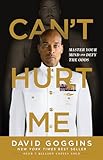
Can’t Hurt Me by David Goggins
David Goggins’s memoir is, in some respects, the most unexpected entry on this list. Where most of the books here approach trauma through the lens of healing and gentle restoration, Goggins approaches it through radical physical challenge. His childhood was severe: an abusive father, deep poverty, racism, a learning disability, and the accumulated wounds of a self-described failure by his early twenties. His response was to become, by most objective measures, one of the most physically accomplished human beings alive — Navy SEAL, ultramarathon runner, holder of the world pull-up record.
The reason this book belongs alongside The Body Keeps the Score is that Goggins, without the clinical vocabulary, demonstrates something van der Kolk argues: that the body is central to healing from trauma, and that moving through discomfort rather than around it can be transformative in ways that thinking about discomfort cannot be. Goggins does not advocate this approach as a universal prescription; he is honest about the psychological cost. But his account of using physical challenge to dismantle the story he had been told about himself — worthless, limited, destined for nothing — is genuinely instructive about the relationship between body, mind, and the inherited narratives of difficult childhoods.
This is not a quiet book. Goggins’s voice is confrontational and occasionally overwhelming. But for readers who found van der Kolk’s description of somatic approaches abstractly compelling and want to see what one version of embodied healing looks like in practice — raw, extreme, and unmistakably real — Can’t Hurt Me is unlike anything else on this list.
On Connection, Shame, and Belonging
Daring Greatly by Brené Brown
Brené Brown spent years studying shame before she understood that shame and trauma are not the same thing but are almost always found together. The Body Keeps the Score explains the physiology; Daring Greatly examines the social and emotional architecture that keeps people locked in patterns that trauma initiates. Brown’s central argument is that vulnerability — the willingness to be seen without guarantee of approval — is not weakness but the precondition for connection, creativity, and genuine recovery.
For readers processing difficult histories, this book offers something specific and valuable: a framework for understanding why shame so reliably silences people, and why the antidote to shame is not privacy or stoicism but the experience of being witnessed by someone who does not withdraw. Brown is a researcher, and her work is grounded in qualitative data from thousands of interviews; she is also a skilled writer who draws on her own struggles without making herself the centre of her subject. The combination produces a book that is intellectually credible and emotionally accessible in equal measure.
Daring Greatly pairs particularly well with The Body Keeps the Score for readers who found van der Kolk’s account of interpersonal trauma — the ways in which early relationships shape the nervous system’s capacity for safety — most resonant. Brown’s work is the social and relational complement to van der Kolk’s neurobiological account.
The Gifts of Imperfection by Brené Brown
Where Daring Greatly is expansive and argumentative, The Gifts of Imperfection is more intimate and prescriptive — ten guideposts for living with greater wholeness, drawn from Brown’s research on what she calls Wholehearted living. The book deals with the same terrain as its companion: shame, worthiness, the exhaustion of performing competence, and the quiet devastation of never feeling quite enough. But it is organised around practical shifts rather than conceptual arguments, and many readers find it the more immediately usable of the two.
For those reading after The Body Keeps the Score, the most useful sections concern the relationship between perfectionism and self-protection. Van der Kolk describes how trauma produces hypervigilance; Brown describes how perfectionism — the belief that if I am perfect enough, I will avoid criticism and loss — is a form of self-protection that becomes its own kind of suffering. The connection between these two observations is not made explicit in either book, but the reader who has absorbed both will find it hard to miss.
Brown’s tone is warm without being saccharine, and she is careful to distinguish Wholehearted living from the kind of toxic positivity that tells people simply to choose happiness. She takes difficulty seriously, which is why her work has found such a devoted readership among people for whom difficulty has not been theoretical.
The Courage to Be Disliked by Ichiro Kishimi and Fumitake Koga
This Japanese bestseller presents the philosophy of Alfred Adler — a contemporary of Freud’s who took a radically different view of human psychology — through a Socratic dialogue between a philosopher and a young man. Adler disagreed with Freud’s insistence that we are determined by our past. He argued instead that we are determined by our goals, and that what we call trauma is frequently a story we are choosing to tell ourselves — not consciously or maliciously, but because the narrative of being damaged serves a purpose: it protects us from the risk of genuine engagement with the present.
This argument will be challenging for many readers who have just finished The Body Keeps the Score, and it should be approached with that tension in mind rather than as a contradiction to be resolved. Van der Kolk’s work on the neurobiological reality of trauma is not negated by Adler’s philosophical challenge; the two operate at different levels of analysis. But The Courage to Be Disliked asks a question that van der Kolk does not quite ask: at what point does the accurate understanding of one’s trauma become an identity that forecloses change? When does explanation become excuse?
It is a provocative question, and Kishimi and Koga present it with unusual intellectual rigour and warmth. For readers who found The Body Keeps the Score clarifying but who worry about becoming overly defined by their history, this book offers a philosophical counterweight that is worth sitting with.
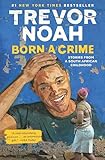
Born a Crime by Trevor Noah
Trevor Noah’s memoir of growing up in apartheid and post-apartheid South Africa is, among other things, a meditation on the relationship between systemic violence and individual resilience — a relationship that The Body Keeps the Score examines clinically but that Born a Crime renders in vivid human terms. Noah’s childhood was genuinely dangerous: his very existence was illegal under apartheid law (his father Swiss, his mother Black South African), and the violence that surrounded his upbringing was both structural and intimate. His mother was shot in the head by her abusive second husband. He survived by his wits and by his mother’s extraordinary, sometimes bewildering faith.
What makes Born a Crime relevant here is not only its subject matter but its emotional texture. Noah writes about surviving a violent and chaotic childhood with humour, generosity, and what might be called tactical hope — not the kind that denies difficulty but the kind that refuses to let difficulty be the whole story. For readers of The Body Keeps the Score who found the clinical account of childhood trauma heavy, Noah offers something that a psychiatrist’s case studies cannot: the specific, irreducible personality of a particular person who passed through particular fires and came out shaped but not destroyed.
It is also a book about love — specifically about the complicated, sustaining, sometimes maddening love between a mother and a child, and what that love can and cannot protect. Van der Kolk is clear that secure attachment is the foundation of resilience. Born a Crime is one of the most vivid illustrations of what that looks like in practice, and what happens when it coexists with chaos.
On Memoirs of Surviving and Recovering
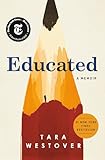
Educated by Tara Westover
Tara Westover grew up in the mountains of Idaho in a family that did not believe in schools, doctors, or the authority of the state. She taught herself to read, educated herself into Cambridge and Harvard, and wrote this book — a memoir of the process — with a scrupulous honesty about what she gained and what it cost her. Educated is, among other things, an account of the dissonance between the self one creates in survival and the self one might become in safety, and of how long it takes for the nervous system to register that the danger has passed.
Readers of The Body Keeps the Score will recognise the patterns Westover describes — the hypervigilance, the loyalty to an abuser, the way the body responds to threat long after the immediate threat has been removed — even though Westover does not use that clinical vocabulary. She writes instead from inside the experience, which gives the book a kind of authenticity that clinical language, however precise, cannot replicate. The most affecting passages are those in which she describes her confusion about her own history: not knowing whether her memories are accurate, not knowing whether her attachment to her family is love or the traumatic bonding van der Kolk describes, not knowing who she would be if she stopped fighting.
Educated is not a recovery narrative in the conventional sense; it does not arrive at easy resolution. But it is an honest account of what beginning to see clearly looks like, and for many readers that honesty is more sustaining than a tidier story would be.
The Glass Castle by Jeannette Walls
Jeannette Walls grew up with parents who were, by any conventional measure, neglectful — a mother absorbed in her own artistic ambitions, a father of dazzling intelligence and catastrophic alcoholism who moved the family from town to town, always promising the glass castle he would one day build them and never building it. The Glass Castle is Walls’s account of that childhood, and it is remarkable for the complexity of its emotional register: she neither condemns her parents nor excuses them, and she refuses the reader the comfort of a simple villain.
For those who have read The Body Keeps the Score, the book offers a different kind of illumination than the clinical text. Van der Kolk describes what happens neurologically when a child cannot rely on their caregivers for safety and co-regulation. Walls describes what that feels like from the inside — the loyalty that coexists with rage, the creativity that emerges from necessity, the specific adaptations a child makes when the adults in the room are not reliably available. There is something instructive in the fact that Walls became a journalist: someone whose professional instinct is to observe clearly, to report accurately, to resist the distortions of wishful thinking. The memoir reads as the work of someone who learned very early that seeing things as they are, however painful, is safer than pretending.
The Glass Castle is not, in the end, a story about damage. It is a story about the complicated love that survives damage, and about the long, unfinished work of deciding what to carry forward and what to put down.
Becoming by Michelle Obama
Michelle Obama’s memoir is not a trauma narrative in the direct sense, and it would be reductive to categorise it as one. But Becoming is, among many other things, an account of a childhood shaped by systemic disadvantage and the specific vigilance required to navigate it — and of the effort, sustained over decades, of building an identity that is one’s own rather than a reaction to other people’s limiting assumptions.
Obama writes about her South Side Chicago upbringing with warmth and without sentimentality, about the ways in which the small daily negotiations of Black life in America — navigating a school counsellor who tells her she is not Princeton material, making oneself smaller in spaces not designed to include people like her — accumulate into something that requires active, ongoing effort to metabolise. She does not use the language of trauma, but she describes, with precision and intelligence, what it costs to maintain dignity and ambition in an environment that does not always invite them.
For readers of The Body Keeps the Score who are thinking about the intersection of structural injustice and individual psychological experience — about what it means to carry not just personal history but collective history in the body — Becoming is one of the most eloquent and honest accounts available. It is also simply one of the best-written memoirs of the last decade.
On the Psychology of Healing and Resilience
Mindset by Carol S. Dweck
Carol Dweck’s research on fixed and growth mindsets began as educational psychology and became something considerably larger — a framework for understanding how the stories we tell about our own capacities shape what we are actually capable of. The fixed mindset holds that intelligence, talent, and ability are static: you either have them or you do not. The growth mindset holds that all capacities can be developed through effort and learning. The difference between these two orientations, Dweck argues, is not trivial; it shapes how people respond to failure, to challenge, and to the discomfort of not yet knowing how to do something.
For readers of The Body Keeps the Score, the connection to trauma may not be immediately obvious, but it runs deep. One of the most persistent effects of traumatic experience is the internalisation of a fixed story about the self — I am damaged, I am not capable of connection, I will always be this way — that functions as a fixed mindset applied not to intelligence but to identity and recovery. Dweck’s research suggests that these stories are neither permanent nor accurate, and her book offers a rigorous, evidence-based account of how they can be changed.
Mindset is not a therapeutic text, and Dweck does not engage directly with trauma. But for readers who are ready to move from understanding their history to actively engaging with their capacity to grow, it is one of the clearest and most research-grounded frameworks available.
Grit by Angela Duckworth
Angela Duckworth’s research asks a question that feels especially relevant after reading The Body Keeps the Score: what is it that allows some people to persist through extraordinary difficulty, and how much of that capacity is fixed versus learnable? Her answer — that grit, defined as passion and perseverance towards long-term goals, is a more reliable predictor of significant achievement than talent or IQ — is now well known. Less well appreciated is the psychological texture of the book, which spends considerable time on the conditions that produce grit and on the distinction between the kind of hard work that develops people and the kind that simply depletes them.
The chapter on parenting is particularly relevant here: Duckworth describes research showing that the children most likely to develop grit are those who grow up in environments that are demanding and warm simultaneously — where high expectations coexist with genuine support and emotional safety. This maps directly onto what van der Kolk argues about secure attachment as the foundation of resilience. Children whose early relationships provide both challenge and safety develop nervous systems that can tolerate frustration and recover from failure. Children whose early relationships are characterised by unpredictability or threat develop different neurological defaults.
Grit does not spend much time on what happens when the foundations of secure attachment are absent, which is where The Body Keeps the Score begins. But it is a useful companion for thinking about what recovery is aiming at — not just the absence of symptoms but the development of the capacity to pursue something that matters over time.
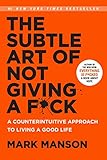
The Subtle Art of Not Giving a F*ck by Mark Manson
Mark Manson’s book is frequently misread as a manual for indifference. It is actually a book about values — specifically about the damage done by caring deeply about things that are outside one’s control or that reflect other people’s definitions of success, and about the liberation available when one identifies what genuinely matters and organises one’s emotional energy around that instead. The provocation in the title is not nihilism; it is an argument for selectivity and intentionality about what deserves one’s attention and concern.
For readers of The Body Keeps the Score, this reframe has a specific resonance. One of the effects of trauma, as van der Kolk describes, is the generalisation of threat responses: the nervous system that was shaped by genuine danger continues to respond as though everything is dangerous. The emotional and cognitive corollary is an inability to distinguish between what actually matters and what merely feels urgent. Manson’s argument — that the quality of a life is determined by the quality of the problems one chooses to engage with — is not a clinical intervention, but it points toward the same territory that trauma-informed therapy addresses: the recovery of the capacity to choose.
The book is funnier and more irreverent than anything else on this list, which is itself a relief after extended engagement with trauma literature. Manson does not shy away from difficulty — several of his chapters engage directly with mortality, loss, and failure — but he refuses to make difficulty the last word, and that refusal is, for many readers, a useful counterbalance.
The Psychology of Money by Morgan Housel
This last entry may seem the most surprising inclusion, but it earns its place. Morgan Housel’s book is ostensibly about financial decision-making, but its deeper subject is the relationship between experience, emotion, and the stories we tell ourselves about what we need in order to feel safe. Housel argues that financial behaviour is driven not by spreadsheet logic but by deeply personal narratives formed by the specific economic circumstances in which one grew up — which is to say, by history carried in the body and the memory, exactly as van der Kolk describes.
The chapters on risk, on enough, and on the difference between wealthy and rich are particularly illuminating for anyone who has been thinking about how early experiences of scarcity, instability, or chaos shape one’s relationship to security in adulthood. Housel does not use the word trauma, but he describes, with considerable psychological sophistication, how the emotional imprints of past experience continue to drive present behaviour in ways that pure reason cannot override — and how recognising this is the first step toward making different choices.
The Psychology of Money is the most accessible book on this list, and it offers something that the more explicitly therapeutic titles sometimes do not: the reminder that the patterns formed by difficult experience show up everywhere in a life, not only in the consulting room, and that understanding them has practical consequences well beyond the psychological.
Continuing the Reading
The fifteen books above cover a wide range, from clinical theory to raw memoir to philosophical challenge to practical framework. If you have found yourself drawn to the intersection of psychology and self-understanding, our guide to the best books about mental health covers more titles across this territory, including books on anxiety, grief, and the science of wellbeing.
Reading in this area is, by nature, uneven. Some books will land at exactly the right moment; others will feel premature, or simply not like the right register for where you are. That is not a failure of either the book or the reader. The best approach is probably to follow what genuinely draws you rather than completing the list in order — and to allow yourself to stop when a book is asking more than you can currently give.
Van der Kolk’s central insight — that the body keeps the score — is not only a clinical observation. It is also an argument for patience with oneself. The work of understanding how we carry our history is slow, non-linear, and often uncomfortable. The books here are companions for that work, not replacements for it.
For the Best Psychology Books
For the definitive guide to psychology — from cognitive science to social psychology and behavioural economics — see our Best Psychology Books list.
This post contains Amazon affiliate links. If you purchase a book through one of these links, we may earn a small commission at no additional cost to you. We only recommend books we believe are genuinely worth your time.
Frequently Asked Questions
What should I read after The Body Keeps the Score?
It depends on what you are looking for. If you want more on the science of trauma and the nervous system, Lost Connections by Johann Hari and Man's Search for Meaning by Viktor Frankl are excellent next steps. If you are drawn to memoir — to hearing what survival looks like from the inside — Educated by Tara Westover, The Glass Castle by Jeannette Walls, and Born a Crime by Trevor Noah are among the most powerful accounts available. If you are ready to move towards practical healing and resilience, Daring Greatly by Brené Brown and Mindset by Carol Dweck offer rigorous, research-grounded frameworks.
Is The Body Keeps the Score appropriate for someone currently in therapy?
Many readers find it enormously validating to read alongside therapy, particularly if their therapist is familiar with somatic or trauma-informed approaches. It can help you name what you are experiencing and give you language to bring into sessions. That said, some readers find it activating — it is a detailed clinical account and does not soften its subject matter. If you are in an acute phase of processing, it is worth discussing with your therapist before you start, or reading in short sections rather than straight through.
What is The Body Keeps the Score actually about?
The Body Keeps the Score, by psychiatrist Bessel van der Kolk, argues that trauma is not merely a psychological event stored as difficult memories — it is a physiological event that reshapes the brain, the nervous system, and the body itself. Van der Kolk draws on decades of clinical work to show why talk therapy alone is often insufficient for trauma survivors, and surveys a range of somatic and body-based approaches — EMDR, yoga, theatre, neurofeedback — that work at the level of the nervous system rather than only the mind.
Are there novels similar to The Body Keeps the Score in terms of themes?
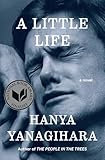
The Body Keeps the Score is non-fiction, but many readers drawn to its themes find powerful resonance in literary fiction. Novels that deal seriously with trauma, embodiment, and survival include A Little Life by Hanya Yanagihara, The Kite Runner by Khaled Hosseini, and Homegoing by Yaa Gyasi, which traces intergenerational trauma across generations of a Ghanaian family. These are demanding reads, but they engage the same emotional and psychological territory from a different angle.
Why did The Body Keeps the Score become such a cultural phenomenon?
The book was published in 2014, but its ascent to the top of bestseller lists happened several years later, driven largely by word-of-mouth among readers who felt it named something they had not previously had language for. Part of its power is that van der Kolk refuses to separate clinical categories from lived experience — he writes about real patients with real histories, and the accumulation of those stories creates something that feels less like a science book and more like a reckoning. The broader cultural conversation around trauma, ACEs (adverse childhood experiences), and mental health that accelerated in the late 2010s gave the book a readership far beyond clinical psychology.