15 Books Like Outliers to Read Next
Loved Outliers? These 15 books explore why some people succeed, what luck and practice actually explain, and how systems shape individual outcomes — with the same big-idea clarity.
By Elena Marsh
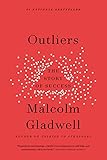
Malcolm Gladwell’s Outliers: The Story of Success is built around a simple but genuinely subversive argument: the people we celebrate as self-made geniuses are, in almost every case, beneficiaries of hidden advantages they did nothing to earn. The Canadian hockey players who dominate their sport were born in January, February, and March — early in the eligibility year, which made them physically larger than their peers at the critical moment of selection. Bill Gates had access to a computer terminal at his school in 1968, when almost no one else in the world did. The Beatles played eight-hour sets in Hamburg before they were famous. Talent, in Outliers, is real but insufficient; what separates the exceptional from the merely good is usually circumstance, timing, and the accumulation of opportunity.
The 10,000-hour rule — Gladwell’s popularisation of Anders Ericsson’s research on deliberate practice — became the book’s most discussed idea, partly because it was the most democratising: if world-class expertise is a product of sustained effort rather than innate gift, then achievement is more available than we assume. But Outliers complicates even that optimism: the people who put in 10,000 hours are generally the people who were given structured time, early access, and social permission to practice. Effort compounds opportunity; without the opportunity, the effort has nowhere to go.
What makes Outliers distinctive is not just the argument but the method. Gladwell has a gift for identifying the moment at which a social science finding, properly understood, turns the conventional story on its head. He takes the reader’s assumption — that success is a straightforward product of ability and will — and dismantles it case by case, using evidence that was always available but that nobody had assembled into a coherent picture. The result is a book that changes how you look at achievement, and at the systems that produce or prevent it.
Quick answer: If you want more Malcolm Gladwell, start with The Tipping Point or Blink. For the science of practice and expertise, Grit by Angela Duckworth is the essential companion. For the cognitive science that underpins the whole argument, Thinking, Fast and Slow by Daniel Kahneman is the deeper read.
More Malcolm Gladwell
The books below are Gladwell’s own — each one a variation on his central preoccupation with the gap between how we think human behaviour works and how it actually works.
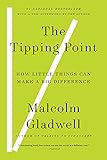
The Tipping Point by Malcolm Gladwell
The Tipping Point is the book that established Gladwell as a writer, and it shares with Outliers the same core method: taking a concept from social science — in this case, the epidemiological model of how diseases spread — and applying it to cultural and social phenomena to produce a counterintuitive account of causation. Why do some ideas, products, and behaviours suddenly spread through a population while others fail to gain traction? Gladwell’s answer involves three types of people (Connectors, Mavens, and Salesmen), a principle of contextual stickiness, and the idea that the right small change at the right moment can tip a trend from dormancy to epidemic.
For Outliers readers, the continuity is clear: just as Gladwell argues that exceptional individuals are products of their environment more than their talent, he argues here that social phenomena are products of specific contextual conditions more than any intrinsic quality. The same scepticism about conventional causation is at work. The Tipping Point is slightly more optimistic than Outliers — it implies that if you can identify the right leverage points, you can engineer social change — but the underlying intellectual move is identical.
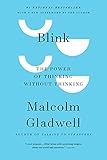
Blink by Malcolm Gladwell
Blink is Gladwell’s account of rapid cognition: the thin-slicing ability that allows an art expert to spot a forgery in seconds, or a tennis coach to predict a double fault before the ball leaves the racquet. On its surface this seems like an argument for intuition over deliberation, but Gladwell’s real interest is in understanding when the unconscious mind’s fast assessments are reliable and when they are fatally biased. A pair of musicians played blind to an audition panel consistently outperforms the candidate who played with their back to the panel. Snap judgments of faces produce biased outcomes in courts and classrooms. The same cognitive process that enables expertise also encodes prejudice.
The connection to Outliers is oblique but genuine. Both books are interested in the hidden machinery behind outcomes that appear to be straightforward products of merit. Blink examines that machinery in individual decision-making; Outliers examines it at the level of careers and life trajectories. Read together, they build a picture of a world in which the outcomes we attribute to talent, skill, or justice are shaped at every level by factors we are not consciously aware of.
What the Dog Saw by Malcolm Gladwell
What the Dog Saw is a collection of Gladwell’s long-form journalism from The New Yorker, and it is the best argument for reading Gladwell at essay length rather than book length. Each piece isolates a single idea and develops it with the compression and precision that Gladwell’s longer books sometimes dilute. The essays on Ron Popeil and the televised pitch, on the Enron collapse as a puzzle rather than a secret, on the problems with the way we think about genius and late-blooming — all of these share the Outliers instinct for finding the moment at which received wisdom turns out to be wrong.
For readers who want more of Gladwell’s specific method — the case study, the counterintuitive reveal, the social science finding re-examined through a human story — this is the richest available source. It also offers a useful corrective to the criticism that Gladwell’s books are padded: the essays show what he can do when the argument must carry itself without the structural support of a book-length narrative.
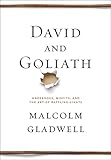
David and Goliath by Malcolm Gladwell
David and Goliath is the book most directly in conversation with Outliers because it focuses on the same question from a different angle: not what advantages we fail to recognise, but what we fail to recognise as disadvantage. Gladwell’s argument is that conditions we automatically read as weaknesses — a learning disability, a difficult childhood, the experience of losing a parent early — frequently produce strengths that the person in question would not otherwise have developed. The underdog wins not despite their disadvantage but in some important cases because of it.
This is a more contested argument than the one in Outliers, and critics have pointed to selection bias in Gladwell’s examples. But the intellectual challenge is valuable: the same analytical lens that Outliers applies to advantage — asking what structural factors are actually driving an outcome — David and Goliath applies to disadvantage. Whether or not you accept every case study, the book sharpens your ability to question the assumptions embedded in the words “advantage” and “disadvantage.”
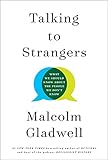
Talking to Strangers by Malcolm Gladwell
Talking to Strangers is Gladwell’s darkest and most unsettling book, and it returns to the question at the heart of Blink: why are human beings so poor at reading other people, and what are the consequences of that failure? Starting from the traffic stop in which Sandra Bland was arrested and later died in police custody, Gladwell examines the cognitive and institutional systems that cause us to misread strangers. We default to truth — we assume people are who they say they are. We couple our judgments to context in ways that make us systematically unreliable when the context changes. Trained professionals are no better at detecting lies than untrained civilians.
For Outliers readers, the structural argument will feel familiar: the individual failures Gladwell examines — the judge who missed Bernie Madoff, the Cuban intelligence agents who fooled the CIA, the campus administrators who failed to act on reports about Jerry Sandusky — are not primarily failures of individual intelligence or character but failures of systems and default assumptions that nobody chose and very few people have examined.
On Success, Talent, and Practice
These books take the questions Outliers raises — what actually produces exceptional performance, and how much does circumstance determine outcomes? — and pursue them with greater empirical rigour.
Grit by Angela Duckworth
Angela Duckworth spent years studying what she calls grit — the combination of passion and perseverance toward long-term goals — and her research is both a complement to Outliers and a quiet corrective to it. Where Gladwell emphasises circumstance and structural advantage, Duckworth is interested in the psychological qualities that allow individuals to sustain effort over time, often in the face of setbacks and discouragement. Her finding that grit is a better predictor of achievement than IQ, in settings from the West Point military academy to the National Spelling Bee, is one of the most cited findings in contemporary psychology.
The relationship between the two books is productive rather than contradictory. Outliers is right that opportunity structures success; Duckworth’s research adds that even within populations with similar opportunities, the individuals who persist over time tend to distinguish themselves from those who don’t. Both are arguing against simple talent narratives — Duckworth because talent without persistence rarely converts to achievement, Gladwell because talent without opportunity rarely gets to demonstrate itself at all. Together they offer a more complete picture than either provides alone.
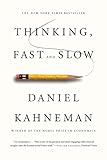
Thinking, Fast and Slow by Daniel Kahneman
Daniel Kahneman’s account of the two systems through which the human mind operates — System 1 (fast, automatic, intuitive) and System 2 (slow, effortful, deliberate) — provides the cognitive science foundation that Outliers assumes without fully explaining. When Gladwell argues that we systematically misattribute success to talent rather than circumstance, he is describing a failure of System 2 to correct System 1’s automatic pattern-matching. We see a successful person and our minds immediately construct a story of talent and merit; the slower, more effortful analysis that would reveal the structural advantages is rarely performed.
Thinking, Fast and Slow is a substantially denser and more demanding book than anything Gladwell has written — it is an academic who has spent forty years studying human cognition producing a summary of that research for a general audience, not a journalist making science accessible through storytelling. But for readers who finish Outliers wanting to understand why our beliefs about success are so resistant to correction, Kahneman’s account of cognitive bias, narrative fallacy, and the halo effect is the place to go.
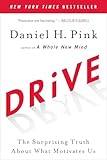
Drive by Daniel Pink
Daniel Pink’s argument in Drive is that the dominant model of human motivation — carrots and sticks, external rewards and punishments — is largely false, and that the research demonstrating its falsity has been sitting in academic journals for decades while business, education, and government have continued to ignore it. The real drivers of sustained, high-quality performance are autonomy (the desire to direct our own lives), mastery (the urge to get better at things that matter), and purpose (the need to feel we are serving something larger than ourselves).
The connection to Outliers is structural: both books are making an argument that the conventional story — success flows from talent, performance flows from incentives — is not just incomplete but actively misleading, and that the evidence for a better account has long been available to anyone willing to look at it. Pink is more focused on organisational and educational systems than Gladwell, but the intellectual move is the same: find the social science finding that the mainstream has not absorbed, and show what the world looks like once you take it seriously.
Atomic Habits by James Clear
James Clear’s immensely practical account of habit formation operates at a different register from Outliers — it is a how-to book rather than a work of social analysis — but the two are more closely related than they might appear. Outliers demonstrates that exceptional performers are almost always the beneficiaries of early, repeated, structured practice in their domain: the 10,000 hours are hours of accumulated micro-behaviours that compound over years into expertise. Atomic Habits explains the mechanics of that compounding process at the level of individual behaviour.
Clear’s four laws of behaviour change — make it obvious, make it attractive, make it easy, make it satisfying — are in effect a practical guide to creating the kind of daily practice conditions that Outliers’ subjects were given by their circumstances. Where Gladwell explains why early environmental structures matter, Clear explains how to engineer those structures for yourself when you were not lucky enough to be born into them. It is, in this sense, the most actionable companion to Outliers on this list.
On Why Smart People Succeed (and Fail)
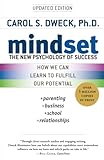
Mindset by Carol S. Dweck
Carol Dweck’s research on fixed versus growth mindsets is one of the most influential bodies of work in contemporary psychology, and it addresses directly a tension that Outliers raises but does not resolve: if success is so heavily determined by circumstance, what is the role of individual belief and effort? Dweck’s answer is that how people interpret their own abilities — whether they see them as fixed traits or as capacities that can be developed through effort — has a profound effect on their willingness to take on challenges, persist through failure, and ultimately achieve at higher levels.
The growth mindset is not a refutation of Outliers’ structural argument; it is a complement to it. People born into advantageous circumstances who have a fixed mindset often fail to develop the skills those circumstances enable, while people with fewer structural advantages but strong growth orientations sometimes find unexpected paths to achievement. Both Dweck’s psychological account and Gladwell’s structural account are needed to make sense of the variation in outcomes that neither alone can explain.
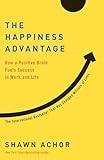
The Happiness Advantage by Shawn Achor
Shawn Achor’s research, developed from a decade teaching positive psychology at Harvard, challenges the conventional productivity formula: work hard, achieve success, then be happy. His evidence, drawn from studies of performance across multiple professions, suggests the causal arrow runs the other way — that positive affect precedes and enables higher performance rather than following from it. People who are in a positive mental state are more creative, more resilient, more socially effective, and better at solving problems than the same people in a neutral or negative state.
For Outliers readers, the interest is in what this adds to Gladwell’s picture of exceptional performance. If the environments that produce exceptional performers are also generally environments of psychological safety, encouragement, and positive reinforcement — as many of Gladwell’s case studies suggest — then Achor’s research may help explain part of the mechanism. The structural advantages Gladwell identifies do not just provide practice hours; they may also provide the psychological conditions under which sustained effort and growth are possible.
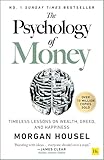
The Psychology of Money by Morgan Housel
Morgan Housel is the closest contemporary heir to Gladwell’s method: he takes counterintuitive ideas from behavioural economics and psychology and develops them through well-chosen stories and case studies that make the abstract concrete. The Psychology of Money applies this approach to financial decision-making, arguing that the way people behave with money has far less to do with intelligence or information than with their personal history, emotional temperament, and the particular historical moment they came of age in.
The parallels with Outliers are direct. Housel’s argument that the most successful investors are not necessarily the most analytically gifted but the people whose experience and temperament happen to align with the particular conditions of the market they are navigating is essentially an Outliers argument applied to finance. The chapter on luck and risk is the most explicit connection: Housel argues, as Gladwell does, that outcomes we attribute to skill are heavily influenced by factors the individual did not control and may not even recognise.
On Systems, Culture, and Hidden Advantages
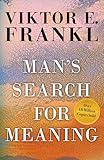
Man’s Search for Meaning by Viktor E. Frankl
Viktor Frankl’s account of surviving the Nazi concentration camps and the logotherapy he developed from that experience seems, at first, an unlikely pairing with Outliers. But the book addresses something that Gladwell’s structural analysis leaves open: what sustains individuals within brutal systems that are entirely outside their control? Frankl’s answer — that the last human freedom is the freedom to choose one’s attitude toward one’s circumstances — is not a refutation of Gladwell’s argument but a necessary supplement to it.
Outliers is primarily concerned with success as it is conventionally measured: professional achievement, fame, wealth. Frankl is concerned with something prior and deeper: the capacity to maintain meaning and agency in circumstances where conventional success is impossible. For readers who find Outliers’ structural determinism slightly claustrophobic — if success is so heavily determined by circumstance, what can any individual do? — Frankl’s book offers a philosophically serious answer that does not require abandoning the structural analysis.
Becoming by Michelle Obama
Michelle Obama’s memoir is one of the most searching accounts of what it actually feels like to navigate the gap between structural disadvantage and individual aspiration that the genre has produced. She grew up on the South Side of Chicago in a family of modest means, attended Princeton and Harvard Law School, and eventually became First Lady of the United States — a trajectory that, in Outliers’ terms, required an extraordinary alignment of individual effort, structural opportunity, and historical timing.
What Becoming adds that Gladwell’s analytical mode cannot is the texture of that experience: the moments of doubt, the awareness of being monitored and assessed differently because of race and gender, the cost of assimilation into institutions that were not built for people like her, and the slow development of a sense of purpose that was genuinely hers rather than one assigned by others’ expectations. It is an Outliers story told from the inside, with all the complexity and ambiguity that the analytical framework necessarily flattens.
How to Choose Your Next Read
If you want more Malcolm Gladwell: start with The Tipping Point, then Blink, then David and Goliath.
If you want the science of practice and expertise: Grit by Duckworth, then Ericsson’s Peak for the academic foundation.
If you want the cognitive science of how we misread success: Thinking, Fast and Slow is the essential deeper read.
If you want practical tools for building the practice conditions Outliers describes: Atomic Habits and Drive.
If you want a personal, first-person perspective on the structural argument: Becoming by Michelle Obama.
For a full guide to Gladwell’s catalogue, see our Malcolm Gladwell books ranked guide, which covers every book from The Tipping Point to Revenge of the Tipping Point with reading recommendations for each.
For the Best Self-Help Books
For the definitive guide to self-help and personal development — from Atomic Habits to The Power of Now — see our Best Self-Help Books list.
More Non-Fiction and Self-Help Guides
- Books Like Daring Greatly: Vulnerability and Courage
- Best Books on Leadership: Essential Reads for Managers
Affiliate disclosure: Links to Amazon on this page are affiliate links. We earn a small commission at no extra cost to you. This does not influence our editorial recommendations.
Frequently Asked Questions
What should I read after Outliers?
The most natural follow-ups to Outliers depend on what you found most compelling. For more Malcolm Gladwell, start with The Tipping Point or Blink — both share the same gift for finding the counterintuitive thread in social science research. For a deeper look at practice and expertise, Grit by Angela Duckworth and Peak by Anders Ericsson both extend and complicate Gladwell's 10,000-hour argument with more rigorous evidence. If the structural and cultural dimensions of success interested you most, Thinking, Fast and Slow by Daniel Kahneman offers the cognitive science that underpins much of what Outliers describes.
Is the 10,000-hour rule from Outliers accurate?
The 10,000-hour rule as Gladwell presents it is a simplification of Anders Ericsson's research on deliberate practice — and Ericsson himself has said that Gladwell's version misrepresents his findings. Ericsson's actual argument is that it is not simply hours of practice that produce expertise, but hours of deliberate practice: practice that is focused, effortful, and targeted at specific weaknesses with immediate feedback. The total figure also varies enormously by domain. Gladwell's version captures something true — that world-class expertise requires sustained effort over years — but strips out the qualifications that make the research genuinely useful. Ericsson's own book, Peak, is the corrective.
What is Outliers mainly about?
Outliers argues that extraordinary achievement is not primarily a product of individual talent or effort, but of hidden advantages: the year someone was born, the opportunities they were given, the cultural legacy they inherited, the historical moment they happened to occupy. Gladwell uses case studies — Bill Gates, the Beatles, Canadian hockey players, Korean Air crashes — to argue that we systematically underestimate the role of circumstance in success and overestimate the role of innate ability. The book is a sustained attack on the myth of the self-made individual.
Are Malcolm Gladwell's books worth reading?
They are worth reading as stimulating, beautifully crafted arguments, with the caveat that they are arguments rather than definitive accounts of the research they describe. Gladwell is a storyteller who uses social science as raw material, and his books have attracted real criticism from academics for oversimplification and selective use of evidence. The most productive way to read Outliers — or any Gladwell book — is as a provocation that sends you to the primary sources rather than as a final word on the subject.
Do I need to read Malcolm Gladwell's books in order?
No. All of Gladwell's books are standalone — each is built around a single central idea developed through independent case studies and can be read in any sequence. That said, Outliers and David and Goliath share a preoccupation with how we misread advantage and disadvantage and read well together. The Tipping Point and Blink represent Gladwell's earlier, more focused mode and are useful entry points if you have not read him before.