15 Books Like Born a Crime to Read Next
Loved Born a Crime? These 15 memoirs and narrative non-fiction books share Trevor Noah's combination of personal honesty, humour, political awareness, and hard-won resilience.
By Natalie Osei

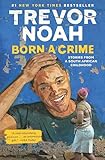
Trevor Noah was born in 1984 in South Africa, the child of a Black Xhosa mother and a white Swiss father — a combination legally criminalised under apartheid’s Prohibition of Mixed Marriages Act. Born a Crime, published in 2016, is the account of growing up inside that anomaly: too light-skinned for one side, too dark for the other, fluent in multiple languages as a matter of survival, raised by a woman whose faith and ferocity is the book’s true subject.
What distinguishes it from the large field of contemporary memoir is that Noah never allows the personal to float free of the structural. Every anecdote is also an explanation — of how apartheid shaped space, language, and self-perception; of how race operates not as fixed biology but as a set of continuously negotiated social performances. The humour is not decoration: it is the means by which Noah describes genuinely horrifying circumstances without sensationalising them or retreating into victimhood.
Quick answer: Start with Educated by Tara Westover — it shares Born a Crime’s central preoccupation with what it costs to build a self in opposition to everything your origin demands. For the South African political dimension, Long Walk to Freedom by Nelson Mandela is indispensable. For memoir equally sharp on race and identity, Becoming by Michelle Obama is the closest match in tone.
Memoirs of Unlikely Survival and Wit
These memoirs share Born a Crime’s combination of a difficult origin, a formidable parent, and a narrator whose intelligence and humour are inseparable from the survival strategies they developed as a child.
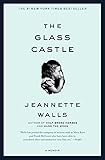
The Glass Castle by Jeannette Walls
Jeannette Walls grew up the child of a brilliant, charismatic, and profoundly irresponsible father and a mother who prioritised her art over the welfare of her children. The family moved constantly and eventually settled in genuine poverty in a West Virginia mining town. The Glass Castle is Walls’s account of that childhood and the long, complicated reconciliation with her parents that followed.
The comparison to Born a Crime is not one of political context — Walls’s story is about American poverty rather than apartheid — but of emotional architecture. Both books centre a child navigating a world defined by a parent’s powerful, flawed, and ultimately loving personality; both writers are completely honest about how damaging those childhoods were without reaching for easy condemnation. Walls, like Noah, holds affection and anger simultaneously.
Educated by Tara Westover
Tara Westover grew up in rural Idaho in a family that did not register her birth or send her to school, organised around her father’s survivalist conviction that the government was an instrument of control. She passed the entrance exam to Brigham Young University at seventeen with no formal schooling. Educated, published in 2018, is her account of that process and of what it cost her to leave.
What makes it the most essential read for Born a Crime readers is the precision with which Westover analyses self-transformation — the way education does not simply add knowledge but rewrites the stories you tell about who you are and where you came from. Noah’s memoir makes the same point through language: which language you speak, and who you can speak it with, determines what version of reality you are permitted to inhabit.
Can’t Hurt Me by David Goggins
David Goggins grew up in an abusive household in rural Indiana and eventually became a Navy SEAL and ultramarathon runner. Can’t Hurt Me, published in 2018, is partly a memoir of extreme endurance and partly an argument about the relationship between suffering, identity, and self-reinvention.
The comparison to Born a Crime is tonal as much as circumstantial: both are books about the construction of a self against the specific gravity of a damaging origin. Where Noah uses comedy and structural analysis, Goggins uses intensity. But both share a refusal to offer clean redemption — Can’t Hurt Me is honest about how much damage remains even after the transformation.
Memoirs of Political Awakening
These books share Born a Crime’s quality of using personal narrative to illuminate the political — the way large historical forces land on individual bodies and make certain lives possible and others not.
Long Walk to Freedom by Nelson Mandela
The essential companion for any reader who found the apartheid context of Born a Crime as gripping as the personal narrative. Mandela’s autobiography traces his life from his childhood in the Transkei through his legal career in Johannesburg, his leadership of the ANC, his twenty-seven years on Robben Island, and the negotiated transition to democracy. It is one of the great political memoirs of the twentieth century.
Where Noah’s account of apartheid is necessarily intimate and childhood-scaled — the experience of a boy trying to understand why his family cannot walk together on the street — Mandela’s is panoramic. Reading them together produces something neither alone provides: the texture of ordinary life under the system alongside the history of how that system was built and dismantled.
Becoming by Michelle Obama
Michelle Obama’s memoir, published in 2018, traces her life from her working-class childhood on the South Side of Chicago through Princeton, Harvard Law, and her eight years as First Lady. It is a book about race, class, ambition, and what it means to be a Black woman navigating institutions built for and by white men.
Both Noah and Obama are acutely interested in what education does to a person’s relationship to their origin — the way it opens doors and simultaneously creates distance from the community you came from. Both are rigorous about the performance and policing of racial identity, and the unwritten rules governing how you must present yourself to be legible to the institutions you are entering. For more memoir in this vein, see our roundup of books like Becoming.
A Promised Land by Barack Obama
Barack Obama’s memoir of his 2008 presidential campaign and the first two and a half years of his presidency is more reflective and structurally ambitious than most political memoir. Published in 2020, it is the work of a man thinking carefully about what it means to occupy the most powerful office in the world while being the first person who looks like him to do so.
What connects it to Born a Crime is the shared intellectual project of understanding how systems work — how race functions within institutions, how power shapes what is possible, and how a person maintains moral coherence within structures that are partly corrupt. A Promised Land rewards readers who finished Born a Crime wanting to think more rigorously about how political change actually happens.
Memoirs of Finding Identity Against the Odds
These books share Born a Crime’s concern with identity — what it means to build a coherent self in conditions that deny you one.
Daring Greatly by Brené Brown
Brené Brown’s 2012 research synthesis argues that vulnerability — the willingness to be seen fully, without armour — is not a weakness but the precondition for genuine connection and self-respect. This is not an obvious companion to Born a Crime, but the connection is real.
Noah’s memoir is in large part a portrait of a person who learned to use humour, intelligence, and linguistic fluency as protective armour in situations where genuine vulnerability would have been dangerous. Brown’s framework provides vocabulary for understanding what that armour costs, and her analysis of how shame is transmitted across generations maps directly onto the dynamic between Noah and his mother Patricia — whose own capacity for vulnerability, and refusal of it, shapes the book’s most powerful chapters.
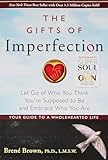
The Gifts of Imperfection by Brené Brown
Brown’s earlier and more personal book, published in 2010, argues for the relationship between wholehearted living and the willingness to let go of inherited stories about who we should be. It is shorter than Daring Greatly, structured as a series of guideposts rather than a sustained argument.
For Born a Crime readers, it resonates most strongly around the questions of belonging and authenticity that run through Noah’s memoir. His account of being neither Black enough nor white enough — of always being the wrong kind of person in every room — illustrates exactly what Brown calls “fitting in” as opposed to “belonging.” The distinction she draws, that fitting in requires changing yourself to match your environment while belonging requires bringing your full self, illuminates something important about Noah’s story.
Grit by Angela Duckworth
Angela Duckworth’s 2016 book argues that the most reliable predictor of success is not talent but a combination of passion and perseverance — the capacity to maintain sustained effort toward a long-term goal in the face of failure and the absence of immediate reward.
Her answer to where grit comes from — that it is substantially shaped by the messages you received about effort and failure as a child — connects directly to the portrait of Patricia Noah as a woman who refused to accept the world’s assessment of what was possible for her or her son. Noah’s trajectory from Soweto to The Daily Show is, among other things, a demonstration of the quality Duckworth is describing.
Non-Fiction on Race, Systems, and Power
These books are more analytical than memoir — they explain the systems that Noah’s memoir inhabits and enacts.
Outliers by Malcolm Gladwell
Malcolm Gladwell’s 2008 book argues that success is less a product of individual genius than of particular advantages, timing, and cultural inheritance. The case is made through case studies ranging from Canadian hockey players to Bill Gates to the cultural roots of a Korean Air disaster.
For Born a Crime readers, Outliers is most valuable as a systematic articulation of something Noah shows intuitively: that individuals do not succeed or fail in a vacuum, but within systems that make success available or render it impossible regardless of effort. Gladwell’s chapter on cultural legacies is especially relevant to Noah’s account of how apartheid shaped not just the law but the psychology and social organisation of every South African who lived under it.
Man’s Search for Meaning by Viktor E. Frankl
Viktor Frankl survived four Nazi concentration camps, including Auschwitz, and Man’s Search for Meaning, first published in 1946, is his account of that experience and of the psychological theory he developed from it: that what allows a person to survive unendurable conditions is not physical strength but the capacity to maintain a sense of meaning and purpose.
The comparison to Born a Crime is not one of equivalence, but of structural concern. Both books ask what a person requires to maintain their humanity under conditions designed to deny it. Noah’s answer is language, community, and his mother’s intractable conviction that his life had value. Frankl’s answer is more abstract but compatible: meaning, and the freedom to choose one’s attitude toward one’s circumstances. It can be read in a single sitting.
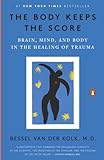
The Body Keeps the Score by Bessel van der Kolk
Bessel van der Kolk’s 2014 account of trauma — how it works in the body and mind, and why conventional psychiatric treatment has consistently failed to address its specific damage — is partly neuroscience, partly clinical memoir.
Born a Crime is, among other things, a book about intergenerational trauma — how the violence of apartheid inscribed itself into the psychologies of those who lived under it and was transmitted to the generation that came after. The chapter in which Noah describes watching his mother being shot by his stepfather is one of the book’s most devastating passages. Van der Kolk provides the psychological framework for understanding how that kind of violence occurs and why it recurs. The Body Keeps the Score is demanding — serious science rather than self-help — but it deepens any memoir that deals honestly with violence.
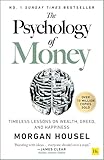
The Psychology of Money by Morgan Housel
Morgan Housel’s 2020 essay collection is not obviously a companion to Born a Crime, but the connection is real. His central arguments — that financial outcomes are heavily determined by when and where you were born, and that behaviour under conditions of scarcity shapes psychology in ways that persist long after the scarcity has ended — map directly onto the economic dimension of Noah’s memoir.
Noah’s account of growing up in poverty in post-apartheid South Africa is, if you read it carefully, a study in the psychology of scarcity. Housel provides a rigorous framework for understanding why the economic legacy of apartheid did not simply end when the legal apparatus was dismantled — why the financial behaviours of people raised under exclusion persist across generations. The Psychology of Money is accessible, elegantly written, and more politically aware than most books in the personal finance genre.
For a broader view of the memoir tradition Born a Crime belongs to, our roundup of the best biographies ever written covers twenty-four essential lives across politics, science, and culture.
Affiliate disclosure: Some links on this page are Amazon affiliate links. If you purchase through them, we earn a small commission at no extra cost to you. This does not affect which books we recommend or how we write about them.
Frequently Asked Questions
What should I read after Born a Crime?
The closest match for a Born a Crime reader is Educated by Tara Westover — it shares the same combination of a difficult childhood, an absent or dangerous parent, and the long, complicated work of constructing an identity outside the world you were born into. Becoming by Michelle Obama is the next most natural step if you want memoir that is similarly politically aware and written with warmth and precision. Long Walk to Freedom by Nelson Mandela is the essential companion for the South African dimension.
Is Born a Crime a true story?
Yes, Born a Crime is a memoir. Trevor Noah was genuinely born a crime — the product of a relationship between a Black South African woman and a white Swiss man at a time when such relationships were illegal under apartheid law. The book's title is not metaphorical. The events described, including his childhood in Soweto and Johannesburg, his complicated relationship with his mother Patricia, and his early adulthood navigating a post-apartheid South Africa that still bore all the marks of segregation, are drawn from Noah's own experience.
Why is Born a Crime considered one of the best memoirs?
Born a Crime succeeds where many memoirs fail because it refuses to treat personal experience as its own justification. Noah uses his story to illuminate how systems — apartheid, poverty, race classification, language — work at the level of individual lives. The book is funny in the way that great comic writing is always also serious: the humour is a survival mechanism, a way of processing horror without being consumed by it. The portrait of his mother Patricia is among the most vivid in recent memoir writing.
Is Born a Crime suitable for young adult readers?
Born a Crime is widely read by older secondary school students and is suitable for readers from about age 15 upward. It contains some descriptions of violence, including domestic abuse, that are handled with honesty rather than sensationalism. There is also a young adult adaptation of the book, called It's Trevor Noah: Born a Crime — Stories from a South African Childhood, which is edited for a younger readership. The adult edition is the richer work and the one most readers should start with.
What makes Born a Crime different from other celebrity memoirs?
Most celebrity memoirs are career narratives dressed up as life philosophy. Born a Crime is the opposite: a political and sociological argument delivered through the texture of a specific childhood. Noah is not using his story to explain how he became famous; he is using his fame to get people to read a book about apartheid, language, race, and what it costs a person to exist in a category the law has decided is impossible. The comedy and the structural analysis are inseparable, which is what places it in the tradition of the best political memoir.