15 Books Like Becoming to Read Next
Loved Becoming? These 15 memoirs and inspiring non-fiction books share Michelle Obama's combination of personal honesty, resilience, and belief in the possibility of change.
By Natalie Osei
Michelle Obama’s Becoming is, on its surface, a memoir about an extraordinary life: a South Side Chicago childhood defined by tight family bonds and modest means, a path through Princeton and Harvard Law School, a career in the public sector, a marriage to a man who would become President of the United States, and eight years in the White House under a level of scrutiny that is difficult to fully imagine. But what makes the book something more than a record of remarkable events is the consistency of its attention to the interior life. Obama is less interested in what happened to her than in what she made of it — and in showing, at every stage, the gap between the polished public image and the private person negotiating uncertainty, imposter syndrome, professional sacrifice, and the ongoing effort to define herself on her own terms.
The book has sold tens of millions of copies across more than thirty languages, and the appetite for it tells you something about what readers were looking for. Becoming arrived in 2018 against a particular political backdrop, but its appeal is not primarily political — it is about the universal experience of trying to construct a self that is authentically yours in the face of institutional pressure, family expectation, racial stereotype, and the steady low hum of other people’s doubt. Obama writes about being told repeatedly that her ambitions were unrealistic, that certain spaces were not meant for people like her, and about the discipline required to disbelieve those messages without dismissing the reality behind them. That combination — clear-eyed about structural obstacles, unwilling to be defeated by them — is what readers keep returning to.
The books below share one or more of those qualities: personal honesty about the gap between public image and private experience, navigation of racial and social identity, political awareness, and a fundamental belief that effort and resilience can change the trajectory of a life. Some are memoirs, some are accounts of public lives, and some are non-fiction that explores the psychology behind the qualities Becoming dramatises.
Quick answer: Start with Born a Crime by Trevor Noah — it is the single memoir that most closely matches Becoming’s tone, thematic range, and the combination of political context with intimate personal storytelling. Then move to Long Walk to Freedom for the political memoir tradition at its most profound, or Mindset by Carol Dweck if you want the psychological framework behind what Obama enacts throughout the book.
Memoirs of Resilience and Unlikely Journeys
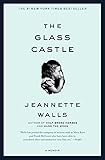
The Glass Castle by Jeannette Walls
Jeannette Walls grew up with parents who were imaginative, intellectually alive, and fundamentally incapable of providing the stability their children needed. Her father Rex was an alcoholic visionary who kept promising to build the family a spectacular glass castle and never did; her mother was a painter who resented domestic obligation and refused to be governed by conventional expectations of parenthood. The family moved constantly — across desert towns, into a squatter’s community in Appalachian West Virginia — and Walls spent much of her childhood hungry, cold, or negotiating a parent’s crisis. She eventually made it to New York and became a journalist.
What connects The Glass Castle to Becoming is not circumstance but moral texture. Like Obama, Walls refuses to flatten her parents into either villains or victims. She loved them, and the book holds that love in tension with the damage they caused. There is no simple verdict, no clean arc of escape and triumph. Both books are also written with a controlled, precise prose style that allows the difficulty of the material to register without melodrama. Readers who respond to Obama’s refusal to simplify will find The Glass Castle similarly committed to the complicated truth.
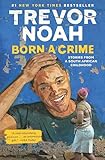
Born a Crime by Trevor Noah
Trevor Noah was born in South Africa in 1984, the child of a Black Xhosa mother and a white Swiss father, at a time when their relationship was literally a criminal act under apartheid law. Born a Crime opens with this fact — Noah’s existence was illegal — and builds from there a memoir that is alternately hilarious and devastating, always grounded in the specificity of what it meant to be a mixed-race child navigating a society built around racial categories he could not fit neatly into.
The parallels with Becoming are numerous. Both books are fundamentally concerned with race and identity, with what it means to grow up in a society that assigns you a position before you have had a chance to define yourself. Both are written with warmth and intelligence rather than grievance. Both centre the relationship with a formidable mother — Noah’s mother Patricia is one of the great characters in recent memoir, a fierce and resourceful woman whose faith and will are inseparable — and both use that relationship to examine how values are transmitted and what they cost. If you finish Becoming wanting a memoir with the same emotional generosity and the same political intelligence operating in a different context, Born a Crime is the place to go.
Memoirs by Political Figures and Activists
Long Walk to Freedom by Nelson Mandela
Mandela’s autobiography spans nearly eight decades of South African history, from his rural Transkei childhood through his legal career, his leadership of the ANC, his twenty-seven years in prison on Robben Island, and his emergence as the first democratically elected president of a post-apartheid South Africa. It is one of the great political memoirs of the twentieth century, and it shares with Becoming a quality that is rare in books by public figures: genuine reflection on personal cost and moral complexity.
Obama has spoken about Mandela as an exemplar of the belief that public service requires not just talent and conviction but sustained self-discipline and sacrifice. Long Walk to Freedom is the account of what that looks like in practice — the years of prison, the separation from family, the compromises required in negotiation, the doubt about whether the sacrifice was proportionate to the outcome. For readers who were moved by Becoming’s account of what the White House years cost the Obama family, this is the essential parallel text from a different political tradition and a far more extreme set of circumstances.
A Promised Land by Barack Obama
Barack Obama’s presidential memoir covers his political career through the first term and into the killing of Osama bin Laden. It is a long book, and notably more policy-focused than Becoming — Obama spends considerable time on the mechanics of legislation and the compromises required to pass the Affordable Care Act. But it is also, at intervals, a remarkably candid account of the weight of the presidency: the gap between the transformative vision that drives a political career and the grinding institutional reality of governing, the toll of constant scrutiny, and the private experience of being a Black man who had become the most powerful person in the world and still encountered the full repertoire of American racism.
Read after Becoming, A Promised Land works as the other half of a long conversation. The years Obama’s memoir describes are the same years Michelle Obama accounts for, and the different emphases — she focuses on identity, family, and personal cost; he focuses on policy, strategy, and the obligations of power — illuminate both books. Together they constitute one of the most intimate portraits of a presidency ever written by two people who lived it from different positions.
Memoirs of Identity and Finding Your Voice
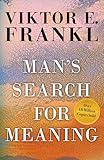
Man’s Search for Meaning by Viktor Frankl
Viktor Frankl was an Austrian psychiatrist who survived four Nazi concentration camps, including Auschwitz, and emerged to write this short, extraordinary account of what enabled some prisoners to survive psychologically when the material conditions for survival were more or less equal. His central argument — that human beings can endure almost anything if they can find meaning in it, and that the last freedom is the freedom to choose one’s attitude toward unavoidable suffering — has influenced psychology, philosophy, and self-help thinking for seven decades.
The connection to Becoming is thematic: both books are accounts of how a person navigates conditions that were not designed for them, and both rest on a conviction that the inner life — values, purpose, the stories one tells about one’s own experience — matters more than external circumstance. Obama’s tone is warmer and more optimistic than Frankl’s, shaped by a very different set of conditions, but the underlying belief in human agency and the importance of meaning is the same. Man’s Search for Meaning is also one of the shortest books on this list, at roughly 150 pages, and remains one of the most potent.
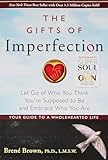
The Gifts of Imperfection by Brené Brown
Brené Brown’s research on shame, vulnerability, and belonging has made her one of the most widely read non-fiction writers of the past two decades. The Gifts of Imperfection is her most accessible and personal book: a guide to what she calls Wholehearted living, built around the insight that genuine connection — to other people, to work, to purpose — requires first letting go of the idea that your worth depends on your performance or others’ approval.
Readers of Becoming will recognise the territory immediately. One of the most striking threads in Obama’s memoir is her account of the imposter syndrome she encountered at Princeton and Harvard, the pressure to represent not just herself but an entire community, and the work required to find a self-definition that was not dependent on institutional validation. Brown provides the psychological language for what Obama is describing. The Gifts of Imperfection is written for a general audience and does not require prior knowledge of Brown’s research, and it functions equally well as a standalone read or as a companion to any memoir about the costs of navigating spaces shaped by other people’s expectations.
Daring Greatly by Brené Brown
Where The Gifts of Imperfection is focused on personal practice, Daring Greatly is Brown’s investigation of vulnerability as the precondition for genuine leadership, creativity, and connection. The title comes from Theodore Roosevelt’s “Man in the Arena” speech, which Obama cites in Becoming — Obama writes about returning to it repeatedly during her White House years as a reminder that the opinion of people who are not in the arena is not the relevant measure.
Brown’s central argument is that the willingness to be seen — to act without certainty of outcome, to risk failure or judgement — is not a weakness but the defining quality of the leaders and creators who matter most. Becoming dramatises this argument repeatedly: Obama describing her decision to speak publicly about miscarriage, about the loneliness of the White House years, about her genuine anger at specific political episodes. For readers drawn to that quality of candour in the memoir, Daring Greatly provides the intellectual framework that explains why it is not merely personal but politically and culturally significant.
Non-Fiction on the Psychology of Growth
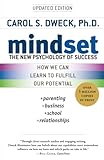
Mindset by Carol Dweck
Stanford psychologist Carol Dweck spent decades studying the difference between students who treated failure as evidence of fixed limitation and those who treated it as information to be used. Her research produced the framework of fixed mindset versus growth mindset — the idea that the belief that abilities can be developed through effort and strategy is not merely motivational but changes how the brain processes challenge and setback.
Becoming is, in practice, a sustained demonstration of growth mindset: a woman who was told repeatedly that her ambitions exceeded what was appropriate for someone from her background, and who treated those messages as problems to be solved rather than verdicts to be accepted. Dweck’s book provides the research behind that instinct. It is prescriptive in a way that memoir is not, but it covers the same essential territory — how one’s relationship to one’s own potential is formed, and what it takes to change it. Mindset is also one of the most cited books in education, leadership, and sports psychology, and its ideas have genuinely reshaped how many institutions think about talent.
Grit by Angela Duckworth
Angela Duckworth was a consultant who became a teacher, then a psychologist, following a question that she could not stop thinking about: why do some people — not always the most talented — achieve extraordinary things, while other equally or more talented people plateau early? Her answer, developed through years of research into West Point cadets, spelling bee champions, teachers in high-poverty schools, and salespeople, is that the combination of passion and perseverance she calls grit is a better predictor of long-term achievement than IQ or raw talent.
The argument resonates directly with Obama’s account of her own trajectory. Obama does not present herself as a prodigy; she presents herself as someone who worked harder and with more sustained purpose than most people around her. She writes about the importance of being willing to do the unglamorous preparatory work, about the sustaining power of having a clear sense of purpose larger than personal success. Grit is not a memoir, but it is in conversation with Becoming at nearly every turn, and readers who find Obama’s story persuasive will find Duckworth’s research a useful companion for understanding why it worked.
Atomic Habits by James Clear
James Clear’s framework for habit formation is the most practical book on this list, and also, in a quiet way, one of the most philosophically interesting. His central argument is that identity and behaviour are more closely linked than most people recognise — that the most effective way to change a habit is not to focus on the outcome you want but on the kind of person you want to be, and to treat each small action as a vote for that identity.
Obama’s account of her own daily practices — her discipline about exercise, the structures she and Barack put in place to protect family time during the White House years, the deliberate cultivation of friendships and community — reads as an intuitive enactment of Clear’s principles. She describes becoming the kind of person who prioritises certain things, rather than simply trying to achieve certain results. Atomic Habits is widely read in business and productivity contexts, but its core insights are applicable to anyone interested in the relationship between daily practice and long-term self-construction — which is one of the underlying questions of Becoming from beginning to end.
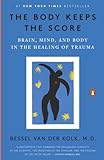
The Body Keeps the Score by Bessel van der Kolk
Bessel van der Kolk’s landmark study of trauma — how it lives in the body, how it distorts perception and behaviour, and what it takes to genuinely heal rather than simply manage — has changed how clinicians, educators, and general readers understand the relationship between past experience and present functioning. It is a more demanding read than most books on this list, combining case studies with neuroscience and reflections on therapeutic practice, but it rewards the effort with a genuinely new way of seeing human behaviour.
The connection to Becoming is indirect but real. Obama writes about the experience of miscarriage and the grief of it; about the subtle toll of constantly performing in environments built around other people’s comfort; about the emotional labour required to remain open and present while being simultaneously scrutinised and stereotyped. Van der Kolk’s framework helps name what that kind of sustained performance costs the body and the nervous system. For readers drawn to Obama’s moments of psychological honesty — the acknowledgement that certain experiences leave marks that do not simply resolve once circumstances improve — The Body Keeps the Score provides the most rigorous account available of why that is true, and what can be done about it.
Deep Work by Cal Newport
Cal Newport’s argument is deceptively simple: the ability to concentrate without distraction on cognitively demanding tasks is becoming rarer at exactly the moment it is becoming more economically valuable, and cultivating that ability is one of the highest-leverage investments a person can make in their own capacity. He draws on the practices of everyone from Carl Jung to J.K. Rowling to make the case that great work of any kind — intellectual, creative, political — requires not just talent and motivation but the deliberate protection of sustained attention.
Obama’s path through Harvard Law, through the Chicago non-profit sector, through the demands of the White House, is a record of exactly the kind of deep, sustained focus Newport is describing. She writes about the importance of preparing thoroughly, of doing the work before the room, of not mistaking busy-ness for productivity. Deep Work is a more austere book than Becoming — Newport’s tone is analytical rather than personal — but its core insights about how exceptional work actually gets done are in direct dialogue with Obama’s account of what her professional life required. For readers energised by Becoming’s portrait of disciplined ambition, Deep Work is a useful practical companion.
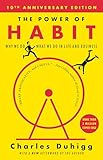
The Power of Habit by Charles Duhigg
Charles Duhigg’s investigation of the science of habit formation — how habits are encoded in the brain, how they shape individual and organisational behaviour, and how they can be changed — covers similar ground to Atomic Habits but from a more journalistic angle, with detailed case studies from business, sport, and social movements. The book includes an extended account of how the Montgomery bus boycott spread and sustained itself, which is particularly resonant for readers of Becoming given Obama’s explicit engagement with the Civil Rights tradition as a frame for her own sense of civic obligation.
Duhigg’s chapter on social habits — the idea that movements and organisations change not when individuals change their habits but when the relationships between people shift — is one of the most useful frameworks available for understanding how political change actually happens. Obama’s account of community organising in Chicago and of the 2008 Obama campaign’s grassroots strategy maps directly onto Duhigg’s analysis. The Power of Habit is a book that works on multiple levels: as a personal guide to behaviour change, and as an account of how collective human action is structured and sustained.
There is no single book that reproduces what Becoming does — its particular combination of political scope, personal intimacy, racial consciousness, and disciplined optimism is specific to Obama’s voice and experience. But the books above each illuminate one or more of the qualities that make it resonant. Begin with Born a Crime if you want another memoir that holds all of those threads together in a single voice. Move to Mindset or Grit if you want the psychology behind the resilience Obama describes. Return to Long Walk to Freedom when you want to understand the tradition of political memoir that Becoming belongs to, and what it looks like when the stakes are even higher.
For the Best Biographies and Memoirs
For the definitive guide to biography and memoir across history, politics, and science, see our Best Biographies Ever Written list.
Affiliate disclosure: Links on this site are affiliate links. We earn a small commission at no extra cost to you. This does not influence our editorial recommendations.
Frequently Asked Questions
What kind of books are similar to Becoming?
Becoming sits at the intersection of several traditions: the political memoir, the African American coming-of-age narrative, and the self-help inflected story of personal growth. Books most similar to it tend to share at least two of those strands. Born a Crime by Trevor Noah is the closest single parallel — a childhood memoir shaped by race and politics, told with warmth and intelligence. Long Walk to Freedom by Nelson Mandela and A Promised Land by Barack Obama share the political register. The Glass Castle and Educated share the working-class-origins-to-elite-institution arc. For the growth and resilience dimension, Mindset by Carol Dweck and Grit by Angela Duckworth cover similar intellectual territory in a more prescriptive form.
Is Becoming suitable for book clubs?
Becoming is one of the best book club choices of the past decade. It generates discussion at multiple levels: the personal (Obama's complicated relationship with ambition, her experiences of racism in elite institutions, her marriage), the political (what public service costs a family, the nature of compromise), and the societal (race, class, and gender in America). The book is also well-paced and accessible — no reader will feel excluded by difficulty of style. For a richer book club session, pairing it with Born a Crime or Long Walk to Freedom gives the group comparative material about how different political contexts shape a memoir's possibilities.
What should I read after Becoming if I want more Michelle Obama?
Michelle Obama's follow-up, The Light We Carry (2022), is the natural next step — it extends the themes of Becoming into a more explicitly self-help framework, exploring the personal practices and mental habits that have helped her navigate uncertainty. For readers who want more of Barack Obama's perspective, A Promised Land covers their White House years from his vantage point and is notably candid about the pressures of the presidency. The audio versions of both books, read by their authors, are particularly recommended.
Are there memoirs by other political figures as personal as Becoming?
Becoming is unusually personal for a memoir by a political figure — most politicians' memoirs are more guarded about family life and inner conflict. Long Walk to Freedom by Nelson Mandela comes closest in its willingness to reflect on moral complexity and personal sacrifice. A Promised Land by Barack Obama is more policy-focused but contains candid passages about doubt and the limits of political possibility. Outside American politics, I Am Malala by Malala Yousafzai offers the same combination of political stakes and intimate personal narrative, though from a very different context.
What non-fiction books about resilience and growth are similar to Becoming?
For the resilience and personal growth dimension of Becoming, the most relevant books are Mindset by Carol Dweck, which provides the psychological framework behind the belief that effort and learning can change outcomes; Grit by Angela Duckworth, which examines why sustained passion and perseverance predict success better than raw talent; and Man's Search for Meaning by Viktor Frankl, which remains the most profound account of how human beings find purpose under conditions of extreme adversity. Daring Greatly by Brené Brown shares Becoming's emphasis on vulnerability as a precondition for authentic connection and leadership.