Books About India: Essential Reading for Visitors and Curious Minds
The best books set in India — from Bombay's underworld to Kerala's backwaters, Partition to contemporary inequality. Fiction and memoir for every kind of traveller.
By Natalie Osei

India defies single characterisation more than almost any other country. The India of Arundhati Roy’s Kerala — its backwaters, its caste system, its Communist politics — is a different country from the India of Rushdie’s Bombay or the India of Adiga’s contemporary inequality or the India of Forster’s anxious colonial drama. The books on this list represent this range: the subcontinent across time, across class, across region, rendered by writers who knew it from the inside.
What they have in common is the scale and specificity of the India they render. These are not books about India as exotic backdrop but about India as a society with its own internal logic — its own ways of organising love, debt, class, and aspiration that make perfect sense from inside and are genuinely difficult to understand from outside. Fiction does more work here than any guidebook.
The Bombay/Mumbai Experience
1. Shantaram — Gregory David Roberts ⭐⭐⭐⭐⭐
The most immersive novel for first-time visitors to India: an escaped Australian convict arrives in Bombay with a false passport and nothing else, and the city unmakes and remakes him. Roberts’s portrait of Bombay — its slums, its underworld, its Bollywood industry, its extraordinary human density — is rendered with the authority of someone who was genuinely there, genuinely embedded, genuinely transformed. At 944 pages it asks a significant commitment; it repays it completely.
Best for: Mumbai (Bombay); backpackers and first-time India visitors; readers who want total cultural immersion.
➡ Full review → | Buy on Amazon →
The British Raj
2. A Passage to India — E.M. Forster ⭐⭐⭐⭐⭐
The most important novel about the British Raj: an English woman and her prospective mother-in-law visit India, encounter a young Muslim doctor, and the encounter ends in catastrophe that exposes the impossibility of genuine connection across the colonial divide. Forster’s India is the India of the 1920s — Muslim doctors, Anglo-Indian clubs, the specific landscape of Chandrapore in the hot season — but the psychological and political insights remain as sharp as they were when published in 1924.
Best for: Rajasthan and northern India; the British Raj period; anyone interested in colonialism and its social dynamics.
➡ Full review → | Buy on Amazon →
Contemporary India
3. The White Tiger — Aravind Adiga ⭐⭐⭐⭐⭐
The Booker Prize-winning novel about a lower-caste man from rural Bihar who becomes a driver for a wealthy Delhi family and murders his employer to become an entrepreneur. Adiga’s India is the India of contemporary inequality — Gurgaon’s shopping malls and the villages that supply their workers, the “Darkness” of rural India and the “Light” of the New India that the economic boom created for a minority. Sharp, funny, and genuinely angry: the most direct portrait of post-liberalisation India’s social realities.
Best for: Delhi and contemporary India; understanding the inequality at India’s economic transformation; readers who want political fiction that doesn’t moralise.
➡ Full review → | Buy on Amazon →
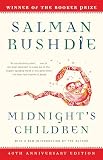
4. Midnight’s Children — Salman Rushdie ⭐⭐⭐⭐⭐
The Booker Prize winner (and Booker of Bookers) is the great Indian novel of the 20th century: the story of Saleem Sinai, born at the exact moment of Indian independence, whose life mirrors the history of the nation. Rushdie’s India is Bombay in the first instance, but the novel ranges across the subcontinent — Pakistan, Bangladesh, Kashmir — through Partition, the Emergency, the nationalisation campaigns, and the transformation of a new nation. The magical realism makes the historical epic accessible; the historical epic gives the magic weight.
Best for: The sweep of post-independence India; Bombay/Mumbai; anyone who wants India through a literary lens.
➡ Full review → | Buy on Amazon →
Kerala and the South
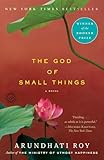
5. The God of Small Things — Arundhati Roy ⭐⭐⭐⭐⭐
The Booker Prize-winning novel set in a Syrian Christian family in Kerala in the late 1960s is the most literarily accomplished Indian novel of the last thirty years. Roy’s prose is among the most beautiful in contemporary English fiction, and the Kerala she renders — its backwaters, its Communist politics, its caste system operating below every social surface — is specific and completely convincing. The tragedy at the novel’s centre is inevitable from the first chapter; the power is in the accumulation of detail that makes it so.
Best for: Kerala and the south of India; the caste system’s continuing operation; readers who want Indian literature at its most artistically ambitious.
➡ Full review → | Buy on Amazon →
Children’s India
6. The Jungle Book — Rudyard Kipling ⭐⭐⭐⭐
Kipling’s collection of stories set in the jungles of central India — Mowgli, Baloo, Bagheera, and Shere Khan — is both a product of the Raj perspective and a genuine evocation of the Indian jungle. The forests of Madhya Pradesh (the Seoni region) are rendered with accuracy: the specific animals, the specific landscape, the specific relationship between human settlement and wilderness. For children visiting India, and for adults who remember loving these stories, the original text rewards revisiting.
Best for: Wildlife sanctuaries and national parks; families; the central Indian jungle landscape.
➡ Full review → | Buy on Amazon →
The Emergency and Social India
7. A Fine Balance — Rohinton Mistry ⭐⭐⭐⭐⭐
Set during Indira Gandhi’s Emergency of 1975–77 — when civil liberties were suspended, slum clearances were enforced with brutal efficiency, and the poor were subjected to forced sterilisation — Mistry’s masterpiece follows four characters sharing a Bombay apartment: two tailors from a lower caste, a widowed student, and their landlady. One of the most heartbreaking novels ever written about India’s capacity to consume its most vulnerable people, and one of the most important accounts of the Emergency in any literary form.
Best for: Understanding India’s social stratosphere and caste system; Mumbai; readers who want Indian literature at its most morally serious.
➡ Full review → | Buy on Amazon →
Books About India by Region
| Region | Best Book |
|---|---|
| Mumbai (Bombay) | Shantaram — Gregory David Roberts |
| Mumbai (dark) | A Fine Balance — Rohinton Mistry |
| Delhi | The White Tiger — Aravind Adiga |
| Kerala | The God of Small Things — Arundhati Roy |
| All India | Midnight’s Children — Salman Rushdie |
| British Raj India | A Passage to India — E.M. Forster |
| Central India | The Jungle Book — Rudyard Kipling |
Also Worth Reading
Kim by Rudyard Kipling — The great novel of the Great Game set across India, from Lahore to the Himalayas. More sympathetic to the Raj than Forster but more interested in India’s actual diversity and human texture than the colonial-era perspective usually allows.
Affiliate disclosure: Links to Amazon on this page are affiliate links. We earn a small commission at no extra cost to you.
Frequently Asked Questions
What is the best book to read before visiting India?
Shantaram by Gregory David Roberts is the most immersive novel for first-time visitors — it captures the overwhelming sensory experience of arriving in Bombay (Mumbai) with nothing, and renders the city's generosity and complexity with unusual accuracy. For historical context, Midnight's Children by Salman Rushdie covers the full sweep of post-independence India.
What are the best books set in Mumbai (Bombay)?
Shantaram is the definitive Bombay novel for Western readers — its portrait of the city's slums, underworld, and extraordinary human density is unlike anything else. Rohinton Mistry's A Fine Balance (not on this list) is set partly in a Bombay tenement and gives a different, more domestic portrait of the city during the Emergency of the 1970s.
What Indian novels should I read?
The three essential modern Indian novels in English are The God of Small Things by Arundhati Roy (Kerala), Midnight's Children by Salman Rushdie (Bombay/India at independence), and The White Tiger by Aravind Adiga (contemporary inequality). All three won the Booker Prize. Together they cover the span of post-independence India's literary identity.
What books are about the British Raj in India?
A Passage to India by E.M. Forster is the most important novel about the British Raj — a precise account of the impossibility of genuine friendship across the colonial divide. Rudyard Kipling's The Jungle Book and Kim are also set in Raj-era India and give a very different (more sympathetic to empire) perspective.