Twilight vs Harry Potter: Which YA Fantasy Series is Better?
Two defining YA franchises face off. We compare Twilight and Harry Potter on story, tone, prose, and cultural longevity to help you decide which to read first.

Few arguments in the history of young adult fiction generate more heat than this one. Twilight by Stephenie Meyer and the Harry Potter series by J.K. Rowling are the two franchises that defined what YA fantasy meant to an entire generation of readers — and they are almost total opposites in what they care about.
Harry Potter is a story about friendship, courage, and the long arc of good struggling against evil, built across seven novels that grow in complexity as the reader grows with them. Twilight is a story about one feeling: the vertigo of falling in love with someone dangerous, the way desire and fear become indistinguishable from each other, and the particular madness of believing that love can conquer not just obstacles but mortality itself.
Both series sold hundreds of millions of copies. Both spawned blockbuster film franchises. Both created fandoms so intense they rewired the cultural conversation around books aimed at teenagers. The comparison is interesting precisely because neither series wins on the other’s terms. You have to ask what you’re looking for first.
Quick Comparison
| Twilight | Harry Potter | |
|---|---|---|
| Series | Twilight Saga | Harry Potter |
| Author | Stephenie Meyer | J.K. Rowling |
| Books | 4 (+ novella) | 7 |
| Genre | YA Gothic Romance / Fantasy | YA Fantasy / Adventure |
| Protagonist | Bella Swan | Harry Potter |
| Tone | Intense, atmospheric, romantic | Adventurous, darkening, epic |
| Target Audience | Teen / YA (13+) | Middle Grade through Adult (8+) |
Twilight: What Makes It Work
Twilight was published in 2005 and spent the next five years dominating the cultural conversation around YA fiction in a way that is genuinely difficult to overstate. Stephenie Meyer did not invent the vampire romance, but she reinvented what it could do for a teenage audience by stripping it down to its emotional core.
The Bella and Edward dynamic is the engine of everything. Bella Swan is an ordinary girl who relocates to a perpetually overcast small town in Washington and encounters Edward Cullen — beautiful, cold, and very clearly not human. The gothic atmosphere Meyer constructs around this encounter is one of the novel’s genuine strengths: the rain-soaked Pacific Northwest landscape, the constant low-grade threat, the sense that the world Bella grew up in was a surface layer over something older and more dangerous underneath.
What drove the series to its particular cultural dominance from 2005 to 2010 was Meyer’s ability to inhabit the experience of forbidden love with an intensity that felt overwhelming rather than melodramatic to its target readers. Edward is a vampire who has to fight his own instincts not to kill Bella every time he is near her. The attraction is therefore also danger. The love story is inseparable from the threat. Meyer understood that for a certain reader at a certain age, this is not a red flag — it is the whole point. The forbidden quality of the relationship is what makes it feel absolute.
The series works best when it trusts this core dynamic rather than trying to expand around it. The Cullen family’s backstory, the vampire politics of the later books, and the werewolf subplot involving Jacob Black all serve ultimately to raise the stakes on Bella and Edward’s central relationship. When they work, they deepen the emotional intensity. When they don’t, they dilute it.
What the series accomplished culturally was real: it proved that a YA romance without irony or distance, one that asked readers to fully inhabit a fantasy of all-consuming love, could command a mainstream audience in the millions. Whether you find that achievement exciting or worrying depends on your relationship to the genre’s conventions — but its reality is undeniable.
Harry Potter: What Makes It Work
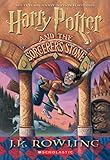
Harry Potter and the Sorcerer’s Stone arrived nine years before Twilight, in 1997, and established a template so successful that it reshaped children’s and YA publishing for two decades. J.K. Rowling’s masterstroke was the boarding school as a container for magic: Hogwarts is an institution with rules, traditions, rivalries, and a hierarchy, which means its world feels inhabited and real in ways that pure fantasy settings often don’t.
The found family at the center of the series — Harry, Ron, and Hermione — is one of the most successful examples of that dynamic in popular fiction. Rowling understood that readers would love each character for different reasons and built the trio so that they are genuinely incomplete without each other. Harry has courage and purpose. Ron has humor and loyalty. Hermione has intelligence and moral seriousness. None of them would survive without the others, and the series makes you feel that.
Voldemort as a villain works because Rowling takes him seriously as a philosophical problem, not just a physical threat. He represents the belief that some people are intrinsically more valuable than others, that power is its own justification, and that love is a weakness. Harry defeats him not through superior power but by being the opposite of these beliefs in his own character. This is the series’ central argument, and Rowling never loses track of it across seven books.
The seven-book emotional arc is the series’ most impressive structural achievement. Each installment grows darker and more morally complex than the last — Goblet of Fire introduces real death and real consequence; Order of the Phoenix deals with institutional failure and the corruption of authority; Deathly Hallows is war fiction, essentially, dressed in the language of fantasy. Rowling trusted her young readers to grow up alongside Harry, and they did.
Key Differences
Romance-first vs. adventure-first. This is the most fundamental structural difference between the two series. Twilight organizes everything around the central love story — plot, supporting characters, and world-building all exist to serve and intensify Bella and Edward’s relationship. Harry Potter organizes everything around the central conflict: Voldemort’s return and defeat. Romance is present in the series, but it is never the primary driver.
Darkness levels. Both series get dark, but differently. Twilight’s darkness is atmospheric and emotional — it lives in the gothic register of danger and obsession. Harry Potter’s darkness is narrative and moral: characters die, institutions betray their members, and good people make catastrophic mistakes. The later Potter books engage with grief, trauma, and political violence in ways that Twilight never attempts.
Prose quality. This is where the gap between the series is most apparent. Rowling’s prose is not literary in the high-art sense, but it is precise, witty, and consistently controlled. Meyer’s prose is more variable — at its best, it captures the dizzy, distorted quality of emotional overwhelm; at its worst, it is repetitive and flat. Readers who prioritize craft will find Harry Potter the more reliable read sentence-by-sentence.
Cultural longevity. Both series have endured, but differently. Harry Potter has become something close to a cultural institution — it is taught in schools, referenced across media, and continues to be read by children who were not yet born when the series concluded. Twilight retains a devoted fan community and a significant nostalgic audience, but its cultural footprint is more generational than universal. This partly reflects the different ambitions of the two series: a seven-book epic about the nature of evil is simply more durable material than a four-book romance.
Which Should You Read First?
Read Harry Potter first if you are reading with a child, coming to both series fresh as an adult, or primarily interested in world-building, character depth, and narrative structure. The series rewards investment in a way that compounds across all seven books, and starting with the most substantial series means the comparison you make later is between a complete literary experience and a more focused emotional one.
Read Twilight first if you are a teenager (or were one recently) primarily drawn to romantic fiction, if the gothic atmosphere appeals to you strongly, or if you want to understand why this series mattered so much to so many readers in the late 2000s. Reading it first lets you engage with it on its own terms before the Harry Potter comparison colors your expectations.
If you have already read one and are deciding whether to read the other: yes to both. They do sufficiently different things that reading one does not diminish the other. The comparison is genuinely interesting, and readers who have spent time with both tend to have more nuanced views of each.
What to Read After Both
Once you have read both series, your next steps depend on which elements mattered most to you.
For the found-family boarding school magic of Harry Potter, Percy Jackson and the Lightning Thief by Rick Riordan is the most natural continuation. It replaces wizardry with Greek mythology, keeps the youth-in-a-dangerous-world-they-don’t-fully-understand premise, and delivers five books of consistently entertaining adventure with a very different tonal register — funnier and less emotionally demanding than Potter, but warmly satisfying.
For the YA dystopia and romance energy that bridges both series, Divergent by Veronica Roth offers a high-concept world-building premise with a central romance that has real stakes and a protagonist whose interiority is rendered with more complexity than Bella Swan’s.
For readers who loved Twilight’s emotional intensity and want to stay in YA romance but grow toward more literary fiction, The Fault in Our Stars by John Green is the essential next read. It is more self-aware, more precisely written, and more intellectually demanding than Twilight, while preserving — and arguably intensifying — the gut-level emotional impact that made Twilight’s core audience love it.
Frequently Asked Questions
Is Twilight or Harry Potter better?
It depends entirely on what you want from a book. Harry Potter is the more complete, emotionally layered, and structurally ambitious work — a seven-book arc that deepens in complexity as its readers age with it. Twilight is a more focused, emotionally intense experience: it does one thing, the feeling of overwhelming first love and the terror and pull of something forbidden, and it does that one thing with considerable power. Most readers who engage honestly with both series find Harry Potter to be the richer literary achievement, while acknowledging that Twilight’s hold on its core audience is genuine and not trivially explained away.
Which series is more appropriate for younger readers?
Harry Potter is more broadly age-appropriate across the full series, though the early books are written for children aged 8–12 and the later books grow progressively darker. Twilight is aimed at older YA readers — roughly 13 and up — primarily because of its romantic and sexual tension, possessive relationship dynamics, and gothic atmosphere. Neither series is inappropriate for its target age group, but Harry Potter can start younger.
Can adults enjoy Twilight?
Yes, and many do — though often on different terms than younger readers. Adults who first read Twilight as teenagers frequently revisit it for the nostalgia of that original emotional hit. Adults coming to it fresh tend to engage with it more analytically. What persists across all readings is the gothic atmosphere and the specific intensity of Meyer’s emotional register. If you can meet the book on its own terms — as a fantasy of romantic extremity rather than a realistic portrait of a healthy relationship — adult enjoyment is entirely possible.
What should I read after Twilight and Harry Potter?
After Harry Potter, the most natural next step for younger readers is Percy Jackson and the Lightning Thief by Rick Riordan. For older readers, Divergent by Veronica Roth offers a similarly totalizing YA world with higher stakes romance. After Twilight, The Fault in Our Stars by John Green offers an emotionally intense YA romance with considerably more literary sophistication.
For the Best Fantasy Books
For the definitive guide to fantasy fiction — from Tolkien and Le Guin to Brandon Sanderson and George R.R. Martin — see our Best Fantasy Books of All Time list.
More YA Fantasy Reading Guides
- Books Like Percy Jackson: Best Greek Mythology Adventure Series
- Leigh Bardugo Books in Order: Complete Grishaverse Guide
Affiliate disclosure: Links on this site are affiliate links. We earn a small commission at no extra cost to you. This does not influence our editorial recommendations.
Frequently Asked Questions
Is Twilight or Harry Potter better?
It depends entirely on what you want from a book. Harry Potter is the more complete, emotionally layered, and structurally ambitious work — a seven-book arc that deepens in complexity as its readers age with it. Twilight is a more focused, emotionally intense experience: it does one thing, the feeling of overwhelming first love and the terror and pull of something forbidden, and it does that one thing with considerable power. Most readers who engage honestly with both series find Harry Potter to be the richer literary achievement, while acknowledging that Twilight's hold on its core audience is genuine and not trivially explained away. If your goal is a broader, more satisfying narrative, Harry Potter wins. If you want to be swept into an all-consuming romantic obsession, Twilight delivers.
Which series is more appropriate for younger readers?
Harry Potter is more broadly age-appropriate across the full series, though the early books (Sorcerer's Stone through Prisoner of Azkaban) are written for children aged 8–12, and the later books grow progressively darker, dealing with death, war, and political corruption in ways best suited to readers 12 and up. Twilight is aimed at older YA readers — roughly 13 and up — primarily because of its romantic and sexual tension, possessive relationship dynamics, and gothic atmosphere. Neither series is inappropriate for its target age group, but Harry Potter can start younger.
Can adults enjoy Twilight?
Yes, and many do — though often on different terms than younger readers. Adults who first read Twilight as teenagers frequently revisit it for the nostalgia of that original emotional hit. Adults coming to it fresh tend to engage with it more analytically: noting the prose's limitations, the relationship's unhealthy power dynamics, and the relative absence of plot outside the central romance. What persists across all readings is the gothic atmosphere and the specific intensity of Meyer's emotional register. If you can meet the book on its own terms — as a fantasy of romantic extremity rather than a realistic portrait of a healthy relationship — adult enjoyment is entirely possible.
What should I read after Twilight and Harry Potter?
After Harry Potter, the most natural next step for younger readers is Percy Jackson and the Lightning Thief by Rick Riordan, which offers the same boarding-school-adjacent found-family energy with Greek mythology instead of wizardry. For older readers, Divergent by Veronica Roth explores a similarly totalizing YA world with higher stakes romance. After Twilight, The Fault in Our Stars by John Green offers an emotionally intense YA romance with considerably more literary sophistication — a useful next step for readers who want to stay in the emotional register of YA while expanding the craft of the books they're reading.