Leigh Bardugo Books in Order: Complete Grishaverse Reading Guide (2026)
The complete Leigh Bardugo reading order — the Shadow and Bone trilogy, Six of Crows duology, King of Scars duology, and how the Netflix series maps to the books.

Leigh Bardugo’s Grishaverse spans three distinct series — the Shadow and Bone trilogy, the Six of Crows duology, and the King of Scars duology — all set in the same world but following different characters, different tones, and different scales of story. The trilogy follows a young soldier discovering her powers in the nation of Ravka. The duology follows a crew of criminals planning an impossible heist in a city modelled on Amsterdam. The final pair of books follows a king managing the political fallout of everything that came before. They share a world and some characters, but reading them feels like entering three related but meaningfully different books.
The reading order question matters here in a way it doesn’t for most series. The King of Scars duology assumes familiarity with all five books that precede it. The Six of Crows duology works best with some understanding of the world, but not necessarily the full trilogy first. The Shadow and Bone trilogy is the natural starting point — and also, for some readers, the slower one.
The quick answer: read Shadow and Bone, Siege and Storm, and Ruin and Rising first, then Six of Crows and Crooked Kingdom, then King of Scars and Rule of Wolves. If you find the trilogy’s pacing frustrating in the early chapters, stop and start with Six of Crows instead. Both entry points are legitimate, and we’ll cover the tradeoffs below.
All 7 Grishaverse Books at a Glance
| # | Title | Year | Series/Type |
|---|---|---|---|
| 1 | Shadow and Bone | 2012 | Shadow and Bone trilogy #1 |
| 2 | Siege and Storm | 2013 | Shadow and Bone trilogy #2 |
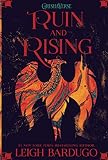
| 3 | Ruin and Rising | 2014 | Shadow and Bone trilogy #3 |
| 4 | Six of Crows | 2015 | Six of Crows duology #1 |
| 5 | Crooked Kingdom | 2016 | Six of Crows duology #2 |
| 6 | King of Scars | 2019 | King of Scars duology #1 |
| 7 | Rule of Wolves | 2021 | King of Scars duology #2 |
Best starting point: Shadow and Bone for the full arc, or Six of Crows if you prefer heist fantasy and ensemble casts.
The Recommended Reading Order
The standard reading order follows publication sequence, which also happens to be the most logical narrative progression:
- Shadow and Bone (2012) — Alina Starkov, an orphaned mapmaker’s assistant in the Ravkan army, discovers she possesses a rare and powerful ability. She is taken from everything she knows and drawn into the court of the Darkling, the most powerful Grisha in Ravka’s history.
- Siege and Storm (2013) — Alina and her childhood companion Mal are on the run. The stakes expand from personal survival to the fate of Ravka itself, and Bardugo introduces Nikolai Lantsov — a character who becomes increasingly central to the series.
- Ruin and Rising (2014) — The trilogy’s conclusion. Alina pushes toward the confrontation the first two books have been building, and Bardugo makes choices that have divided readers sharply since publication.
- Six of Crows (2015) — Set several years after the trilogy’s events in the city-state of Ketterdam. Criminal prodigy Kaz Brekker assembles a crew to infiltrate the most secure prison in the world and extract a scientist whose research could destabilise everything.
- Crooked Kingdom (2016) — The heist’s aftermath. Bardugo raises the stakes again and delivers one of the most emotionally demanding conclusions in recent YA fantasy.
- King of Scars (2019) — Nikolai Lantsov, now king of Ravka, is dealing with a darkness inside him — a consequence of events in the trilogy. The book weaves together multiple storylines and requires familiarity with both previous series to follow.
- Rule of Wolves (2021) — The Grishaverse’s final book. Nikolai and his allies navigate war, political manipulation, and the long consequences of the series’ full history.
Reading this way means that by the time you reach Six of Crows, you understand the world’s politics, what Grisha are and why they are valued and persecuted, and what the events of the trilogy meant for Ravka. Certain character reveals and references in Six of Crows land with more weight when the trilogy is behind you. A figure mentioned in passing carries real resonance if you know their history.
Should You Start with Six of Crows Instead?
The honest case for starting with Six of Crows is strong, and it’s worth making explicitly rather than burying.
Six of Crows is the more celebrated book. It regularly tops reader polls for favourite YA fantasy novels, and its reputation within the genre is significantly higher than the Shadow and Bone trilogy’s. The heist structure — six morally compromised characters with different skills, different loyalties, and different reasons to need the job done — is executed with a precision that the trilogy, built on a more familiar chosen-one framework, cannot match. Kaz Brekker is one of the sharpest character constructions in contemporary fantasy: ruthless, damaged, strategically brilliant, and written with enough interiority that his ruthlessness never becomes cartoonish.
The Shadow and Bone trilogy, by contrast, takes time to establish its world and protagonist. The first book in particular is paced as a classic YA novel: a young woman discovers her powers, is removed from her ordinary life, navigates a court environment, and falls into a complicated dynamic with a magnetic antagonist. It works, but readers accustomed to faster-paced ensemble fiction sometimes find it slow. This is not a flaw in the trilogy — it’s a genre choice — but it’s worth acknowledging.
The practical advice: if you’re a reader who gravitates toward coming-of-age fantasy with a single protagonist and a romantic triangle at its centre, start with Shadow and Bone. If you prefer ensemble casts, morally grey characters, heist mechanics, and a city-based setting over a military one, start with Six of Crows and return to the trilogy after. You will miss some context, but Bardugo built Six of Crows to be accessible to readers without it.
The Shadow and Bone Trilogy
The trilogy is set primarily in Ravka, a nation modelled loosely on Tsarist Russia, divided by a stretch of supernatural darkness called the Fold. Alina Starkov, the protagonist across all three books, is a nineteen-year-old cartographer’s assistant who has spent her life concealing an ability she doesn’t fully understand. When that ability is revealed, she is taken from the military unit she shares with her best friend Mal and placed under the instruction of the Darkling — the leader of Ravka’s Grisha corps, a soldier-magician who has kept the country together for generations.
The first book establishes the Darkling as one of the most effective antagonists in recent fantasy. He is not a straightforward villain. His goals have internal logic, his power is genuinely threatening, and his relationship with Alina is drawn with enough moral complexity that readers are still debating whether Bardugo played it correctly years after publication. Siege and Storm expands Alina’s power and her political entanglements, and introduces Nikolai Lantsov in a way that shifts the trilogy’s centre of gravity. He is witty, manipulative, strategically gifted, and immediately more interesting to many readers than Mal, who bears the structural weight of being Alina’s anchor to her pre-Grisha life.
Ruin and Rising brings the trilogy to its conclusion, and the ending is divisive. Bardugo makes a specific choice about where Alina ends up — geographically, politically, romantically — that a significant portion of readers found unsatisfying or inconsistent with the trilogy’s themes. This is worth knowing in advance, not to spoil the ending, but to calibrate expectations: the conclusion is not a triumphant, unambiguous resolution. Whether that’s a flaw or a feature depends on what you wanted from it. The trilogy as a whole is stronger than its individual reception suggests; it does things with power and cost and the corruption of idealism that straightforwardly satisfying endings would have undercut.
Six of Crows and Crooked Kingdom
Six of Crows is set in Ketterdam, a mercantile city-state built on trade, exploitation, and organised crime. Kaz Brekker, seventeen years old and already one of the most feared figures in the city’s criminal underworld, is offered a job: break into the Ice Court of Fjerda — a fortress considered impenetrable — and extract a scientist who has developed a drug that can weaponise Grisha. The job is impossible. Kaz assembles a crew anyway.
The crew is the book’s central achievement. Inej Ghafa is a spy and acrobat who was trafficked into Ketterdam and bought her freedom working for Kaz; her arc involves agency, faith, and the cost of survival. Jesper Fahey is a sharpshooter with a gambling problem and secrets he hasn’t fully examined. Wylan Van Eck is the mark’s son, a demolitions expert who has been disowned and is running from his past. Nina Zenik is a Grisha Heartrender who has survived captivity and formed an unlikely bond with her captor, the Fjerdan witch-hunter Matthias Helvar.
Matthias’s arc is one of the most discussed in the series. He is a soldier trained to hunt and kill Grisha, partnered against his will with a Grisha woman who has every reason not to trust him. Bardugo handles the relationship between Nina and Matthias with more honesty than the format typically allows — the ideological gulf between them is real, not a misunderstanding to be resolved. What happens to Matthias in Crooked Kingdom provoked a response from readers that outlasted the book’s publication by years.
Crooked Kingdom requires having read Six of Crows. It is not a standalone in any meaningful sense — it picks up directly from Six of Crows’s ending and spends its entire length in the aftermath. The emotional payoff of Crooked Kingdom is built entirely on investment in characters whose depth was established in the first book. Read them back to back if you can.
King of Scars and Rule of Wolves
The King of Scars duology follows Nikolai Lantsov after the events of the Shadow and Bone trilogy have reshaped Ravka. Nikolai is now king, which means he is managing political alliances, succession pressures, and religious factions — as well as a supernatural darkness that took root inside him during the trilogy. The books are more politically complex than either of the preceding series and require familiarity with both to follow without difficulty.
King of Scars alternates between Nikolai’s storyline, a storyline following Zoya Nazyalensky (a character from the trilogy whose role here is significantly expanded), and a storyline involving Nina Zenik, carrying forward her arc from Crooked Kingdom. The tonal range is wider than either previous series — parts of it read like political intrigue, parts like survival horror, parts like something approaching tragedy.
Rule of Wolves closes the Grishaverse. It is the most continuity-dense entry in the series and the most rewarding for readers who have followed all seven books. Bardugo is dealing with the accumulated consequences of three series’ worth of choices, and the ending functions as a conclusion for the world as a whole rather than for any single character or storyline. Whether it fully sticks depends on your tolerance for ensemble resolutions, but as a conclusion to a seven-book project, it holds together.
The Netflix Series
The Netflix adaptation of Shadow and Bone ran for two seasons (2021–2023) before being cancelled. It is a significant departure from the source material in ways that matter to book readers.
The most substantial change is structural: the show merges the timelines of Shadow and Bone and Six of Crows from the beginning. Kaz Brekker, Inej, and Jesper appear in Season 1 even though Six of Crows is set several years after the trilogy ends in the books. This creates an entirely new storyline — the Crows attempting to use the chaos of the main plot to their advantage — that has no equivalent in either source text. Season 2 goes further, incorporating elements from later in the trilogy and inventing additional storylines to accommodate the merged timeline.
The result is a show that works reasonably well as its own thing and works less well as an adaptation. Jessie Mei Li’s Alina and Ben Barnes’s Darkling are both well-cast. The Crows — Freddy Carter as Kaz in particular — carry exactly the right energy. But the show’s pace is uneven, the merged timeline creates continuity complications that Season 2 never fully resolves, and the cancellation means it ends without closure.
For book readers: watch after finishing the books, not before. The show’s versions of characters and events are vivid enough to compete with your own reading, and the books are richer.
The individual review pages for each book — Shadow and Bone, Siege and Storm, Ruin and Rising, Six of Crows, Crooked Kingdom, King of Scars, and Rule of Wolves — cover each book in depth, including content notes and reader reception. If you’re deciding where to start and want more detail on a specific book before committing, those pages are the place to go.
For the Best Fantasy Books
For the definitive guide to fantasy fiction — from Tolkien and Le Guin to Brandon Sanderson and George R.R. Martin — see our Best Fantasy Books of All Time list.
More Fantasy Series Reading Guides
- Books Like Fourth Wing: Best Romantasy Reads
- V.E. Schwab Books in Order
- Cassandra Clare Books in Order: Complete Shadowhunters Guide
Also Recommended
For the full Leigh Bardugo bibliography, reviews, and biography, visit the Leigh Bardugo author page on Editors Reads.
Affiliate disclosure: Links on this site are affiliate links. We earn a small commission at no extra cost to you. This does not influence our editorial recommendations.
Frequently Asked Questions
What order should I read Leigh Bardugo's Grishaverse books?
The recommended reading order is: Shadow and Bone trilogy first (Shadow and Bone → Siege and Storm → Ruin and Rising), then Six of Crows duology (Six of Crows → Crooked Kingdom), then King of Scars duology (King of Scars → Rule of Wolves). You can also start with Six of Crows if you prefer heist fantasy over coming-of-age — both entry points work.
Can I start with Six of Crows without reading Shadow and Bone first?
Yes. Six of Crows works as a standalone entry point and is widely considered the stronger series. You'll encounter references to events in the Shadow and Bone trilogy, but Bardugo wrote Six of Crows to be accessible to new readers. Many fans recommend starting with Six of Crows precisely because it hooks readers faster.
Do the Netflix Shadow and Bone series and Six of Crows books align?
The Netflix series combines characters from both series from the start — Kaz Brekker and the Crows appear in Season 1 even though Six of Crows is set years after Shadow and Bone in the books. This is a significant departure from the source material. Book readers will notice many timeline and character arc differences.
Is the Grishaverse series complete?
The Shadow and Bone trilogy is complete (3 books). The Six of Crows duology is complete (2 books). The King of Scars duology is complete (2 books, ending with Rule of Wolves). Bardugo has indicated she may return to the Grishaverse in future projects but no additional main series books are announced.
What is the difference between Grisha and the Grishaverse?
Grisha are people with the ability to manipulate matter at the molecular level — they are not mages or wizards in the traditional fantasy sense. The Grishaverse is the term fans use for the shared world across all three series, which includes Ravka, Ketterdam, and surrounding nations.