Books Like Tomorrow and Tomorrow and Tomorrow: 11 Novels
If Tomorrow and Tomorrow and Tomorrow moved you with its portrait of a decades-long creative partnership and the love that is not quite romance but more than friendship, these novels share its preoccupations.
By Lena Fischer

Gabrielle Zevin’s Tomorrow and Tomorrow and Tomorrow is a novel about Sam Masur and Sadie Green, who meet in a hospital at twelve years old, lose touch, and then — by accident, in a Boston train station when they are both in college — find each other again. For the next thirty years they make video games together. They also love each other, hurt each other, go years without speaking, and create work that outlasts both of them. Their relationship never fits any available category: it is not quite friendship, not quite romance, not quite a working partnership, and yet it is somehow more sustaining and more destructive than any of those things would be.
The novel was a critical and commercial phenomenon — one of the most discussed literary novels of the past several years, with a readership that spans people who have never touched a video game and people who spent their childhoods in arcades. Its breadth of appeal comes from Zevin’s ability to use the specific language and culture of game-making to illuminate universal questions: What does it mean to make something? What do we owe the people who made us? What is the difference between loving someone and being in love with them? The eleven novels below share these preoccupations — long friendships, creative lives and their costs, and the particular sadness of loving people you cannot hold.
Long Novels About Creative Friendship
#1 — Daisy Jones and the Six by Taylor Jenkins Reid
The closest parallel to Tomorrow and Tomorrow and Tomorrow on this list: a decades-long creative partnership between two people who make extraordinary art together, are not quite in love and not quite not, and whose collaboration produces both their best work and their most serious damage. Reid’s oral-history format — assembled interview transcripts, contradicting each other, building a portrait from competing perspectives — creates the same effect as Zevin’s close third person: the reader feels the intimacy and the unbridgeable distance simultaneously. Billy Dunne and Daisy Jones’s creative relationship has exactly the productive friction and mutual dependency that defines Sam and Sadie’s, set in a different industry at a different moment but with the same fundamental question at its center: what do we owe the person who makes us capable of our best work?
#2 — Beautiful Ruins by Jess Walter
An Italian hotel owner on the Ligurian coast meets a dying American actress in 1962 and falls completely in love with her. Fifty years later, the story of that brief encounter is still unresolved. Walter’s novel moves between its 1962 Italian scenes, present-day Hollywood, and multiple other registers — a chapter written as a failed novel’s excerpt, a Rat Pack story, a contemporary film pitch — to build a portrait of art, ambition, and the long afterlife of a single moment. It shares Tomorrow and Tomorrow and Tomorrow’s quality of being simultaneously warm and literary, and its concern with what art is worth and what it costs. The writing is gorgeous in a way that earns its ambition, and the ending is one of the most satisfying in recent American fiction.
#3 — The Corrections by Jonathan Franzen
Franzen’s great American family novel has the same generational scope and emotional precision as Tomorrow and Tomorrow and Tomorrow, though its subject is a Midwestern family’s slow reckoning with its own dysfunction rather than a creative partnership. What the two novels share is an ambition about form — both are built to hold entire decades, entire ways of living — and a refusal to resolve their central tensions tidily. The Lambert family’s three adult children converge on their aging parents’ home for one last Christmas, and the novel’s five sections move between their perspectives with a kind of clinical warmth that readers of Zevin’s novel will recognize. It is longer and more demanding than almost anything else on this list, and it repays that demand fully.
Creative Lives and What They Cost
#4 — Stoner by John Williams
William Stoner discovers literature in his first year at the University of Missouri and never recovers. He becomes an English professor, has a bad marriage, conducts one intense and ruinous love affair, and dies in obscurity. Williams’s 1965 novel — rediscovered by a wide audience in the 2010s after decades of neglect — is the literary novel most purely concerned with what it means to find your work and do it well under difficult conditions, without recognition, without reward. The sadness in it is not melodrama but something quieter: a life lived with integrity in a world that does not particularly notice. Readers who responded to Tomorrow and Tomorrow and Tomorrow’s treatment of what it means to make something that matters, even when the world receives it wrong, will find Stoner the most searching version of that question.
#5 — A Visit from the Goon Squad by Jennifer Egan
Egan’s Pulitzer Prize-winning novel tracks a group of people connected to the music industry across several decades, using a formally inventive structure — each chapter a different voice, a different time period, and one chapter written entirely as a PowerPoint presentation — to explore what time does to ambition, friendship, and the art people make in their youth. It shares Tomorrow and Tomorrow and Tomorrow’s willingness to use the specificity of a creative industry (music rather than games) to hold universal questions, and its formal inventiveness is comparable to Zevin’s own willingness to play with narrative structure. The novel is funnier than it sounds and more devastating than its structure initially suggests.
#6 — The Goldfinch by Donna Tartt
Theo Decker survives a museum bombing at thirteen that kills his mother, and steals a small Dutch masterpiece in the chaos. The painting — Carel Fabritius’s The Goldfinch — anchors his entire life, across decades of loss and bad decisions and unlikely friendship. Tartt’s enormous novel is about art the way Tomorrow and Tomorrow and Tomorrow is about games: with total seriousness about the specific experience of encountering a work that changes you, and deep curiosity about what it means that such things exist and that we love them. It is also, in the middle section set in Las Vegas, one of the best portraits of aimless male friendship in contemporary fiction. The ending makes an argument about art and survival that is almost exactly Zevin’s argument made through different materials.
Friendship That Is More and Less Than Romance
#7 — Normal People by Sally Rooney
Connell and Marianne are clearly right for each other and cannot quite manage to be together — not because they don’t love each other but because of something structural in how they were made, some difference in what they can accept and what they cannot ask for. Rooney writes the relationship between them with unnerving emotional precision, capturing the specific register of a connection that both people feel and neither can fully inhabit. The comparison to Tomorrow and Tomorrow and Tomorrow is exact: Sam and Sadie’s failure to be together is similarly structural, similarly nobody’s fault and everybody’s fault. Rooney is the writer whose emotional register is closest to Zevin’s — the same restrained prose, the same refusal to explain more than necessary, the same faith in the reader to feel what is not said.
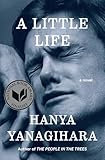
#8 — A Little Life by Hanya Yanagihara
A significant content warning belongs here: A Little Life contains extended, graphic depictions of childhood abuse and self-harm, and it is one of the most emotionally demanding novels in contemporary fiction. It belongs on this list because readers who responded to Tomorrow and Tomorrow and Tomorrow’s exploration of what men are to each other — the particular depth and vulnerability of male friendship, the things that get said sideways if at all — will find Yanagihara’s treatment of those same themes taken to an extreme. Jude, Willem, JB, and Malcolm form a friendship in New York that becomes the central fact of their adult lives, and the novel follows them across decades with the same generational scope as Zevin’s. The darkness is far greater and the resolution far less consoling, but the underlying question — what do we owe each other, what can we survive together — is the same.
#9 — The Secret History by Donna Tartt
A small group of classics students at a Vermont college remake themselves in the image of ancient Greece and commit a murder that binds them together in guilt. Tartt’s debut is darker and more gothic than Tomorrow and Tomorrow and Tomorrow, but it shares its preoccupation with a tight creative and intellectual group of young people — what they make together, what they owe each other, how the group shapes each individual into something they would not have been alone. The novel also shares Zevin’s interest in the way friendship is constituted by shared reference and shared work, and how the things people make together become the hardest things to leave behind. Richard Papen’s account of his time among Henry, Francis, Charles, Camilla, and Bunny is one of the most compelling portraits of intellectual intoxication in American fiction.
Literary Fiction with Scope and Ambition
#10 — Lincoln in the Bardo by George Saunders
Abraham Lincoln’s young son Willie dies in 1862, and the grieving president visits the crypt where his body lies. Around him, the dead who have not yet passed on — held in the bardo by their attachments to life — observe, argue, and are slowly transformed by what they witness. Saunders’s formally radical novel — assembled from competing voices, fragments of historical record, and the testimonies of the dead — is the most formally inventive novel on this list and the one that most directly shares Tomorrow and Tomorrow and Tomorrow’s tone: grief and comedy held in the same breath, the past made present through an act of imagination that is also an act of love. It is shorter than anything else in this section and entirely unlike anything else you have read.
#11 — Conversations with Friends by Sally Rooney
Rooney’s debut novel is here because the emotional precision it brings to the relationship between Frances and Nick — two people engaged in something they cannot name, that seems to cost more than it should and mean more than either will admit — is so close to Zevin’s treatment of Sam and Sadie that readers of one will immediately feel the resonance of the other. Frances is cooler and more defended than Sadie, Nick more passive than Sam, but the structure of the relationship — the creative energy, the power imbalance that shifts, the love that cannot quite become what either person needs — is recognizable. Rooney writes with the same trust in the reader’s intelligence that Zevin does, and the same refusal to resolve ambiguity into clarity.
How to Choose Your Next Read
If you want the closest match — a decades-long creative partnership between two people who make extraordinary art together and cannot quite be together: Daisy Jones and the Six.
If you want the emotional precision of Sam and Sadie’s relationship carried into a more realistic register: Normal People or Conversations with Friends.
If you want a long novel about what art is worth and what it costs: The Goldfinch or Stoner.
If you want formal inventiveness comparable to Zevin’s structural ambition: A Visit from the Goon Squad or Lincoln in the Bardo.
If you want the exploration of male friendship taken to its most demanding extreme: A Little Life — with the content warning noted above.
If you want literary scope and warmth and a love story that spans decades: Beautiful Ruins.
If you want an American family novel with the same generational sweep and emotional precision: The Corrections.
For the Best Fiction Books
For the definitive guide to fiction — the greatest novels across literary fiction, classics, and contemporary writing — see our Best Fiction Books of All Time list.
More Contemporary Literary Fiction Guides
- Books Like Station Eleven: Pandemic, Memory, and Art
- Books Like A Little Life: Novels That Devastate and Endure
Also Recommended
Affiliate disclosure: Links to Amazon on this page are affiliate links. We earn a small commission at no extra cost to you. This does not influence our editorial recommendations.
Frequently Asked Questions
Is Tomorrow and Tomorrow and Tomorrow about video games?
The novel is set in and around the video game industry from the early 1990s to the early 2010s, and the games Sam and Sadie create are central to the plot — Zevin writes about the experience of playing and making games with real authority. But it is not a book you need to be a gamer to love. The games are the medium through which the novel explores creativity, collaboration, love, and loss; understanding them matters less than feeling what it means to make something with another person.
What is the relationship between Sam and Sadie?
Sam and Sadie meet as children in a hospital, lose touch, and reconnect as young adults. Their relationship is the novel's great puzzle: they love each other, they hurt each other, they create extraordinary things together, and they cannot quite manage to be in love in the conventional sense. Zevin is deliberately ambiguous about whether their relationship is romantic, and much of the novel's tension comes from the reader's inability to classify what they have.
Why is the novel called Tomorrow and Tomorrow and Tomorrow?
The title comes from Macbeth's 'Tomorrow, and tomorrow, and tomorrow' speech — the one about the meaninglessness of days and the brief candle of human life. Zevin uses it to mean something different: the games Sam and Sadie make are premised on the idea that tomorrow is always possible, that the game can always be restarted, that failure is not permanent. The title holds both meanings simultaneously.
Is Tomorrow and Tomorrow and Tomorrow literary fiction or genre fiction?
It is literary fiction. The novel uses video games as its primary setting and subject but is not a genre thriller or adventure; it is a novel about creative partnership, the passage of time, ambition, and the ways we love people we cannot hold. It is often compared to other sprawling literary novels about friendship and making art.