15 Books Like The Power of Habit to Read Next
Finished The Power of Habit? These 15 books go deeper on habit science, behavioural psychology, and why our automatic behaviours are so hard to change and so powerful when we do.
By Lena Fischer
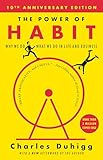
Charles Duhigg’s The Power of Habit does something that most popular science books only claim to do: it genuinely changes how you see human behaviour. After reading it, you cannot watch someone reach for their phone, light a cigarette, or walk to the kitchen at nine o’clock without seeing the cue-routine-reward loop ticking away underneath. The habit loop is one of those explanatory frameworks that, once learned, cannot be unlearned.
The book’s particular strength is the neuroscience. Duhigg’s account of the basal ganglia — the brain structure where habitual behaviour is encoded, separate from the regions handling conscious decision-making — is among the clearest available in popular writing. His explanation of the craving that develops between cue and routine, the anticipatory desire that makes habits so self-reinforcing and so difficult to interrupt, is something most habit-change advice skips entirely. Understanding it is not merely interesting. It is practically useful for anyone who has ever tried to break a behaviour they know is bad for them and failed.
Where Duhigg’s book differs from its most famous companion is in scope and orientation. Atomic Habits by James Clear is a system — Clear takes the habit loop and engineers it into a precise, actionable framework. The Power of Habit is an explanation — Duhigg takes the same mechanism and uses it to illuminate individual behaviour, corporate culture, and social movements. Both books rest on the same scientific foundation, but they are doing different things and addressing different needs. If you have read one and want the other’s contribution, the link at the end of this section will take you directly to that comparison.
The 15 books below extend Duhigg’s work in the directions it opens up: deeper into cognitive science, further into motivation and meaning, outward into focus and professional performance, and inward toward the question of what kind of life consistent habits are actually building toward.
Quick answer: Start with Atomic Habits if you want a practical system to apply immediately, Thinking, Fast and Slow if you want the full cognitive science, or Drive if you want to understand why some habits persist and others collapse.
The Habit Science Companions
Atomic Habits by James Clear
The inevitable first recommendation — not because it covers the same ground as The Power of Habit but because it covers what Duhigg’s book deliberately leaves underexplored. Clear takes the cue-routine-reward loop that Duhigg describes and builds it into a four-law system for practical behaviour change: make the cue obvious, make the behaviour attractive, make it easy, make it satisfying. To break a bad habit, invert each law. The framework is simple enough to carry in your head and rigorous enough to generate specific tactics for any situation.
Where The Power of Habit gives you understanding, Atomic Habits gives you a method. The two books are genuinely complementary rather than redundant: Duhigg explains why the craving between cue and routine is so powerful; Clear tells you how to engineer that craving deliberately. Duhigg’s keystone habit concept — the idea that some habits trigger cascade effects across other behaviours — finds its practical counterpart in Clear’s habit stacking, where new behaviours are anchored to existing ones. The identity reframe at the centre of Atomic Habits, which argues that durable habits are grounded in who you are rather than what you want to achieve, is also not found in Duhigg and is worth the book alone. For a direct comparison of the two, see our full guide at Atomic Habits vs The Power of Habit.
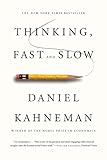
Thinking, Fast and Slow by Daniel Kahneman
If The Power of Habit is the account of how automatic behaviour works, Thinking, Fast and Slow is the account of why it exists — the deeper cognitive architecture that makes the brain rely on automatic systems in the first place. Kahneman’s Nobel Prize-winning work introduces the System 1 and System 2 distinction: System 1 is fast, automatic, associative, and effortless; System 2 is slow, deliberate, effortful, and metabolically expensive. Habits are, in Kahneman’s terms, System 1 behaviours — and the entire purpose of habit formation is to move complex behaviours out of System 2 and into System 1, where they can run without consuming attention.
This reframing enriches Duhigg’s account considerably. The reason habits are so resistant to conscious override is that the part of the brain doing the overriding — System 2 — is easily fatigued, easily distracted, and chronically underestimated by its owner. The reason keystone habits are so powerful is that they cascade through the System 1 repertoire, reorganising automatic behaviour at a structural level. Kahneman’s book is longer and denser than The Power of Habit, and it covers far more ground than habit science alone, but the sections on cognitive ease, heuristics, and the limits of self-knowledge are essential reading for anyone who wants to understand why behaviour change is genuinely difficult rather than merely a matter of trying harder.
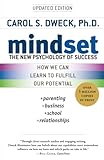
Mindset by Carol Dweck
Duhigg establishes that habits can be changed — that the loop is not destiny, that awareness of the mechanism gives you leverage over it. Dweck’s research addresses the prior question: what psychological disposition determines whether people actually use that leverage? Her fixed-versus-growth mindset distinction, drawn from decades of research with students, athletes, and professionals, finds that people who believe their abilities are fixed by nature treat failure as evidence of inadequacy and stop trying. People who believe abilities are developed through effort treat failure as information and continue. The difference in outcomes across every domain she studied is substantial.
For Power of Habit readers, Mindset is most useful as an account of what happens at the moment of failure — which is to say, at the most critical moment in any habit-change attempt. Duhigg’s framework explains the mechanism; Dweck explains the psychological context that determines whether people re-engage with that mechanism after it breaks down, or conclude that they are simply “not someone who can change.” The growth mindset, it turns out, is itself a habit of interpretation that can be deliberately cultivated. That recursive quality makes this book one of the more practically powerful on this list.
On Motivation and Why We Do What We Do
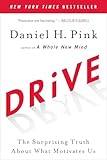
Drive by Daniel Pink
Duhigg’s treatment of habits is largely agnostic about motivation — the habit loop operates regardless of why you want a particular behaviour. Pink’s Drive addresses that gap directly, and its findings have significant implications for how durable any habit will be. His core argument, built on decades of research in behavioural economics and cognitive psychology, is that the dominant model of motivation — external rewards and punishments — is not just insufficient but actively counterproductive for anything involving creativity, complexity, or sustained effort. The real drivers are autonomy (control over how you work), mastery (the drive to improve at something that matters), and purpose (connection to something beyond yourself).
For habit-builders, Drive explains why habits attached to external rewards — weight loss goals tied to a target number, productivity habits tied to a bonus — tend to collapse once the reward is achieved or withdrawn. Habits grounded in intrinsic motivation are more durable because the reward is built into the behaviour itself. Pink’s analysis of what he calls “type I” behaviour — intrinsically motivated, self-directed, mastery-oriented — maps closely onto the kind of habits that actually sustain themselves over years. Reading Drive alongside Duhigg suggests a useful revision to the habit-building process: before optimising the loop, examine whether the routine is something you genuinely want to do or merely something you have decided you should.
Grit by Angela Duckworth
Duhigg’s keystone habits are powerful precisely because they set off structural changes that persist over time. But what sustains the keystone habit itself, particularly in the face of the obstacles, boredom, and competing demands that inevitably arise? Angela Duckworth’s research on grit — the combination of passion and perseverance toward long-term goals — addresses this question with unusual rigour. Her longitudinal studies of West Point cadets, National Spelling Bee finalists, and teachers in high-poverty schools find consistently that the most reliable predictor of achievement is not talent or intelligence but the capacity to sustain effort and interest over time.
The book’s most useful contribution for Power of Habit readers is the distinction Duckworth draws between grit and mere stubbornness. Grit is not about white-knuckling through tasks you hate. It is about the combination of intrinsic interest in a domain and the deliberate practice orientation that allows someone to keep improving within it. Habits that survive are usually habits that are in service of something a person genuinely cares about — and Duckworth’s framework is one of the clearest accounts of what that caring actually consists of and how it is developed. The chapters on deliberate practice, drawn partly from Anders Ericsson’s research, provide the most rigorous available account of what high-quality habit execution looks like over a career.
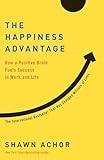
The Happiness Advantage by Shawn Achor
Where most of the psychology on this list works from behaviour outward — building the right habits, then reaping the outcomes — Achor’s research suggests the relationship is more circular than that. His central finding, drawn from research conducted with Harvard students and hundreds of companies, is that happiness precedes success rather than following it: the positive brain is more creative, more productive, more resilient, and more socially connected than the neutral or negative brain. The practical implication is that habits which increase positive affect — gratitude practices, social connection, physical exercise — improve performance across every other domain.
For Power of Habit readers, The Happiness Advantage is valuable for two reasons. First, it provides an evidence base for why the “reward” element of the habit loop matters more than most habit-building frameworks acknowledge — not just as a reinforcement mechanism, but as a genuine input to cognitive performance. Second, Achor’s “Tetris Effect” concept, which describes how training the brain to scan for positive possibilities changes what it automatically notices in any environment, is essentially a habit of perception — and his treatment of it is the clearest account of how cognitive habits work that exists outside of academic literature. The book is more conversational in tone than most on this list and reads quickly, but its evidence base is serious.
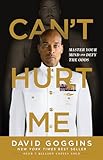
Can’t Hurt Me by David Goggins
Duhigg’s framework is largely optimistic about the habit loop: learn the mechanism, identify the cue, experiment with the routine, protect the reward. Goggins’s memoir is a corrective from the opposite direction. His account of transforming himself from an overweight pest control worker to a Navy SEAL, ultramarathon runner, and one of the world’s elite endurance athletes is not primarily a story about clever system design. It is a story about what happens when someone decides that discomfort is not a reason to stop.
The “40 per cent rule” that Goggins articulates — his belief that when the mind says stop, the body is only at 40 per cent of its actual capacity — is unscientific as stated but points at something real: that the ceiling most people operate below is a habitually formed psychological limit rather than a physiological one. For Power of Habit readers, the value of Can’t Hurt Me is in the dimension it adds to the keystone habit concept. Goggins’s core habit — refusing to accept the first impulse to quit — cascades through every domain of his life in exactly the way Duhigg describes keystone habits operating. The book is rawer and more confrontational than anything else on this list, and it is not for everyone, but its account of deliberately dismantling a comfort-seeking habit and replacing it with a discomfort-seeking one is unlike anything else in the genre.
On Focus and Willpower
Deep Work by Cal Newport
Newport’s 2016 book makes the case that concentrated, undistracted effort is the defining professional skill of the information age — and that most knowledge workers are systematically destroying their capacity for it. The argument connects directly to The Power of Habit in two ways. First, distraction is itself a habit: the reflexive checking of email, the ping-chasing, the context-switching that fills most working days is not a neutral response to external demands but a cue-routine-reward loop that has been deeply reinforced by the design of modern communication tools. Second, deep work — like Duhigg’s keystone habits — cascades. Workers who protect time for concentrated effort tend to find that other areas of their professional performance improve as a side effect.
Newport’s four “deep work philosophies” — monastic, bimodal, rhythmic, and journalistic — are essentially habit designs for different professional circumstances, and reading them alongside Duhigg’s framework illuminates why some approaches work for some people and not others. The shutdown ritual Newport recommends, which signals the end of the working day and prevents work-related rumination in the evenings, is a precise application of habit-loop design to professional boundary-setting. For more on this, see our Books Like Deep Work guide.
Indistractable by Nir Eyal
Before writing Indistractable, Nir Eyal wrote Hooked — the book that taught a generation of product designers how to build compulsive habit loops into apps and platforms. His subsequent work is a deliberate corrective: a framework for understanding and managing the internal triggers that drive distraction. Eyal’s central insight is that distraction is not primarily caused by external interruptions but by discomfort — by the uncomfortable internal states (boredom, anxiety, uncertainty) that the brain has learned to relieve through avoidance behaviours. Tackling distraction, on this account, requires understanding the emotional triggers that precede the compulsive reach for the phone, not simply blocking the apps.
This sits alongside Duhigg’s framework in a productive tension. The Power of Habit focuses on the routine and the reward; Eyal focuses on the cue — specifically, the internal emotional cues that are harder to see and harder to interrupt than the environmental ones Duhigg more often discusses. Together, they provide a more complete picture of why some habits persist even when you genuinely want to stop them, and why simple environmental interventions (turning off notifications, deleting apps) work in the short term but tend to be routed around unless the underlying emotional trigger is addressed.
Digital Minimalism by Cal Newport
A companion to Deep Work rather than a sequel, Digital Minimalism addresses the question that follows from any serious engagement with habit science: if the cue for distraction is built into the design of the tools you use every day, what does a sustainable response actually look like? Newport’s answer is not a collection of tips for managing screen time. It is a philosophy: a deliberate reconsideration of which technologies genuinely serve your values and a structured programme — a thirty-day digital declutter — for resetting your relationship with the ones that do not.
For Power of Habit readers, Digital Minimalism is notable for its application of the habit loop at the environmental level. Newport argues that the smartphone’s persistent presence in every context — bedroom, meals, conversations — means that the cue for distraction is literally inescapable with conventional management strategies. The only effective response is to redesign the environment so that the cue rarely appears. This is Duhigg’s framework applied at a more radical scale, and Newport’s account of what people discover when they do the declutter — not that they were addicted to their phones but that they were using them to avoid being alone with their thoughts — is one of the more psychologically honest passages in recent productivity writing.
On Building a Better Working Life
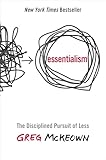
Essentialism by Greg McKeown
Duhigg’s keystone habit concept implies a prior question that The Power of Habit does not spend much time on: which habits are worth building? McKeown’s Essentialism is the most rigorous available answer. His central argument is that most people are doing far too many things, spread too thin across too many commitments, to do any of them exceptionally well — and that the solution is not better time management but a disciplined process of deciding what is essential before attempting to optimise it. The Essentialist, McKeown argues, does not ask “how can I do everything?” but “what is the most important thing, and how do I protect it?”
For habit-builders, the practical implication is significant. The habit-loop framework tells you how to build any habit; Essentialism tells you which habits deserve the investment. McKeown’s framework is particularly useful as a corrective to the productivity genre’s tendency to treat all habit formation as equally valuable. The discipline of saying no — which is itself a habit, with its own cue (a request or opportunity), routine (evaluation against your highest priorities), and reward (the relief and clarity of protected focus) — is arguably the most powerful keystone habit McKeown identifies. The book’s writing is crisp, its examples well-chosen, and its argument more philosophically serious than the management-book category it often gets filed under.
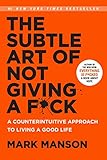
The Subtle Art of Not Giving a F*ck by Mark Manson
Manson’s deliberately provocative book is, underneath the tone, a serious argument about values and the problem of misaligned motivation. His central claim — that most people’s unhappiness comes not from a lack of positive experiences but from caring about the wrong things — connects directly to the habit-formation literature’s persistent finding that habits attached to shallow goals are fragile. If the keystone habit, as Duhigg describes it, reorganises other behaviours around itself, then the value anchoring the keystone habit matters enormously. Habits built on vanity, external approval, or comparison to others are built on sand.
Manson’s framework for choosing what to care about — which he grounds in the inevitability of pain and the necessity of choosing which problems are worth solving — is rougher and less research-heavy than Duckworth or Pink, but it addresses a real gap in the habit literature. Most habit-building frameworks assume the goal is given and focus on the mechanism. Manson interrogates the goal, and his interrogation is more searching and more honest about the difficulty of that question than most. Read after The Power of Habit, this book functions as a useful challenge: before you optimise the loop, ask whether the loop is in service of anything worth optimising.
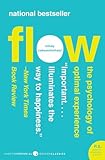
Flow by Mihaly Csikszentmihalyi
Csikszentmihalyi’s 1990 masterwork is the intellectual predecessor of much of what Duhigg and Clear describe, and it addresses the question that the habit literature rarely foregrounds: what does it actually feel like to perform a habitual behaviour at its best? Flow — the state of total absorption that occurs when a challenge is well-matched to skill — is the experiential peak of any well-formed habit. Athletes call it being in the zone. Musicians describe it as playing without thinking. Csikszentmihalyi’s research, conducted across decades and cultures, found it to be associated with the highest levels of human happiness, meaning, and performance.
For Power of Habit readers, Flow extends the reward component of the habit loop beyond reinforcement mechanics into something richer. Duhigg’s account of reward is primarily neurological — dopamine, craving, anticipation. Csikszentmihalyi’s account of the most powerful rewards associated with skilled behaviour is phenomenological: the loss of self-consciousness, the distortion of time, the sense of effortless competence that characterises expert performance. Understanding that the intrinsic reward of deep engagement is available to anyone who has developed a habit to the point of genuine skill gives the entire project of habit formation a different character. It is not merely about better outcomes. It is about the quality of experience available during the behaviour itself.
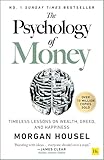
The Psychology of Money by Morgan Housel
Housel’s book is not primarily about habits, but its subject — why intelligent people make systematically poor financial decisions — is, at its core, a study in the habit loops, cognitive biases, and emotional triggers that govern behaviour under conditions of uncertainty. His central insight is that financial outcomes are determined less by knowledge than by behaviour, and that the behaviours that determine wealth and security are largely habitual: spending patterns, saving reflexes, the emotional response to market volatility, the story a person tells about what money is for.
The connection to The Power of Habit is direct. Duhigg’s chapter on institutional habits — how corporations develop organisational routines that no individual designed — has a precise personal finance equivalent in Housel’s analysis of how financial behaviour is shaped by the era a person grew up in, the family norms they absorbed, and the emotional associations money acquired in childhood. Both books are making the same point from different angles: automatic behaviour is not random, it is historical, and understanding its origins is the first step toward changing it. The Psychology of Money is also one of the most readable books in the finance genre, and its lessons about time, patience, and the compounding effect of consistent behaviour sit naturally alongside Duhigg’s keystone habit framework.
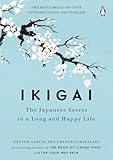
Ikigai by Hector Garcia and Francesc Miralles
Every book on this list that deals with habits and behaviour change eventually forces the same underlying question: habits in service of what? Ikigai — the Japanese concept of “reason for being,” understood as the intersection of what you love, what you are good at, what the world needs, and what you can be paid for — is Garcia and Miralles’s answer to that question as embodied in the lives of the remarkably long-lived residents of Okinawa. It is a shorter and more philosophical book than the others here, and it makes no claims to the scientific rigour of Duhigg or Kahneman. But it earns its place on this list by addressing the dimension that behavioural science tends to treat as exogenous: the question of purpose.
Habit formation is a technology. Like all technologies, its value depends entirely on what it is used for. The people Duhigg profiles who change their habits successfully — the woman who quits smoking and transforms her life, the aluminium company CEO who remakes his organisation through a single safety habit — do so because the habit is connected to something they genuinely care about. Ikigai is the most accessible available account of what that caring looks like when it is fully developed: not as a goal to achieve but as a way of being that a life organised around consistent, purposeful behaviour eventually produces.
How to Choose Your Next Read
If you want more cognitive science: Thinking, Fast and Slow is the essential next step.
If you want a practical system to apply immediately: Atomic Habits is the direct companion. See also our full Books Like Atomic Habits guide.
If you want to understand motivation and why habits persist: Drive or Grit.
If you want to apply habit science to your working life: Deep Work or Essentialism.
If you want the philosophical dimension: Flow or Ikigai.
For the Best Self-Help Books
For the definitive guide to self-help and personal development — from Atomic Habits to The Power of Now — see our Best Self-Help Books list.
Affiliate disclosure: Links to Amazon on this page are affiliate links. We earn a small commission at no extra cost to you. This does not influence our editorial recommendations.
Frequently Asked Questions
What should I read after The Power of Habit?
The most natural next read after The Power of Habit is Atomic Habits by James Clear, which takes Duhigg's habit loop framework and turns it into a precise, practical system for changing behaviour. For the deeper cognitive science, Thinking, Fast and Slow by Daniel Kahneman is essential — it explains the System 1 and System 2 architecture that habit formation exploits. If you want to apply habit thinking to your working life specifically, Deep Work by Cal Newport is the best companion. Readers interested in motivation and why habits persist or collapse should move to Drive by Daniel Pink.
Is The Power of Habit or Atomic Habits better?
They are better at different things. The Power of Habit is the richer scientific and journalistic account — Duhigg explains the neuroscience of the habit loop, the role of craving and reward, and how habits operate at the level of organisations and social movements. Atomic Habits is the more actionable book — James Clear's Four Laws of Behaviour Change give you an immediate, practical framework you can apply to any habit starting today. Most readers who engage seriously with one end up reading the other. Together, they cover the subject about as thoroughly as popular writing currently can.
What is the main difference between The Power of Habit and Atomic Habits?
The central difference is descriptive versus prescriptive. The Power of Habit wants to explain how and why habits work — the neuroscience, the social dynamics, the corporate and societal implications. Atomic Habits wants to change your behaviour, and every chapter is oriented toward that goal. Duhigg's book is intellectually richer; Clear's is more immediately useful. Both build on the same scientific foundation — the habit loop — but they use it for entirely different purposes.
What books cover the science behind The Power of Habit in more depth?
Thinking, Fast and Slow by Daniel Kahneman is the deepest treatment of the cognitive architecture underlying habit formation — his System 1 and System 2 framework explains precisely why habits bypass conscious deliberation. Mindset by Carol Dweck addresses the psychological substrate that determines whether people successfully change their habits at all. For the motivational science, Drive by Daniel Pink examines why habits built around external rewards tend to be fragile, while habits rooted in autonomy and purpose endure.
Are there books like The Power of Habit that focus on work and productivity?
Several of the best habit books apply directly to professional life. Deep Work by Cal Newport focuses on building the habit of concentrated, undistracted effort — the single skill Newport argues separates exceptional knowledge workers from average ones. Essentialism by Greg McKeown extends habit thinking to decision-making, building the discipline of focusing only on what is truly important. Indistractable by Nir Eyal addresses the competing behaviours that undermine any productive habit, and The Happiness Advantage by Shawn Achor examines how positive habits compound into better professional performance over time.