Books Like Moon Palace: 11 Novels of Chance
If Moon Palace captivated you with its picaresque account of a young man finding his place in America through accident and inheritance, these novels share its warmth, its scope, and its fascination with chance.

Paul Auster’s Moon Palace is his most welcoming novel — the one in which his characteristic preoccupations (accident, identity, family mystery, the strangeness of American life) are held in a picaresque structure warm enough to carry the reader without formal demand. Marco Stanley Fogg — the name itself is an Auster joke: a fog of surnames from American literature and exploration — arrives at Columbia with a small inheritance and spends it all on books, and what follows is a series of episodes that gradually reveal a family history larger and stranger than he knew. The chance encounters that shape Marco’s life are not arbitrary but weighted, and the novel’s warmth comes from Auster’s conviction that even the most random-seeming events carry meaning. The books below share Moon Palace’s picaresque energy, its interest in young men finding their way through America, or its conviction that chance is not random but meaningful.
The Great American Picaresque
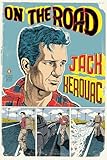
#1 — On the Road by Jack Kerouac
Kerouac’s novel established the template for the American road narrative — Sal Paradise and Dean Moriarty driving across the country in the late 1940s, seeking sensation, jazz, and something neither of them can name. It is the founding document of a particular strain of American literary energy: restless, improvisational, convinced that the self is formed by movement rather than by settlement, and that America is best understood from the road, in motion, through encounters with strangers.
Moon Palace shares all of this. Marco’s wandering — from Columbia to Central Park to Utah and back — is structured by the same conviction that the road is the natural condition of the American hero. But Auster’s relationship to Kerouac is partly critical: where Dean Moriarty’s wandering is glamorised, even in its destruction, Marco’s destitution is rendered without glamour. The Central Park episodes are not romantic; they are frightening and sometimes squalid. Auster inherits Kerouac’s formal structure while insisting on consequences Kerouac preferred not to examine.
Both novels use the American landscape — the continent’s sheer scale, its indifference to individual lives — as a mirror for an identity in formation. Both are novels about young men who cannot yet say what they are looking for, conducted in the faith that the search itself is what matters. On the Road is the ancestor; Moon Palace is the corrective.
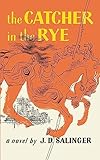
#2 — The Catcher in the Rye by J.D. Salinger
Holden Caulfield’s three days in New York City are the most celebrated portrait of urban adolescent destitution in American fiction, and they are a direct precursor to Marco Fogg’s extended near-collapse in the same city. Both narrators are young men from privileged but fractured backgrounds who find themselves alone in New York, watching the city from outside whatever social system they nominally belong to — simultaneously yearning for connection and unable to accept it when it is offered.
Salinger’s New York and Auster’s New York share a particular quality: the most legible city in the world, with its grid and its neighborhoods and its known addresses, becomes the most isolating. The city’s very intelligibility makes the protagonist’s dislocation more acute. Both Holden and Marco are surrounded by people and radically alone. Both use money badly, as if testing how far they can fall. Both are narrators who talk too much about what they notice and too little about what they feel, which is how readers come to understand that feeling is precisely what they cannot manage.
The Central Park episodes in both novels are not coincidental — the park is where New York’s surface legibility dissolves into something wilder, and both writers use it that way.
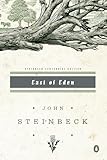
#3 — East of Eden by John Steinbeck
Steinbeck’s California epic is the family saga most directly comparable to Moon Palace’s multi-generational structure. Both novels are about family secrets that span three generations and reveal the protagonist’s inheritance — in Steinbeck’s case the Trask family and their unconscious re-enactment of the Cain and Abel story across the Salinas Valley, in Auster’s case the mystery of Marco’s grandfather and father. Both are interested in the fundamental question of whether inherited character can be escaped, whether what was given to you is also your destiny.
The California landscape in East of Eden and the Utah desert in Moon Palace serve similar functions: vast, indifferent, beautiful, capable of both destroying and clarifying a person. Steinbeck’s Salinas Valley is a character as much as a setting, and the same is true of the Utah desert through which Marco travels in Auster’s novel. Both writers use physical landscape to externalise the interior condition of characters who cannot yet articulate their own situation.
East of Eden is a larger, more overtly ambitious novel — longer, more populated, more explicitly mythological in its structure. But the family mystery at its heart, and the way that mystery determines the shape of a young man’s life before he understands what is happening, is the same engine that drives Moon Palace.
American Men Finding Themselves
#4 — Stoner by John Williams
William Stoner is a Missouri farm boy who discovers literature at university and never leaves — an academic who finds, through accident and necessity, what he was meant to do, and who pays for that discovery in ways he could not have anticipated. John Williams’s novel is the quieter, sadder counterpart to Marco’s picaresque: both are novels about a young man finding his vocation through the kind of incident that looks accidental from outside but feels inevitable from within.
Both protagonists are defined by their relationship to books — Marco spends his inheritance on them; Stoner organises his entire life around them. Both novels are suffused with a restrained melancholy about what a life devoted to literature costs, and what it gives in return. Stoner’s discoveries are literary; his commitment is final rather than provisional, which is what separates him from Marco. But the loneliness of both protagonists — one through choice, one through circumstance — and their shared conviction that the life of the mind is worth its price, gives both novels their quality of quiet, earned sadness.
Stoner is a slower and less eventful novel than Moon Palace, but readers who respond to Moon Palace’s warmth toward a protagonist who cannot quite make his life work will find something related, and permanently affecting, in Williams’s masterpiece.
#5 — The World According to Garp by John Irving
T.S. Garp is Marco Fogg’s closest analogue in American literary fiction: another young man with an unusual parentage — his mother, Jenny Fields, conceived him with a dying tail gunner as an act of deliberate single motherhood — moving through a series of vivid, violent, and blackly comic episodes that accumulate into a life defined by accident, loss, and writing. Like Marco, Garp is a writer-protagonist, and both novels are interested in what it costs to be a person who makes sense of experience by turning it into narrative.
Irving’s novel is darker and more violent than Moon Palace — the world according to Garp is a world in which terrible things happen without warning and people are not protected by their intelligence or their good intentions. But it shares the picaresque structure, the conviction that life is best understood as a series of episodes that only cohere in retrospect, and the sense that the most important things about a person are the things that happened to them before they were old enough to choose.
Both novels are also about men who are formed by their mothers’ lives as much as by their own choices — Garp by Jenny’s radical example, Marco by the mystery of the mother he never knew.
#6 — A Prayer for Owen Meany by John Irving
Irving’s second entry on this list is the novel that most directly shares Moon Palace’s concern with how a friendship shapes an identity — and with the discovery that the shape of your life was determined before you understood what was happening. John Wheelwright narrates his entire adult life through the lens of his childhood friendship with Owen Meany, a small, strange boy whose voice sounds like it has already been through everything and emerged on the other side.
Owen is, in Auster’s terms, the kind of person whose life is structured by coincidence that turns out not to be coincidence at all — whose apparent accident is in fact a pattern. The New Hampshire setting and the American history running through the novel (Vietnam, the assassinations, the loss of innocence that organises the whole postwar American literary project) give it the specific historical weight that Moon Palace achieves through the Apollo mission and the 1960s. Both are novels about young men who watch their era rather than participate in it, and who are formed by that watching into something they could not have planned.
Outsiders in America
#7 — The Brief Wondrous Life of Oscar Wao by Junot Díaz
Oscar de León is a cousin to Marco Stanley Fogg: another young man shaped by an inheritance he didn’t choose — in Oscar’s case the fukú, the Dominican family curse that runs through generations of the de León family like a dark alternative to the American dream. Both novels use coincidence as a structural principle, both are picaresques through the American experience, and both are finally about the relationship between personal history and larger historical forces that the protagonist had no hand in creating.
Díaz’s formal energy — the footnotes, the code-switching, the narrator Yunior who is both inside and outside the story — shares something with Auster’s interest in the relationship between narrator and narrative, in what it means to tell someone else’s story from the inside. Both writers are suspicious of the clean, well-lit version of America, and both find in their protagonists’ outsider status a vantage point from which the country’s contradictions become visible.
Oscar is less fortunate than Marco, and Díaz is less hopeful than Auster — the novel ends in tragedy that Moon Palace avoids. But readers who respond to Moon Palace’s picaresque structure and its interest in how inheritance determines identity will find a powerful, noisier, more contemporary version of the same concerns in Díaz’s novel.
#8 — The Perks of Being a Wallflower by Stephen Chbosky
Charlie is a younger, more vulnerable version of Marco Fogg’s characteristic position: the observer who cannot quite participate, the person whose inner life is richer and more developed than his ability to inhabit it. Both protagonists experience the world largely through others — Marco through Thomas Effing’s extraordinary stories about a life already lived, Charlie through his friends’ lives and loves — before finding their way, slowly and painfully, to their own.
Chbosky’s novel is shorter and simpler than Moon Palace, aimed at a younger readership and less interested in the metaphysics of chance. But it shares Moon Palace’s warmth, its gentleness toward a protagonist who is still becoming something, and its conviction that the young outsider observing from the margins is building, slowly and without knowing it, the inner life he will eventually inhabit. The novel’s famous last line — “I feel infinite” — is the younger, more immediate version of the resolution Moon Palace arrives at through longer, stranger routes.
For readers who want the emotional register of Moon Palace in a less formally demanding form, The Perks of Being a Wallflower is the most accessible companion on this list.
The Goldfinch School (Catastrophe and Recovery)
#9 — The Goldfinch by Donna Tartt
Theo Decker is the closest equivalent in contemporary American fiction to Marco Fogg’s combination of intellectual seriousness and accidental, picaresque movement through the world. Orphaned at thirteen by an explosion in a New York museum, shaped irreversibly by what he took from the rubble and what was taken from him, Theo moves through the same combination of privilege and destitution, the same inability to settle into the life available to him, the same sense that the real story of his life is being written by forces he cannot see or control.
Both novels are about young men formed by losses they didn’t choose, who carry a specific object as a token of their lost origin — Marco carries books and a red notebook that connects him to what he has lost; Theo carries the small Dutch masterpiece that connects him to his mother and to the version of himself that existed before the explosion. Tartt’s novel is longer, darker, and more plot-driven than Moon Palace, and it reaches into darker American territories — the Las Vegas of Boris, the antiques trade, addiction. But the picaresque structure and the long arc of recovery, the conviction that a person can survive the destruction of everything they depended on and find something worth living for on the other side, is the same in both novels.
#10 — Beautiful Boy by David Sheff
David Sheff’s memoir — a father’s account of his son Nic’s descent into addiction to crystal meth and the family’s years of hope, loss, and partial recovery — is the nonfiction counterpart to Moon Palace’s portrait of a young man losing and recovering himself. Marco’s near-starvation in Central Park is a form of self-erasure, a reduction to bare existence that the novel treats as both frightening and, ultimately, clarifying. Addiction is a more brutal and less literary version of the same process: the self stripped to its essentials by forces it cannot control.
Both texts are about the terrifying proximity, in a young person’s life, between the freedom required to become oneself and the destruction that can result from exercising that freedom without adequate support. Sheff’s memoir is more frightening than Auster’s novel because it is real, and because the resolution is not clean — Nic’s recovery is genuine but qualified, and the damage is not undone. Moon Palace readers who respond most strongly to Marco’s destitution, who want to follow that thread into nonfiction and into darker territory, will find something essential and deeply affecting in Sheff’s book.
#11 — Breakfast of Champions by Kurt Vonnegut
Vonnegut’s novel is the satirical American version of what Auster does with more solemnity. Both are about America as a system of accidental meaning — a country that has produced, by some combination of circumstance, ideology, and sheer historical momentum, a particular kind of person: isolated, baffled by the distance between the official story of American life and their experience of it, susceptible to narratives that offer to explain the inexplicable.
Vonnegut’s Dwayne Hoover, driven insane by reading a novel that tells him he is the only real person in the world and everyone else is a robot, is Auster’s Quinn from The New York Trilogy taken to its logical comedic conclusion. Both writers are interested in the dangerous power of fiction — in what happens when a story is taken too literally, when the narrative structure we impose on experience starts to feel more real than the experience itself. And both use the American grid — the city block, the highway, the numbered street — as a symbol for the American belief that the world can be rendered legible, rational, and controllable, a belief both writers find simultaneously necessary and delusional.
Breakfast of Champions is funnier and more despairing than Moon Palace, but readers who want to follow Auster’s preoccupations into the broader tradition of postwar American fiction will find Vonnegut an indispensable companion.
How to Choose Your Next Read
If you want the classic American road narrative: On the Road.
If you want another novel with a multi-generational family secret: East of Eden.
If you want a writer-protagonist in the Irving tradition: The World According to Garp.
If you want warm and accessible at a smaller scale: The Perks of Being a Wallflower.
If you want something more ambitious and structurally complex: The Brief Wondrous Life of Oscar Wao.
If you want the picaresque in darker American territory: The Goldfinch.
For the Best Fiction Books
For the definitive guide to fiction — the greatest novels across literary fiction, classics, and contemporary writing — see our Best Fiction Books of All Time list.
More Paul Auster and Postmodern Fiction Guides
- Paul Auster Books in Order: Complete Reading Guide
- Books Like The New York Trilogy: Identity and Postmodern Mystery
More Paul Auster Reading Guides
Affiliate disclosure: Links on this site are affiliate links. We earn a small commission at no extra cost to you. This does not influence our editorial recommendations.
Frequently Asked Questions
Is Moon Palace a good first Paul Auster novel?
Yes — Moon Palace is widely recommended as the best entry point for readers new to Auster. It has his characteristic preoccupations (coincidence, identity, the mysteries that structure a life) but is warmer and more accessible than The New York Trilogy. Marco Stanley Fogg is someone the reader can care about as well as observe, and the novel's resolution, while involving considerable coincidence, is earned rather than arbitrary.
What genre is Moon Palace?
Moon Palace is American literary fiction with picaresque elements. It follows its protagonist through a series of loosely connected episodes — near-starvation in New York, employment as a companion to an elderly eccentric, a journey to Utah, a return to New York — that are unified by the family mystery gradually being revealed. It is not genre fiction in any strict sense, though it borrows from picaresque, the family saga, and the road novel.
What other Paul Auster books are similar to Moon Palace?
Mr. Vertigo shares Moon Palace's picaresque structure and its use of an American historical panorama as backdrop. Brooklyn Follies is the closest in warmth and accessibility. The Invention of Solitude shares the autobiographical strand about fathers and sons that runs through Moon Palace's family revelation. 4 3 2 1 is the most ambitious version of the same concerns — American identity, the role of accident in shaping a life — at much larger scale.
Why is the novel called Moon Palace?
Moon Palace is the name of a Chinese restaurant near Columbia that Marco passes regularly. It also refers to the moon itself — which appears at significant moments throughout the novel, including the Apollo moon landing that occurs during Marco's desert journey. The title points to Auster's interest in destinations that are visible but unreachable, goals that illuminate the journey toward them without being attained.