Books Like 4 3 2 1: 11 Novels of Branching Lives
If Paul Auster's 4 3 2 1 captivated you with its portrait of one man's four parallel lives through American history, these novels share its ambition, scope, and fascination with the roads not taken.

Paul Auster’s 4 3 2 1 is built around the most fundamental question of any life: what if? Archibald Isaac Ferguson is born once, in Newark, New Jersey, in 1947, and Auster follows four versions of what happens next — four Fergusons who share a birth and a family name and a physical body, and who become, under the pressure of different circumstances, entirely different people. The structure is both a literary device and a philosophical argument: the self is not inevitable but contingent, shaped by accidents of circumstance — a father’s business success or failure, a death, an encounter, a summer job — that occur before anyone has any say in the matter. The 1960s that each Ferguson inhabits — the assassinations, the Civil Rights movement, the Columbia protests, the Vietnam draft — give these private contingencies a public resonance.
The books below have been chosen because they share the novel’s ambition (long, multi-perspective, historically grounded), its fascination with contingency and what-if, or its commitment to following characters across decades of American or world history. None of them do exactly what 4 3 2 1 does, but each of them takes the same questions seriously.
Long Literary Novels About American Life
#1 — The Goldfinch by Donna Tartt
Theo Decker is thirteen years old when his mother takes him to the Metropolitan Museum of Art and a bomb goes off. She dies in the rubble; Theo walks out carrying a small Dutch Golden Age painting he has taken from the wreckage — Carel Fabritius’s The Goldfinch — and cannot return. Tartt traces the next fifteen years of his life across New York, Las Vegas, Amsterdam, and back, showing how that single catastrophic event, and the painting it produced, shapes every subsequent choice and relationship. The 4 3 2 1 parallel is exact: if Theo had not been in the museum that day, every moment of his life would have been different. Tartt and Auster share the conviction that catastrophic early events determine everything that follows, that the self is not formed in a vacuum but by the specific accidents of what happens when you are young and unable to protect yourself from history. The Goldfinch is less structurally experimental — there is only one Theo — but equally committed to following its protagonist through the full arc of young adulthood into the kind of person the initial disaster has made him. At 771 pages, it is a close match for 4 3 2 1’s scale, and Tartt’s prose is among the most assured in contemporary American fiction.
#2 — The Corrections by Jonathan Franzen
The Corrections is the American literary novel that comes closest to 4 3 2 1 in its structural logic: three adult children — Gary, Chip, Denise Lambert — whose entirely different lives each reflect the same parental household, making the reader aware, chapter by chapter, of how the same origin produces completely different people. The Lambert family home in St. Jude, where Alfred and Enid have lived for decades, is the single starting point from which three diverging lives radiate. Gary is a successful Philadelphia banker who is quietly cracking. Chip is an academic who has lost his position and his dignity. Denise is a celebrated chef whose private life is a sustained act of self-destruction. Franzen does not run the lives simultaneously, as Auster does; he alternates them, and the effect is less formally vertiginous but equally revealing of contingency and divergence. The historical context — the 1990s financial boom, the Eastern European transition to market economies, the early pharmaceutical treatment of Alzheimer’s disease — provides a public backdrop for private choices in exactly the way Auster uses the 1960s. Franzen’s prose is colder than Auster’s but equally precise, and the family dynamics he describes are among the most honest in American fiction.
#3 — Infinite Jest by David Foster Wallace
Infinite Jest is 4 3 2 1’s closest rival in American fiction for length, formal ambition, and the seriousness with which it takes American culture as its subject. Set in a near-future North America in which years are sponsored by corporations and a film called Infinite Jest is so entertaining that anyone who watches it loses all desire to do anything else, the novel is organised around a tennis academy in Boston and a halfway house at the bottom of the hill — two institutions whose inhabitants are all, in different ways, subjects of the culture of addiction and entertainment that Wallace diagnosed as American modernity’s central pathology. The connection to Auster is in scale and seriousness rather than theme: both novelists believed American fiction needed to be as large and formally complex as the society it described, and that simplifying that complexity was a form of dishonesty. The experience of reading both novels is similar — the pleasure of inhabiting an enormously detailed fictional world — but Wallace is darker, more ironic, more interested in the seductions of nihilism. For readers who found 4 3 2 1 compelling and want something formally experimental in a different direction.
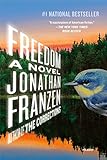
#4 — Freedom by Jonathan Franzen
Franzen’s second appearance on this list reflects the consistency of his project: where The Corrections concerns itself with family as the unit of contingency, Freedom expands the frame to politics, ecology, and ideology. The Berglunds — Walter, his wife Patty, their son Joey — are a liberal Minnesota family navigating the first decade of the twenty-first century, with its particular pressures: the Iraq War, the environmental movement, the collapse of the housing market, the various forms of freedom that American culture offers its citizens and the various ways those freedoms become traps. Franzen is interested in how political ideology shapes private life, in the gap between what people believe they value and how they actually behave. Auster, in 4 3 2 1, is interested in how private accidents shape the political person — in how the same public history looks different from four different private positions. The two concerns are complementary, and Franzen’s novels read as a dialogue with Auster’s: both are long novels that take seriously the claim that domestic fiction can carry the full weight of national history.
Generational Scope and Contingency
#5 — Pachinko by Min Jin Lee
Pachinko is the novel that most completely shares 4 3 2 1’s central argument about contingency — the claim that who you become is inseparable from when and where you were born and what had already happened before you arrived. Sunja, a young Korean woman in Japanese-occupied Korea, becomes pregnant in 1910 by a married man, and her decision — or rather her lack of options — sets in motion a family history that Lee traces across four generations, from colonial Korea through wartime Japan through the postwar economic miracle to the present day. At every point in the novel, the reader is made aware that different historical circumstances would have produced different people, that the Zainichi Korean identity that shapes each generation is not chosen but assigned by history. Lee does not use parallel lives as her structure — she works chronologically, not simultaneously — but the argument she makes through accumulated time is Auster’s argument made through simultaneous alternatives. The result is a novel in which each individual life is both fully realised in itself and part of a pattern that only becomes visible across the full span of the book.
#6 — Homegoing by Yaa Gyasi
Gyasi’s first novel is among the most structurally elegant treatments of the idea that history determines the self. Beginning in eighteenth-century Ghana with two half-sisters — Effia, who marries a British colonial officer, and Ama, who is enslaved and transported to America — the novel follows one chapter per generation of each family line, moving through seven generations to the present day. Each chapter is a different person; each person is shaped by the accumulated history of everyone who came before. The reader watches contingency compound across centuries, the initial accident of which sister ended up where producing consequences that magnify and transform across generations until the present-day characters, who could not be more different in circumstance, can be traced back to a single origin. Like 4 3 2 1, Homegoing argues that the self is not an individual achievement but a historical inheritance — that who you are is determined by events that happened before your birth, in places you have never been, to people you will never meet. Gyasi’s structure is more linear than Auster’s, but the philosophical argument is the same, made with comparable authority and precision.
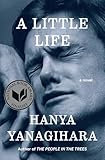
#7 — A Little Life by Hanya Yanagihara
A Little Life is 4 3 2 1’s most extreme counterpoint: where Auster follows four parallel versions of one life, exploring how different circumstances produce different selves, Yanagihara follows a single version of one life to its most devastating possible conclusion. Jude St. Francis arrives in New York City with three college friends, and the novel follows all four of them — but increasingly only Jude — across the next decades, as his friends achieve various forms of adult success and Jude carries, from a childhood that the novel reveals incrementally, damage that cannot be repaired. Both novels ask how much of a person is determined before they have any say in the matter; Yanagihara’s answer is bleaker than Auster’s, insisting that Jude’s early damage cannot be undone by love or circumstance or time. Where 4 3 2 1 finds possibility in contingency — the same person could have been different, which means no outcome is inevitable — A Little Life finds horror in it. For readers who found 4 3 2 1 moving and want to follow the same questions about identity and formation into much darker territory. Significant content warnings apply; this is one of the most emotionally demanding novels in contemporary fiction.
Formally Inventive Multi-Perspective Novels
#8 — Cloud Atlas by David Mitchell
Mitchell’s six-story nested structure — each story interrupted at its midpoint, the set descending to the innermost story before returning to each interrupted narrative in reverse order — is the formal complement to Auster’s four-Ferguson parallel structure. Both novels are interested in whether lives are shaped by forces larger than any individual’s choices, and both use structural complexity to argue that single-perspective narrative cannot contain the full truth of a human life. Cloud Atlas moves across centuries — from a nineteenth-century Pacific sea voyage to a post-apocalyptic Hawaii — rather than through parallel contemporaneous lives, but the philosophical concern is shared: contingency, the question of what survives across time, the way individual agency is both real and hemmed in by forces it cannot see. Mitchell’s novel is more genre-flexible than Auster’s, moving through pastiche and science fiction and thriller conventions, but the underlying seriousness is the same. The question of whether the souls in the six narratives are truly connected — whether the novel’s structural rhymes are evidence of reincarnation or only coincidence — is left open in the same spirit that Auster leaves his mysteries open.
#9 — Lincoln in the Bardo by George Saunders
Saunders’s first novel is set in the graveyard where Abraham Lincoln’s eleven-year-old son Willie lies, the night after his funeral in February 1862. The novel is narrated by the ghosts of the graveyard — dozens of them, from across American history, each with their own voice and their own unfinished business — alongside excerpts from real and invented historical accounts of Lincoln’s grief. The hundreds of ghost voices, each partial and self-serving and unable to see what they cannot bear to see, create an effect related to 4 3 2 1’s four-Ferguson structure: multiple perspectives on the same situation, none of them authoritative, each illuminating aspects the others cannot see. No single voice tells the full truth; the truth is in the gaps between voices. The novel is formally unlike anything else in American fiction and shares 4 3 2 1’s conviction that the single perspective is inadequate to the complexity of any moment in history. It is also, at around 350 pages, a much shorter commitment — for readers who want formal ambition at a fraction of the length.
#10 — Beautiful Ruins by Jess Walter
Walter’s novel is a smaller-scale version of 4 3 2 1’s interest in how different decades of the twentieth and twenty-first centuries feel to the people living in them. Moving between a tiny Italian coastal village in 1962, contemporary Hollywood, Edinburgh in the 1970s, and a World War Two Italian village, the novel follows a young Italian hotel owner who meets an American actress filming a movie nearby and is told something that will take him fifty years to understand. The form of the book — chapters set in different periods, different voices, the same story approached from different directions — gives Walter the structural complexity to show how the same encounter looks different depending on when you are looking at it and from whose position. The novel shares 4 3 2 1’s affection for the particular texture of specific historical moments and its conviction that certain encounters between people are permanent and formative regardless of what circumstances surround them. At 337 pages it is one of the lighter books on this list, and an excellent starting point for readers who want to test their appetite for formally inventive historical fiction before committing to something longer.
#11 — The Bone Clocks by David Mitchell
Mitchell’s second appearance on this list reflects his particular affinity with Auster’s structural concerns. The Bone Clocks follows Holly Sykes across six sections set between 1984 and 2043, from her teenage years in Gravesend through middle age to a near-future Ireland after the collapse of global infrastructure. Each section is set in a specific historical moment — the Cold War’s last decade, the boom years of the 1990s, the post-financial-crisis 2010s, the near-future — and each shapes the people within it in ways the characters can feel but not fully describe. Mitchell is interested, as Auster is, in how the same person is made and remade by the historical circumstances she moves through, how identity is both continuous across decades and radically transformed by them. The immortal Horologists who intersect with Holly’s life across the decades introduce a fantasy dimension absent from 4 3 2 1, but the underlying argument — that who you are at any moment is the product of everything that has happened in the world before that moment — is shared. For readers who want 4 3 2 1’s temporal scope combined with Mitchell’s genre flexibility.
How to Choose Your Next Read
If you want the closest match in American literary fiction: The Corrections or Freedom.
If you want generational scope across world history: Pachinko or Homegoing.
If you want comparable formal ambition: Cloud Atlas or Infinite Jest.
If you want a single life followed with comparable intensity: The Goldfinch or A Little Life.
If you want something formally inventive but shorter: Lincoln in the Bardo or Beautiful Ruins.
More Paul Auster and Literary Fiction Guides
- Paul Auster Books in Order: Complete Reading Guide
- Books Like Moon Palace: Wandering and American Identity
Affiliate disclosure: Links to Amazon on this page are affiliate links. We earn a small commission at no extra cost to you. This does not influence our editorial recommendations.
Frequently Asked Questions
How long is 4 3 2 1 and is it worth the commitment?
4 3 2 1 is 866 pages. Whether it is worth the commitment depends on your appetite for long, structurally ambitious literary novels. Readers who commit to it report that the four Fergusons become genuinely distinct by the middle of the book, and that the American historical backdrop — the 1960s assassinations, the Civil Rights movement, Vietnam — gives the parallel lives a public resonance that sustains the length. Readers who found The Corrections or Infinite Jest too long are likely to feel the same about 4 3 2 1.
Is 4 3 2 1 Auster's best novel?
Critical opinion is divided. Some consider it his masterwork — the culmination of his career's preoccupations at the largest possible scale. Others prefer The New York Trilogy for its formal precision, or Moon Palace for its warmth. The Booker Prize shortlist confirmed its ambitions were taken seriously. It is certainly his most ambitious novel, though not everyone finds ambition and quality equivalent.
What other books use parallel lives as a structure?
Cloud Atlas by David Mitchell uses nested rather than parallel narratives but achieves a related effect of multiple lives illuminating each other. The Hours by Michael Cunningham follows three women in different periods whose lives rhyme without directly connecting. Kate Atkinson's Life After Life follows the same woman through multiple deaths and rebirths. All three achieve something related to 4 3 2 1's fascination with contingency — the way a life is shaped by the accidents of when and where it happens.
What is 4 3 2 1 about, beyond its structure?
Beyond the parallel-lives conceit, 4 3 2 1 is a novel about being Jewish in mid-twentieth-century America, about being a writer in a culture that doesn't quite value literature, about the specific historical weight of the 1960s, and about how much of who we are is determined before we make any choices. It is Auster's most autobiographical novel — Archie Ferguson is in many ways Auster himself, born in Newark in 1947, reaching adulthood in the 1960s — and it contains within its four lives many of the roads Auster himself did not take.