Books Like Daisy Jones and The Six: 11 Reads
If the oral history format and doomed 70s rock atmosphere of Daisy Jones hooked you, these 11 books capture the same magic.

Taylor Jenkins Reid’s Daisy Jones and The Six does something almost no novel attempts: it presents itself as a documentary. The story of a fictional 1970s rock band’s rise and implosion is told entirely through retrospective interviews — band members, managers, lovers, hangers-on — all contradicting each other, all remembering the same events differently, all circling the thing that broke them apart without quite saying it directly. The format is the novel’s central achievement. You do not read Daisy Jones so much as watch it, the way you would watch a late-night music documentary, knowing even before anyone admits it that something went terribly wrong.
What the novel captures alongside its format is the specific mythology of a particular moment: the Sunset Strip in the early 1970s, the way a band becomes a world unto itself, the blurring of creative partnership and romantic obsession, and the particular alchemy of two people who are genuinely better artists together than apart and cannot figure out how to be people together at all. The doomed romance between Daisy and Billy is classic, but what gives it weight is that their incompatibility is not just personal — it is structural. They need each other to make the music and cannot survive the closeness that making music requires.
The books below approach this territory from different angles. Some are other Taylor Jenkins Reid novels that share her gift for celebrity mythology and retrospective intimacy. Others are about artists and the cost of creative life. A few share the unconventional narrative structure that makes Daisy Jones feel like no other reading experience. All of them will feel like natural next reads for someone who finished the novel and immediately wanted more.
More Taylor Jenkins Reid: Celebrity, Myth, and the Stories We Tell About Ourselves
#1 — The Seven Husbands of Evelyn Hugo by Taylor Jenkins Reid
A reclusive Hollywood icon in her eighties chooses an unknown journalist to receive her life story — and what emerges is a portrait of a woman who remade herself entirely, loved deeply and strategically, and protected her truest self for decades at great cost. Reid uses the same retrospective interview structure as Daisy Jones, and the effect is identical: you are always reading a constructed account, always aware that Evelyn is choosing what to reveal and when. The love story at the novel’s center is one of the most devastating in contemporary commercial fiction. If you read only one book on this list, make it this one.
#2 — Malibu Rising by Taylor Jenkins Reid
Four siblings — children of a famous, absent surf legend — gather at their Malibu beach house for an end-of-summer party in 1983 that will end with the house burning down. Reid structures the novel to unfold over a single night while cutting back through decades of family history, and the result is a portrait of what it costs to be raised in the shadow of someone else’s myth. The atmosphere — beach houses, rock music, the particular golden light of California in the early 1980s — is continuous with Daisy Jones, and the novel is about people trying to separate their own identities from the larger story they were born into.
The 1970s and the Rock World: Atmosphere and Immersion
#3 — Beautiful Ruins by Jess Walter
A young Italian hotel keeper in 1962 meets an American actress on the edge of a breakdown, and the encounter reverberates across fifty years of lives. Walter moves between the Italian coast, Hollywood in its golden age, and contemporary Los Angeles with the same ease Reid moves between decades, and the novel has the same quality of retrospection — all these people looking back and trying to account for a single catalytic moment. The portrait of creative ambition, the wreckage that comes with it, and the improbable longevity of genuine feeling is continuous with Daisy Jones in ways that are hard to articulate but immediately felt.
#4 — The Secret History by Donna Tartt
A group of classics students at a small Vermont college become complicit in a death, and the novel tells this story in reverse: the murder is announced in the first line, and everything that follows is the account of how they arrived there. Tartt’s portrait of an insular, intense group of young people who construct their own world with its own rules — and the catastrophic consequences of that world colliding with the real one — has the same quality of examined mythology that Daisy Jones carries. The atmosphere of obsession, intellectual beauty, and moral collapse is its own kind of drug.
#5 — The Goldfinch by Donna Tartt
Theo Decker survives a bombing at a New York museum as a child and walks out with a painting he should not have taken. The novel follows him across decades — from a wealthy Upper East Side household to the Las Vegas desert to the Amsterdam art underground — as the painting becomes the fixed point around which his chaotic life turns. Like Daisy Jones, The Goldfinch is about the way a single formative experience shapes everything that follows, and about the relationship between beautiful things and the damage we sustain in acquiring or protecting them. It is long, absorbing, and deeply felt.
Unconventional Narrative Forms: When the Structure Is the Story
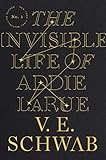
#6 — The Invisible Life of Addie LaRue by V.E. Schwab
In 1714, a young woman in rural France makes a desperate bargain: she will be free, but she will be forgotten by everyone she meets. The Invisible Life of Addie LaRue spans three centuries, accumulating its portrait of Addie through episodes separated by decades, building a sense of a long, strange, beautiful life out of fragments. The novel shares with Daisy Jones a quality of retrospective intimacy — the sense that you are assembling a complete portrait from partial accounts — and it has the same melancholy at its heart about what is permanently lost when a story ends.
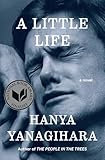
#7 — A Little Life by Hanya Yanagihara
Four friends meet at a New England college and follow each other into adult life in New York, but the novel gradually narrows its focus onto one of them — Jude, a lawyer with a past he will not discuss and injuries that will not fully heal. A Little Life is one of the most formally ambitious novels of the past twenty years: it builds its portrait of a person through accumulated testimony, the way Daisy Jones does, but the effect is one of devastating accumulation rather than documentary distance. It is a genuinely difficult read that many people describe as the most affecting novel they have encountered.
The Romance at the Center: Push-Pull, Doomed, and Real
#8 — Normal People by Sally Rooney
Connell and Marianne meet in their final year of school in rural Ireland — he is popular, she is not — and their relationship moves across years and phases and cities and misunderstandings, always with the sense that they are meant to matter to each other more than they currently do. Rooney’s novel is about two people who are better versions of themselves together but cannot sustain the closeness that requires, which is the emotional core of Daisy Jones stated in a quieter register. The writing is precise, the feeling is immense.
#9 — Conversations with Friends by Sally Rooney
Frances is a twenty-one-year-old Dublin college student who becomes entangled with a married couple — Nick, an actor, and Melissa, a journalist — while maintaining her existing complicated relationship with her best friend and ex, Bobbi. Rooney’s debut is about the gap between how we present ourselves and what we actually feel, and about the particular damage that comes from conducting relationships through performance and language rather than honesty. The creative-world setting and the triangular emotional structure have real continuity with Daisy Jones.
#10 — Ugly Love by Colleen Hoover
Tate and Miles agree on a relationship with two rules: no questions about the past, no expectations about the future. The novel alternates between the present — their arrangement, its terms, its costs — and flashbacks to six years earlier when Miles was a different person. Hoover’s bestselling romance has a structural quality that readers of Daisy Jones will recognize: the retrospective that reveals, piece by piece, what someone had to survive to become who they are. It is overtly emotional in ways that Daisy Jones is not, but the investment it asks for is the same.
For the Reader Who Loved the Creative Partnership
#11 — A Visit from the Goon Squad by Jennifer Egan
A music executive and his assistant anchor a novel that sprawls across decades, continents, and radically different narrative formats — one chapter is a PowerPoint presentation — tracing how the music industry and the people inside it change over time. Egan’s Pulitzer-winning novel is about the relationship between art and commerce, the way idealism corrodes, and what it means to have been part of something that mattered and then to have watched it end. The fragmented, documentary quality of the storytelling produces the same effect as Daisy Jones: a portrait assembled from many angles, with the whole emerging only gradually.
How to Choose Your Next Read
If you want more Taylor Jenkins Reid and the same retrospective celebrity mythology: start with The Seven Husbands of Evelyn Hugo.
If you want the same 1970s creative-world atmosphere: Beautiful Ruins or The Secret History.
If you want the doomed romance without the rock world: Normal People or Ugly Love.
If you want the same unconventional narrative structure: The Invisible Life of Addie LaRue or A Little Life (be prepared for emotional intensity).
If you want literary fiction about the cost of art and obsession: The Goldfinch.
Taylor Jenkins Reid Books in Order
For every Taylor Jenkins Reid novel in order — The Seven Husbands of Evelyn Hugo, Daisy Jones & The Six, Malibu Rising, and more — see our Taylor Jenkins Reid Books in Order guide.
For the Best Fiction Books
For the definitive guide to fiction — the greatest novels across literary fiction, classics, and contemporary writing — see our Best Fiction Books of All Time list.
More Women’s Fiction and Book Club Reads
Affiliate disclosure: Links to Amazon on this page are affiliate links. We earn a small commission at no extra cost to you. This does not influence our editorial recommendations.
Frequently Asked Questions
Is Daisy Jones and The Six based on Fleetwood Mac?
Daisy Jones and The Six was inspired in part by the Fleetwood Mac story — particularly the romantic and creative tensions within the band during the Rumours era — but it is not a roman à clef. Taylor Jenkins Reid drew on the mythology of 1970s rock more broadly, and the characters are wholly invented. The novel captures the emotional truth of that scene without mapping directly onto any real band or person.
What is the best reading order for Taylor Jenkins Reid's books?
Most readers start with The Seven Husbands of Evelyn Hugo, which is widely considered her best work and shares Daisy Jones's oral-history structure and old-Hollywood glamour. From there, Daisy Jones and The Six and Malibu Rising can be read in either order — they are set in loosely connected universes. One True Loves and Maybe in Another Life are her earlier, more straightforward romances and work well as lighter palate cleansers between her more ambitious novels.
Are there other novels told in oral history format like Daisy Jones?
Yes, though they are relatively rare. World War Z by Max Brooks is the most famous example — a global pandemic told entirely through survivor interviews. The Disaster Tourist by Yun Ko-eun and Asymmetry by Lisa Halliday both use unconventional documentary structures to build their narratives. In literary fiction, A Visit from the Goon Squad by Jennifer Egan fragments its rock-world story across radically different formats, which produces a similar effect of accumulating testimony.
What should I read after Daisy Jones if I loved the romance more than the music?
If the doomed creative partnership and push-pull romance were what gripped you, try Normal People by Sally Rooney for two people who are clearly meant to be together and keep missing each other, or Ugly Love by Colleen Hoover for a relationship that both people know is damaging but cannot stop. The Seven Husbands of Evelyn Hugo has the same quality of a great love story told in retrospect, with the sadness of knowing how it ends built into every sentence.