Books About Italy: Essential Reading for Every Visitor
The best books set in Italy — from Tuscany to Venice, Naples to Rome. Fiction, memoir, and historical fiction for travellers and Italophiles.
By Natalie Osei

Italy consistently draws more visitors than almost any other country, and the literature it has generated is correspondingly vast. The books on this list are the ones that best illuminate what Italy actually is — not the tourist-brochure version, but the country of specific cities, specific histories, and specific ways of being that make it unlike anywhere else.
Italy is not one place. The Tuscany of Frances Mayes and the Naples of Elena Ferrante are as different from each other as two European countries; the medieval monastery of Umberto Eco’s novel and the Venice of Thomas Mann’s are centuries and worlds apart. This list represents that range — the Italy of Tuscany and Rome, Venice and Naples, medieval abbeys and modernist sensibility.
Tuscany and the Expat Experience
1. Under the Tuscan Sun — Frances Mayes ⭐⭐⭐⭐⭐
The American companion to A Year in Provence — a San Francisco poet buys a ruined Tuscan villa and discovers Italian rural life, renovation, and the pleasures of an agricultural year. Where Mayle is comic and observational, Mayes writes as a poet: the prose is more lyrical, the food writing more explicitly sensuous, the attention to landscape and season more literary. The renovation sections are as specific as Mayle’s, and the account of learning the rhythms of the vendemmia, the olive harvest, the summer tomatoes is excellent. The most pleasurable single book about Tuscany available in English.
Best for: Visitors to Tuscany; anyone who has dreamed of renovating a Mediterranean farmhouse.
➡ Full review → | Buy on Amazon →
2. Eat, Pray, Love — Elizabeth Gilbert ⭐⭐⭐⭐
The Italy section of Gilbert’s year-long journey is a sustained meditation on what happens when you give yourself permission to eat extraordinarily well and take pleasure seriously. Rome and Naples are rendered with an Anglophone’s specific delight: the pizzeria in Naples, the pasta in Rome, the particular quality of Italian life that reorganises your sense of what matters. Gilbert is more personally revelatory than Mayes, and the Italy chapters — before she moves to India and Bali — are the most purely pleasurable.
Best for: Rome and Naples; readers interested in food culture and Italian pleasure.
➡ Full review → | Buy on Amazon →
Naples and the South
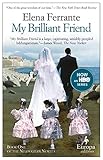
3. My Brilliant Friend — Elena Ferrante ⭐⭐⭐⭐⭐
The first volume of the Neapolitan Novels is the defining work of modern Italian fiction: the story of a lifelong friendship between two women in a poor Naples neighbourhood from the 1950s onwards, told with a psychological honesty and social precision that is unlike almost anything else in contemporary literature. The Naples of this novel is not the tourist Naples of Vesuvius and pizza but a neighbourhood of violence, poverty, and extraordinary ambition — a place that explains why millions of southern Italians left for the north or for America during the 20th century, and why those who stayed were changed by staying.
Best for: Naples; understanding the divide between northern and southern Italy; readers who want their Italy without tourist filtering.
➡ Full review → | Buy on Amazon →
Medieval and Historical Italy
4. The Name of the Rose — Umberto Eco ⭐⭐⭐⭐⭐
Eco’s debut novel — a murder mystery set in a 14th-century Italian Benedictine monastery — is one of the most erudite and entertaining historical novels in European literature. The monk William of Baskerville and his novice investigate a series of deaths in an abbey, but the investigation is also a tour of medieval Italian intellectual culture: the heresies, the manuscript traditions, the relationship between the Church and secular knowledge, the extraordinary beauty and violence of the medieval period. The monastery is imagined from composite real sites in northern Italy.
Best for: Northern Italy and the Piedmont region; medieval Italian history; readers who want intellectual depth with their thriller.
➡ Full review → | Buy on Amazon →
Venice
5. Death in Venice — Thomas Mann ⭐⭐⭐⭐⭐
The most famous literary work set in Venice is a short novel — more a novella — about a German writer who arrives in the city in the grip of creative exhaustion and becomes fatally obsessed with the beauty of a Polish boy. Mann’s Venice is the perfect literary Venice: gorgeous and decaying simultaneously, the beauty inseparable from the corruption, the aesthetic pleasure inseparable from moral dissolution. No other work captures the city’s particular atmosphere — its water, its impossible light, its sense of gorgeous deterioration — with comparable precision.
Best for: Venice; readers interested in aesthetics, obsession, and the psychology of creativity.
➡ Full review → | Buy on Amazon →
Florence and Rome
6. Inferno — Dan Brown ⭐⭐⭐⭐
The third Robert Langdon novel is set largely in Florence and functions, like all of Brown’s books, as an enthusiastic and detailed tour of the city’s monuments, artworks, and hidden passages. Whether or not you find the plot credible, the Florence it renders — the Palazzo Vecchio, the Vasari Corridor, the Baptistery, Dante’s neighbourhood — is convincingly researched and presented with the pace of a genuine thriller. Brown’s books are also effective for Venice, which Langdon visits in the second half of this novel.
Best for: Florence and Venice; thriller readers who want their city tour embedded in a racing plot.
➡ Full review → | Buy on Amazon →
More Essential Italy
7. Angels and Demons — Dan Brown ⭐⭐⭐⭐
Set almost entirely in Rome and Vatican City — a breakneck tour of the Castel Sant’Angelo, the Vatican’s secret passages, Bernini’s church sculptures, and the Piazza Navona. More Rome-centric than Inferno and the best of Brown’s novels for anyone spending time in the city. The Vatican City sections are as close to a breathless guided tour as fiction gets.
Best for: Rome and Vatican City; thriller readers who want their city tour embedded in a racing plot.
➡ Full review → | Buy on Amazon →
8. A Room with a View — E.M. Forster ⭐⭐⭐⭐⭐
The classic Edwardian Florence novel: Lucy Honeychurch, a young Englishwoman on a chaperoned tour, encounters the Emersons — father and son, socially inappropriate, entirely unpretentious — and finds her carefully managed life rearranged. Forster’s Florence, seen through the eyes of someone experiencing its art and light for the first time with genuine openness, captures something specific about how the city affects northern European visitors. The Piazza della Signoria, Santa Croce, the Arno: all transformed by being seen through eyes in the process of opening.
Best for: Florence; anyone who wants their Italy filtered through a coming-of-age emotional register.
➡ Full review → | Buy on Amazon →
9. The Talented Mr. Ripley — Patricia Highsmith ⭐⭐⭐⭐⭐
Tom Ripley is sent to Italy to retrieve a wealthy young American from his life of idleness on the Bay of Naples — and finds it far easier to become him than to persuade him home. Highsmith lived in Europe and loved Italy, and the landscape of the novel — the light of Mongibello, the streets of Rome, the canals of Venice — is rendered with specific, sensory conviction. The most psychologically unsettling Italy novel: the country as enabler of transformation, for better and worse.
Best for: Naples, Rome, and Venice; readers who want Italy as psychological landscape rather than culinary paradise.
➡ Full review → | Buy on Amazon →
Books About Italy by Region
| Region | Best Book |
|---|---|
| Tuscany | Under the Tuscan Sun — Frances Mayes |
| Naples / The South | My Brilliant Friend — Elena Ferrante |
| Venice | Death in Venice — Thomas Mann |
| Florence | Inferno — Dan Brown / A Room with a View — Forster |
| Medieval Italy | The Name of the Rose — Umberto Eco |
| Rome / Vatican | Angels and Demons — Dan Brown |
| Naples (thriller) | The Talented Mr. Ripley — Patricia Highsmith |
Affiliate disclosure: Links to Amazon on this page are affiliate links. We earn a small commission at no extra cost to you.
Frequently Asked Questions
What is the best book to read before visiting Italy?
Under the Tuscan Sun by Frances Mayes is the most joyful introduction to Tuscany and Italian rural life. For Rome specifically, Dan Brown's Inferno (set in Florence) or Angels and Demons (set in Rome) are enormously readable thrillers that double as city guides. For southern Italy and Naples, My Brilliant Friend by Elena Ferrante is unmatched.
What are the best books set in Florence?
Dan Brown's Inferno is set largely in Florence and functions as an enthusiastic tour of the city's monuments. The Name of the Rose by Umberto Eco is set in a medieval Italian monastery and gives the deepest sense of Italian medieval intellectual culture. E.M. Forster's A Room with a View (not on this list but worth adding) is the classic English-language Florence novel.
What are the best books about Naples and southern Italy?
My Brilliant Friend by Elena Ferrante is set in a poor Neapolitan neighbourhood from the 1950s onwards and is the defining work of modern Italian fiction about the south. The first of the four-volume Neapolitan Novels, it gives more insight into what distinguishes southern Italy from the rest of the country than any travel writing.
What is the best book set in Venice?
Death in Venice by Thomas Mann is the most famous literary work set in the city — a short novel about obsession, beauty, and decay that captures Venice's particular atmosphere of gorgeous deterioration. For a thriller, Donna Leon's Commissario Brunetti series (starting with Death at La Fenice) is set entirely in Venice and is excellent.