1984 vs Fahrenheit 451: Which to Read First?
Two of the defining dystopias of the 20th century, warning about opposite dangers. How Orwell's 1984 and Bradbury's Fahrenheit 451 compare — and where to begin.
1984 and Fahrenheit 451 are routinely shelved together as the twin pillars of 20th-century dystopia, and they are often read back to back in schools. But they are not making the same argument. They imagine two different roads to the same loss of freedom — and the difference between them is the most interesting thing about reading them together.
Two opposite warnings
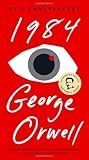
George Orwell’s 1984 (1949) is the dystopia of imposed control. Its world, ruled by the Party and the ever-watching Big Brother, maintains power through surveillance, torture, perpetual war, and the systematic corruption of language and truth itself. Freedom is crushed from above, deliberately and cruelly. Its terror is the terror of a boot on a human face, forever.
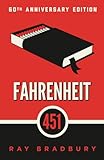
Ray Bradbury’s Fahrenheit 451 (1953) is the dystopia of willing surrender. In its world, books are burned — but the deeper horror is that hardly anyone misses them. The population has traded reading and thought for wall-sized screens, fast cars, and constant, numbing entertainment. Censorship did not have to be forced on people; they asked for it, because thinking had become uncomfortable.
This is the classic framing: Orwell feared those who would ban books and control us through pain; Bradbury feared a future where books would not need banning because no one wanted to read them.
How they compare
| 1984 | Fahrenheit 451 | |
|---|---|---|
| Published | 1949 | 1953 |
| Control through | Fear, surveillance, pain | Distraction, comfort, apathy |
| Length | Longer, denser | Short, lyrical |
| Mood | Bleak, claustrophobic | Mournful, poetic |
| Lasting fear | The state erases truth | The public abandons thought |
Which should you read first?
Read Fahrenheit 451 first if you want a shorter, more accessible, more lyrical introduction to dystopian fiction, or if its warning about distraction and the death of reading feels closest to your own anxieties about the present.
Read 1984 first if you want the heavyweight — the most influential and comprehensive dystopia ever written, the one that gave us the language we still use to describe tyranny, and the darker, more demanding of the two.
If you read only one, make it 1984; it is the more important book. But the richest experience is reading both and arguing with yourself about which future we are actually living in.
What each gets right about now
Part of why these books endure is that each predicted a different feature of the present. 1984 anticipated mass surveillance, the political weaponisation of language, and the idea that whoever controls the record of the past controls the future — concepts so useful that its coinages (doublethink, Big Brother, memory hole) are now ordinary political vocabulary.
Fahrenheit 451 anticipated something subtler and, to many readers, more uncomfortably familiar: a population that abandons depth and attention not under coercion but voluntarily, hypnotised by wall-sized screens and a constant drip of shallow entertainment. Its firemen burn books, but the real catastrophe is that almost no one notices they are gone.
Reading them together is the point. One warns about what a state might do to you; the other warns about what a culture might do to itself. The unease they leave behind is different, and both are worth feeling.
Read next
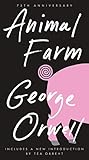
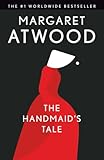
The essential third dystopia is Aldous Huxley’s Brave New World, which sits closer to Bradbury — control through pleasure rather than pain. From there, Orwell’s Animal Farm and Margaret Atwood’s The Handmaid’s Tale round out the core of the genre. For more, see our guide to books like 1984.
Affiliate disclosure: Links on this page are affiliate links. We earn a small commission at no extra cost to you.
Frequently Asked Questions
Should I read 1984 or Fahrenheit 451 first?
If you want the more accessible entry point, read Fahrenheit 451 first — it is shorter, faster, and more lyrical, and you can finish it in an afternoon. If you want the definitive, most influential dystopia, read 1984 first; it is the heavier and more comprehensive book, and the one whose vocabulary (Big Brother, doublethink, thoughtcrime) has shaped how we talk about tyranny. Both are standalone, so order is up to you.
Which is more relevant today, 1984 or Fahrenheit 451?
They are relevant to different anxieties, which is why people argue about it. 1984 speaks to surveillance, state propaganda, and the manipulation of truth and language. Fahrenheit 451 speaks to distraction, the decline of reading, and a culture that abandons books not because they are banned but because no one wants them. Many readers feel Fahrenheit 451's vision of a population numbed by wall-sized screens and constant entertainment has aged into uncomfortable accuracy.
What is the main difference between 1984 and Fahrenheit 451?
The mechanism of control. In 1984, the state rules through fear, pain, surveillance, and the deliberate destruction of truth — control imposed from above. In Fahrenheit 451, control comes from below: people willingly trade books and thought for comfort and distraction, and censorship is something the public wanted. Orwell feared what would be done to us; Bradbury feared what we would do to ourselves.
Which is harder to read, 1984 or Fahrenheit 451?
1984 is the more demanding read — longer, bleaker, and containing dense passages of political theory (notably the in-novel book by Goldstein). Fahrenheit 451 is shorter and more poetic, though Bradbury's lush, metaphor-heavy prose has its own challenges. For a first dystopia or a younger reader, Fahrenheit 451 is the gentler starting point.