Thinking, Fast and Slow vs Blink: Which First?
Kahneman and Gladwell both study how the mind makes decisions — and arrive at almost opposite conclusions. A close comparison of Thinking, Fast and Slow and Blink.
By Lena Fischer
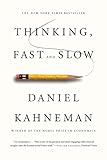
Here is the question both books are trying to answer: when should you trust your gut?
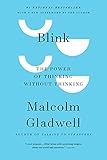
Thinking, Fast and Slow by Daniel Kahneman and Blink by Malcolm Gladwell are the two most widely read popular books on intuition and decision-making. They are often recommended together, frequently cited in the same breath, and both have shaped public understanding of how the mind works. They also arrive, if you read them carefully, at almost opposite conclusions about the reliability of instinctive judgment.
This matters. If Gladwell is right, we should trust our rapid assessments more — the snap judgment of an art expert who knows a kouros is a fake before she can articulate why is giving us access to a form of processing that deliberate analysis would only contaminate. If Kahneman is right, we should be deeply suspicious of those same rapid assessments — the art expert’s certainty is the product of a cognitive system that is fast, fluent, and often systematically wrong in ways we cannot detect from the inside.
Both books are worth reading. But they need to be read together, and they need to be read in the right order, or you will walk away with a flattering but inaccurate picture of your own judgment.
Quick Comparison
| Thinking, Fast and Slow | Blink | |
|---|---|---|
| Author | Daniel Kahneman | Malcolm Gladwell |
| Year | 2011 | 2005 |
| Central Claim | Fast thinking is powerful and often systematically wrong | Snap judgments are frequently superior to deliberate reasoning |
| Method | Decades of peer-reviewed experimental research | Narrative journalism drawing on academic studies |
| Prose Style | Methodical, precise, cumulative | Propulsive, story-driven, accessible |
| Length | ~500 pages | ~280 pages |
| Best for | Understanding how cognition actually works | Entry-level introduction to intuition and expertise |
Thinking, Fast and Slow: What Makes It Work
Thinking, Fast and Slow is the summation of Daniel Kahneman’s career. Kahneman spent five decades as a psychologist and behavioural economist, much of it in collaboration with Amos Tversky, developing the research programme that would eventually earn him the Nobel Prize in Economics in 2002. The book is his attempt to explain what that work actually revealed about the human mind — not as a polished popular account of other people’s research but as a first-person account of ideas he spent his life building.
The book’s organisational framework is the distinction between System 1 and System 2. System 1 is fast, automatic, and associative — it reads faces, catches tones of voice, completes familiar patterns, and arrives at answers before the conscious mind has formulated the question. System 2 is slow, deliberate, and effortful — it concentrates, calculates, evaluates arguments, and monitors the outputs of System 1 for error. The relationship between the two is not equal: System 2 is lazy, depleting its resources quickly and preferring to endorse System 1’s outputs rather than challenge them. This means that most of what we think of as “judgment” is actually System 1 operating automatically, with System 2 providing post-hoc rationalisation of conclusions it did not reach.
This architecture generates a specific catalogue of cognitive errors. The anchoring effect — the way an arbitrary initial number contaminates subsequent estimates — is one of the most extensively documented in experimental psychology and one of the most practically important: it explains why the first price mentioned in a negotiation exerts disproportionate influence on the final settlement, regardless of its relevance. The availability heuristic — the tendency to judge the probability of an event by how easily examples come to mind — explains why plane crashes feel more dangerous than car trips even when statistics suggest the opposite. The halo effect — the way an initial positive impression colours subsequent judgments — explains why attractive people are assumed to be competent, why a good first chapter leads reviewers to overrate subsequent ones.
What makes Kahneman’s treatment different from most pop-psychology accounts of these biases is that he is not simply cataloguing quirks. He is building a model of how human cognition is structured, and the model has predictive power: it tells you not just which errors people have made in the past but in which circumstances they are likely to make them in the future. The bias about which System 1 produces confident but erroneous judgments is not random; it follows from specific architectural features of the fast system. If you understand the architecture, you can anticipate the errors.
The book’s middle section on expert intuition is where the conversation with Blink becomes most explicit. Kahneman is careful and precise here: expert intuition is real, but it is reliable only when two conditions are met. First, the environment must be regular — there must be stable statistical regularities that can be learned. Second, the expert must have had sufficient exposure to that environment, with clear and timely feedback on their judgments. Chess masters, firefighters, and anaesthesiologists develop reliable intuitions because they practice in environments with those properties. Stock-pickers, clinical psychologists making long-term predictions, and admissions officers predicting future student performance typically do not. When the conditions are absent, expert confidence is indistinguishable from overconfidence.
The final section on the two selves — the experiencing self and the remembering self — is among the most philosophically unsettling passages in popular psychology writing. Kahneman demonstrates through elegant experiments that the self which lives through an experience and the self which later evaluates it are not identical, and that our retrospective judgments are shaped by a small number of moments (the peak and the end) rather than by the aggregate of what was actually experienced. This has profound implications for how we should think about wellbeing, memory, and the decisions we make in anticipation of future satisfaction.
Thinking, Fast and Slow is not an easy read. It is 500 pages of careful argument, and some sections — particularly the middle chapters on prospect theory and the psychology of risky choice — require sustained concentration. The reward is a model of the mind that is genuinely useful: a framework for understanding your own errors and, in at least some circumstances, predicting them before they occur.
Blink: What Makes It Work
Blink is a different kind of book, and it should be assessed on its own terms before being compared to Kahneman’s. Malcolm Gladwell is a journalist, not a psychologist. His books are not works of scholarship; they are works of narrative popularisation, and the question to ask of them is whether the central idea is real, whether the stories illuminate it, and whether the reading experience is worth the time. By two of those three measures, Blink succeeds.
The book opens with a story that is genuinely gripping. In 1983, the J. Paul Getty Museum in California acquired what appeared to be a kouros — a rare archaic Greek statue of a standing youth — for nearly $10 million. Fourteen months of scientific analysis concluded it was authentic. But when the museum invited leading art historians and archaeologists to inspect it, their initial reactions were almost uniformly negative. Thomas Hoving, the former director of the Metropolitan Museum of Art, looked at it and his first word was “fresh” — a word, he later said, that carried an unease he could not immediately articulate. Federico Zeri, the Italian art historian, had a similar instinctive discomfort with the statue’s fingernails. The Getty ignored these responses. The statue was eventually determined to be a fake.
Gladwell’s argument is that the art historians were accessing, through their rapid unconscious processing, information that the scientific testing could not capture. Their snap judgment was more accurate than the deliberate, multi-month analysis that preceded it. This is the phenomenon Gladwell calls “thin-slicing” — the ability to find patterns from very limited exposure — and his book is structured around a series of stories that are meant to illustrate and celebrate it.
The stories are well chosen and genuinely interesting. The research by psychologist Nalini Ambady showing that students’ ratings of teachers from two-second silent video clips predicted end-of-semester evaluations almost as well as full semester evaluations is real, replicated, and striking. The account of how John Gottman can predict divorce from a fifteen-minute conversation with a couple with high accuracy is real. The discussion of priming — the way unconsciously absorbed information shapes subsequent judgments — draws on real experimental work by John Bargh and colleagues.
Where Gladwell is most valuable is as an introducer. For a general reader who has never encountered the psychology of snap judgment, unconscious cognition, or priming, Blink provides vivid, memorable entry points. The story of the kouros is unforgettable. The account of how the Williams Sisters revolutionised the reading of tennis serves is a brilliant illustration of how expertise transforms perception. The final chapter on the tragic shooting of Amadou Diallo — four officers fired 41 shots at an unarmed man reaching for his wallet — is a sober and powerful analysis of how racial bias and arousal state distort fast-system judgments in life-or-death situations, and it does not fit the book’s overall optimistic thesis at all, which is itself instructive.
Blink is also where Outliers and The Tipping Point begin to be understood as part of the same project. Gladwell is consistently interested in the hidden factors — unconscious cognition, social context, accumulated advantage — that explain why outcomes are more determined by circumstances than by conscious choice or intention. Read in sequence, his books form a sustained argument about the limits of individual agency and the outsized role of environment, timing, and social dynamics.
Where They Contradict Each Other
The contradiction between the two books is real, and it is worth being precise about it.
Gladwell’s core claim in Blink is that snap judgments are often more accurate than deliberate analysis — that the unconscious mind, processing information in ways the conscious mind cannot access, can arrive at correct answers that extended deliberation would miss or corrupt. The kouros story, the Gottman research, the thin-slicing experiments are all meant to support this claim.
Kahneman’s research programme is, in part, a sustained refutation of this claim — or rather, a precise account of when it is true and when it is not. The conditions under which expert intuition is reliable are much more restrictive than Gladwell suggests. Gottman’s ability to predict divorce from a fifteen-minute conversation reflects decades of practice in a regular environment (marriage dynamics are relatively stable across populations) with clear feedback (follow-up on couples he has assessed). The kouros story reflects genuine art historical expertise developed over careers. These cases are not representative of intuitive judgment in general; they are examples of what intuition looks like at the far end of deliberate expertise development.
When those conditions are absent — as they typically are in hiring decisions, medical diagnoses outside well-defined domains, financial predictions, and most of the judgments that actually shape people’s lives — System 1 is not accessing hidden wisdom. It is applying heuristics that were adaptive in ancestral environments and are often badly miscalibrated for the specific demands of modern decision-making. The research is unambiguous on this point. Simple statistical models outperform expert clinical judgment in a wide range of domains. Human interviewers add negative predictive value to hiring processes compared to structured assessments. Financial professionals who express the greatest confidence in their predictions are the ones whose predictions are most likely to be wrong.
Kahneman does not argue that intuition is always wrong. He argues that intuition is a tool with a specific operating range, that most people dramatically overestimate that range, and that the cognitive fluency of a confident intuition is not evidence of its accuracy. This is a more nuanced claim than Gladwell’s, and a more accurate one.
What the Research Actually Shows
The scientific literature on expert intuition, decision-making, and cognitive bias has grown substantially since both books were published, and the overall picture supports Kahneman more than Gladwell.
A landmark 2009 paper by Gary Klein — who is in many ways the intellectual source of Gladwell’s thesis in Blink — and Kahneman himself is worth noting. The two researchers, who had spent years on opposite sides of this debate, collaborated to identify when intuitive expertise could be trusted. Their answer: only in high-validity environments with sufficient practice and clear feedback. Both authors signed onto this conclusion. Gladwell’s version of the argument does not make this restriction central.
The replication crisis in social psychology has also affected some of the priming research Gladwell relies on. The specific Bargh studies on priming and behaviour — the experiments that showed elderly-word primes made people walk more slowly — have proven difficult to replicate at scale. This does not invalidate the general concept of priming, which is robust, but it does suggest that the effect sizes Gladwell describes may be exaggerated.
Kahneman’s own Prospect Theory — the account of how people evaluate gains and losses that earned him the Nobel — has replicated extensively and remains one of the most solid findings in behavioural economics. The core insight, that losses loom larger than equivalent gains and that people’s risk preferences depend on how options are framed rather than their absolute values, has been confirmed across cultures, domains, and experimental paradigms.
Practical Takeaways from Each
The most practically useful thing Thinking, Fast and Slow teaches is a taxonomy of error. If you know you are susceptible to anchoring, you can deliberately move the anchor before committing to a figure. If you know the availability heuristic inflates your estimates of emotionally salient events, you can seek base rate data before making probability judgments. If you know that your experiencing self and your remembering self will evaluate an experience differently, you can make better decisions about which one to consult for which purpose.
The most practically useful thing Blink teaches is respect for tacit expertise. In domains where you have genuine deep experience and have received consistent feedback over a long period, your gut reaction deserves more weight than your internal critic will give it. The novice who second-guesses their trained response is often worse off than the expert who trusts it — provided the expertise is real.
Together, the practical lesson is: know which domain you are in. If you are in a regular environment where you have accumulated deep experience and received clear feedback, your System 1 is probably better calibrated than you think. If you are making a judgment in an irregular environment with limited relevant experience and ambiguous feedback — which describes most consequential decisions in professional and personal life — your System 1 is almost certainly overconfident, and System 2 review is not optional.
Who Should Read Each Book
Read Thinking, Fast and Slow if you want a rigorous, evidence-based account of how the mind actually works. Read it if you make decisions with significant consequences — in business, medicine, law, investing, or any professional context where errors are costly. Read it if you want to understand not just which biases exist but why they exist, what architectural features of cognition produce them, and under what conditions you can reasonably expect to avoid them. Read it if you are prepared to invest 500 pages in a careful argument.
Read Blink if you want an engaging introduction to intuition, expertise, and unconscious cognition that you can finish in a weekend. Read it if you find the idea that rapid judgment can outperform deliberate analysis intuitively compelling and want to encounter the research that supports it — with the understanding that Kahneman provides the necessary correctives. Read it if you are interested in Outliers or The Tipping Point and want to understand Gladwell’s broader intellectual project before diving into either.
The sequencing matters more here than in most book pairings. Read Kahneman first if you can. Thinking, Fast and Slow will give you the framework to read Blink critically — to distinguish the cases where Gladwell’s argument is genuinely supported by the evidence from the cases where he is telling a compelling story that goes beyond what the studies warrant. Read Blink first if you need an accessible entry point, but know that you will need to revise some of its conclusions afterward.
The Gladwell Trilogy: Blink, Outliers, The Tipping Point
If Blink captures your attention, Outliers and The Tipping Point complete the trilogy that represents Gladwell’s most focused work.
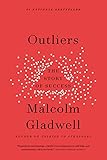
Outliers is, in some ways, the book that best delivers on the promise of Blink. Where Blink argues that the hidden factor in expert judgment is unconscious processing, Outliers argues that the hidden factor in exceptional success is accumulated advantage — the 10,000-hour rule, yes, but also birth month relative to academic cut-offs, historical timing, cultural legacy, and the specific circumstances that allow some people to accumulate the hours that others never get the opportunity to put in. It is the most tightly argued of his books and the one whose central claims have been most rigorously tested.
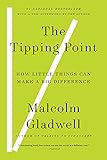
The Tipping Point extends the logic from individuals to social phenomena, asking why some ideas, behaviours, and products spread like epidemics while others, equally good, never reach critical mass. The answer — that the right people, in the right context, transmitting the right message at the right moment — is the same structural argument Gladwell makes everywhere: outcomes are more determined by hidden contextual factors than by the intrinsic qualities of what is being spread. The book is dated in some of its specific examples but durable in its framework.
Together with Blink, these three books form a coherent argument about human behaviour: that we are far less in control of our judgments, our success, and our social influence than we believe, and that understanding the hidden mechanisms is the first step toward navigating them more intelligently.
Frequently Asked Questions
Is Thinking, Fast and Slow better than Blink?
Thinking, Fast and Slow is the more rigorous and ultimately more reliable book. Kahneman’s account of how intuitive judgment works — and when it fails — is grounded in decades of peer-reviewed research he conducted himself, and it leads to genuinely useful predictions about when to trust your gut and when not to. Blink is the more readable book and the more fun one, but its central claim — that snap judgments are often superior to deliberate reasoning — is not well supported by the evidence Gladwell presents. The two books are best read as a pair, with Kahneman providing the framework and Gladwell providing the stories that the framework helps you evaluate.
Does Blink hold up scientifically?
Partially. Gladwell’s core insight — that trained experts can sometimes make accurate rapid judgments from very limited information — is real and documented. The problem is that he dramatically underweights the conditions required for that expertise to produce reliable intuitions: years of deliberate practice in a regular environment with clear feedback. When those conditions are absent, snap judgment is no more accurate than chance, and often less accurate than simple statistical models. Thinking, Fast and Slow provides the corrective framework that Blink needs.
What is the difference between System 1 and System 2 thinking?
System 1 is fast, automatic, associative, and largely unconscious — it reads faces, catches tones, completes familiar patterns, and arrives at answers before the conscious mind has formulated the question. System 2 is slow, deliberate, effortful, and conscious — it concentrates, calculates, evaluates arguments, and monitors System 1’s outputs for error. Most of what we experience as “thinking” is actually System 1 operating automatically, with System 2 providing post-hoc rationalisation. The architecture explains most of the cognitive biases Kahneman documents: they are by-products of a fast system optimised for speed and narrative coherence rather than accuracy.
What should I read after Thinking, Fast and Slow and Blink?
After both, the most productive next reads depend on what you want to deepen. For more Gladwell, Outliers and The Tipping Point extend his interest in hidden contextual factors — Outliers in particular is a useful complement to the expertise question Blink raises. For a practical application of Kahneman’s framework, Thinking in Bets by Annie Duke brings System 2 discipline into the domain of probabilistic decision-making. For Kahneman’s own follow-up on a related problem — the underappreciated role of random variability in human judgment — Noise: A Flaw in Human Judgment is the essential extension.
Is thin-slicing real?
Yes, under specific conditions. Thin-slicing — making accurate judgments from brief exposure to limited information — is a documented phenomenon. The research Gladwell cites on teacher ratings from silent video clips and on Gottman’s divorce predictions is real. The critical caveat he underemphasises is that thin-slicing works reliably only when the person doing the judging has deep expertise in a regular, feedback-rich environment. A chess grandmaster who plays thousands of games with clear outcomes develops reliable intuitions. A hiring manager who interviews candidates and rarely follows up on their long-term performance does not. The conditions matter enormously, and Blink tends to celebrate the phenomenon without adequately specifying when it applies.
For the Best Psychology and Decision-Making Books
For the best books in behavioural psychology and decision-making — from Thinking, Fast and Slow to Predictably Irrational to The Undoing Project — see our Best Self-Help Books and Best Books of All Time guides.
Affiliate disclosure: Links on this site are affiliate links. We earn a small commission at no extra cost to you. This does not influence our editorial recommendations.
Frequently Asked Questions
Is Thinking, Fast and Slow better than Blink?
Thinking, Fast and Slow is the more rigorous and ultimately more reliable book. Kahneman's account of how intuitive judgment works — and when it fails — is grounded in decades of peer-reviewed research he conducted himself, and it leads to genuinely useful predictions about when to trust your gut and when to distrust it. Blink is the more readable book and the more fun one, but its central claim — that snap judgments are often superior to deliberate reasoning — is not well supported by the evidence Gladwell presents. The two books are best read as a pair, with Kahneman providing the framework and Gladwell providing the stories that the framework helps you evaluate.
Does Blink hold up scientifically?
Partially. Gladwell's core insight — that trained experts can sometimes make accurate rapid judgments from very limited information — is real and documented. The problem is that he dramatically underweights the conditions required for that expertise to produce reliable intuitions: years of deliberate practice in a regular environment with clear feedback on outcomes. When those conditions are not met, snap judgment is no more accurate than random guessing, and often less accurate than simple statistical models. Kahneman's work, which explicitly examines the same research literature Gladwell cites, provides the corrective framework that Blink needs.
What is the difference between System 1 and System 2 thinking?
System 1 and System 2 are the names Daniel Kahneman uses for two modes of cognitive processing. System 1 is fast, automatic, associative, and largely unconscious — it is what happens when you read a face, catch a ball, or answer '2+2'. System 2 is slow, deliberate, effortful, and conscious — it is what happens when you calculate a tip, evaluate a logical argument, or parallel park. Most of what we think of as 'thinking' is actually System 1 operating automatically, with System 2 taking over only when a situation is genuinely novel, complex, or when System 1 signals that it is uncertain. The architecture explains most of the cognitive biases Kahneman documents: they are the by-products of a fast system that is optimised for speed and narrative coherence rather than accuracy.
What should I read after Thinking, Fast and Slow and Blink?
After both, the most productive directions depend on what aspect you want to deepen. For the broader Gladwell universe, Outliers and The Tipping Point extend his interest in how small factors produce large outcomes — Outliers in particular is a useful complement to the expertise question that Blink raises. For the cognitive science underlying Kahneman's framework, Predictably Irrational by Dan Ariely applies similar methodology to economic behaviour with a lighter touch. For a practical application of Kahneman's System 2 principles to high-stakes decisions, Thinking in Bets by Annie Duke brings the framework into the domain of deliberate probabilistic reasoning. And for the uncomfortable extension of Kahneman's work — the evidence that expert judgment is often not better than simple statistical models — Noise: A Flaw in Human Judgment, his 2021 follow-up, is essential.
Is thin-slicing real?
Yes, under specific conditions. Thin-slicing — the ability to make accurate judgments from brief exposure to limited information — is a documented phenomenon. Nalini Ambady's research on teacher effectiveness ratings from silent video clips, which Gladwell describes in Blink, is real and has been replicated. The critical caveat that Gladwell underemphasises is that thin-slicing works reliably only when the person doing the judging has deep expertise in a regular, feedback-rich environment. A chess grandmaster who plays ten thousand games and gets immediate feedback on their moves develops reliable intuitions. A hiring manager who interviews candidates and rarely follows up on their long-term performance does not. The conditions matter enormously, and Blink tends to celebrate the phenomenon without adequately specifying the constraints.