The Hobbit vs Harry Potter: Which to Read First?
Two books have introduced more readers to fantasy than any others. We compare The Hobbit and Harry Potter on every axis that matters — and tell you which to read first.

Ask any adult reader when they fell in love with fantasy, and the answer almost always comes down to one of two books. Either they were handed The Hobbit by a parent or teacher who believed in the power of adventure, or they picked up Harry Potter and the Philosopher’s Stone and disappeared for a week. The two books have been recruiting readers into the genre for decades, and between them they cover almost every reason a person might fall in love with fantasy: the ancient pull of the quest, the warmth of a world you wish you could enter, the sense that magic is not just possible but earned.
They are also genuinely different books — different in length, tone, prose style, intended age range, and what they ask of a reader. If you are choosing for yourself, for a child, or for a friend who has never read fantasy, the choice matters. This guide will help you make it.
Quick Comparison
| The Hobbit | Harry Potter and the Philosopher’s Stone | |
|---|---|---|
| Author | J.R.R. Tolkien | J.K. Rowling |
| Published | 1937 | 1997 |
| Length | ~95,000 words | ~77,000 words |
| Age Range | 10 and up | 8 and up |
| World-Building | Deep mythological history | Dense contemporary detail |
| Tone | Warmly comic, then serious | Wondrous, darkening across the series |
| Series Length | 1 book (leads to LOTR trilogy) | 7 books |
| Prose Difficulty | Moderate (formal narrator) | Easy (close third-person) |
The Hobbit: What Makes It Work
The Hobbit begins with one of the great opening sentences in fantasy: “In a hole in the ground there lived a hobbit.” Four words in, Tolkien has you — partly because of what the sentence promises (adventure in an unfamiliar world), and partly because of what it doesn’t say (what is a hobbit, and why is that the first thing we need to know?). The answer is that a hobbit is an ordinary creature, comfortable and unadventurous by nature, the least likely hero imaginable. That is exactly why Bilbo Baggins works so well as a protagonist.
The genius of The Hobbit is the everyman hero structure. Bilbo does not want to go on an adventure. He is dragged into one by Gandalf and a company of thirteen dwarves who want to reclaim their mountain from a dragon, and almost everything that follows is the story of a small, frightened creature discovering — to his own considerable surprise — that he is far more capable than he believed. The ring he finds in a cave (which will become the axis of everything Tolkien writes afterward) is almost a footnote in this story. Here, it is just a useful trinket. The real treasure is the hobbit himself.
Tolkien writes The Hobbit with a distinctive authorial voice — he addresses the reader directly, makes asides, offers opinions on the characters, and occasionally winks at his own narrative. This narrator is sometimes described as the book’s peculiarity, but it is actually one of its great pleasures. It feels like being told a story by someone who genuinely loves telling stories, and who trusts you to be in on the joke. The humor is real, the warmth is real, and when the tone darkens — as it does, sharply, in the final third — the shift is all the more powerful for the lightness that preceded it.
The quest structure — thirteen waypoints, each with its own peril — is borrowed from fairy tale and myth, and it gives the book a satisfying episodic quality. You can read a chapter, set it down, and pick it up again knowing exactly where you are. This makes it particularly well suited to reading aloud or to readers who are still developing their stamina for longer narratives.
And then there is what the book leads to. The Lord of the Rings is one of the great achievements of twentieth-century literature, but it assumes a reader who is already comfortable in Middle-earth — who knows what hobbits are, who trusts Gandalf, who understands why the Shire is worth protecting. The Hobbit builds that trust. The later books hit harder, and feel more inevitable, because The Hobbit taught you to love the world before it showed you the cost of saving it.
Harry Potter: What Makes It Work
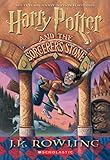
Harry Potter and the Philosopher’s Stone opens on the Dursleys’ ordinary street and works through a simple but irresistible premise: what if there were a hidden world of magic running parallel to ours, and what if the key to entering it was a letter that arrives on your eleventh birthday? The portal fantasy has a long history (Narnia, Wonderland, Oz), but Rowling’s version is distinctive because the magical world is not simply the ordinary world made wonderful — it is a complete society, with its own history, institutions, prejudices, hierarchies, and politics, all mapped in extraordinary detail.
Hogwarts is the delivery mechanism for this world. The school setting does several things at once: it gives Rowling a structure for releasing information gradually (each year a new level, new classes, new dangers), it provides Harry with the community he has never had (the Dursleys are his anti-family; the Weasleys, Hermione, and Dumbledore are his real one), and it gives readers something to project themselves into. Almost everyone has been new somewhere, has longed to belong, has hoped to discover they are more special than their circumstances suggested. Harry’s story is structured around wish fulfillment that never feels dishonest because Rowling is careful to make him earn it.
The series’ real achievement, however, is what happens across seven books. The world that feels light and wondrous in Philosopher’s Stone becomes genuinely dangerous and morally complex by Goblet of Fire, and by Deathly Hallows it carries the full weight of a war narrative. This accumulating darkness is one of the most successful structural choices in modern fiction: the books grew with their readers, so that the children who started with Philosopher’s Stone in 1997 found Deathly Hallows exactly as dark as they were ready for in 2007.
Rowling’s world-building is also exceptional at the level of texture and detail. Diagon Alley, Quidditch, Bertie Bott’s Every-Flavour Beans, Honeydukes, the Marauder’s Map — these are not just colorful decorations. They create the sense of a world that exists independently of the plot, that would go on being itself whether Harry were present or not. Readers do not just follow Harry through this world; they want to live in it. That desire to inhabit the world, rather than merely follow its story, is the source of the series’ extraordinary staying power.
Key Differences
Single book vs. series commitment. The Hobbit is a complete story in one volume. You can read it, love it, and stop — or continue to The Lord of the Rings when you are ready. Harry Potter is seven books, and while Philosopher’s Stone works as a standalone, the full emotional payoff requires the whole series. This is not a flaw; it is a different kind of promise. The question is whether you want a single perfect journey or a world to live in for years.
Complexity and darkness. The Hobbit darkens in its final third but remains, fundamentally, an adventure story with a happy resolution. Harry Potter builds from lightness to genuine tragedy across its arc. The Deathly Hallows contains deaths that still upset readers who have been with the series for years. If darkness in fantasy concerns you (for yourself or for a child), The Hobbit is the safer first choice.
Prose difficulty. Tolkien writes in a more formal register, with a narrator who uses long sentences, archaic vocabulary, and direct address. Rowling writes in a plainer, closer third-person that moves quickly and demands less patience. Neither is inaccessible, but they reward different reading dispositions. Tolkien suits readers who enjoy the texture of prose; Rowling suits readers who are primarily interested in plot and character.
Re-readability for adults. Both books reward re-reading, but differently. The Hobbit accumulates depth because you read it knowing what Tolkien was building — every reference to the Ring, every hint of the larger mythology, lands differently once you know where it leads. Harry Potter rewards re-reading because Rowling planted clues for the whole series beginning in book one; the foreshadowing is extraordinary once you know what to look for.
For Children: Which First?
The conventional wisdom — read The Hobbit first, then Harry Potter — does not hold universally. The more useful question is: what kind of reader is the child?
Start with Harry Potter if the child is 8–10 and primarily interested in characters, friendships, and a world they can imagine being part of. The school setting is immediately recognizable, Harry’s situation (bullied, overlooked, longing to belong) resonates with most children who have felt different, and the plot moves briskly enough to hold a reader who is still developing sustained attention.
Start with The Hobbit if the child is 10 or older and is drawn to adventure stories, enjoys being read to (Tolkien’s narrator voice is magnificent aloud), or has already read several chapter books and is ready for something with a slightly more literary texture. The Hobbit also works beautifully as a read-aloud for younger children who might not yet read it alone — the language is rich enough to delight adults too.
The honest answer for most children: Harry Potter first. It is more immediately gripping, the language is more accessible, and the emotional hook (belonging, identity, found family) is more universally resonant for young readers. The Hobbit then becomes the natural next step — a slightly more demanding but equally rewarding experience that the child is now ready for.
For Adult Fantasy Newcomers: Which First?
Adults who have never read fantasy face a different question. They bring more reading experience and patience, but they may also be more skeptical — more aware of fantasy’s reputation for escapism, more likely to need a book that justifies the commitment upfront.
Choose The Hobbit if you want a single, self-contained journey that you can complete in a weekend and evaluate without commitment to a longer series. At roughly 300 pages, it makes a clear, low-stakes case for the genre. Its humor, its humanity, and the elegance of its quest structure are more immediately apparent to adult readers than to children. And because it is so short, it functions perfectly as a test: if you love it, The Lord of the Rings awaits. If it leaves you indifferent, you have lost a weekend, not months.
Choose Harry Potter if you want to lose yourself in a world. The series is long (roughly 3,400 pages across seven books), but adults who commit to it often find themselves reading it faster than they expected, because Rowling’s plotting is expert and the world is genuinely seductive. The books start light and earn their darkness; an adult reader who is patient with the first two books (deliberately written for younger readers) will find that books three through seven are among the most satisfying narrative experiences in popular fiction.
Our recommendation for most adult newcomers: Start with The Hobbit. It is the quicker, more immediately rewarding test case, and if it captures you, you will go on to The Lord of the Rings — which is the greater book — before finding your way to Harry Potter eventually. If you start with Harry Potter and love it, you may reach The Hobbit last, which is a shame, because Tolkien’s world gives added dimension to everything that followed it.
What to Read After Both
Once you have finished both The Hobbit and Harry Potter, you are ready for the wider landscape of fantasy. Here are the most natural next steps.
The Lord of the Rings by J.R.R. Tolkien
The obvious continuation. The Lord of the Rings takes everything The Hobbit built — the world, the mythology, the hobbits, the sense that something ancient and important is at stake — and expands it into one of the great novels of the twentieth century. It is longer, darker, and more demanding than The Hobbit, but the payoff is proportional. If The Hobbit was the door, this is what the door leads to.
Eragon by Christopher Paolini
A farm boy discovers a dragon egg. An empire pursues him. A mentor is lost too soon. Christopher Paolini began writing Eragon at fifteen, and the novel wears its influences (Tolkien, Star Wars, Anne McCaffrey) with visible enthusiasm. What it delivers is a deeply satisfying classic fantasy quest with a coming-of-age arc — exactly the kind of adventure that fans of both The Hobbit and Harry Potter are ready for next.
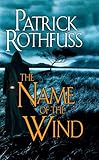
The Name of the Wind by Patrick Rothfuss
For readers ready to step into adult fantasy: Kvothe is the most famous hero of his age, now living in hiding as an innkeeper, telling his own story to a Chronicler. The book is set partly at a University where students study the science of magic — which will feel immediately familiar to Harry Potter readers — while Rothfuss’s mythic prose style carries the same sense of legend that Tolkien built into every page. It is the most beautifully written modern fantasy novel.
The Chronicles of Narnia by C.S. Lewis
Lewis was Tolkien’s closest friend and literary sparring partner, and The Lion, the Witch and the Wardrobe is the companion piece to The Hobbit that most readers never find. Children transported into a magical world, a great conflict between good and evil, and a mentor figure (Aslan) who is simultaneously warm and terrifying — it prefigures Harry Potter in important ways and drinks from the same mythological well as Tolkien. Start with The Lion, the Witch and the Wardrobe and let the seven-book series unfold from there.
Frequently Asked Questions
Is The Hobbit or Harry Potter better for children?
Harry Potter and the Philosopher’s Stone is the better starting point for most children aged 8–10 because the school setting and child protagonist make it immediately relatable. The Hobbit suits slightly older or more patient readers (10+) who enjoy a narrator’s voice and a slower, more episodic adventure. Both are excellent; the question is really about what kind of story the child gravitates toward.
Is The Hobbit harder to read than Harry Potter?
Yes, modestly. The Hobbit is written in a slightly more formal register and features an intrusive narrator who addresses the reader directly in a style some children find unfamiliar. Harry Potter uses a closer third-person perspective and plainer prose. Neither is difficult for a confident reader of 10+, but The Hobbit rewards readers who enjoy old-fashioned storytelling, while Harry Potter is more immediately accessible.
Should I read The Hobbit before The Lord of the Rings?
Yes. The Hobbit is not strictly required reading before The Lord of the Rings, but it introduces Bilbo, the Shire, Gandalf, and Gollum in a lighter register that makes the transition to the more serious tone of The Lord of the Rings feel natural. More importantly, The Hobbit is a wonderful book in its own right and should not be skipped.
What should I read after The Hobbit and Harry Potter?
After both, the most natural next steps are The Lord of the Rings (the full scope of Tolkien’s world), Eragon by Christopher Paolini (a young protagonist, a dragon, and a classic quest), and The Name of the Wind by Patrick Rothfuss (literary fantasy with a brilliant hero at a school for magic). For younger readers, The Chronicles of Narnia by C.S. Lewis is the essential companion to both.
For the Best Fantasy Books
For the definitive guide to fantasy fiction — from Tolkien and Le Guin to Brandon Sanderson and George R.R. Martin — see our Best Fantasy Books of All Time list.
More Fantasy Reading Guides
- Books Like The Lord of the Rings: Epic Fantasy for Tolkien Fans
- Leigh Bardugo Books in Order: Complete Grishaverse Guide
Affiliate disclosure: Links on this site are affiliate links. We earn a small commission at no extra cost to you. This does not influence our editorial recommendations.
Frequently Asked Questions
Is The Hobbit or Harry Potter better for children?
Harry Potter and the Philosopher's Stone is the better starting point for most children aged 8–10 because the school setting and child protagonist make it immediately relatable. The Hobbit suits slightly older or more patient readers (10+) who enjoy a narrator's voice and a slower, more episodic adventure. Both are excellent; the question is really about what kind of story the child gravitates toward.
Is The Hobbit harder to read than Harry Potter?
Yes, modestly. The Hobbit is written in a slightly more formal register and features an intrusive narrator who addresses the reader directly in a style some children find unfamiliar. Harry Potter uses a closer third-person perspective and plainer prose. Neither is difficult for a confident reader of 10+, but The Hobbit rewards readers who enjoy old-fashioned storytelling, while Harry Potter is more immediately accessible.
Should I read The Hobbit before The Lord of the Rings?
Yes. The Hobbit is not strictly required reading before The Lord of the Rings, but it introduces Bilbo, the Shire, Gandalf, and Gollum in a lighter register that makes the transition to the more serious tone of The Lord of the Rings feel natural. More importantly, The Hobbit is a wonderful book in its own right and should not be skipped.
What should I read after The Hobbit and Harry Potter?
After both, the most natural next steps are The Lord of the Rings (the full scope of Tolkien's world), Eragon by Christopher Paolini (a young protagonist, a dragon, and a classic quest), and The Name of the Wind by Patrick Rothfuss (literary fantasy with a brilliant hero at a school for magic). For younger readers, The Chronicles of Narnia by C.S. Lewis is the essential companion to both.