Rich Dad Poor Dad vs Think and Grow Rich: Which First?
Two of the best-selling personal finance books ever written — but which do you read first? A close comparison of Rich Dad Poor Dad and Think and Grow Rich.
By Marcus Webb

Some books sell millions of copies because they are perfectly marketed. A smaller number sell millions of copies because they change how readers think. Rich Dad Poor Dad and Think and Grow Rich are in that second category — which is why, despite decades of criticism from financial professionals, academics, and fact-checkers, they remain at the top of recommended reading lists worldwide.
Rich Dad Poor Dad has sold over 32 million copies since 1997. Think and Grow Rich has sold over 100 million since 1937. Between them, they have probably influenced more individual financial decisions than any regulatory framework or economics curriculum ever has. That influence is worth taking seriously — as is the criticism. Neither book is above scrutiny, and neither deserves to be dismissed on the basis of its flaws alone.
If you have not read both, the question is not whether to read them. It is which to read first.
Quick Comparison
| Rich Dad Poor Dad | Think and Grow Rich | |
|---|---|---|
| Author | Robert Kiyosaki | Napoleon Hill |
| Year | 1997 | 1937 |
| Core Message | Acquire assets; avoid liabilities; build financial literacy | Desire, belief, and persistence create wealth |
| Actionability | Moderate — framework is clear, specific steps are vague | Low — principles require translation into action |
| Criticism | Factual looseness; Kiyosaki’s real-life claims disputed | No concrete steps; some passages are pseudoscientific |
| Best For | Readers who want a new lens on money and work | Readers who want to understand the psychology of success |
Rich Dad Poor Dad: What Makes It Work
Rich Dad Poor Dad is structured around a simple premise: as a boy, Robert Kiyosaki had two father figures. His biological father — the “poor dad” — was highly educated, worked hard, earned a good salary, and died with little wealth. His best friend’s father — the “rich dad” — never finished high school, built businesses and investment portfolios, and died wealthy. The two dads gave him contradictory advice about money, work, and risk. The book is Kiyosaki’s account of what he learned from the contrast.
The central framework is the distinction between assets and liabilities. Kiyosaki defines these in deliberately provocative ways: an asset is anything that puts money in your pocket; a liability is anything that takes money out. By this definition, your house — if it does not generate income — is a liability, not an asset. Your car is a liability. Your salary, insofar as it flows through your hands and out into expenses, is working for your employer’s asset column rather than building your own. The rich, Kiyosaki argues, spend their working years acquiring assets. The middle class spend their working years acquiring things they believe are assets.
This reframing lands hard for most readers in their twenties, and for good reason: it contradicts almost everything that mainstream financial advice says about homeownership, job security, and the relationship between education and income. Whether or not every element of Kiyosaki’s argument holds up under scrutiny, the framework forces a useful question that most people have never been asked: does this thing I am spending money on generate income, or does it consume it?
The financial literacy point — Kiyosaki’s argument that schools teach children almost nothing about money — resonated in 1997 and resonates still. The curriculum has not materially changed. Most adults enter working life without understanding compound interest, tax strategy, the difference between income and wealth, or how the rich actually structure their finances. Rich Dad Poor Dad names this gap and makes it feel correctable. That is a significant service.
The narrative style deserves credit too. Kiyosaki is not writing a textbook; he is telling stories. The two-dads framework is a teaching device that makes abstract financial concepts concrete and memorable. Even readers who later discover that aspects of the “rich dad” are composite or embellished tend to find that the lessons stick. The vehicle for the lesson matters less than whether the lesson is transmitted.
Think and Grow Rich: What Makes It Work
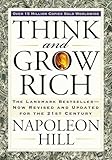
Think and Grow Rich was published in 1937, during the Great Depression, and claims to be the distillation of twenty years of interviews with over five hundred of the wealthiest and most successful people in America — including Andrew Carnegie, Henry Ford, Thomas Edison, and John D. Rockefeller. Napoleon Hill argues that he identified thirteen principles common to the success of each of them. The book works through those principles in sequence.
The first principle is desire — not a vague wish for wealth, but what Hill calls a burning desire, a specific, obsessive commitment to a defined outcome. Hill is insistent on specificity: not “I want to be rich” but “I will have $50,000 by a specific date, and here is what I will give in return for it.” The precision matters because it forces the reader to translate an abstraction into a concrete target, and because it makes the commitment visible to the self in a way that general wishes do not.
The mastermind concept — Hill’s argument that a coordinated alliance of minds working toward a shared purpose produces something greater than the sum of its parts — became one of the most cited ideas in business literature and continues to underpin the coaching and networking industries. CEOs reference it openly; executive coaches build entire practices around it. The insight is not that successful people work harder than others. It is that they build environments in which the right thinking becomes easier and the wrong thinking becomes harder.
The 1937 context strengthens rather than weakens some of Hill’s arguments. His subjects built their wealth under conditions — the Depression, two world wars, the collapse of financial institutions that ordinary people had trusted entirely — that make the typical modern reader’s obstacles look comparatively manageable. Hill did not interview people who succeeded when conditions were favourable. He interviewed people who succeeded when conditions were catastrophic, and he asked them what they had that others did not.
Why do CEOs keep citing this book decades after it was written? Because the psychological barriers to financial success — the failure to commit, the inability to persist through setbacks, the substitution of planning for action — are not solved by more information. Most people who fail financially do not fail because they lack knowledge. They fail because they do not act on what they know. Think and Grow Rich is almost entirely about that gap.
Key Differences
Mindset-first vs system-first. Think and Grow Rich works at the level of psychology: it asks what you believe about yourself and about money, what you desire badly enough to act on despite discomfort, and whether you have built the mental environment that makes success more likely. Rich Dad Poor Dad works at the level of system: it gives you a new way of categorising financial decisions and argues that applying that categorisation consistently over time produces different outcomes. Both are necessary. Most people need the system before the mindset shift is useful; a smaller number need the mindset shift before they can engage with the system. Knowing which you are determines which to read first.
Modern practicality vs Depression-era philosophy. Kiyosaki is writing for a contemporary audience navigating a specific economic landscape: the decline of the pension, the rise of the knowledge economy, the financialisation of real estate. His examples — starting small businesses, buying rental properties, understanding the tax code — are legible to a modern reader. Hill is writing from a different historical moment, and his examples require translation. The principles transfer. The specific cases need updating.
What each book leaves out. Rich Dad Poor Dad tells you what kind of financial decisions to make but gives limited guidance on exactly how to make them. The transition from “acquire assets” to a specific, executable investment strategy is left largely to the reader. Think and Grow Rich builds the psychological infrastructure for success but does not tell you what to do once you are psychologically ready. Between them, there is a significant gap: neither book is particularly strong on the mechanics of personal finance — budgeting, debt management, the specific structure of index fund investing. You will need other books for that.
Honest Assessment
Both books have earned their criticisms, and readers deserve to encounter those criticisms honestly.
Kiyosaki has faced serious questions about whether “rich dad” is a real person or a composite teaching device — questions he has answered inconsistently over the years. Beyond biography, some of his specific financial claims are contested or simply wrong: his definition of assets and liabilities diverges from standard accounting; his track record as a real estate investor is less clear than the book implies; and his various business ventures since the book’s publication have been uneven at best. The book has also inspired a minority of readers to take genuinely imprudent financial risks under the banner of “acquiring assets.”
Hill’s problems are different. Think and Grow Rich contains passages that are pseudoscientific — the theory of “vibrations” of thought, the claim that strong desire literally attracts its object — that have not aged well. His historical sourcing is difficult to verify and may be embellished. Some of the interviews he claims to have conducted are disputed. The book’s cultural context includes assumptions about gender, race, and class that are not simply dated but were exclusionary at the time of writing.
Neither set of problems invalidates the core ideas. A book does not need to be factually flawless to be transformative, and both books have demonstrably transformed readers’ financial lives. But a thoughtful reader engages with the text critically — using the framework where it is sound, questioning it where it is not, and supplementing it with books that are stronger on the dimensions where these are weak.
Which Should You Read First?
Read Rich Dad Poor Dad first.
It is the faster and more immediately actionable read. The assets-versus-liabilities framework is the kind of idea that reorganises subsequent thinking: once you have it, you apply it automatically to every financial decision. It is also a better entry point into the personal finance genre for most contemporary readers — it speaks to a recognisable modern experience of work, debt, and the feeling that the financial system is not designed in your favour.
Think and Grow Rich is the better second book. Hill’s thirteen principles will land differently — and more usefully — once you have a concrete framework to apply them to. The psychological work that Think and Grow Rich demands is most valuable when you already know what you want to do but keep finding reasons not to do it. That is the position most readers find themselves in after Rich Dad Poor Dad: motivated, intellectually convinced, but not yet acting. Hill addresses that gap directly.
That said: if you already have a clear financial framework and find yourself paralysed by doubt, inertia, or a scarcity mindset, reverse the order. Think and Grow Rich’s psychological scaffolding may be exactly what you need before a system-level book will be useful to you.
Either order works. Read both.
What to Read After Both
The Total Money Makeover by Dave Ramsey gives you the concrete steps that neither classic provides. Ramsey’s Baby Steps — from an emergency fund through debt elimination to investing — are specific, sequential, and designed for readers who know they should be doing better and need a step-by-step structure to do it. It is more conservative than either Kiyosaki or Hill, and deliberately so.
The Millionaire Next Door by Thomas Stanley and William Danko is the empirical counterpart to both books’ anecdotal frameworks. Based on decades of research into actual millionaires, it documents the behaviours — consistent frugality, investing the difference, living below your means — that produce wealth in real households. Less inspiring than either classic, and more reliable.
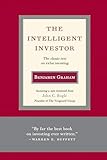
The Intelligent Investor by Benjamin Graham fills the investment mechanics gap that both books leave open. Graham’s principles — margin of safety, the Mr Market metaphor, the distinction between defensive and enterprising investors — are the foundation of every credible long-term investing strategy. Warren Buffett calls it the best investing book ever written.
Your Money or Your Life by Vicki Robin reframes the core question that Kiyosaki and Hill raise but neither fully answers: what is money actually for? Robin’s concept of “life energy” — the idea that every dollar spent represents hours of your finite life — is a useful corrective to both books’ implicit assumption that more wealth is always the goal.
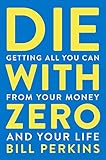
Die with Zero by Bill Perkins offers the most direct challenge to the wealth-accumulation mindset. Perkins argues that optimising for a large estate is a category error — that experiences have a biological shelf life and that money unspent is life unlived. Read it not as a rejection of financial discipline but as a necessary question about what all that discipline is in service of.
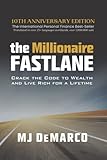
The Millionaire Fastlane by MJ DeMarco is the most direct descendant of Rich Dad Poor Dad’s entrepreneurial ethos. DeMarco’s critique of the “slow lane” — save 10% of your salary for forty years and retire at sixty-five — is more pointed than Kiyosaki’s, and his framework for building scalable businesses is more specific. For readers who responded most strongly to Kiyosaki’s anti-employment message, this is the natural next step.
Frequently Asked Questions
Is Rich Dad Poor Dad or Think and Grow Rich better?
They serve different purposes. Rich Dad Poor Dad gives you a concrete mental model — the distinction between assets and liabilities — that changes how you evaluate every financial decision. Think and Grow Rich works at a deeper level, addressing the psychology of desire, persistence, and belief that determines whether you act on that knowledge at all. If you want a framework for understanding money, start with Rich Dad Poor Dad. If you want to understand why you haven’t acted on what you already know, start with Think and Grow Rich.
Is Rich Dad Poor Dad still relevant?
Yes, with caveats. The core insight — that financial literacy is largely absent from formal education, that the distinction between income-generating assets and income-consuming liabilities is the essential lens for building wealth — remains as useful today as when the book was published in 1997. The specific investment examples and some of Kiyosaki’s biographical claims have been widely questioned. Read it for the framework, not as a specific investment manual.
Is Think and Grow Rich outdated?
Parts of it are. The book was written in 1937, and its language, its assumptions about gender and race, and some of its more mystical passages belong firmly to its era. But the core principles — burning desire, specialised knowledge, the mastermind alliance, persistence — are cited by executives and entrepreneurs across industries to this day. The Depression-era context actually strengthens some of the book’s arguments: Hill interviewed people who built wealth under conditions far more hostile than most readers face.
What should I read after Rich Dad Poor Dad and Think and Grow Rich?
After both, the most natural next reads are The Total Money Makeover by Dave Ramsey (for a concrete debt-elimination and savings system), The Millionaire Next Door by Thomas Stanley and William Danko (for data on how ordinary people actually build wealth), and The Intelligent Investor by Benjamin Graham (for the mechanics of long-term investing). Your Money or Your Life by Vicki Robin reframes the relationship between money and time in a way that complements both books. Die with Zero by Bill Perkins offers a direct challenge to the wealth-accumulation mindset that both classics promote.
More Personal Finance and Investment Guides
- Best Investing Books for Beginners
- Best Personal Finance Books for Beginners
- Best Books for Entrepreneurs
Affiliate disclosure: Links on this site are affiliate links. We earn a small commission at no extra cost to you. This does not influence our editorial recommendations.
Frequently Asked Questions
Is Rich Dad Poor Dad or Think and Grow Rich better?
They serve different purposes. Rich Dad Poor Dad gives you a concrete mental model — the distinction between assets and liabilities — that changes how you evaluate every financial decision. Think and Grow Rich works at a deeper level, addressing the psychology of desire, persistence, and belief that determines whether you act on that knowledge at all. If you want a framework for understanding money, start with Rich Dad Poor Dad. If you want to understand why you haven't acted on what you already know, start with Think and Grow Rich.
Is Rich Dad Poor Dad still relevant?
Yes, with caveats. The core insight — that financial literacy is largely absent from formal education, that the distinction between income-generating assets and income-consuming liabilities is the essential lens for building wealth — remains as useful today as when the book was published in 1997. The specific investment examples and some of Kiyosaki's biographical claims have been widely questioned. Read it for the framework, not as a specific investment manual.
Is Think and Grow Rich outdated?
Parts of it are. The book was written in 1937, and its language, its assumptions about gender and race, and some of its more mystical passages belong firmly to its era. But the core principles — burning desire, specialised knowledge, the mastermind alliance, persistence — are cited by executives and entrepreneurs across industries to this day. The Depression-era context actually strengthens some of the book's arguments: Hill interviewed people who built wealth under conditions far more hostile than most readers face.
What should I read after Rich Dad Poor Dad and Think and Grow Rich?
After both, the most natural next reads are The Total Money Makeover by Dave Ramsey (for a concrete debt-elimination and savings system), The Millionaire Next Door by Thomas Stanley and William Danko (for data on how ordinary people actually build wealth), and The Intelligent Investor by Benjamin Graham (for the mechanics of long-term investing). Your Money or Your Life by Vicki Robin reframes the relationship between money and time in a way that complements both books. Die with Zero by Bill Perkins offers a direct challenge to the wealth-accumulation mindset that both classics promote.