Ray Bradbury Books in Order: Complete Bibliography & Best Starting Points
Ray Bradbury's complete bibliography in order — from Fahrenheit 451 and The Martian Chronicles to Something Wicked This Way Comes. The best place to start and what makes his work last.
Ray Bradbury was not a science fiction writer in the technical sense: he was a poet who used science fiction’s imagery to write about love, memory, childhood, death, and the fear that the future is consuming the past. His Mars is not a scientific extrapolation but a mythological landscape. His robots are not engineering thought experiments but meditations on what it means to be human. His rockets are vehicles for elegy.
He published more than 30 books and over 600 short stories across a career that spanned six decades. The essential Bradbury is a small number of these — but they are among the most distinctive and most emotionally resonant books in American literature.
The Essential Bradbury
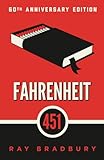
Fahrenheit 451 — 1953
The novel that defined Bradbury for most readers, and the most politically resonant of his works. Guy Montag is a fireman in a future America — but firemen in this future start fires rather than putting them out: their job is to burn books, which have been banned because they make people unhappy. When Montag encounters a girl who asks him if he’s happy, and an old professor who shows him what books contain, he begins to question everything he has done.
Bradbury’s diagnosis of why this future came to be is darker than the obvious reading suggests: the government did not impose book burning from above. The people stopped wanting to read first. Books were replaced by interactive television walls and headphone entertainment; the firemen came after. It is a novel about voluntary ignorance as much as censorship, and that makes it more urgent in the age of algorithmic entertainment rather than less.
Under 160 pages. Essential.
The Martian Chronicles — 1950
A collection of linked stories chronicling the human colonisation of Mars — the Martians who resist it, the colonists who bring their Earth grievances and Earth prejudices with them, and the Mars that eventually becomes Earth’s refuge when Earth destroys itself. The stories span from 1999 to 2026 in the original edition (updated in later editions).
The Martian Chronicles is Bradbury at his most ambitious and his most politically engaged. The Martians, whose civilisation is destroyed by human contact (first through disease, then through settlement), are a deliberate allegory for the colonisation of indigenous peoples. The human colonists carry their racism, their nostalgia, and their failures with them across space. Mars does not make them new.
The book is also, simultaneously, a meditation on nostalgia itself — on the way human beings are always longing for a home they cannot return to, and building imperfect replicas of it wherever they go.
Something Wicked This Way Comes — 1962
Bradbury’s darkest novel. Two thirteen-year-old boys in a Midwestern town — Jim Nightshade and Will Halloway — encounter Cooger and Dark’s Pandemonium Shadow Show, a travelling carnival that arrives in October and offers its marks exactly what they most desire. The desires come at a price. The novel is about temptation, about what adults want that they should not, and about the relationship between fathers and sons as the means by which mortality is passed and resisted.
Written in a prose style that is closer to poetry than to conventional fiction — dense with imagery and metaphor — Something Wicked is the novel in which Bradbury’s fantasy mode is most fully realised.
Complete Bibliography
Novels
| Title | Year | Note |
|---|---|---|
| Dark Carnival | 1947 | First collection; rare; stories collected in later books |
| The Martian Chronicles | 1950 | Linked stories; essential |
| Fahrenheit 451 | 1953 | Essential |
| Dandelion Wine | 1957 | Semi-autobiographical; summer in Illinois |
| Something Wicked This Way Comes | 1962 | Fantasy; darkest novel |
| Death Is a Lonely Business | 1985 | Detective novel; Venice, California |
| A Graveyard for Lunatics | 1990 | Hollywood detective novel |
| Green Shadows, White Whale | 1992 | Memoir-novel; Ireland writing Moby Dick |
| From the Dust Returned | 2001 | Gothic family chronicle |
| Let’s All Kill Constance | 2002 | Detective novel |
| Farewell Summer | 2006 | Sequel to Dandelion Wine |
Short Story Collections (Selected)
| Title | Year | Note |
|---|---|---|
| The Illustrated Man | 1951 | Linked frame narrative; essential |
| The Golden Apples of the Sun | 1953 | Finest standalone collection |
| A Medicine for Melancholy | 1959 | Also released as The Day It Rained Forever |
| The Machineries of Joy | 1964 | |
| I Sing the Body Electric! | 1969 | |
| The Stories of Ray Bradbury | 1980 | Definitive 100-story selection |
The Short Stories
Bradbury is at least as important as a short story writer as a novelist — possibly more so. The stories published in The Illustrated Man (1951) are the best introduction to his range: a frame narrative in which a tattooed man’s tattoos come to life as separate stories allows Bradbury to move between science fiction, fantasy, and horror within a single volume.
The essential Bradbury stories include:
- “A Sound of Thunder” — the original time-travel butterfly-effect story
- “There Will Come Soft Rains” — an automated house going through its routines after nuclear war destroys its inhabitants
- “The Veldt” — children’s virtual reality room becomes the site of murder
- “The Fog Horn” — a lighthouse keeper and a monster who both want to be heard
- “All Summer in a Day” — a class of Venusian children and the one girl who remembers Earth’s sun
Reading Order Recommendations
New to Bradbury: Fahrenheit 451 → The Martian Chronicles → Something Wicked This Way Comes.
For short story fans: The Illustrated Man → The Stories of Ray Bradbury (select 10–15 stories).
Complete reading: Fahrenheit 451 → The Martian Chronicles → The Illustrated Man → Something Wicked This Way Comes → Dandelion Wine. This covers his essential range in roughly chronological order.
Frequently Asked Questions
What is the best Ray Bradbury book to start with?
Fahrenheit 451 is the obvious starting point — it is his most famous novel, under 160 pages, and the most politically urgent of his works: a fireman in a future America where books are burned discovers that he can no longer burn them. The Martian Chronicles is the better book for readers who want to understand Bradbury's full range — it is a collection of linked stories that is also a meditation on colonialism, nostalgia, and what human beings bring with them when they travel.
Is Ray Bradbury science fiction or fantasy?
Both, and neither cleanly. Bradbury described himself as a fantasy writer who used science fiction's furniture — rockets, Mars, technology — to write about fundamentally human and emotional subjects. He had no interest in scientific accuracy and did not pretend to. His Mars is a dream-landscape, not a planet. His robots are philosophical propositions, not engineering concepts. The genre labels matter less than the understanding that Bradbury's subject was always what technology and change do to the human soul.
Do Ray Bradbury's books need to be read in order?
No — all his major works are standalone. The Martian Chronicles is structured as a series of linked stories rather than a continuous novel, and the links are thematic rather than narrative. Fahrenheit 451, Something Wicked This Way Comes, and Dandelion Wine are independent novels. The only 'order' worth considering is emotional: The Martian Chronicles and Dandelion Wine are gentler; Fahrenheit 451 and Something Wicked are darker.
Why is Fahrenheit 451 still relevant?
Bradbury wrote Fahrenheit 451 in 1953, partly in response to McCarthyism and the House Un-American Activities Committee's investigations of suspected communists in the arts. But the novel's real subject is not government censorship — it is voluntary ignorance: the society in Fahrenheit 451 burned books because people stopped wanting to read, not because the government started. That diagnosis — the preference for entertainment over thought — has become more rather than less accurate.