Naval Ravikant's Book Recommendations: The Essential Reading List
The books Naval Ravikant recommends most — from The Almanack of Naval Ravikant and Poor Charlie's Almanack to Antifragile, Skin in the Game, and the philosophy books he returns to repeatedly.
By Marcus Webb

Naval Ravikant is the co-founder of AngelList and one of the most influential angel investors of the last two decades. But his wider cultural influence comes from his public thinking about wealth, happiness, and how to reason clearly — thinking he has shared through Twitter, podcast appearances, and the compilation that has become The Almanack of Naval Ravikant.
His reading recommendations are unusual for a Silicon Valley figure: less interested in management, productivity, or business tactics than in first-principles thinking across philosophy, science, and mathematics. He reads to understand the world rather than to execute more efficiently within it.
Essential Reading: Naval’s Own Work
The Almanack of Naval Ravikant — Eric Jorgenson (2020)
Not written by Naval but compiled from his public thinking: tweets, podcast interviews, essays. Jorgenson organised the material into two halves — “Wealth” (how to get rich without getting lucky, Naval’s famous Twitter thread on creating leverage and specific knowledge) and “Happiness” (his thinking on how to be at peace with oneself and the world). Available free online and in print.
For readers who want Naval’s framework before exploring the books that shaped it, start here. It is also one of the best arguments for the value of thinking in public: Naval’s tweets and podcast appearances, assembled with care, add up to a coherent philosophy of life.
The Books Naval Returns To
Poor Charlie’s Almanack — Charlie Munger (compiled by Peter Kaufman)
Naval has called this one of the most important books he has read. Charlie Munger, Warren Buffett’s longtime partner, is the greatest practitioner of “latticework” thinking — using mental models from multiple disciplines (physics, biology, psychology, economics) to understand any problem. Poor Charlie’s Almanack collects his speeches, talks, and letters, and is the best available account of how a genuinely great mind actually works.
Heavy and expensive in print, but worth acquiring. The investment compounds.
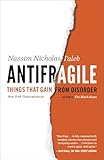
Antifragile — Nassim Nicholas Taleb (2012)
Naval is a committed Taleb reader and has recommended all his books, but Antifragile is the most useful standalone volume. Taleb’s central idea: some things benefit from disorder, volatility, and stress — they are not merely robust (surviving shocks) but antifragile (gaining from them). Naval applies this to career design, financial positioning, and intellectual development. The concept of optionality — keeping choices open, avoiding exposure to catastrophic downside — is central to both Taleb and Naval’s thinking.
Skin in the Game — Nassim Nicholas Taleb (2018)
Taleb’s most directly applicable book. The principle: never take advice from someone who doesn’t bear the consequences of being wrong. Skin in the Game is about accountability, about why systems become corrupt when decision-makers are insulated from the results of their decisions, and about how to identify who actually knows what they’re talking about. Naval has applied this principle explicitly to his own investment thinking.
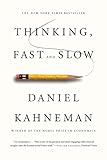
Thinking, Fast and Slow — Daniel Kahneman (2011)
Naval recommends Kahneman’s account of System 1 (fast, intuitive, biased) and System 2 (slow, deliberate, effortful) thinking as essential reading for anyone who wants to understand how their own mind actually works rather than how they assume it works. The biases Kahneman documents — anchoring, availability, loss aversion, overconfidence — are the failure modes that cost investors, entrepreneurs, and thinkers the most. Knowing them does not eliminate them, but it helps.
Fooled by Randomness — Nassim Nicholas Taleb (2001)
Taleb’s first book and, some argue, his best. The central argument: we systematically underestimate the role of luck in success and overestimate the role of skill. Fooled by Randomness is the intellectual foundation for everything Taleb has written since — and Naval’s thinking about wealth creation (the importance of optionality, of avoiding ruin, of compound interest) reflects Taleb’s influence directly.
Philosophy and Wisdom
Naval’s recommended reading consistently returns to a few sources:
Meditations by Marcus Aurelius — Naval has called this the most important book he has read. Aurelius’s private journal — a Stoic practice of daily self-examination — is the most direct and most personal philosophical document in the Western tradition. Available free in multiple translations.
The Bhagavad Gita — Naval has described being influenced by Vedic philosophy and the Gita’s conception of detached action: doing what is right without attachment to the result.
Siddhartha by Hermann Hesse — A novel about the search for enlightenment that Naval has recommended as an accessible entry point to Eastern philosophical ideas.
On Science and Reality
Naval is an explicit advocate for reading primary science rather than pop-science summaries:
Richard Feynman’s Lectures on Physics — Naval has recommended understanding physics as foundational to clear thinking generally. Feynman’s lectures are available free online.
The Selfish Gene by Richard Dawkins — Evolution by natural selection as a mental model for understanding systems. Naval considers evolutionary biology one of the most useful frameworks available.
His Advice About Reading
Naval’s most distinctive reading recommendation is about how to read rather than what to read:
- Read what you love until you love to read. Interest compounds. Reading books you feel obligated to read produces diminishing returns.
- Re-read books that changed your thinking. Most value comes from depth rather than breadth.
- Abandon books freely. Life is too short for books that don’t deliver value by page 50.
- Prefer books with staying power over books that are currently discussed. A book that has been read for 200 years has passed a harder test than a book that was published last year.
Further Reading
The Hard Thing About Hard Things — Ben Horowitz — Naval has invested in Andreessen Horowitz funds and has recommended Horowitz’s account of what building a company actually involves.
Zero to One — Peter Thiel — Naval and Thiel have appeared together and shared intellectual influences. Thiel’s argument about monopoly and innovation reflects thinking Naval has also expressed.
The 48 Laws of Power — Robert Greene — Naval has recommended reading Greene’s work to understand how power actually operates rather than how it is supposed to operate.
Frequently Asked Questions
What is Naval Ravikant's most recommended book?
Naval has recommended The Almanack of Naval Ravikant (a compilation of his own interviews and essays) as a summary of his thinking, but among books by others, he most frequently recommends Charlie Munger's Poor Charlie's Almanack, Nassim Taleb's Antifragile and Skin in the Game, and philosophical texts including Marcus Aurelius's Meditations. He is an unusually eclectic reader who ranges from hard science to Zen poetry.
What kind of books does Naval Ravikant recommend?
Naval's reading tends toward three overlapping domains: philosophy (Stoicism, Eastern philosophy, epistemology), science (physics, evolution, complexity), and investment/wealth-creation thinking. He is explicitly dismissive of most business books and management advice, preferring books that describe fundamental principles over specific tactics. He reads slowly and re-reads — he has said he doesn't read for novelty but for depth.
What is The Almanack of Naval Ravikant?
The Almanack of Naval Ravikant, compiled by Eric Jorgenson, is a collection of Naval's tweets, podcast appearances, and essays organised by theme — how to create wealth, how to think about happiness, how to reason clearly, how to find meaning. It is not written by Naval in the traditional sense but is a curated selection of his public thinking. It is available for free online and has been read by millions. For readers new to Naval, it is the best starting point.
Does Naval Ravikant actually read all the books he recommends?
Naval has described his reading practice as slow and selective: he does not try to read every new business book and does not read for professional obligation. He reads philosophy and science for understanding, re-reads books he finds foundational rather than moving to the next title, and abandons books quickly if they don't repay his attention. He is also suspicious of reading as a status signal — the question for him is not how many books you've read but how deeply the books you've read have changed your thinking.