The Lean Startup vs Zero to One: Which First?
Two books dominate every founder's reading list. The Lean Startup and Zero to One agree that most businesses fail — and disagree about everything else. Here is how their philosophies compare, where each goes wrong, and which to read first.
By Marcus Webb

Ask a venture capitalist which startup books they recommend and you will almost always get the same two titles. The Lean Startup by Eric Ries and Zero to One by Peter Thiel sit at the top of virtually every founder reading list — assigned in business school courses, referenced in pitch meetings, cited in accelerator curricula, quoted in the introductions of a hundred subsequent business books.
They also disagree with each other about almost everything that matters.
The Lean Startup, published in 2011, argues that most startups fail because they build things nobody wants, and that the solution is a disciplined methodology of experimentation: define your assumptions, build the smallest possible product that tests them, measure what actually happens, and use the results to decide whether to continue or change direction. The method applies to any new venture operating under uncertainty. It is designed to reduce waste and increase the odds that you are building something real.
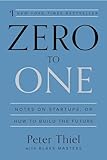
Zero to One, published in 2014, argues that this is the wrong question entirely. Ries is concerned with building a company that works. Thiel is concerned with building a company that matters — and his definition of mattering is specific: creating something genuinely new, achieving a monopoly in a new market, and capturing a large fraction of the value that new thing creates. The Lean Startup’s validated learning, in Thiel’s framework, optimises for incremental improvement. Zero to One is interested only in the discontinuous leap.
The tension between these two books is not merely theoretical. It maps onto real disagreements about what kind of company is worth building, whose advice is worth following, and what the enterprise of entrepreneurship is actually for.
Quick Comparison
| The Lean Startup | Zero to One | |
|---|---|---|
| Author | Eric Ries | Peter Thiel |
| Year | 2011 | 2014 |
| Core argument | Test assumptions, iterate fast, reduce waste | Find a secret, build a monopoly, create something new |
| Target founder | Any founder under uncertainty | Technology founders seeking venture-scale outcomes |
| Methodology | Validated learning, build-measure-learn loop | Contrarian thinking, monopoly theory |
| Evidence base | Case studies, lean manufacturing, Toyota | Thiel’s own investments and company-building experience |
| Tone | Methodical, prescriptive, systematic | Philosophical, contrarian, intellectually assertive |
| Best for | Reducing risk of building the wrong thing | Deciding which thing is worth building at all |
The Lean Startup: What Ries Gets Right
The Lean Startup is built on a single premise that is both obvious in retrospect and radically underimplemented in practice: the biggest risk facing a new venture is not execution risk but assumption risk — the risk that the product you are building, the market you are targeting, and the customer behaviour you are counting on are not real.
Eric Ries encountered this problem directly at IMVU, a 3D social network he co-founded, where the team spent months building features that users never wanted. The experience led him to study lean manufacturing — particularly the Toyota Production System, which had developed methods for identifying and eliminating waste in complex production processes — and to ask whether its principles could be applied to the problem of building a new product under conditions of extreme uncertainty.
The resulting framework is structured around a loop: Build a minimum viable product (MVP) — the simplest version of your product that tests your most critical assumption — Measure what actually happens when real users encounter it, and Learn from the results whether your assumption was correct. If it was, continue building. If it was not, pivot: change your strategy while preserving your core learning. The loop then repeats.
The minimum viable product concept is the most frequently cited and most frequently misunderstood element of the book. An MVP is not a rough, unfinished version of your eventual product. It is a specific tool for testing a specific assumption. Ries gives the example of Zappos’ founder, who tested the assumption that people would buy shoes online by photographing shoes from local stores, posting the photos with a price, and then purchasing the shoes from the store when someone placed an order — before writing a single line of code or holding any inventory. The MVP answered the most important question — will people actually buy shoes online? — with the minimum possible investment.
The pivot concept is equally important and equally misunderstood. A pivot is not a sign of failure or strategic confusion. It is the rational response to evidence that a core assumption was wrong. Ries documents pivots by companies including Flickr (which began as a massively multiplayer online game), YouTube (which began as a video dating site), and Instagram (which began as a location-based check-in app). In each case, the company’s founding assumption proved incorrect, but the learning accumulated in testing that assumption revealed a better opportunity. The pivot preserved the team, the infrastructure, and the learning while changing the strategy.
What makes The Lean Startup genuinely useful beyond its framework is its account of vanity metrics — measurements that look good but do not actually track the health of the business. Total registered users, page views, and download counts are the most common examples: they go up as long as you acquire new users, making the business appear to be growing even when retention is catastrophic and genuine engagement is thin. Ries argues for actionable metrics — measurements that connect directly to the assumptions you are testing and clearly indicate whether the business model works. Cohort analysis, which tracks the behaviour of users acquired in the same time period through their entire lifecycle, is his primary alternative.
Zero to One: What Thiel Gets Right
Zero to One begins with an interview question. Peter Thiel asks every candidate for a job at his companies: “What important truth do very few people agree with you on?” His argument is that the best startup ideas are answers to this question — secrets, in his terminology, which are truths that most people do not believe, overlooked by the consensus for reasons of social conformity, intellectual laziness, or genuine difficulty of discovery.
The question is harder than it appears. Most people’s answers are either contrarian-sounding positions that are actually widely held (technology will change everything; the education system is broken) or genuinely heterodox positions that are wrong. A true secret — a belief that is both widely disbelieved and actually correct — is the rarest thing in intellectual life. But it is, Thiel argues, the only viable foundation for a genuinely new company. You cannot build something that has never existed before if you believe only things that everyone already believes.
Thiel’s market theory follows from this. He argues that competition is a destructive force that companies, founders, and business education systematically romanticise. Competition eliminates margins, forces attention toward rivals rather than customers, and prevents the kind of long-term planning that produces durable value. Monopoly — the ability to set your own prices, determine your own direction, and compound your advantages over time without competitive pressure — is not the enemy of value creation but its precondition. Google’s search dominance, Apple’s device ecosystem, and PayPal’s payments network all produced extraordinary value precisely because they achieved, for a period, monopolistic positions in their respective markets.
The practical implication for founders is to start by dominating a small market rather than entering a large one. A startup that captures 1% of a billion-dollar market has accomplished nothing meaningful: it has not dominated anything, achieved any durable competitive advantage, or built any compounding returns. A startup that captures 80% of a niche market it has largely created has built the foundation for expansion — and the dominance it has achieved in the small market is real, defensible, and the source of genuine competitive advantages as it grows. Thiel’s go-big-by-starting-small argument is one of the most genuinely useful pieces of strategic advice in the book, and it is underrated relative to his more dramatic claims.
The analysis of what he calls the Power Law — the observation that venture returns are governed by a distribution in which a handful of companies account for the overwhelming majority of total value — is the most important intellectual contribution of the book for anyone thinking seriously about venture-backed companies. If this is true (and the evidence that it is is substantial), it has profound implications for how founders should think about the potential of their companies, how investors should think about portfolio construction, and how the ecosystem as a whole should evaluate what counts as success. A startup that is “doing well” in conventional terms — growing 20% year over year, profitable, well-managed — may be a complete failure by venture standards if it has foreclosed the possibility of venture-scale returns.
Key Differences
Scope of applicability. The Lean Startup applies to any new venture operating under uncertainty — a software startup, a new product line inside an established company, a non-profit, a government initiative. Ries explicitly develops the concept of the “internal startup” for intrapreneurs. Zero to One is concerned specifically with technology companies capable of venture-scale outcomes. Thiel’s framework does not apply to most businesses, and he would be the first to say so: he is not interested in most businesses.
Diagnosis of failure. Ries diagnoses startup failure as primarily an execution problem: companies build the wrong thing, commit too much capital to untested assumptions, and discover too late that their product does not create the value they imagined. The solution is methodological rigour — a discipline of testing and learning that reduces the cost of being wrong. Thiel diagnoses startup failure as primarily a strategic problem: companies compete in markets that already exist, copying ideas that have already been implemented, accepting a conventional picture of what is possible. The solution is better thinking — a willingness to ask heretical questions and act on heterodox answers.
Relationship to competition. This is the sharpest disagreement between the two frameworks. The Lean Startup implicitly accepts the competitive landscape as given and asks how to succeed within it. Zero to One argues that the competitive landscape itself is the trap, and that the goal of strategy is to escape it. Ries’s methodology will help you build a better product than your competitors. Thiel’s methodology is designed to help you build a product that renders the category of “competitor” irrelevant.
Evidence and epistemic style. Ries’s framework is empiricist in its commitments: it is built on measurement, testing, and the willingness to update based on evidence. The Lean Startup’s prescription is: do not trust your intuitions until they have been validated by user behaviour. Thiel’s framework is, in a significant sense, the opposite: it is built on the belief that your intuition about an undiscovered truth — a secret — is the starting point, and that validated learning cannot find secrets because the market cannot validate what it does not yet know it wants. This is a genuine philosophical disagreement, not a difference of emphasis.
What Each Gets Wrong
The Lean Startup’s most significant limitation is that validated learning cannot find secrets. The methodology is excellent for optimising toward a market that already exists or a need that customers can already articulate. It is much weaker as a tool for discovering genuinely new opportunities. The famous Henry Ford aphorism — “If I had asked people what they wanted, they would have said faster horses” — is apocryphal, but the underlying point is real: user research and iterative testing will not tell you to build a railroad. The Lean Startup’s MVP methodology would likely have killed several of the most important companies of the past two decades in their earliest stages, when their assumptions looked bizarre and their metrics looked terrible. Amazon’s investment in AWS, Google’s bet on autonomous vehicles, Apple’s iPhone launch — none of these were validated-learning plays. They were contrarian bets on secrets.
There is also a subtle trap in the pivot concept. Ries frames the pivot as a strategic tool — a disciplined response to evidence. In practice, many founders use the rhetoric of “pivoting” to justify abandoning a difficult but correct strategy at the first sign of resistance. The willingness to change direction based on evidence is valuable. But the willingness to persist in the face of evidence that looks discouraging, because you have a more complete picture of the opportunity than the market does yet, is equally valuable and harder to teach. The Lean Startup does not give founders good tools for distinguishing between “we have discovered our assumption was wrong” and “we are too early and need to be patient.”
Zero to One’s most significant limitation is that it is excellent advice for the one company in a hundred that is genuinely building something new, and largely useless or actively harmful for the other ninety-nine. Thiel’s framework assumes that the founder has correctly identified a secret — a true contrarian insight about what is possible — and that the strategic question is how to capture that insight as a monopoly. For founders who believe they have such an insight and are wrong, Zero to One provides elegant justification for a very expensive mistake. The book’s philosophical confidence can be mistaken for a template that most companies do not fit.
The monopoly theory also has limits that Thiel does not fully acknowledge. Some of the most important economic activity — services, manufacturing, healthcare, education — does not fit the monopoly creation model. Thiel’s dismissal of competition and his elevation of monopoly as the only worthwhile goal can lead founders to misdirect their energy toward narrative (“we are creating a new category”) rather than toward the genuinely difficult work of building something customers actually need. The rhetorical sophistication of Zero to One is also a genuine risk: it is a book that can make bad ideas sound good.
Which Should You Read First?
Read The Lean Startup first.
The case for this order is practical rather than philosophical. Most founders, regardless of their eventual ambitions, are operating under conditions of deep uncertainty about what their customers actually want, what their product should actually do, and whether their assumptions about their market are actually correct. The Lean Startup gives you tools for dealing with this uncertainty systematically, and those tools are useful regardless of what kind of company you are building.
Zero to One’s framework is most powerful when you already understand the problem it is solving — when you have experienced firsthand the limitations of validated learning, when you have felt the trap of optimising a product that should never have existed in its current form, when you want to ask bigger questions about why you are building what you are building. Reading it after The Lean Startup gives you both the methodology and its most serious critique, which is far more useful than either alone.
If you are specifically building a technology company with explicit venture ambitions, the sequencing matters less, and you might read Zero to One first. But most founders benefit more from Ries before Thiel: learn how to test before you learn how to think.
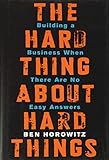
For the full picture of what happens after the strategy, read The Hard Thing About Hard Things by Ben Horowitz — the book that neither Ries nor Thiel fully prepares you for.
What to Read After Both
Having absorbed both frameworks, the most useful next reads are the ones that complicate both.
The Hard Thing About Hard Things by Ben Horowitz is the essential corrective. Horowitz spent years running Loudcloud and Opsware through conditions that no methodology prepares you for: the dot-com crash, a company being kept alive through rounds of increasingly difficult financing, the pressure to make decisions under conditions where the right answer is genuinely unclear. His book is not a framework book. It is an account of what leadership actually looks like when frameworks fail, and it contains more practical wisdom for founders in difficulty than either of the books above. It is blunt, specific, and occasionally devastating.
Good to Great by Jim Collins is the most rigorous attempt to answer the question both Ries and Thiel leave open: what makes a company sustain excellent performance over time? Collins and his research team studied a sample of companies that made the leap from good to great performance and sustained it for at least fifteen years, identifying the common factors. His findings — particularly the concept of the Hedgehog Concept (the intersection of what you can be best at, what drives your economic engine, and what you are passionate about) and Level 5 Leadership (leaders who combine personal humility with fierce professional will) — complicate both Lean Startup’s execution focus and Zero to One’s strategic vision in ways that are worth sitting with.
Frequently Asked Questions
Is The Lean Startup or Zero to One better?
They are better for different founders at different stages with different ambitions. The Lean Startup is the more universally applicable book — its validated learning framework works for founders building anything from a consumer app to an enterprise software tool, and its core discipline of testing assumptions before scaling investment is sound advice in almost every context. Zero to One is the more intellectually stimulating book and the more useful one for founders who specifically want to build a technology company designed for venture-scale outcomes. Thiel’s questions are better than most founders’ answers, but his prescription — find a secret and build a monopoly — is only actionable for a specific kind of company. If you are uncertain what kind of company you are building, read The Lean Startup first.
Does The Lean Startup work for non-tech businesses?
Better than Zero to One does, which sets a low bar. The Lean Startup’s core discipline — defining assumptions, running minimum viable experiments, measuring results, and deciding whether to pivot or persevere — applies to any new venture operating under uncertainty, whether it is a restaurant, a non-profit, a consulting firm, or an enterprise software company. The language and examples in the book skew toward software startups, and some of the tooling Ries recommends requires a digital product to implement fully. But the underlying logic is general.
What does Peter Thiel mean by “going from zero to one”?
Thiel distinguishes between two types of progress: horizontal progress (going from one to n — copying things that work, expanding into new markets, doing more of the same) and vertical progress (going from zero to one — creating something genuinely new that did not exist before). He argues that most business competition is horizontal — companies fighting over existing markets using existing approaches — and that the truly valuable companies are those that achieve vertical progress: creating a new category, building a technology that makes something previously impossible into something routine.
Is Zero to One still relevant in 2026?
Its core ideas are more relevant than its specific arguments. Thiel’s framework for identifying what he calls “secrets” — truths that most people do not believe, which create the opportunity space for genuinely new companies — remains one of the more useful lenses for evaluating startup ideas. His analysis of why competition destroys value while monopoly creates it is counterintuitive and worth internalising. Some of his specific predictions and examples have aged poorly given subsequent developments in AI and markets, but the philosophical architecture of the book holds up. Read the core argument, not the specific forecasts.
What should I read after The Lean Startup and Zero to One?
After both, the next reads depend on which direction you want to go. For the reality of running a company once you have built it — the management, the people problems, the near-death experiences that no framework prepares you for — The Hard Thing About Hard Things by Ben Horowitz is the most honest and useful book available. For understanding what separates companies that sustain long-term performance from those that do not, Good to Great by Jim Collins is the most rigorous study available, and its findings complicate both Lean and Zero to One in useful ways.
For the Best Business and Startup Books
For the definitive guide to startup and entrepreneurship reading — from Ries and Thiel to the best books on leadership, strategy, and company-building — see our Best Books for Entrepreneurs list.
Affiliate disclosure: Links on this site are affiliate links. We earn a small commission at no extra cost to you. This does not influence our editorial recommendations.
Frequently Asked Questions
Is The Lean Startup or Zero to One better?
They are better for different founders at different stages with different ambitions. The Lean Startup is the more universally applicable book — its validated learning framework works for founders building anything from a consumer app to an enterprise software tool, and its core discipline of testing assumptions before scaling investment is sound advice in almost every context. Zero to One is the more intellectually stimulating book and the more useful one for founders who specifically want to build a technology company designed for venture-scale outcomes. Thiel's questions are better than most founders' answers, but his prescription — find a secret and build a monopoly — is only actionable for a specific kind of company. If you are uncertain what kind of company you are building, read The Lean Startup first.
Does The Lean Startup work for non-tech businesses?
Better than Zero to One does, which sets a low bar. The Lean Startup's core discipline — defining assumptions, running minimum viable experiments, measuring results, and deciding whether to pivot or persevere — applies to any new venture operating under uncertainty, whether it is a restaurant, a non-profit, a consulting firm, or an enterprise software company. The build-measure-learn loop was developed partly from manufacturing principles and is not inherently tech-specific. The language and examples in the book skew toward software startups, and some of the tooling Ries recommends (A/B testing, cohort analysis) requires a digital product to implement fully. But the underlying logic is general.
What does Peter Thiel mean by 'going from zero to one'?
Thiel distinguishes between two types of progress: horizontal progress (going from one to n — copying things that work, expanding into new markets, doing more of the same) and vertical progress (going from zero to one — creating something genuinely new that did not exist before). He argues that most business competition is horizontal — companies fighting over existing markets using existing approaches — and that the truly valuable companies are those that achieve vertical progress: creating a new category, building a technology that makes something previously impossible into something routine. The title is a shorthand for the argument that the hardest and most valuable entrepreneurial act is not scaling a known business model but inventing a new one.
Is Zero to One still relevant in 2026?
Its core ideas are more relevant than its specific arguments. Thiel's framework for identifying what he calls 'secrets' — truths that most people do not believe, which create the opportunity space for genuinely new companies — remains one of the more useful lenses for evaluating startup ideas. His analysis of why competition destroys value while monopoly creates it is counterintuitive and worth internalising. Some of his specific predictions and examples have aged poorly — his views on artificial intelligence from the 2014 edition look incomplete given subsequent developments — but the philosophical architecture of the book holds up. Read the core argument, not the specific forecasts.
What should I read after The Lean Startup and Zero to One?
After both, the next reads depend on which direction you want to go. For the reality of running a company once you have built it — the management, the people problems, the near-death experiences that no framework prepares you for — The Hard Thing About Hard Things by Ben Horowitz is the most honest and useful book available. It is the antidote to both Ries's methodology and Thiel's philosophy, because it describes what happens after your strategy meets actual circumstances. For understanding what separates companies that sustain long-term performance from those that do not, Good to Great by Jim Collins is the most rigorous study available, and its findings complicate both Lean and Zero to One in useful ways.