Harry Potter vs Percy Jackson: Which to Read First?
Harry Potter and Percy Jackson are two of the most beloved fantasy series ever written. Here's how they compare — and which one to pick up first.
The question comes up constantly: someone is starting fantasy for the first time, or buying books for a child, or returning to the genre after years away. Which series first — Harry Potter or Percy Jackson? Both are beloved, both are long, and both have devoted readers who will tell you that theirs is the obvious starting point.
They are more different than they look. They share the basic architecture of modern children’s fantasy — a child who discovers extraordinary abilities, a school or training ground, a growing cast of loyal friends, a darkening threat — but they deploy that architecture in very different directions. Harry Potter is a British boarding-school novel that grows into something genuinely dark and morally complex. Percy Jackson is an American road-trip adventure rooted in Greek mythology, faster and funnier, more interested in action than atmosphere.
Neither is the wrong answer. But the right answer for a specific reader depends on who that reader is and what they want.
Quick Comparison
| Feature | Harry Potter | Percy Jackson |
|---|---|---|
| Author | J.K. Rowling | Rick Riordan |
| Books in main series | 7 | 5 |
| Age range (recommended) | 9–16+ | 8–14 |
| Tone | Wondrous, then increasingly dark | Adventurous, comedic throughout |
| Mythology | Original (Wizarding World) | Greek mythology |
| Humor | Warm and playful | Frequent, fast, modern |
| Darkness | Significant in later books | Moderate; lighter overall |
| Protagonist age at start | 11 | 12 |
Harry Potter: What Makes It Work
J.K. Rowling built one of the most fully realised secondary worlds in the history of children’s literature. The Wizarding World — Diagon Alley, Hogwarts, Hogsmeade, the Ministry of Magic — is dense with internal logic and accumulated detail. Reading the series feels less like following a story and more like inhabiting a place. That sense of world-immersion is Harry Potter’s greatest achievement, and it’s what keeps readers returning for re-reads decades later.
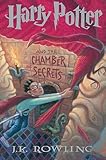
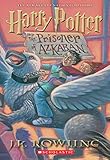
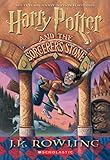
Harry Potter and the Sorcerer’s Stone is deceptively light — a charming fish-out-of-water story about a boy who discovers he’s a wizard. The Chamber of Secrets deepens the mystery. The Prisoner of Azkaban is widely considered the turning point where the series finds its full voice: darker, structurally more ambitious, genuinely surprising. By The Goblet of Fire, Rowling is writing a novel that deals openly with death, betrayal, and political corruption — and the darkness never fully lifts.
This tonal arc is one of Harry Potter’s greatest strengths and its one complication for younger readers. The series grows up alongside its protagonist. What begins at 11 ends at 17, and the final three books (The Order of the Phoenix, The Half-Blood Prince, and The Deathly Hallows) are genuinely heavy. That weight is earned, and it’s part of why the series endures — but it’s worth knowing it’s coming.
Percy Jackson: What Makes It Work
Rick Riordan had a simple, brilliant premise: the Greek gods are real, they never left, and their half-human children walk among us. Percy Jackson, a twelve-year-old with ADHD and dyslexia who has never fit into any school, discovers that his apparent disorder is actually proof of divine heritage. His ADHD is the battle reflexes of a demigod; his dyslexia is a brain hardwired for ancient Greek. He is the son of Poseidon.
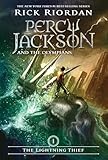
Percy Jackson and the Lightning Thief is one of the most propulsive first novels in children’s fantasy. Riordan trusts his readers and moves fast — the mythology is deployed with confidence and wit, the voice is immediately distinctive, and the stakes are established within the first fifty pages. Where Harry Potter’s first book is slow-building and atmospheric, the Lightning Thief is kinetic.
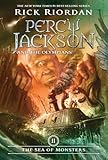
The series maintains that energy across all five books. The Sea of Monsters riffs on Homer’s Odyssey; The Titan’s Curse introduces Artemis and the Hunters; and The Last Olympian delivers a full-scale battle for Olympus that Riordan has been carefully setting up since book one. The plotting is tighter than Harry Potter’s — five books rather than seven, and each one moves.
Percy’s narrative voice deserves special mention. He is funny, self-deprecating, and observant in a specifically American teenage way — the humor is quick and contemporary without feeling forced. Riordan writes a first-person narrator that readers of almost any age find easy to inhabit.
Key Differences
Tone and humor
Percy Jackson is funnier. That isn’t a criticism of Harry Potter — Rowling has excellent comic instincts — but Percy’s first-person narration is built around comedy in a way that Harry’s third-person perspective is not. Riordan jokes constantly, undercuts tense moments with quips, and gives Percy a running internal commentary that makes even dangerous situations feel lighter. This is a deliberate choice that keeps the series accessible to younger readers throughout, even as the stakes escalate.
Harry Potter uses humor differently. The Weasley twins provide comic relief; Hogwarts is full of whimsical detail; the early books have a lightness that sits alongside the wonder. But Rowling is building toward something that requires genuine darkness, and the humor withdraws as the series progresses. By Book 5, large sections of the narrative are heavy and deliberately suffocating.
Mythology
Percy Jackson’s Greek mythology is the backbone of the entire series. Riordan did his research, and the allusions are specific and accurate — the Battle of the Labyrinth references Daedalus, Ariadne, and the Minotaur; the geography of the Underworld is drawn from Hesiod and Homer. Reading Percy Jackson is genuinely educational in the sense that myths stick to you afterward. Many readers of the series find themselves looking up the original myths.
Harry Potter’s world is original rather than mythological. Rowling draws on folk traditions, fairy tale structures, and real-world folklore — the names of spells come from medieval Latin, the creatures from British legend — but she’s building a new world rather than reworking an existing one. This makes the worldbuilding feel more personal and immersive, but it doesn’t come with the external depth that mythology provides.
Length and commitment
Seven books versus five books is a meaningful difference. The Harry Potter series, in the later volumes, runs to 700–800 pages per book; the complete series is over a million words. Percy Jackson is more compact — the books are shorter, the series is shorter, and the overall pace is brisker. For readers nervous about committing to a long fantasy series, Percy Jackson is the lower-risk entry point.
Darkness
Percy Jackson deals with death, loss, and genuine danger, but it maintains a fundamentally optimistic register throughout. The worst moments — and there are genuinely affecting ones — are balanced by humor and the series’ consistent conviction that the heroes will find a way through. Harry Potter earns the right to be much darker. Characters readers have known for six books die. The institutional world fails. The protagonist is asked to walk into death. These are not metaphorical gestures toward darkness; they are the real thing.
Which Should You Read First?
The answer depends on who is reading.
For readers aged 8–10: Start with Percy Jackson. The voice is more immediately accessible, the tone is lighter, and the shorter books make it easier to finish and feel the satisfaction of a completed series. Harry Potter’s later books will be there when they’re ready.
For readers aged 10–12: Either works. If they’re drawn to atmosphere and world-building, Harry Potter will hook them on page one. If they like fast action and humor, Percy Jackson may feel more immediately engaging. Many readers this age read both simultaneously.
For readers aged 13 and up: Harry Potter first, or both together. The emotional weight of the later Potter books is a genuine literary experience that rewards older readers. Riordan’s series remains excellent at this age — the mythology hits differently with more background knowledge — but the impact of Harry Potter is harder to replicate.
For adults coming to children’s fantasy for the first time: Harry Potter first. The series is a genuine literary achievement and a useful baseline for understanding why so much contemporary fantasy looks the way it does. Percy Jackson is an excellent follow-up that will feel faster and lighter after Rowling’s accumulated density.
For parents reading aloud to young children: Percy Jackson from age 7–8; Harry Potter from age 9 with the understanding that you’ll be navigating the darker material of Books 4–7 together.
What to Read After Both
If you’ve finished both series and want to stay in the same territory:
More Rick Riordan: The Kane Chronicles applies the same formula to Egyptian mythology; Magnus Chase does the same for Norse. The Rick Riordan Presents imprint publishes mythology-based middle-grade from authors drawing on South Asian, Mesoamerican, Caribbean, and West African traditions.
More epic fantasy: Brandon Sanderson’s work — particularly the Mistborn trilogy — offers the same combination of detailed world-building and satisfying series plotting at a more adult level. For something closer to Harry Potter in tone, The Chronicles of Narnia by C.S. Lewis remains essential.
YA fantasy: Leigh Bardugo’s Grisha trilogy (beginning with Shadow and Bone) and Cassandra Clare’s Mortal Instruments series both continue the school-of-magic tradition in different directions. Suzanne Collins’ The Hunger Games is the obvious progression for readers who found the later Harry Potter books compelling and want to go darker.
Adult fantasy: Patrick Rothfuss’ The Name of the Wind is the smoothest transition from Harry Potter to adult epic fantasy — a school story, a chosen-one narrative, and a genuine literary ambition, all in one novel.
Frequently Asked Questions
Is Harry Potter or Percy Jackson better?
Neither series is objectively better — they excel in different ways. Harry Potter is darker, more emotionally complex, and builds a richer secondary world over seven books. Percy Jackson is funnier, faster-paced, and more accessible to younger readers. Most fans who read both love both. If forced to choose, Harry Potter tends to have a longer-lasting impact on older readers; Percy Jackson is often the better first fantasy for children aged 8–11.
Which series is more appropriate for younger children?
Percy Jackson is generally more appropriate for younger children. The series works well from age 8 upward, with a lighter tone and less emotional intensity. Harry Potter starts at a similar age level but grows significantly darker — The Goblet of Fire introduces death and torture, and The Order of the Phoenix deals with grief and institutional corruption. Many parents read Harry Potter alongside children from book four onward.
Can adults enjoy Percy Jackson?
Yes. Percy Jackson is technically middle-grade fiction, but adults read and enjoy it regularly. The humor is sharp enough to work across age groups, the Greek mythology is genuinely well-deployed, and the emotional core — a kid with ADHD and dyslexia who turns out to be exceptional — resonates at any age. The later books in the series, particularly The Last Olympian, have real narrative weight.
What should I read after Harry Potter and Percy Jackson?
After Harry Potter, the natural progressions are The Name of the Wind by Patrick Rothfuss (epic fantasy for older teens), The Hunger Games by Suzanne Collins (darker YA), or Jonathan Strange & Mr Norrell by Susanna Clarke (adult fantasy in a British setting). After Percy Jackson, try The Kane Chronicles or Magnus Chase (also by Rick Riordan), or Aru Shah and the End of Time from the Rick Riordan Presents imprint for more mythology-based adventure.
For the Best Fantasy Books
For the definitive guide to fantasy fiction — from Tolkien and Le Guin to Brandon Sanderson and George R.R. Martin — see our Best Fantasy Books of All Time list.
More YA Fantasy Reading Guides
- Books Like Percy Jackson: Best Greek Mythology Adventure Series
- Rick Riordan Books in Order: Percy Jackson and All Series
Affiliate disclosure: Links on this site are affiliate links. We earn a small commission at no extra cost to you. This does not influence our editorial recommendations.
Frequently Asked Questions
Is Harry Potter or Percy Jackson better?
Neither series is objectively better — they excel in different ways. Harry Potter is darker, more emotionally complex, and builds a richer secondary world over seven books. Percy Jackson is funnier, faster-paced, and more accessible to younger readers. Most fans who read both love both. If forced to choose, Harry Potter tends to have a longer-lasting impact on older readers; Percy Jackson is often the better first fantasy for children aged 8–11.
Which series is more appropriate for younger children?
Percy Jackson is generally more appropriate for younger children. The series works well from age 8 upward, with a lighter tone and less emotional intensity. Harry Potter starts at a similar age level but grows significantly darker — The Goblet of Fire introduces death and torture, and The Order of the Phoenix deals with grief and institutional corruption. Many parents read Harry Potter alongside children from book four onward.
Can adults enjoy Percy Jackson?
Yes. Percy Jackson is technically middle-grade fiction, but adults read and enjoy it regularly. The humor is sharp enough to work across age groups, the Greek mythology is genuinely well-deployed, and the emotional core — a kid with ADHD and dyslexia who turns out to be exceptional — resonates at any age. The later books in the series, particularly The Last Olympian, have real narrative weight.
What should I read after Harry Potter and Percy Jackson?
After Harry Potter, the natural progressions are The Name of the Wind by Patrick Rothfuss (epic fantasy for older teens), The Hunger Games by Suzanne Collins (darker YA), or Jonathan Strange & Mr Norrell by Susanna Clarke (adult fantasy in a British setting). After Percy Jackson, try The Kane Chronicles or Magnus Chase (also by Rick Riordan), or Aru Shah and the End of Time from the Rick Riordan Presents imprint for more mythology-based adventure.