Rick Riordan Books in Order: Percy Jackson and All Series (2026)
The complete reading order for all Rick Riordan series — Percy Jackson, Heroes of Olympus, Kane Chronicles, Magnus Chase, Trials of Apollo, and more.
Rick Riordan has built the most expansive mythology-based children’s and YA universe in publishing. Beginning in 2005 with a dyslexic twelve-year-old who discovers he is the son of Poseidon, Riordan has since worked his way through Greek mythology, Roman mythology, Egyptian mythology, Norse mythology, and back again — with characters crossing between series, story threads running across decades of publication, and a fictional universe substantial enough that reading order genuinely matters.
This is not a situation like Agatha Christie, where most novels are self-contained and sequence is largely optional. Percy Jackson characters appear in Heroes of Olympus. Heroes of Olympus characters appear in Trials of Apollo. The emotional payoff of certain moments in the later series depends entirely on knowing who these people are and what they have already survived together. A new reader who starts with the wrong book will not be lost — Riordan is too skilled a writer for that — but they will miss the layers that make the universe work as a whole.
This guide covers every major series, the correct sequence, and where to begin.
All Rick Riordan Books at a Glance
| # | Title | Year | Series/Type |
|---|---|---|---|
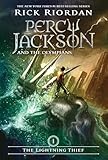
| 1 | The Lightning Thief | 2005 | Percy Jackson #1 |
| 2 | The Sea of Monsters | 2006 | Percy Jackson #2 |
| 3 | The Titan’s Curse | 2007 | Percy Jackson #3 |
| 4 | The Battle of the Labyrinth | 2008 | Percy Jackson #4 |
| 5 | The Last Olympian | 2009 | Percy Jackson #5 |
| 6 | The Red Pyramid | 2010 | Kane Chronicles #1 |
| 7 | The Lost Hero | 2010 | Heroes of Olympus #1 |
| 8 | The Son of Neptune | 2011 | Heroes of Olympus #2 |
| 9 | The Mark of Athena | 2012 | Heroes of Olympus #3 |
| 10 | The House of Hades | 2013 | Heroes of Olympus #4 |
| 11 | The Blood of Olympus | 2014 | Heroes of Olympus #5 |
Best starting point: The Lightning Thief — always and without exception.
Always Start Here: Percy Jackson and the Olympians
There is no ambiguity about where to begin. Every reader, regardless of age, regardless of familiarity with Greek mythology, starts with The Lightning Thief. This is not a soft recommendation. The entire Riordan universe builds from this foundation, and the characters introduced in this series are the emotional core of everything that follows.
Percy Jackson is twelve years old, has been expelled from every school he has attended, and has just been told that he is a half-blood — the child of a Greek god and a mortal parent. Zeus’s master lightning bolt has been stolen. Percy is accused of the theft. He has until the summer solstice to find it, or the gods go to war.
What makes the series work is Riordan’s decision to ground the mythology entirely in Percy’s voice — sardonic, self-deprecating, genuinely funny, and increasingly brave. Percy is not a chosen one who rises effortlessly to his destiny. He is a kid who is scared, who makes wrong decisions, who loses people, and who keeps going anyway. By the time the series reaches its conclusion in The Last Olympian, the reader has spent five books caring deeply about a character whose growth has been earned rather than assumed.
The five books, in order:
- The Lightning Thief (2005)
- The Sea of Monsters (2006)
- The Titan’s Curse (2007)
- The Battle of the Labyrinth (2008)
- The Last Olympian (2009)
Read all five before moving on. The series builds continuously — this is not a case where individual books stand cleanly alone. The prophecy at the heart of the series is revealed in Book 1 and resolved in Book 5, and the journey between them is the point.
The Heroes of Olympus (Read Second)
Heroes of Olympus picks up after the events of The Last Olympian and immediately complicates everything. The series opens not with Percy but with a new character — Jason Grace, a Roman demigod — waking up with no memory of who he is. The world of Camp Half-Blood, it turns out, is only half the picture. There is also Camp Jupiter, a Roman demigod encampment, and the two camps have been kept separate for very deliberate reasons.
This is the series where Riordan’s universe expands most dramatically. The cast grows from a core trio to an ensemble of seven demigods — Greek and Roman — who must work together against a threat older and stranger than anything in the Percy Jackson series. Percy remains a central character. The pleasure of seeing him through other characters’ eyes, after five books entirely from his perspective, is one of the series’ ongoing satisfactions.
Do not start here. The opening of The Lost Hero is deliberately disorienting, and its impact depends on knowing what Percy’s world looks like before a character arrives who has no knowledge of it. If you have read Percy Jackson, the tension is immediate. Without that context, it’s simply confusing.
The five books, in order:
- The Lost Hero (2010)
- The Son of Neptune (2011)
- The Mark of Athena (2012)
- The House of Hades (2013)
- The Blood of Olympus (2014)
The Mark of Athena ends on one of the most ruthless cliffhangers in YA fiction. This is noted not as a warning but as a preparation: do not begin it unless you have The House of Hades immediately available.
The Kane Chronicles (Egyptian Mythology — Standalone)
The Kane Chronicles is Riordan’s Egyptian mythology series, following Carter and Sadie Kane — siblings who discover they are descended from ancient Egyptian magicians and are drawn into a conflict involving the gods of the Egyptian pantheon. It is the most self-contained of Riordan’s major series. The Kane Chronicles characters and the Percy Jackson characters exist in the same world, but their stories run largely parallel rather than intersecting.
This series can be read after completing The Lightning Thief — there is no requirement to finish Percy Jackson or Heroes of Olympus first, though some readers prefer to read it between the two Greek mythology series. The tone is slightly different from Percy Jackson: the dual-narrator structure, alternating between Carter and Sadie’s perspectives, gives the series a texture unlike anything else in Riordan’s catalogue.
The three books, in order:
- The Red Pyramid (2010)
- The Throne of Fire (2011)
- The Serpent’s Shadow (2012)
Crossover novellas — The Son of Sobek, The Staff of Serapis, and The Crown of Ptolemy — connect the Kane Chronicles to the Percy Jackson and Heroes of Olympus universe. These short stories are worth reading after completing both the Kane Chronicles and at least the first Heroes of Olympus series.
Magnus Chase and the Gods of Asgard (Norse)
Magnus Chase and the Gods of Asgard moves into Norse mythology, following Magnus Chase — a cousin of Annabeth Chase, a character Percy Jackson readers will know well — as he navigates Valhalla, the Nine Worlds, and a looming apocalypse called Ragnarok. The series consists of three novels: The Sword of Summer (2015), The Hammer of Thor (2016), and The Ship of the Dead (2017).
This series is not currently in our catalogue, but it is widely available and sits comfortably in the Riordan universe. The connection to Annabeth Chase provides a meaningful link to the Greek mythology series, and Magnus Chase as a protagonist brings a different sensibility than Percy — more deadpan, more accustomed to hardship, and quicker to accept the absurdity of his situation. The series can be read after completing the original Percy Jackson series, though familiarity with Heroes of Olympus enriches the Annabeth appearances.
The Trials of Apollo
The Trials of Apollo is Riordan’s most ambitious series — and the one that requires the most prior reading. The premise is that Apollo, the god of the sun, has been cast out of Olympus by Zeus and forced to live as an ordinary mortal teenager named Lester Papadopoulos, stripped of his divine powers and tasked with restoring a series of ancient Oracles before he can return to godhood.
What makes this series distinct is its perspective: Apollo is an adult consciousness trapped in a teenage body, which gives Riordan’s characteristic humour an extra dimension. Apollo’s self-regard, his gradual and reluctant growth into something resembling humility, and his deepening understanding of what mortality actually costs — these are themes that require the full weight of five series worth of context to land properly.
Do not start here. Familiar characters from both Percy Jackson and Heroes of Olympus appear throughout, and their situations in Trials of Apollo are consequences of events in the earlier series. A reader arriving without that context will understand what happens; they will not feel what it means.
The five books, in order: The Hidden Oracle (2016), The Dark Prophecy (2017), The Burning Maze (2018), The Tyrant’s Tomb (2019), and The Tower of Nero (2020). These books are not currently in our catalogue but are widely available.
The Full Recommended Reading Order
For readers who want a single consolidated sequence, this is the recommended order:
- Percy Jackson and the Olympians — all five books
- The Kane Chronicles — all three books (can be read here or between steps 1 and 3)
- The Heroes of Olympus — all five books
- The Kane Chronicles crossover novellas — The Son of Sobek, The Staff of Serapis, The Crown of Ptolemy
- Magnus Chase and the Gods of Asgard — all three books
- The Trials of Apollo — all five books
- The Sun and the Star (2023) — co-written with Mark Oshiro; focuses on Nico di Angelo and Will Solace
- The Chalice of the Gods (2023) — Percy Jackson in high school, preparing for college
The Kane Chronicles can be slotted in at step 2 or read concurrently with Heroes of Olympus without issue. Everything else should follow the sequence above.
What About the Disney+ Series?
The Disney+ Percy Jackson and the Olympians series — which premiered in December 2023 — adapts the original five Percy Jackson novels, one per season. Rick Riordan co-wrote the scripts and was closely involved in production, having been excluded from the 2010 and 2013 film adaptations in ways he has spoken about publicly. He has been vocal in his support for the television series as the faithful version of his work that the films were not.
The show is an excellent adaptation. It is also, for new readers, exactly the right direction to go: if you watched the series and want more, start with The Lightning Thief. The books provide substantially more depth on the mythology, more time with supporting characters, and the full interior life of Percy’s narration that necessarily gets compressed on screen. Five seasons of television, if the series runs to completion, will cover the same ground as five novels — but the novels were there first, and they remain the richer experience.
For readers who encountered the earlier 20th Century Fox films — Percy Jackson & the Olympians: The Lightning Thief (2010) and Percy Jackson: Sea of Monsters (2013) — the television series and books represent a clean break. The films took significant liberties with the source material and aged out several years from the characters. The books and the Disney+ series restore Percy to twelve years old, which is where the story belongs.
Where to Begin: The Practical Answer
If you have read nothing by Riordan and want a single answer: start with The Lightning Thief. It is one of the most effective opening novels in children’s fantasy — fast, funny, emotionally honest, and constructed with the confidence of a writer who knew exactly what story he was telling. Most readers finish it in two or three sittings and immediately reach for The Sea of Monsters.
The universe Riordan built from that starting point — thirty-plus novels, multiple mythologies, characters who have grown up across a decade of publishing — is the most sustained achievement in mythology-based fiction for young readers. The reading order matters, but it also isn’t complicated. Start at the beginning, follow each series to its end, and let the universe expand around you at the pace Riordan intended.
For the Best Fantasy Books
For the definitive guide to fantasy fiction — from Tolkien and Le Guin to Brandon Sanderson and George R.R. Martin — see our Best Fantasy Books of All Time list.
More YA and Fantasy Reading Guides
- Books Like Percy Jackson: Best Greek Mythology Adventure Series
- Harry Potter vs Percy Jackson: Which Series to Read First?
Also Recommended
For the full Rick Riordan bibliography, reviews, and biography, visit the Rick Riordan author page on Editors Reads.
Affiliate disclosure: Links on this site are affiliate links. We earn a small commission at no extra cost to you. This does not influence our editorial recommendations.
Frequently Asked Questions
What order should I read Rick Riordan books?
Start with Percy Jackson and the Lightning Thief — always. The original five Percy Jackson books come first. After completing Percy Jackson, read The Heroes of Olympus (starting with The Lost Hero). The Kane Chronicles can be read any time after Percy Jackson Book 1, as it's a separate Egyptian mythology series.
Do Rick Riordan's different series connect?
Yes, significantly. Percy Jackson characters appear in Heroes of Olympus. The Trials of Apollo connects to both Percy Jackson and Heroes of Olympus. The Kane Chronicles and Magnus Chase series are mostly separate but crossover novellas exist. Reading Percy Jackson first is essential.
Is the new Percy Jackson TV series based on the books?
Yes — the Disney+ Percy Jackson and the Olympians series adapts the original five books. Rick Riordan was closely involved in production and has praised it as the faithful adaptation the films were not. Each season covers one book.
How many Rick Riordan books are there?
Rick Riordan has written over 30 books in the Camp Half-Blood universe and related mythologies: 5 Percy Jackson, 5 Heroes of Olympus, 3 Kane Chronicles, 3 Magnus Chase, 5 Trials of Apollo, plus The Sun and the Star, The Chalice of the Gods, and numerous crossover novellas.