Gone Girl vs The Silent Patient: Which Wins?
Two unreliable narrators, two genre-defining twists, one question: which should you read first? A close comparison of Gone Girl and The Silent Patient.

When Gone Girl was published in 2012, it did not merely become a bestseller — it changed what readers expected from a psychological thriller. Gillian Flynn’s third novel demonstrated that the genre could carry genuine literary ambition, that an unreliable narrator could be deployed as both a thriller mechanism and a vehicle for cultural commentary, and that an ending could be deeply unsatisfying in the most satisfying way imaginable. The book sold over 20 million copies and generated a David Fincher film.
Seven years later, The Silent Patient arrived and did something that rarely happens in publishing: it found a new audience for the same essential pleasures and made them feel fresh. Alex Michaelides’s debut spent more than a year on the New York Times bestseller list and reminded the genre — which had spent the intervening years producing diminishing returns on the Flynn formula — that the unreliable narrator could still produce genuine shock.
If you have not read both, the question is not whether to read them. It is which to read first.
Quick Comparison
| Gone Girl | The Silent Patient | |
|---|---|---|
| Author | Gillian Flynn | Alex Michaelides |
| Year | 2012 | 2019 |
| Narrator | Dual: Nick and Amy (both unreliable) | Single: Theo Faber (unreliable) |
| Twist Quality | Mid-book; reframes the entire narrative | Final page; retroactively rewrites everything |
| Tone | Savage, satirical, darkly funny | Clinical, precise, methodically tense |
| Pacing | Builds slowly; rewards the patient reader | Propulsive; difficult to put down |
| Re-readability | Exceptional — doubles as a different novel | High — clues become visible; some scenes strain |
| Literary Ambition | High — social commentary throughout | Moderate — Greek tragedy scaffolding, efficient prose |
Gone Girl: What Makes It Work
Gone Girl opens on the morning of Nick and Amy Dunne’s fifth wedding anniversary. Nick comes home to find Amy missing and signs of a struggle. Within hours, he is the primary suspect in his wife’s disappearance. So far, so familiar.
What Flynn does with this premise is structurally audacious. The novel runs on two tracks: Nick’s present-tense chapters as the investigation closes in on him, and Amy’s diary entries, moving forward from the beginning of their relationship. We read two accounts of the same marriage. They do not match. The reader, positioned between them, tries to resolve the contradiction — and cannot, because both narrators are lying, but in different directions, about different things.
The mid-book revelation is one of thriller fiction’s great coups. Flynn earns it honestly: the clues are present, the logic holds, and the reader’s own assumptions about genre conventions — about who the victim is, about the nature of first-person narration — are weaponised against them. What follows in the second half is something rarer: a thriller that maintains and escalates its tension after the mystery is technically solved, because the question shifts from what happened to what is going to happen to what kind of book is this, actually.
The Cool Girl monologue — Amy’s analysis of the performance women undertake to be palatable to men — became a cultural artefact the moment it was published. It has been quoted in feminist essays, deployed in Twitter arguments, and read aloud at book clubs worldwide. What makes it work as more than a set piece is that Flynn does not position it as straightforwardly admirable: Amy’s insight is real, her fury is legitimate, and she is also a person doing terrible things for reasons that include that insight and that fury. Flynn refuses to resolve the tension between those facts. That refusal is what makes Gone Girl a serious novel rather than a clever thriller.
Nick, the other narrator, is a less showy creation but an equally precise one. Flynn writes from inside the specific self-justifications of a man who has deceived himself so thoroughly that his lies have the texture of truth. His sections are less immediately gripping than Amy’s, but they are the structural foundation on which Amy’s performance depends.
The media satire — the cable news coverage, the talking heads, the performance of the grieving husband for cameras — was acute in 2012 and has become more so in the decade since. Flynn understood before most that public narrative and actual events had separated entirely, and that the gap between them was exploitable.
The Silent Patient: What Makes It Work
The Silent Patient opens with a fact: Alicia Berenson, a celebrated painter, shot her fashion photographer husband Gabriel five times in the face and has not spoken a single word since. She is confined to the Grove, a secure psychiatric unit in North London. Everyone wants to know why. Alicia is not saying.
The device is deceptively simple and enormously effective. A silent protagonist removes the possibility of direct unreliable narration from the novel’s most mysterious figure. We cannot hear Alicia’s version of events. We hear instead from Theo Faber, the forensic psychotherapist who has maneuvered himself into a position at the Grove specifically to treat her — because he believes she is trying to communicate something, and he believes he can unlock it.
Theo is a compelling narrator precisely because he is so certain of his own objectivity. He is a therapist; he understands projection, transference, the way patients replicate past wounds in present relationships. He applies all of this knowledge to Alicia with practiced precision. He does not apply it to himself. This is, of course, the point — but Michaelides calibrates the gap between what Theo tells us and what is actually happening with considerable skill. The reader assembles a picture that is correct in its details and wrong in its frame.
The Greek tragedy scaffolding is one of the novel’s more elegant structural choices. Alicia’s last painting before the shooting is called Alcestis — a reference to the myth of the woman who returns from death — and Michaelides, who studied at Cambridge, uses the mythological parallel as more than decoration. The Alcestis parallel connects directly to the novel’s final revelation about sacrifice, obsession, and what love looks like when it has curdled into something else.
The psychiatric institution setting is rendered with specificity: the ward politics, the therapeutic protocols, the administrative pressures, the way patients and staff develop their own ecosystem of dependency and power. This is not simply atmosphere. The institution matters because The Silent Patient is, at its deepest level, a novel about the people who try to fix others as a way of avoiding their own damage — and about what happens when that evasion runs out.
The twist arrives in the final pages with the force of something that was always going to happen and yet somehow did not. It belongs to the finest category of thriller twist: the kind that is fair, clued throughout, and which retroactively transforms every scene you have read rather than simply recontextualizing a final detail. On rereading, certain scenes strain believability — the mechanics of the revelation require some acceptance — but the first read is a near-perfect thriller experience.
Key Differences
Flynn’s feminist fury vs Michaelides’s Greek tragedy structure. Gone Girl is animated by rage — at marriage, at the performance of femininity, at the way media narratives construct female victims. It is a political novel wearing a thriller’s clothes, and the politics are inseparable from the mechanics. The Silent Patient has its own thematic architecture — the wounded healer, the myth of rescue — but the emotional temperature is cooler. Michaelides is more interested in the structure of obsession than in social commentary. Neither approach is superior; they produce very different reading experiences.
Pacing. The Silent Patient is the faster read. At 336 pages, it is structured like a precision instrument — no wasted movement, every chapter ending on a question that the next chapter declines to answer immediately. Gone Girl at 422 pages is more generous with digression and allows itself more time in its characters’ heads. The first third is slower. This is not a flaw; it is the foundation on which the second half depends. But readers who want to be propelled should know that Gone Girl asks for more patience in its early stages.
Re-readability. Both reward rereading, but differently. Gone Girl on a second read is essentially a different book: you read Amy’s diary entries with full knowledge of what they are and discover that Flynn has hidden extraordinary things in plain sight. The Silent Patient on reread reveals its clues, which is satisfying, but also exposes some scenes that require the reader to accept a certain amount of coincidence. Gone Girl is the more durable literary object. The Silent Patient is the better first read.
Comfort with ambiguity. Gone Girl ends without resolution in any traditional sense. The novel’s final state is deeply uncomfortable, and Flynn has said repeatedly that she intended the ending to be what it is. Some readers find this brilliant; some find it a cheat. The Silent Patient resolves more completely. The final revelation answers the novel’s central question definitively. If ambiguity unsettles you, The Silent Patient is the safer choice.
Which Should You Read First?
Read The Silent Patient first.
It is the more purely pleasurable thriller experience: faster, tighter, and engineered to produce a specific effect with maximum efficiency. If you have not been immersed in the unreliable-narrator genre before, The Silent Patient is the ideal entry point. The twist will hit hardest on a first encounter with the form.
Gone Girl is the better novel, and it will reward you more fully if you come to it with some context for what it is doing. Flynn is in conversation with genre conventions — the missing-wife thriller, the grieving-husband media narrative — and that conversation is richer if you have spent some time in the genre first. Reading The Silent Patient before Gone Girl also means you will arrive at Gone Girl’s Cool Girl monologue without the weight of its cultural ubiquity dulling the experience.
That said: if you are already a psychological thriller reader, or if the feminist subtext of Gone Girl is specifically what draws you, start there. It is one of the landmark novels of its decade, and there is a strong argument for meeting it on its own terms before anything else shapes your expectations.
Either order works. You should read both.
If You Liked These, Read Next
Sharp Objects by Gillian Flynn is her debut and in some ways her darkest work — a return to a Missouri hometown, a family with deeply buried violence, and a protagonist whose relationship with her own past is the novel’s real subject. Readers who found Gone Girl’s social commentary compelling will find this more literary, more personal, and more disturbing.
Dark Places is Flynn’s second novel and her most complex plotting achievement. Libby Day survived her family’s massacre as a child; her testimony put her brother in prison. Twenty-five years later, the past begins to unravel. The dual-timeline structure rewards the same careful reading that Gone Girl demands.
Verity by Colleen Hoover takes the unreliable-narrator device and pushes it into territory that neither Flynn nor Michaelides quite reaches. The moral ambiguity of the ending is more thoroughgoing than either book on this list. For readers who finished Gone Girl wanting something that pushes further, this is the natural next move.
Behind Closed Doors by B.A. Paris is the cold portrait of a marriage as a trap. It is less interested in mystery than in dread: the reader understands early what kind of marriage this is, and the novel’s engine is the question of whether escape is possible. The psychological control is rendered with the same ruthlessness that Flynn brings to the Cool Girl analysis.
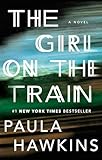
The Girl on the Train by Paula Hawkins was published three years after Gone Girl and is the most direct successor on this list — three female perspectives, none fully reliable, a missing woman, and a resolution that depends on understanding what each narrator has chosen not to say.
In the Woods by Tana French is the option for readers who want the literary quality of Gone Girl without the genre mechanics at the forefront. French is one of the finest prose writers working in crime fiction, and her debut — a Dublin detective investigating the murder of a child near the woods where he himself was traumatized as a boy — handles psychological unreliability with a seriousness that the commercial thriller rarely matches.
Frequently Asked Questions
Is Gone Girl or The Silent Patient better?
Both are exceptional psychological thrillers, but they excel in different ways. Gone Girl is the more literary novel — its prose is sharper, its social commentary richer, and Amy Dunne is one of contemporary fiction’s most unforgettable characters. The Silent Patient is the more purely pleasurable thriller ride — tighter, faster, and engineered around a twist that lands with maximum force. If you want literary ambition alongside the genre mechanics, read Gone Girl first. If you want a precision-built thriller with an extraordinary payoff, start with The Silent Patient.
Which book has the better twist ending?
This is genuinely contested. Gone Girl’s twist — the mid-book revelation of Amy’s diary — is arguably the more artistically ambitious: it reframes an entire character and forces a complete revaluation of everything you have read. The Silent Patient’s final twist is the more satisfying in purely mechanical terms: it arrives at the end, it is fairly clued throughout, and the moment of revelation hits with the clean force of a perfect thriller. Most readers who have read both say Gone Girl’s twist is cleverer; The Silent Patient’s twist is more fun.
Is Gone Girl suitable for book clubs?
Gone Girl is one of the great book club novels of its era. The Cool Girl monologue alone generates thirty minutes of discussion, and the ending — which divides readers sharply — guarantees debate. The novel raises substantive questions about marriage, performance, the media’s construction of female victimhood, and whether a character can be both a monster and a feminist icon. It rewards close reading and tolerates strong disagreement. Be aware that it contains violence and sexually explicit content.
What should I read after Gone Girl and The Silent Patient?
After both, the most natural next reads are Sharp Objects by Gillian Flynn (her darker, more literary debut), Verity by Colleen Hoover (which goes further in its moral ambiguity than either), and Behind Closed Doors by B.A. Paris (for the cold portrait of a domestic trap). If you want to stay in the unreliable-narrator thriller space, The Girl on the Train by Paula Hawkins is the third pillar of the genre’s mid-2010s peak. In the Woods by Tana French is the option for readers who want more psychological depth and literary quality.
Books Like Gone Girl
For psychological thrillers with Gone Girl’s unreliable narrator, dark marriages, and twist endings, see our Books Like Gone Girl guide.
Books Like Verity
For psychological thrillers as twisty, disturbing, and compulsive as Verity, see our Books Like Verity guide.
For the Best Thriller Books
For the definitive guide to thriller fiction — psychological thrillers, legal thrillers, and spy novels — see our Best Thriller Books of All Time list.
Affiliate disclosure: Links on this site are affiliate links. We earn a small commission at no extra cost to you. This does not influence our editorial recommendations.
Frequently Asked Questions
Is Gone Girl or The Silent Patient better?
Both are exceptional psychological thrillers, but they excel in different ways. Gone Girl is the more literary novel — its prose is sharper, its social commentary richer, and Amy Dunne is one of contemporary fiction's most unforgettable characters. The Silent Patient is the more purely pleasurable thriller ride — tighter, faster, and engineered around a twist that lands with maximum force. If you want literary ambition alongside the genre mechanics, read Gone Girl first. If you want a precision-built thriller with an extraordinary payoff, start with The Silent Patient.
Which book has the better twist ending?
This is genuinely contested. Gone Girl's twist — the mid-book revelation of Amy's diary — is arguably the more artistically ambitious: it reframes an entire character and forces a complete revaluation of everything you have read. The Silent Patient's final twist is the more satisfying in purely mechanical terms: it arrives at the end, it is fairly clued throughout, and the moment of revelation hits with the clean force of a perfect thriller. Most readers who have read both say Gone Girl's twist is cleverer; The Silent Patient's twist is more fun.
Is Gone Girl suitable for book clubs?
Gone Girl is one of the great book club novels of its era. The Cool Girl monologue alone generates thirty minutes of discussion, and the ending — which divides readers sharply — guarantees debate. The novel raises substantive questions about marriage, performance, the media's construction of female victimhood, and whether a character can be both a monster and a feminist icon. It rewards close reading and tolerates strong disagreement. Be aware that it contains violence and sexually explicit content.
What should I read after Gone Girl and The Silent Patient?
After both, the most natural next reads are Sharp Objects by Gillian Flynn (her darker, more literary debut), Verity by Colleen Hoover (which goes further in its moral ambiguity than either), and Behind Closed Doors by B.A. Paris (for the cold portrait of a domestic trap). If you want to stay in the unreliable-narrator thriller space, The Girl on the Train by Paula Hawkins is the third pillar of the genre's mid-2010s peak. In the Woods by Tana French is the option for readers who want more psychological depth and literary quality.