Books Like Verity: 11 Dark, Twisty Thrillers
If Verity's manuscript-within-a-novel and unreliable narration left you shaken, these dark romantic thrillers deliver the same punch.

Colleen Hoover’s Verity is one of the rare novels that operates in two genres simultaneously and delivers on the promises of both. On its surface, it is a dark psychological thriller built around a found manuscript — ghostwriter Lowen Ashleigh travels to the Crawford estate to complete a bestselling series and discovers what appears to be a confessional autobiography by the incapacitated author Verity Crawford, detailing crimes that no one else knows about. Underneath that thriller structure is a genuine romance between Lowen and Verity’s husband Jeremy, one that Hoover writes with the same heat and emotional honesty she brings to her purely romantic novels. The result is a book that makes readers feel uncomfortable about which story they want to be true.
What distinguishes Verity within the thriller genre is the manuscript-within-a-novel device and the way Hoover uses it to make the reader complicit in the uncertainty. Lowen — and by extension the reader — is never given firm footing. The documents she finds are as potentially authored as the novel surrounding them. The ending, in which two mutually contradictory pieces of evidence are presented, refuses resolution in a way that is deliberate and structurally earned rather than evasive. This places Verity in the tradition of Gone Girl — dark marriages, controlled deception, narrators who may be performing their own stories — while adding a romantic investment that Flynn tends to strip away.
The books below are organized around what readers tend to respond to most strongly in Verity: the reframing twist, the dark-romance pairing, and the unreliable narrator who may be a victim or a monster. Not all of them share every quality, but each delivers at least one of the things that make Verity so difficult to put down and so difficult to forget.
Twists That Reframe Everything
#1 — The Silent Patient by Alex Michaelides
Alicia Berenson shot her husband five times and has not spoken since. Criminal psychotherapist Theo Faber has spent years trying to treat her, convinced she is trying to communicate something. The Silent Patient builds to a single enormous twist that retroactively reframes the entire novel — the reader realizes they have been watching the wrong character with the wrong assumptions. Michaelides earns the comparison to Hoover: both authors plant their clues with precision, and both depend on the reader trusting a narrator who is controlling the shape of the story. The diary-as-document device is a direct parallel to Verity’s manuscript structure.
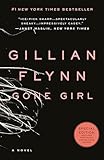
#2 — Gone Girl by Gillian Flynn
The most direct antecedent to Verity in contemporary fiction. Nick and Amy Dunne tell incompatible versions of their marriage and Amy’s disappearance, and the mid-book revelation remains one of the most discussed plot turns of the past twenty years. Flynn’s portrait of a marriage as a performance — both parties constructing public selves with strategic precision — is exactly the territory Hoover occupies in Verity. The dark humor and the refusal to make either narrator sympathetic are different in register from Hoover’s approach, but readers who loved one tend to find the other essential.
#3 — The Last Thing He Told Me by Laura Dave
Hannah’s husband Owen disappears the day his tech company is exposed as a fraud, leaving behind only a note that reads “Protect her” — a reference to Hannah’s stepdaughter Bailey. What follows is a thriller about a woman dismantling the carefully constructed false identity of the man she thought she knew, racing through his past before whoever is after him finds her first. Dave writes the romance inside the thriller with unusual care: the relationship between Hannah and Owen is real and affecting, which makes the process of discovering who he actually was feel like genuine loss rather than plot mechanics. Strongly recommended for readers who responded to the emotional core of Verity.
#4 — The It Girl by Ruth Ware
Ten years after her glamorous college roommate April was murdered and a college porter convicted of the crime, Hannah learns the convicted man died in prison — still proclaiming his innocence. Ware builds the novel around recovered testimony, old diaries, and Hannah’s increasingly unreliable memory of who April actually was beneath the charisma. The document-and-testimony structure mirrors Verity’s manuscript device, and the central question — whether the woman everyone loved and idealized was something else entirely — runs parallel to the uncertainty Hoover generates around Verity Crawford. Ware is one of the more controlled prose stylists working in domestic suspense.
Dark Romance Under Pressure
#5 — Behind Closed Doors by B.A. Paris
Jack and Grace Angel have everything: the perfect house, the perfect marriage, the perfect social life. The truth of what goes on behind closed doors is established relatively early, and Paris’s engine is dread rather than mystery — the question is not what is happening but whether Grace will find a way out. The novel is a rigorous examination of psychological control and the gap between a relationship’s public performance and its private reality, which is precisely Verity’s subject. Paris writes with the same methodical pressure that Hoover applies, and the result is a novel that generates genuine discomfort.
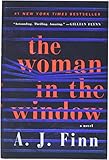
#6 — The Woman in the Window by A.J. Finn
Anna Fox has agoraphobia and hasn’t left her New York apartment in months. She watches her neighbors from her window until she witnesses something she cannot explain and no one else believes. Finn’s novel wears its Hitchcock influences openly and delivers a narrator whose unreliability is pathological — her perception is genuinely compromised, and the reader can never be certain what she is seeing accurately. The dark romantic subplot and the revelation of what is actually happening in the house across the street both resolve in ways that readers who responded to Verity’s claustrophobic dread will find satisfying.
#7 — Local Woman Missing by Mary Kubica
A woman goes missing from a quiet suburb, then a child disappears — and then, eleven years later, a girl matching the child’s description reappears. Kubica constructs the novel across two timelines and multiple perspectives, each narrator in possession of a fragment of the truth. The romantic relationships at the heart of the story are systematically dismantled as the investigation proceeds, revealing how completely people can misread the people closest to them. Kubica’s handling of fractured timelines and the gap between domestic surface and domestic reality is closely aligned with Hoover’s approach in Verity.
Unreliable Narrators and What They’re Hiding
#8 — Sharp Objects by Gillian Flynn
Flynn’s debut novel follows reporter Camille Preaker as she returns to her Missouri hometown to cover the murder of two young girls and confronts a childhood she has never fully processed. Camille is among the most fully realized unreliable narrators in contemporary fiction — not because she lies to the reader, but because she is so damaged that her account of events is filtered through layers of denial, dissociation, and self-destruction. The mother-daughter dynamic at the heart of the novel, and the horror that gradually surfaces from beneath a surface of Southern propriety, shares Verity’s preoccupation with what women will conceal to protect a version of themselves and their families.
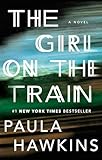
#9 — The Girl on the Train by Paula Hawkins
Rachel watches a couple in a house along her commuter route every day — a couple who seem to have everything she lost. When the woman disappears, Rachel inserts herself into the investigation despite having no reliable memory of the night in question. Hawkins builds three female perspectives, each withholding something, and the truth about what happened depends on understanding what each narrator has chosen not to say and why. The novel shares Verity’s interest in women who are both victims and agents, and the marital dynamics Hawkins draws — the performance of the perfect couple, the violence concealed inside it — are very close to Hoover’s territory.
#10 — In a Dark, Dark Wood by Ruth Ware
Nora is invited to the hen party of an old school friend she hasn’t spoken to in years. She doesn’t understand why she was invited. She goes anyway. Ware opens with Nora in hospital with no memory of the weekend, then rewinds through events at a remote house in the woods. The social dynamics of old relationships, the architecture of secrets between people who were once close, and the gradual revelation of what Nora cannot remember make this one of the more controlled psychological thrillers of the past decade. Ware’s spare, pressurized prose is well suited to readers who responded to Verity’s increasing sense of confinement.
#11 — Lying in Wait by Liz Nugent
Andrew Fitzsimmons brings a young woman home — and she does not leave alive. Nugent then builds a portrait of the Fitzsimmons family from three perspectives, none of them fully reliable, all of them implicated. The novel is Irish noir at its coldest: the meticulous performance of respectability, the violence beneath a comfortable surface, and the way families construct shared fictions to protect the thing they cannot admit. Nugent goes further into darkness than Hoover typically does, but readers who found Verity’s exploration of what a family will conceal genuinely unsettling will find this one of the most effective books on this list.
How to Choose Your Next Read
If you want the closest structural match to the manuscript device: The Silent Patient or The It Girl.
If you want the romance inside the thriller: The Last Thing He Told Me or Behind Closed Doors.
If you want more unreliable narration in the Flynn tradition: Gone Girl or Sharp Objects.
If you want the darkest option on the list: Lying in Wait.
If you want more Colleen Hoover: It Ends with Us explores similarly difficult territory inside a relationship, with the same emotional directness and refusal to look away.
The Silent Patient vs Verity
For a comparison of The Silent Patient and Colleen Hoover’s Verity — two of the most-discussed psychological thrillers of the past decade — see our The Silent Patient vs Verity guide.
For the Best Thriller Books
For the definitive guide to thriller fiction — psychological thrillers, legal thrillers, and spy novels — see our Best Thriller Books of All Time list.
Affiliate disclosure: Links to Amazon on this page are affiliate links. We earn a small commission at no extra cost to you. This does not influence our editorial recommendations.
Frequently Asked Questions
What should I read after Verity?
The best next reads after Verity depend on what you loved most. For the unreliable narrator and dark-marriage dynamics, try Gone Girl by Gillian Flynn or The Silent Patient by Alex Michaelides. For the romance-thriller hybrid feel, The Last Thing He Told Me by Laura Dave or Behind Closed Doors by B.A. Paris work well. If you want more Colleen Hoover, It Ends with Us explores similarly difficult relationship territory, though with a different tone.
Is the ending of Verity ambiguous — which version is true?
Colleen Hoover has stated that she intentionally left the ending open to interpretation and that both readings of Verity Crawford's character are valid within the text. The two documents — the manuscript and the letter — are mutually contradictory, and the novel provides enough evidence for either conclusion. Whether Verity is a calculating villain or a trauma survivor writing dark fiction as a coping mechanism is a question the author wants readers to answer for themselves. This deliberate ambiguity is the point of the book, not a loose end.
Are there other books that use a manuscript-within-a-story device like Verity?
The manuscript-within-a-novel structure Hoover uses in Verity is relatively rare in popular fiction. The closest comparisons are The It Girl by Ruth Ware, which is built around recovered testimony and documents, and The Silent Patient by Alex Michaelides, which uses diary entries as a hidden confession device. For a literary antecedent, Nabokov's Pale Fire uses an embedded document to completely destabilize the reader's understanding of the narrator. In domestic thriller terms, Behind Closed Doors by B.A. Paris and Local Woman Missing by Mary Kubica both use fragmentary or shifted timelines that produce a similar disorienting effect.
What makes Verity different from other psychological thrillers?
Verity sits at the intersection of dark romance and psychological thriller in a way that most genre fiction avoids. The romantic tension between Lowen and Jeremy is genuine and sustained, not just a plot mechanism — which makes the mounting dread about Verity herself far more uncomfortable. Most psychological thrillers prioritize mystery over emotional investment in the central relationship. Hoover builds both simultaneously, so readers are genuinely torn between wanting Lowen and Jeremy to work and needing to know the truth about what happened in that house.