Books Like The Nightingale: 11 Powerful WWII Novels
If The Nightingale moved you with its portrait of women in occupied France, these WWII novels deliver the same emotional depth and courage.
Kristin Hannah’s The Nightingale is structured around a question that the novel answers only at its very end: which of the two Rossignol sisters is telling this story. Vianne stays behind in occupied Carriveau, billeting German officers in her home, watching her neighbours denounced and deported, trying to keep her daughter alive without becoming either a collaborator or a corpse. Isabelle escapes to Paris and joins the Resistance, eventually guiding downed Allied airmen through the Pyrenees on foot in winter. Hannah does not rank these acts of courage against each other — she insists that both require everything their protagonists have, that survival and resistance are not opposites but different expressions of the same refusal.
What the novel does exceptionally well, beyond its propulsive plot, is its portrait of how war reshapes women who are given no official role in it. Vianne and Isabelle are not soldiers or spies in any formal sense. They are a schoolteacher and a headstrong twenty-year-old who make daily decisions — whether to look away, whether to act, whether to risk everyone they love — in a world that has been reorganised around their destruction. The books below share this territory: war experienced from the ground up, by people for whom the front is not a place they go but a condition that has come to find them.
WWII Novels With Women at the Centre
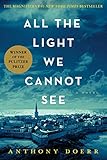
#1 — All the Light We Cannot See by Anthony Doerr
Two parallel narratives move toward each other across occupied Europe: Marie-Laure, a blind French girl who has memorised the streets of Saint-Malo and carries a diamond her father may have stolen from the Natural History Museum, and Werner, a German orphan conscripted into the Wehrmacht for his talent with radios. Doerr won the Pulitzer Prize for this novel, and the prose is among the most careful in contemporary historical fiction — each short chapter is almost a prose poem, building an enormous emotional architecture through accumulation. The moral weight given to ordinary people caught inside a machine they did not build is exactly the territory Hannah works in.
#2 — The Alice Network by Kate Quinn
Two timelines: 1915, when a young Englishwoman named Eve Gardiner is recruited as a spy for a real Allied intelligence network operating in occupied France, and 1947, when a young American named Charlie St. Clair arrives in Europe looking for her cousin who disappeared during the war and falls in with the now-damaged and alcoholic Eve. Quinn cuts between these timelines with precision, and the depiction of female spies operating under occupation — the specific dangers, the specific betrayals, the price paid by women who took on roles the official war record barely documents — makes this the most direct companion to The Nightingale on this list.
#3 — The Rose Code by Kate Quinn
Three women work as codebreakers at Bletchley Park during the Second World War — Osla, a glamorous socialite with a secret link to royalty; Mab, a working-class woman determined to escape her origins; and Beth, shy and brilliant and completely transformed by the work. Quinn shows Bletchley with the same care she brings to the Alice Network: the actual intellectual labour of codebreaking, the class dynamics, and the way these women were required to carry secrets that shaped the war while receiving almost no public credit. The friendships and betrayals between the three protagonists give the novel Hannah’s same emotional drive.
#4 — We Were the Lucky Ones by Georgia Hunter
A Polish Jewish family is scattered across Europe and beyond by the war — to Siberia, Brazil, Palestine, France, and the German camps — and the novel follows each of their separate journeys with the aim of showing how they survive and whether they find each other again. Hunter based the book on her own family’s history, and that origin gives it a texture that purely invented narratives sometimes lack. The emotional core is the same as The Nightingale: the war as something that arrives in the middle of ordinary life and demands responses that no one is prepared for.
Literary War Fiction
#5 — Atonement by Ian McEwan
Thirteen-year-old Briony Tallis witnesses something between her older sister Cecilia and Cecilia’s childhood friend Robbie Turner and misinterprets it catastrophically. Her accusation destroys two lives, and the second half of the novel follows Robbie through the retreat to Dunkirk and Cecilia into wartime nursing, while the third section complicates everything that came before. McEwan is examining how storytelling itself can be a form of violence — how the stories we tell about what we have seen can be self-serving fictions dressed as truth. It is a more formally demanding novel than The Nightingale, but shares its concern with the damage done to ordinary people by forces larger than themselves.
#6 — Birdsong by Sebastian Faulks
Stephen Wraysford arrives in northern France before the First World War as a young man having an affair with his host’s wife; he returns years later as an officer in the trenches, commanding men in conditions that Faulks depicts with unsparing physical detail. The novel moves between Stephen’s pre-war story and the letters of his granddaughter researching his life decades later. Birdsong is the war novel most focused on what the experience of combat actually destroys — not just lives, but the capacity for feeling — and it earns its reputation as one of the definitive literary treatments of men under fire. Readers who want the literary register of The Nightingale but applied to the First World War will find this essential.
#7 — All Quiet on the Western Front by Erich Maria Remarque
Paul Bäumer enlists with his classmates in the German army in 1914, full of the patriotic rhetoric their teacher has fed them, and discovers within weeks what war is actually made of. Remarque’s 1929 novel remains the definitive anti-war novel in the European tradition — not because it argues a political case, but because it renders, in plain prose, the systematic destruction of an entire generation’s inner life. Unlike The Nightingale, this is a novel without a domestic counterpart: there is no home to return to, because the war has made home unimaginable. It belongs on this list because it asks the same question Hannah asks, from the other side of the line: what does a person become, and what do they lose, when survival is the only goal.
Historical Sagas with the Same Emotional Weight
#8 — A Thousand Splendid Suns by Khaled Hosseini
Mariam is an illegitimate child raised in isolation outside Herat; Laila grows up in Kabul during the Soviet occupation. The novel spans three decades of Afghan history — the Soviet war, the civil war, the Taliban — and follows these two women as their lives become entangled through a marriage neither chose. Hosseini’s concern is with women whose choices are circumscribed by laws and customs designed to make them invisible, and who find in each other a loyalty and resourcefulness that becomes its own form of resistance. The emotional architecture is very close to The Nightingale: two women, very different circumstances, the same refusal to disappear.
#9 — Fall of Giants by Ken Follett
The first novel in Follett’s Century Trilogy, Fall of Giants follows five families — British, American, Russian, German, and Welsh — through the First World War and the Russian Revolution. This is a large-canvas historical novel in the tradition of Tolstoy: sweeping, populated, designed to show the war from every angle simultaneously. Follett’s female characters — Ethel Williams, the Welsh maid who becomes a suffragette and labour organiser; Maud, the aristocrat who marries a German diplomat and is separated from him by the war — carry as much weight as the men, and the novel shares The Nightingale’s interest in the domestic consequences of geopolitical catastrophe.
More Kristin Hannah
#10 — Winter Garden by Kristin Hannah
Nina and Meredith Whitson have never understood their distant, cold Russian mother Anya. When their father is dying, he asks them to persuade her to finally finish a fairy tale she began telling them as children — a story that turns out to be the hidden account of her own survival during the Siege of Leningrad. Winter Garden is Hannah working the same territory as The Nightingale: two sisters, a mother’s wartime secrets, the gap between what is survivable and what can be spoken aloud. Readers who want more of what The Nightingale does should start here.
#11 — The Women by Kristin Hannah
Frances McGrath enlists as an Army nurse in Vietnam in 1966, following her brother into a war she barely understands. The novel follows her through her tours, through what she sees and does, and then through her return to an America that does not know how to receive women veterans and prefers, on balance, not to acknowledge they existed. Hannah is doing in The Women what she did in The Nightingale: insisting on the military and moral contributions of women that official history has consistently minimised or erased. The subject is different, but the argument is identical.
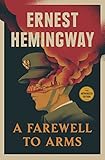
#12 — A Farewell to Arms by Ernest Hemingway
Frederic Henry, an American serving as an ambulance officer in the Italian army during the First World War, falls in love with an English nurse named Catherine Barkley. Hemingway’s prose is as stripped as Hannah’s is full — where Hannah renders emotion directly, Hemingway refuses to name it, building it instead from the pressure of what his sentences leave out. The novel belongs here not because it resembles The Nightingale in style but because it shares its essential claim: that war destroys the specific things — people, futures, ordinary happiness — that make life worth living. Catherine Barkley, like Vianne and Isabelle, pays a price that no military accounting ever records.
How to Choose Your Next Read
If you want the closest match to The Nightingale’s female Resistance focus: The Alice Network by Kate Quinn.
If you want another Kristin Hannah novel: Winter Garden first, then The Women.
If you want the most celebrated literary WWII novel: All the Light We Cannot See.
If you want the widest emotional scope: We Were the Lucky Ones or Fall of Giants.
If you want the literary tradition behind the genre: Atonement or Birdsong.
Kristin Hannah Books in Order
For every Kristin Hannah novel in order — from The Nightingale to The Women and beyond — see our Kristin Hannah Books in Order guide.
For the Best Historical Fiction
For the definitive guide to historical fiction — from Ken Follett and Hilary Mantel to Kristin Hannah and Anthony Doerr — see our Best Historical Fiction Books list.
More WWII Fiction Reading Guides
- Books Like All the Light We Cannot See: WWII Fiction
- Books Like The Book Thief: WWII, Childhood, and Story
Affiliate disclosure: Links to Amazon on this page are affiliate links. We earn a small commission at no extra cost to you. This does not influence our editorial recommendations.
Frequently Asked Questions
What should I read after The Nightingale?
After The Nightingale, the most natural next reads are All the Light We Cannot See by Anthony Doerr for another beautifully written WWII novel with dual perspectives, The Alice Network by Kate Quinn for a female resistance operative in wartime France, and Winter Garden by Kristin Hannah for the same emotional intensity applied to a Russian family shaped by wartime secrets.
What other books has Kristin Hannah written that are similar to The Nightingale?
Kristin Hannah's closest books to The Nightingale are Winter Garden, which follows two sisters discovering their mother's hidden past during the Siege of Leningrad, The Four Winds, which applies her same emotional sweep to the Dust Bowl and the Great Depression, and The Women, which centres on a female Vietnam War nurse returning home to a country that barely acknowledges her service.
What are the best WWII novels told from women's perspectives?
The best WWII novels from women's perspectives include The Nightingale by Kristin Hannah, The Alice Network and The Rose Code by Kate Quinn, We Were the Lucky Ones by Georgia Hunter, and All the Light We Cannot See by Anthony Doerr, which gives substantial weight to a young blind French woman navigating occupied Saint-Malo. Each approaches the war through the lives of women who had no formal military role but whose choices under occupation were just as consequential.
Is The Nightingale based on a true story?
The Nightingale is fiction, but it is grounded in documented history. The character of Isabelle is inspired in part by real young women who guided Allied airmen across the Pyrenees through escape lines like the Comet Line. The Belgian resistance operative Andrée de Jongh, who personally escorted over a hundred airmen, is among the historical figures whose courage Kristin Hannah drew on. The novel's depiction of occupied France — the curfews, the requisitions, the collaboration and resistance — is closely researched.