Books Like The Name of the Rose: Medieval Mysteries
Umberto Eco's William of Baskerville investigates a series of deaths in a 14th-century Italian monastery that houses a legendary library. These books share its intellectual pleasure, its historical depth, and its meditation on reading, knowledge, and the books that were hidden or destroyed.

Umberto Eco published The Name of the Rose in 1980, and the book did something that academic critics said was impossible: it sold millions of copies while engaging seriously with medieval theology, semiotics, and the philosophy of language. The plot is a detective story — Franciscan friar William of Baskerville investigates a series of deaths in a Benedictine abbey that houses one of the greatest libraries in Christendom — but the novel underneath the plot is a meditation on reading, interpretation, and the violence that is done when one authority claims the right to determine what may be known.
The abbey’s library is the novel’s governing image: a labyrinth of locked rooms and cryptic markers, where the most dangerous books are hidden deepest and the path to them is itself a test. Eco’s insight is that the library is not a neutral repository but a political structure — that every decision about which books to preserve, which to destroy, and which to lock away is an act of power over what the future will be permitted to think. The murders are about that power, and the mystery’s solution is inseparable from its argument about knowledge.
The books below were chosen for readers who responded to that intellectual ambition — who want their historical fiction to think, who are drawn to the library as both setting and symbol, and who can follow an investigation that is as much about ideas as about events. They are grouped by what they share most directly with Eco’s novel, from his own later work to historical mysteries and bibliophile fiction that shares the conviction that books are worth dying for.
Books Like The Name of the Rose at a Glance
| # | Book | Author | Why it’s like it |
|---|---|---|---|
| 1 | Foucault’s Pendulum | Umberto Eco | Eco’s labyrinth of interpretation for the modern age |
| 2 | The Prague Cemetery | Umberto Eco | How poisonous ideas are forged — Eco’s darkest novel |
| 3 | The Pillars of the Earth | Ken Follett | The medieval world with more story, less philosophy |
| 4 | The Cadfael Chronicles | Ellis Peters | Christie in a habit: cozy monastic detection |
| 5 | An Instance of the Fingerpost | Iain Pears | Four unreliable narrators and the birth of science |
| 6 | The Shadow of the Wind | Carlos Ruiz Zafón | The library-as-labyrinth in Gothic Barcelona |
| 7 | Possession | A.S. Byatt | A literary archive treasure hunt |
| 8 | The Da Vinci Code | Dan Brown | The popular version of Eco’s hidden-knowledge thesis |
| 9 | The Club Dumas | Arturo Pérez-Reverte | Pure bibliophile mystery and rare-book obsession |
Eco and the Intellectual Mystery
#1 — Foucault’s Pendulum by Umberto Eco
Three editors at a Milan publishing house — Casaubon, Belbo, and Diotallevi — read so many occultist manuscripts that they begin constructing their own conspiracy theory as a game, linking the Knights Templar to every significant event in Western history. Then the game begins to feel real. Eco’s second novel is The Name of the Rose for the contemporary world: the same conviction that interpretation can become its own trap, the same labyrinthine accretion of knowledge, but without the detective scaffolding to orient the reader. More demanding and more disorienting than the first novel, and the ending is genuinely dark. Essential for readers who want to follow Eco all the way.
#2 — The Prague Cemetery by Umberto Eco
Simone Simonini is a forger in 19th-century Europe who is commissioned to produce, and keeps producing, the anti-Semitic documents that will eventually become The Protocols of the Elders of Zion. Eco’s fourth novel is his most disturbing: a historical conspiracy thriller that traces the manufacture of one of history’s most poisonous texts through a narrator who is monstrously unreliable and entirely without redeeming qualities. Where The Name of the Rose asks who controls knowledge, The Prague Cemetery asks how false knowledge is fabricated and how it spreads. Not for every reader, but for those who want to understand the violence that ideas can do, this is Eco’s most forensic work.
Medieval and Historical Mysteries
#3 — The Pillars of the Earth by Ken Follett
Tom Builder wants to build a cathedral. Around that ambition, Follett constructs an epic of 12th-century England: the political chaos after Henry I’s death, the church politics that shape who gets to build and where, the violence that attends every act of creation in a world without law. The Pillars of the Earth shares The Name of the Rose’s period and its conviction that the medieval world is a serious subject for serious fiction, but it is more accessible and more narratively driven. Where Eco’s abbey is a sealed world, Follett’s England is an entire society in motion. For readers who want the period with more story.
#4 — The Cadfael Chronicles by Ellis Peters
Brother Cadfael is a Benedictine monk in 12th-century Shrewsbury who grew up as a soldier and a Crusader before taking his vows — which means he has a practical understanding of violence, medicine, and human nature that makes him an effective detective. Peters’s long series of novels is Christie in a habit: closed communities, limited suspects, careful reasoning from evidence, and a detective whose personal history gives him access to a world wider than his monastery. Cadfael is a more comfortable companion than William of Baskerville, and the series is less philosophically demanding, but it delivers the same pleasure of a brilliant mind working through a medieval problem.
#5 — An Instance of the Fingerpost by Iain Pears
A young woman named Sarah Blundy is tried for murder in 17th-century Oxford. Four men — a young Italian traveler, an English physician, a mathematician, and a government agent — each tell the story of what happened, and their accounts contradict each other completely. Pears’s novel is the most structurally sophisticated historical mystery on this list: the multiple unreliable narrators make the truth of what happened genuinely uncertain, and the novel is as much about epistemology — how we know what we know, whether knowledge is even possible — as about the murder. For readers who want The Name of the Rose’s intellectual ambition applied to the birth of the scientific method.
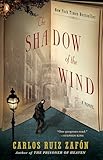
#6 — The Shadow of the Wind by Carlos Ruiz Zafón
Barcelona, 1945. A young boy named Daniel is taken by his bookseller father to the Cemetery of Forgotten Books — a vast labyrinthine repository of neglected works — and told to choose one book to keep and protect. He chooses a novel by a writer named Julián Carax, and then discovers that someone has been systematically destroying every copy of every book Carax ever wrote. Zafón’s novel is The Name of the Rose’s direct spiritual descendant: the library as labyrinth, the book as the object of obsessive pursuit, the investigation of a mystery that reaches deep into the past. The Barcelona Gothic atmosphere — war, Franco’s Spain, the beauty of a city under pressure — is its own reward.
Books About Books, Knowledge, and Forbidden Texts
#7 — Possession by A.S. Byatt
Roland Michell, a low-paid academic researcher, discovers letters in a library suggesting that the Victorian poet Randolph Henry Ash had an illicit relationship with another poet, Christabel LaMotte. His investigation, joined by Maud Bailey, becomes a literary treasure hunt through archives, private collections, and a Cornwall churchyard. Byatt’s novel is the most literary of the bibliophile mystery tradition: it contains actual Victorian poetry (written by Byatt), actual scholarly arguments, and a romance plot that mirrors the Victorian one. The library as space of discovery — where the past speaks through documents to those willing to read carefully — is Eco’s conviction rendered in academic realism.
#8 — The Da Vinci Code by Dan Brown
Robert Langdon, a Harvard professor of religious symbology, is called to the Louvre where a curator has been murdered, leaving behind a cryptic message. The investigation takes him through locked rooms, hidden archives, and a conspiracy theory about what the Church has concealed from the world about its own origins. Brown’s thriller is the popular version of Eco’s thesis: the Church as an institution that suppresses knowledge for power, the hidden text as the key to everything, the library and the museum as sites of concealed truth. The Name of the Rose is the intellectual version of what The Da Vinci Code is the popular version of, and reading them together illuminates how the same ideas move through different registers.
#9 — The Club Dumas by Arturo Pérez-Reverte
Lucas Corso is a rare book dealer, a mercenary and slightly disreputable figure who is hired to authenticate a chapter supposedly written by Alexandre Dumas himself. His investigation leads him to The Nine Doors of the Kingdom of Shadows, a 17th-century manual for summoning the Devil, three copies of which still exist — and someone is killing the people who own them. Pérez-Reverte’s novel is the bibliophile mystery at its most purely pleasurable: the world of rare books, their trade, their forgery, and the obsessives who pursue them is rendered with genuine expertise, and the mystery is propulsive in a way that rewards readers who want the intellectual atmosphere without Eco’s full demands.
How to Choose Your Next Read
If you want more Eco, more demanding: Foucault’s Pendulum — the same labyrinth, no map.
If you want more narrative, same period: The Pillars of the Earth — medieval England at full epic scale.
If you want the most structurally ambitious historical mystery: An Instance of the Fingerpost — four narrators, one truth, total uncertainty.
If you want the most atmospheric: The Shadow of the Wind — Barcelona Gothic, the library as first love.
If you want the most purely pleasurable bibliophile mystery: The Club Dumas — rare books, forgeries, and the Devil’s manual.
For the Best Mystery and Crime Books
For the definitive guide to mystery and crime fiction — from Agatha Christie to Tana French — see our Best Mystery Books of All Time list.
More Historical Mystery Reading Guides
- Conclave: The Book Behind the Oscar-Winning Film
- Dan Brown Books in Order: Robert Langdon Complete Guide
More Historical Mystery Guides
Affiliate disclosure: Links to Amazon on this page are affiliate links. We earn a small commission at no extra cost to you. This does not influence our editorial recommendations.
Frequently Asked Questions
Do I need to know semiotics to enjoy The Name of the Rose?
No. The novel's semiotic underpinnings — the theory of signs, the argument that meaning is always deferred, the engagement with medieval nominalism — are present for readers who want them, but the surface story is an entirely conventional detective novel. William of Baskerville is a brilliant investigator in the Sherlock Holmes mold (the name is deliberate), his young companion Adso narrates, and the abbey's deaths unfold in a classical whodunit structure. Eco designed the novel to work on multiple levels simultaneously. Readers who want the intellectual architecture can find it; readers who want the mystery can follow that instead.
What is The Name of the Rose about, at its core?
At its core, The Name of the Rose is about the danger of knowledge — specifically, the danger of books. The monastery's labyrinthine library contains texts that the Church has decided are too dangerous to be read, and the murders are ultimately about who controls access to forbidden knowledge. Eco wrote it as an argument about interpretation, about the claim that any single authority has the right to decide what may be thought, and about the violence that is done in the name of protecting people from ideas. The 14th-century setting was chosen because the medieval Church's monopoly on literacy makes that argument visible.
Is Foucault's Pendulum harder to read than The Name of the Rose?
Yes, considerably. The Name of the Rose uses the detective genre as scaffolding that keeps the reader oriented through the intellectual density. Foucault's Pendulum has no such scaffolding — the three editors constructing a conspiracy theory are not detectives, the conspiracy metastasizes rather than resolving, and Eco's references to occultism, Kabbalah, and Templar mythology are deployed without the consideration for the general reader that he shows in the earlier novel. Foucault's Pendulum rewards readers who want to follow Eco into the deep water, but readers who found The Name of the Rose demanding enough will want to know what they are getting into.