Books Like The Goldfinch: Art, Loss & Survival
Donna Tartt's Pulitzer-winning novel of Theo Decker — who survives a museum bombing that kills his mother and takes a small Dutch painting — follows the painting across decades and continents. These books share its obsession with art's power, its Dickensian scope, and its meditation on what we hold onto.
By Aisha Patel

Donna Tartt published The Goldfinch in 2013, ten years after The Little Friend and twenty-two years after The Secret History, and the interval is part of the book’s meaning: she writes the way the Dutch masters painted, slowly, with absolute attention, producing a small number of things that are meant to last. The novel runs to nearly eight hundred pages and covers more than a decade of its protagonist’s life, but it never feels long — it has the quality of all genuinely Dickensian fiction, which is that you are always slightly afraid to put it down in case something happens while you are gone.
The premise is simple and devastating: Theo Decker, thirteen years old, is in the Metropolitan Museum of Art with his mother when a bomb goes off. His mother is killed. In the confusion, Theo carries out a small Dutch painting — The Goldfinch by Carel Fabritius, a chained bird on a pale wall — and cannot figure out how to return it without confessing how he came to have it. The painting becomes the secret at the center of his life: through a chaotic adolescence in Las Vegas with a negligent father, through years as an antiques restorer in New York, through a final catastrophe in Amsterdam, the painting is what he is holding onto when everything else dissolves.
The books below were chosen for readers who responded to The Goldfinch’s specific combination of pleasures: the dark academic atmosphere of Tartt’s world, the meditation on what art does and why it matters, the grief at the center of everything, and the Dickensian belief that plot and moral seriousness are not opposites but partners. They are grouped by what they share most directly with Tartt’s achievement.
More Donna Tartt
#1 — The Secret History by Donna Tartt
Tartt’s 1992 debut is one of the most influential American novels of the last thirty years — the novel that invented dark academia as a genre before the genre had a name. Richard Papen, a scholarship student from California, falls in with a small group of classics students at a Vermont college who study only with a charismatic and secretive professor, and gradually discovers that they have committed a murder. The novel begins by telling you this — the identity of the victim and the killers is revealed on the first page — and spends its five hundred pages explaining how it happened. It is a study of how beauty and intelligence and aesthetic intensity can coexist with moral vacancy, and it is the book that established Tartt’s voice: cool, precise, deeply pleasurable, morally serious without being preachy.
#2 — The Little Friend by Donna Tartt
Tartt’s least-known novel and her most Southern Gothic: Harriet Cleve Dufresnes, twelve years old, becomes obsessed with solving the mystery of her nine-year-old brother’s murder, which happened before she was old enough to remember and which has left her family shattered. The Little Friend is slower and stranger than The Secret History or The Goldfinch, closer to Flannery O’Connor than to Dickens, and readers who expect another campus thriller are sometimes disoriented by it. But it is a fully achieved novel with some of Tartt’s best prose — the Mississippi summer, the grandmother’s garden, the church of Christ congregation — and it reveals dimensions of her talent that neither of her other books quite shows.
Art, Objects, and What They Hold
#3 — The Museum of Innocence by Orhan Pamuk
Pamuk’s 2008 novel follows Kemal, a wealthy Istanbul businessman, who becomes obsessed with Füsun, a distant relative and shop girl, and begins collecting objects associated with her — hairpins, earrings, cigarette butts — after she vanishes from his life. The novel is about the objects more than the love story: Pamuk is interested in how objects hold time, how a physical thing can preserve the texture of a moment that would otherwise be lost. The dedication and the final chapter reveal that Pamuk actually built the museum — the Museum of Innocence in Beyoğlu is a real place, and the novel’s objects are on display there. The parallel to The Goldfinch is direct: both novels are about a man holding onto an object because he cannot hold onto what it represents.
#4 — A Gentleman in Moscow by Amor Towles
Count Alexander Rostov, under house arrest in Moscow’s Metropol Hotel from 1922, constructs a beautiful life within severe constraints — the life of a man surrounded by objects, rituals, and relationships that hold his entire world. Towles’s novel shares with The Goldfinch the sense that beauty is not frivolous but essential, that the things we choose to surround ourselves with are a form of moral argument, and that elegance is a discipline rather than a luxury. Both novels are, at bottom, about how to live well inside the catastrophes that life provides. A Gentleman in Moscow is gentler, warmer, and more overtly comic than Tartt’s novel, but readers who responded to the quality of attention Theo gives to the antique furniture trade will find the Count’s equivalent attention fully satisfying.
#5 — Possession by A.S. Byatt
Byatt’s 1990 Booker Prize winner follows two contemporary literary scholars who discover evidence of a secret love affair between two Victorian poets, and the novel alternates between their present-day investigation and the Victorian story they uncover — complete with the poets’ letters, poems, and journals reproduced in full. The object at the center of Possession is text itself: the love letters preserved against all odds, the poems that outlast everyone who wrote and read them. Byatt shares with Tartt the conviction that art and its objects are not peripheral to human life but central to it — that what endures is what was made with the fullest attention — and the Victorian scholarship in Possession carries the same loving precision as Theo’s antiques restoration.
#6 — The Hare with Amber Eyes by Edmund de Waal
De Waal’s 2010 family memoir follows 264 Japanese netsuke — tiny carved figures, each one a marvel of miniature craft — from Paris in the 1870s through Vienna before the Anschluss, through the Nazi confiscation that stripped the de Waal family of almost everything, to the handful of objects that survived. It is nonfiction but reads like a novel, and it is the most direct parallel to The Goldfinch’s central conceit: an object that carries history, that outlasts the people who held it, that becomes the evidence of what was lost and what endured. De Waal is also a ceramicist himself, and his prose has the quality of a maker’s attention — the same quality that Theo brings to his work in the antiques shop.
Grief, Mothers, and the Lives That Form Us
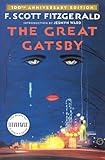
#7 — The Great Gatsby by F. Scott Fitzgerald
Fitzgerald’s 1925 novel is the great American meditation on the obsessive recovery of a lost past — Gatsby’s green light, the dock across the water, the dream of returning to a moment before everything went wrong. Theo’s relationship to the painting is the same: the painting is his mother, preserved in the moment before the explosion, and his whole adult life is structured around the refusal to let her go. Both Gatsby and Theo are men constituted by loss, reaching for something that cannot be recovered, and both novels end with the same melancholy conclusion: the past recedes even as we row toward it. The Great Gatsby is the most precise literary ancestor for what Tartt is doing at the level of grief and obsession.
#8 — Crime and Punishment by Fyodor Dostoevsky
Dostoevsky’s 1866 novel is the psychological precursor to everything Tartt writes: Raskolnikov, a young man of exceptional intelligence, convinces himself that certain superior individuals are exempt from ordinary moral law and murders a pawnbroker to prove it — and then spends the novel in the psychological aftermath of that belief. Tartt has acknowledged Dostoevsky’s influence directly, and the connection to The Goldfinch is specific: Theo’s relationship to the stolen painting has the same logic as Raskolnikov’s relationship to the murder. Both men have done something that puts them outside the ordinary moral community, and both novels are about what that costs. Crime and Punishment is the harder book, but readers who responded to the psychological intensity of Tartt’s novel will find Dostoevsky’s even more relentless.
#9 — A Little Life by Hanya Yanagihara
Yanagihara’s 2015 novel follows four friends from college through their adult lives in New York, centering on Jude St. Francis, a lawyer whose childhood was so damaged that it shapes and eventually destroys everything he builds. A Little Life shares with The Goldfinch the Dickensian scope — the full account of a life from childhood wound to adult consequence — and the conviction that early trauma does not stay in the past but inhabits every subsequent moment. It is considerably darker than Tartt’s novel, and more deliberately extreme in the suffering it depicts; readers who found The Goldfinch’s darkness tolerable should be warned that Yanagihara goes further. But the emotional ambition is comparable, and both novels share the belief that the childhood wound is the most important story fiction can tell.
How to Choose Your Next Read
If you want Tartt’s other work: The Secret History — dark academia before the genre existed, the novel that made her reputation.
If you want the object-as-history taken to its literal conclusion: The Museum of Innocence by Orhan Pamuk — a man who builds an actual museum for his obsession.
If you want the grief and the obsessive recovery of the past in its most iconic form: The Great Gatsby — Fitzgerald’s green light as Theo’s painting.
If you want the psychological intensity without the Dickensian plotting: Crime and Punishment — Dostoevsky’s account of the man who believes himself outside ordinary moral law.
If you want the Dickensian scope with considerably more darkness: A Little Life — Yanagihara’s account of the childhood wound that shapes everything after.
More Contemporary Fiction Reading Guides
- Books Like The Secret History: Dark Academia Reads
- Books Like A Little Life: Novels That Devastate and Endure
Affiliate disclosure: Links to Amazon on this page are affiliate links. We earn a small commission at no extra cost to you. This does not influence our editorial recommendations.
Frequently Asked Questions
What is the Goldfinch painting in the novel?
The Goldfinch is a real painting: a small oil on panel by the Dutch Golden Age painter Carel Fabritius, completed in 1654 — the year Fabritius died in the Delft gunpowder explosion. The painting, now in the Mauritshuis in The Hague, shows a small chained bird against a pale wall, rendered with extraordinary delicacy. Tartt chose it deliberately: Fabritius was a student of Rembrandt and a teacher of Vermeer, a figure at the center of the greatest period in Dutch painting who died young in an explosion, and the painting itself has survived centuries of potential destruction. The parallel to Theo — who survives an explosion that kills his mother and carries the painting through his own chaotic life — is the novel's structural conceit.
Did The Goldfinch deserve the Pulitzer Prize?
The Goldfinch won the 2014 Pulitzer Prize for Fiction, and the award was unusually contentious. Several prominent critics — most notably James Wood in The New Yorker — argued that the novel was well-crafted entertainment rather than serious literature, that its Dickensian pleasures were real but its philosophical ambitions were overreached. Defenders, including many serious readers and the Pulitzer board itself, argued that the distinction between serious literature and pleasurable storytelling is false, that Tartt's control of her enormous canvas was a genuine achievement, and that the novel's final pages — Theo's meditation on art, beauty, and what survives — were among the most eloquent passages in recent American fiction. The debate about The Goldfinch is a debate about what literary fiction is for.
What should I read after finishing all of Donna Tartt's novels?
Tartt has published three novels in thirty years, and readers who have finished all three often feel a specific withdrawal — the loss of that particular combination of dark academia atmosphere, Dickensian plotting, and moral seriousness. The closest parallels are: A.S. Byatt's Possession for the literary obsession and the object holding history; Hanya Yanagihara's A Little Life for the Dickensian scope and the childhood wound; John Irving's The World According to Garp for the picaresque sweep and the mixture of comedy and devastation. For readers drawn specifically to the art world setting, The Museum of Innocence by Orhan Pamuk is essential — a man who builds an actual museum to house the objects associated with his lost love.