Books Like The Secret History: 11 Dark Academia Reads
If The Secret History's morally compromised students and intellectual obsession gripped you, these dark, literary reads belong on your shelf.

Donna Tartt’s The Secret History does something almost no novel attempts: it tells you who committed the murder on the first page. Richard Papen, the narrator, informs us from the outset that he and his four fellow classics students killed their friend Bunny Corcoran. The entire novel then becomes not a whodunit but a how-and-why-did-it-come-to-this — a slow, gorgeous, morally sickening account of how a group of intellectually brilliant, aesthetically obsessive young people arrived at the point of killing one of their own. The inverted mystery was not invented by Tartt, but she made it the engine of a literary novel in a way that had not been done before.
What the novel is really about, beneath the murder, is the seductiveness of beauty and the corruption it licenses. Richard arrives at Hampden College as a nobody from California who has invented a more distinguished past for himself, and is immediately fascinated by the small, closed group of classics students who seem to exist outside ordinary campus life — stylish, private, devoted to Julian Morrow, their charismatic professor. His desire to be admitted to that group overrides every moral instinct he has. The horror of the novel is not what the group does but how completely Richard, who watches and narrates everything, fails to resist the pull of it. He is complicit not through coercion but through want.
The books below share the essential elements: intellectual obsession, elite closed worlds, moral compromise, and beautiful surfaces concealing something dangerous. Some are fellow dark academia novels; others are literary fiction about the corruption of youth or the violence inside brilliant, damaged groups of people.
Other Donna Tartt
#1 — The Goldfinch by Donna Tartt
Thirteen-year-old Theo Decker survives a terrorist bombing at a New York museum that kills his mother. In the aftermath he steals a small Dutch Golden Age painting — Fabritius’s The Goldfinch — and carries it with him through a decade of displacement, grief, and bad decisions. The Goldfinch has a different temperature from The Secret History: warmer, more sprawling, more Dickensian in its plotting. But the preoccupations are the same — the way beautiful objects concentrate meaning, the long damage of formative losses, the moral drift of a narrator who is intelligent enough to see exactly what he is doing and unable to stop. Tartt’s prose is, if anything, more controlled here than in her debut.
The Dark Academia Tradition
#2 — If We Were Villains by M.L. Rio
Seven Shakespeare students at an elite conservatory — four women, three men, each assigned a type: hero, villain, ingenue, temptress. In their fourth year the roles begin to feel less like assignments and more like fates, and someone dies. Rio’s novel is the closest structural match to The Secret History on this list: an inverted mystery narrated by a member of the group who is looking back from a decade’s distance, told to an investigator who already knows the outcome. The Shakespeare immersion is as total as Tartt’s Greek immersion, and the portrait of what happens when a small group of gifted, theatrical young people turns in on itself is rendered with genuine literary intelligence.
#3 — Babel by R.F. Kuang
Oxford, 1828. Robin Swift is brought from Canton to England as a boy, educated in the classical languages, and admitted to Babel — the Royal Institute of Translation, whose silver-working magic underpins the British Empire. Babel is dark academia as political argument: Kuang takes the genre’s characteristic elements — the beautiful institution, the demanding intellectual life, the small devoted group, the moment when that world’s costs become undeniable — and makes explicit what they usually leave implicit about who pays for elite beauty. It is angrier and more expansive than most dark academia, and more honest about what the genre’s aesthetics can conceal.
#4 — Brideshead Revisited by Evelyn Waugh
Charles Ryder arrives at Oxford and is taken up by Sebastian Flyte, the beautiful, charming, self-destructive younger son of an old Catholic family. What follows is Charles’s lifelong entanglement with the Flytes and their crumbling English estate, Brideshead. Waugh is the direct literary ancestor of The Secret History — Julian Morrow’s closed, golden classics group is drawn from the same source material as Sebastian’s Oxford circle, and Richard’s yearning outsider position mirrors Charles’s exactly. The meditation on the seductiveness of a certain kind of English Catholic privilege, and the impossibility of either fully entering it or fully escaping it, is one of the great subjects of twentieth-century fiction.
#5 — The Magus by John Fowles
Nicholas Urfe, an Oxford graduate, takes a teaching post on a remote Greek island and falls under the influence of Maurice Conchis — a wealthy, enigmatic man who draws him into a series of elaborate, increasingly disturbing psychological games. The Magus shares with The Secret History a charismatic older man who exercises near-total intellectual and psychological authority over a younger one, a Mediterranean setting of classical beauty, and a protagonist whose desire to be special makes him perfectly manipulable. Fowles’s novel is longer, stranger, and more deliberately disorienting — the games Conchis plays never fully resolve — but readers who loved the dynamic between Richard and Julian Morrow will recognize it immediately.
Literary Fiction About Morally Compromised Youth
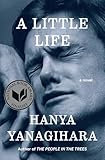
#6 — A Little Life by Hanya Yanagihara
Four college friends — Willem, JB, Malcolm, and Jude — move to New York after graduation and build their adult lives together. A Little Life is not dark academia; it has no murder mystery and no elite institution. But it shares with The Secret History the thing that matters most: the portrait of a small, closed group of young people whose lives become dangerously entangled, and the slow revelation of what one member has survived that the others cannot fully see or absorb. Yanagihara’s prose is obsessive and accumulative in the same way Tartt’s is, and the novel is equally demanding of its reader’s emotional endurance.
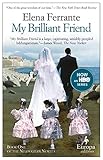
#7 — My Brilliant Friend by Elena Ferrante
Elena Greco and Lila Cerullo grow up together in a poor neighborhood of Naples in the 1950s, and their friendship — competitive, devoted, resentful, indispensable — is the subject of Ferrante’s four-novel Neapolitan sequence. My Brilliant Friend is the first. The texture is entirely different from Tartt — working-class Naples rather than elite Vermont — but the preoccupations are the same: the way one person’s intelligence and desire can be shaped and distorted by proximity to another’s, the violence that lives inside beautiful and intense relationships, the unreliability of a narrator who is both observer and participant. Ferrante is one of the few writers working at Tartt’s level of psychological precision.
#8 — Rules of Civility by Amor Towles
New York, 1938. Katey Kontent is a secretary from a working-class background who, on New Year’s Eve, meets Tinker Grey — wealthy, handsome, magnetic — and is drawn into a world of Manhattan society she had not previously been able to access. Towles writes with the same attention to surfaces, clothes, rooms, and social codes that Tartt brings to Hampden’s aestheticism, and his portrait of a young woman navigating a world that is beautiful but not intended for her maps directly onto Richard’s position in The Secret History. The moral stakes are lower but the elegance of the thing is comparable.
Obsession and Intellectual Intensity
#9 — Normal People by Sally Rooney
Connell and Marianne grow up in the same small Irish town, begin a secret relationship in secondary school, separate, and find each other again at Trinity College Dublin. The novel’s subject is the way power moves between two people — sometimes he has it, sometimes she does — and the way love and intellectual admiration and social anxiety can become impossible to separate. Rooney has none of Tartt’s gothicism, but the intensity of attention she brings to the interior lives of two young people who are each other’s most important audience is the same quality that makes The Secret History compelling beneath the murder plot.
#10 — Conversations with Friends by Sally Rooney
Frances and Bobbi are twenty-one-year-old college students in Dublin who perform spoken word poetry together and, at a reading, meet Melissa — a photographer — and her husband Nick, an actor. An affair develops. Rooney’s debut has the same cool, analytical first-person narration as The Secret History, the same interest in a small, intense social world with its own rules, and the same portrait of a young narrator who understands a great deal intellectually and is nevertheless not in control of what she is doing. Frances is one of fiction’s more compelling unreliable narrators precisely because her unreliability is so cerebral.
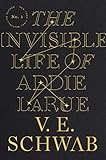
#11 — The Invisible Life of Addie LaRue by V.E. Schwab
Addie LaRue makes a bargain with a god of darkness in 1714 France: she will live forever, but everyone she meets will forget her the moment she leaves their sight. She cannot leave a mark on the world. Three hundred years later, a young man in a New York bookshop remembers her name. Schwab’s novel is the most genre-inflected on this list, but its concerns — beauty, memory, the desire to be known and to leave something behind, the terrible price of what you bargain for — run through The Secret History in different form. The aesthetic obsessiveness and the meditation on what we sacrifice for the things we most want both fit.
How to Choose Your Next Read
If you want the closest structural match to the inverted mystery: If We Were Villains by M.L. Rio.
If you want the literary ancestor of the entire genre: Brideshead Revisited by Evelyn Waugh.
If you want dark academia as political argument: Babel by R.F. Kuang.
If you want more Donna Tartt: The Goldfinch.
If you want the same psychological intensity without the murder plot: A Little Life or My Brilliant Friend.
If you want the same unreliable, intellectually self-aware narrator: Conversations with Friends by Sally Rooney.
For the Best Mystery and Crime Books
For the definitive guide to mystery and crime fiction — from Agatha Christie to Tana French — see our Best Mystery Books of All Time list.
More Dark Academia and Literary Thriller Guides
- Books Like The Goldfinch: Art, Loss, and Object and Life
- Books Like Rebecca: Gothic Suspense and Obsession
Affiliate disclosure: Links to Amazon on this page are affiliate links. We earn a small commission at no extra cost to you. This does not influence our editorial recommendations.
Frequently Asked Questions
What is dark academia and where did it come from?
Dark academia is a literary and aesthetic genre centered on elite educational settings, classical learning, obsessive intellectual pursuit, and the moral rot that can hide beneath beauty and privilege. The Secret History by Donna Tartt is widely considered the founding text of the genre — published in 1992, it established the template that nearly every subsequent dark academia novel follows: a small, gifted group, a charismatic mentor, a campus removed from ordinary life, and a secret that poisons everything.
What are the best other dark academia novels besides The Secret History?
The best dark academia novels after The Secret History are If We Were Villains by M.L. Rio, which transplants the premise to a Shakespearean acting conservatory; Babel by R.F. Kuang, which takes the genre into a fantasy-inflected Oxford and interrogates its colonial assumptions; and Rules of Civility by Amor Towles, which shares the same preoccupation with beautiful, closed social worlds and the outsider who enters them. Brideshead Revisited by Evelyn Waugh is the direct literary ancestor of the entire genre.
Is The Goldfinch as good as The Secret History?
The Goldfinch is Donna Tartt's third novel and won the Pulitzer Prize, but most readers who love The Secret History find it a different kind of book rather than a better or worse one. The Secret History is tighter, colder, and more formally daring — its inverted mystery structure (we know who committed the crime on page one) is one of the most audacious narrative choices in contemporary literary fiction. The Goldfinch is longer, warmer, and more picaresque. Both are worth reading, and Tartt's prose is among the finest of any living American novelist.