Books Like The Da Vinci Code: 11 Conspiracy Thrillers
If The Da Vinci Code's art history puzzles and secret societies kept you reading, these conspiracy thrillers deliver the same propulsive rush.

Dan Brown’s The Da Vinci Code is one of the best-selling novels of the past fifty years, and the reasons for that are worth taking seriously rather than dismissing. Brown invented very little: the conspiracy-thriller genre, the art-history mystery, the race-against-time plot structure — all existed before him. What he perfected was rhythm. The short chapter, the cliffhanger, the revelation that opens onto two new questions: these techniques create a reading experience that bypasses critical judgment entirely. You finish it before you decide whether you liked it.
The novel’s central subject — that Western religious institutions have suppressed a truth that would reshape civilization — is not original either, but Brown delivers it with enough historical texture (however liberally interpreted) to feel like you are learning something. Robert Langdon, the Harvard symbologist who solves ancient puzzles at a sprint, is less a character than a delivery mechanism for information, but the information arrives at exactly the right moments. The books below share some of that DNA: fast plots driven by historical knowledge, secret societies or hidden truths as engines, and the pleasure of feeling that the world has a concealed architecture that the right reader can decode.
A note on literary quality: several of the books on this list are considerably better written than The Da Vinci Code, and some are considerably slower. Where that trade-off matters, it is noted. Not every reader wants the same thing from a conspiracy thriller, and the honest recommendation depends on whether you are chasing that compulsive readability or something more substantial.
Books Like The Da Vinci Code at a Glance
| Book | Author | Best for |
|---|---|---|
| Angels and Demons | Dan Brown | Thriller readers who want action, art history |
| Inferno | Dan Brown | Readers who enjoy fast-paced art-history |
| The Lost Symbol | Dan Brown | Thriller |
| The Name of the Rose | Umberto Eco | Patient literary readers |
| The Pillars of the Earth | Ken Follett | Historical fiction readers who love immersive |
| The Eight | Katherine Neville | Fans of historical thrillers with intellectual |
| Foucault’s Pendulum | Umberto Eco | Intellectually adventurous readers |
| The Labyrinth | Kate Mosse | Fans of historical fiction with a strong sense |
| Shogun | James Clavell | Fans of epic historical fiction, viewers |
| A Gentleman in Moscow | Amor Towles | Literary fiction readers who want elegance, wit |
| The Lincoln Lawyer | Michael Connelly | Legal thriller fans who want a fresh perspective |
More Robert Langdon: Dan Brown’s Other Books
#1 — Angels and Demons by Dan Brown
Published three years before The Da Vinci Code, Angels and Demons introduces Robert Langdon and deploys him against an antimatter bomb hidden somewhere in Vatican City while the Illuminati — or someone claiming to be them — murders cardinals one by one. It is arguably Brown’s most purely propulsive novel: the ticking-clock structure is more rigidly maintained, the setting is spectacular, and the theological stakes are pitched at the same level as The Da Vinci Code without the baggage of its cultural controversy. Readers who want more of exactly what the first book delivered should start here.
#2 — Inferno by Dan Brown
Brown sends Langdon to Florence with amnesia, a dead scientist’s coded message, and a plot built around Dante’s Inferno and a population-control conspiracy. The art-history overlay is denser here — the novel doubles as a guided tour of Florentine landmarks — and the mystery’s central premise is more genuinely troubling than anything in The Da Vinci Code. The amnesia device is convenient and the resolution requires some patience, but for readers who want to stay in Langdon’s company, Inferno is the most visually immersive of the sequels.
#3 — The Lost Symbol by Dan Brown
The most underrated Langdon novel, The Lost Symbol takes on Freemasonry, the architecture of Washington D.C., and the hidden esoteric traditions woven into American founding mythology. The villain is one of Brown’s most disturbing, the Washington setting is richly used, and the climax — which involves a genuinely unexpected reframing of what the novel has been about — lands with more weight than most of the series. Readers who exhausted The Da Vinci Code and want to continue without diminishing returns should give this one a fair hearing.
Historical Mysteries with Deeper Roots
#4 — The Name of the Rose by Umberto Eco
William of Baskerville, a Franciscan friar, arrives at a northern Italian abbey in 1327 to attend a theological disputation and finds himself investigating a series of deaths among the monks. Eco’s novel is what happens when a semiotician and medieval scholar writes a thriller: the puzzle is as intricate as any in Brown, but the historical texture is real rather than invented, and the intellectual substance — on the nature of laughter, the politics of heresy, the meaning of signs — accumulates into something genuinely weighty. It is slower than The Da Vinci Code and considerably more rewarding.
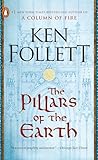
#5 — The Pillars of the Earth by Ken Follett
A cathedral is being built in the fictional English town of Kingsbridge across the twelfth century, and the lives of the people building it — the master builder Tom, the monk Philip, the noblewoman Aliena — are shaped by the politics of church and crown, the ambitions of men who use religious authority as a weapon, and the slow accumulation of knowledge about what makes great stone stand. Follett’s novel is not a puzzle thriller, but it shares The Da Vinci Code’s fascination with the hidden structures of medieval Christendom and the people who both served and subverted them. At over nine hundred pages, it asks for sustained attention it fully repays.
#6 — The Eight by Katherine Neville
During the French Revolution, a chess set of extraordinary power is dismantled and dispersed for safekeeping by the nuns of a Montglane abbey. Two hundred years later, a computer specialist named Catherine Velis is drawn into a global search for the pieces. Neville’s novel runs two timelines in parallel — the Revolutionary period and the 1970s — and populates them with historical figures including Robespierre, Talleyrand, Voltaire, and Catherine the Great, using them with the same freedom Brown applies to Leonardo and Galileo. For readers who want a Da Vinci Code-scale conspiracy with a chess board at its center, this is essential.
Conspiracy Thrillers That Take Their History Seriously
#7 — Foucault’s Pendulum by Umberto Eco
Three editors at a Milan publishing house, exhausted by the occult manuscripts crossing their desks, decide to invent the ultimate conspiracy — a master plan connecting the Knights Templar, Rosicrucians, Freemasons, and every other secret society to a single hidden purpose. Then the conspiracy they invented begins to seem real. Eco’s novel is in part a satire of exactly the kind of thinking that drives The Da Vinci Code, but it is also a genuinely eerie thriller that ends in a way Brown would never risk. Demanding but unmissable for readers who want the real intellectual substance that Brown’s books gesture toward.
#8 — The Labyrinth by Kate Mosse
In 1209, a young woman named Alais is entrusted with the secret of the Holy Grail by her father, a keeper of a book containing truths that the Catholic Church’s crusade against the Cathars is designed to destroy. In 2005, an archaeologist named Alice uncovers bones in a cave near Carcassonne. Mosse runs the two timelines in parallel, using the landscape of the Languedoc — the same southern France that appears in The Da Vinci Code’s backstory — as both setting and character. The Cathar history is handled with more fidelity than Brown manages, and the dual-timeline structure creates a genuine sense of resonance across centuries.
For Readers Who Want Something Adjacent
#9 — Shogun by James Clavell
An English navigator is shipwrecked in feudal Japan in 1600 and finds himself navigating a world whose rules, hierarchies, and power structures are entirely opaque to him — and whose unraveling constitutes the novel’s real subject. Clavell’s novel has none of The Da Vinci Code’s puzzle mechanics, but it shares its pleasure in the gradual revelation of a hidden architecture: the codes of samurai culture, the politics of competing lords, the role of Jesuit missionaries in a country that distrusts them. It is also one of the most purely immersive reading experiences in the genre, a world you do not leave until the last page.
#10 — A Gentleman in Moscow by Amor Towles
Count Alexander Rostov is sentenced to house arrest in Moscow’s Metropol Hotel in 1922, where he will spend the next thirty years as the Soviet century transforms the world outside his windows. This is the furthest departure from The Da Vinci Code’s formula on this list: there is no puzzle, no villain, no globe-trotting. What it shares is a protagonist of deep cultural knowledge navigating a world that wants to suppress or destroy that knowledge, and a plot that rewards close attention to detail and accumulating significance. For readers who loved the texture of The Da Vinci Code’s historical material and want something that takes it further.
#11 — The Lincoln Lawyer by Michael Connelly
Mickey Haller is a defense attorney who works out of the back of his Lincoln Town Car — a man who knows that the legal system is a mechanism that produces outcomes rather than truth, and who navigates it accordingly. When a wealthy client insists on his innocence in a brutal assault case, Haller begins to suspect that the truth behind the case is worse than the charge. Connelly’s novel does not involve secret societies or art history, but it shares The Da Vinci Code’s architecture of hidden truths, procedural reveals, and a protagonist who must decode what he is actually looking at. It is also considerably better written.
How to Choose Your Next Read
If you want more Robert Langdon, immediately: Angels and Demons is the fastest and most purely enjoyable of the series.
If you want the same conspiracy territory handled with more intellectual substance: Foucault’s Pendulum by Eco, with the caveat that it is denser and more demanding.
If you want medieval history and a real puzzle: The Name of the Rose is the benchmark for this kind of fiction.
If you want the same dual-timeline, hidden-relic structure: The Labyrinth or The Eight.
If you want to stay in the thriller mode but read something better written: The Lincoln Lawyer or A Gentleman in Moscow.
If you want sheer immersion and scale: The Pillars of the Earth or Shogun.
For the Best Thriller Books
For the definitive guide to thriller fiction — psychological thrillers, legal thrillers, and spy novels — see our Best Thriller Books of All Time list.
More Mystery and Conspiracy Thriller Guides
- Dan Brown Books in Order: Robert Langdon Complete Guide
- Conclave: The Book Behind the Oscar-Winning Film
Affiliate disclosure: Links to Amazon on this page are affiliate links. We earn a small commission at no extra cost to you. This does not influence our editorial recommendations.
Frequently Asked Questions
What order should I read Dan Brown's Robert Langdon books?
The Robert Langdon series runs: Angels and Demons (2000), The Da Vinci Code (2003), The Lost Symbol (2009), Inferno (2013), and Origin (2017). The Da Vinci Code is the most famous entry point, but Angels and Demons works well as a starting point since it introduces Langdon and shares the same Vatican-and-secret-society DNA. The books stand alone, so you can read them in any order.
What books have the same art history and mystery blend as The Da Vinci Code?
The books that best combine art history with thriller plotting are The Name of the Rose by Umberto Eco (medieval monastery, manuscripts, and murder), The Eight by Katherine Neville (a chess set that hides a world-altering secret across two time periods), and Foucault's Pendulum by Umberto Eco (a satirical but genuinely eerie take on conspiracy culture). For something lighter and more recent, The Labyrinth by Kate Mosse weaves Cathar history and a hidden relic through a dual-timeline mystery set in southern France.
What are the best conspiracy thrillers for fans of fast-paced puzzle plots?
For fast-paced puzzle-driven plots, the best options are Angels and Demons by Dan Brown (his most relentlessly paced Langdon novel), The Eight by Katherine Neville (a chess-piece mystery that spans the French Revolution and the 1970s), and Foucault's Pendulum by Umberto Eco (denser but rewarding for readers who want the intellectual substance that Brown gestures toward). The Pillars of the Earth by Ken Follett trades speed for immersion but delivers the same sense of a hidden architecture beneath the visible world.
Is The Da Vinci Code worth reading if you care about literary quality?
The Da Vinci Code is not a work of literary fiction. Its prose is functional, its characters are types rather than people, and its historical claims are largely invented. What it does exceptionally well is pace: Brown's short-chapter structure and relentless cliffhangers create a reading experience that is genuinely difficult to interrupt. Readers who want the same subject matter handled with more literary care should try The Name of the Rose by Umberto Eco or The Pillars of the Earth by Ken Follett.