Books Like Sharp Objects: Dark Gothic Thrillers
Gillian Flynn's debut — a journalist returns to her Missouri hometown to cover a murder and confronts her mother's pathological control — established Gothic small-town crime fiction as a literary genre. These books share its female rage, its Southern Gothic atmosphere, and the family as primary horror.
Gillian Flynn’s Sharp Objects is her debut novel and, for many readers, her most disturbing. Camille Preaker, a journalist still carrying the marks of a self-destructive adolescence, is sent back to her Missouri hometown of Wind Gap to cover the murders of two young girls. What she finds there is her mother, Adora, a woman of such refined and pathological control that the town itself seems to operate in her image — beautiful on the surface, poisoned underneath. Sharp Objects is less interested in the mechanics of who killed whom than in the question of what a place does to the women it produces.
The novel belongs to a specific tradition: the Gothic small town where surface respectability is maintained at the cost of enormous private violence, and where daughters pay the price. Flynn’s achievement is to make Camille’s body the text of that violence — she has carved words into her own skin, and the novel is literally a reading of what she has written on herself. That anatomical directness gives Sharp Objects a weight that most thrillers do not attempt. It is a book about female rage, female pain, and the families that produce both.
The books below were chosen for readers who responded to that darkness — the Gothic atmosphere, the family as primary horror, the female protagonist shaped by damage she can barely name. They range from Flynn’s own later work to literary fiction that works in adjacent spaces, and they are grouped by what they share most closely with Sharp Objects.
More Gillian Flynn
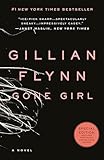
#1 — Gone Girl by Gillian Flynn
Flynn’s third novel is her masterpiece of architectural control: Nick and Amy Dunne narrate their marriage and Amy’s disappearance in alternating voices, each withholding in different ways, until a mid-novel revelation reframes everything. Where Sharp Objects is raw and Gothic, Gone Girl is cold and brilliant — Amy Dunne is the ultimate expression of the female rage that Camille can only hurt herself with, turned outward into something devastating. The two novels make natural companions: the same author, the same unflinching gaze at what women do with what is done to them, very different results.
#2 — Dark Places by Gillian Flynn
Libby Day survived the massacre of her family when she was seven years old, her testimony sending her brother Ben to prison. Twenty-five years later, a true-crime society pays her to reinvestigate. Dark Places cuts between the present investigation and the night of the murders, reconstructing what actually happened to the Day family. It shares Sharp Objects’s preoccupation with family horror and the way childhood violence shapes adult women, and the portrait of Libby — damaged, mercenary, impossible not to follow — is Flynn’s least glamorous but most emotionally honest protagonist.
Gothic Small Towns and Dark Families
#3 — The Virgin Suicides by Jeffrey Eugenides
Five sisters — Cecilia, Lux, Bonnie, Mary, and Therese Lisbon — live in a Michigan suburb in the early 1970s under the suffocating management of their devoutly Catholic parents. After Cecilia’s suicide attempt, their parents’ response makes everything worse, and within a year all five girls are gone. Eugenides narrates from the perspective of the neighborhood boys who watched, years later, still trying to understand what they saw. The suffocating suburb, the daughters destroyed by the expectations placed on them, and the community’s refusal to understand — all of this is the context that Sharp Objects occupies in Missouri.
#4 — We Need to Talk About Kevin by Lionel Shriver
Eva Khatchadourian writes letters to her estranged husband Franklin about their son Kevin, who committed a mass killing at his high school. Shriver’s novel is the purest literary version of the family horror that Flynn circles: a mother who cannot say whether she ever loved her son, a son who seems to have been born as a test of her capacity for love, and a violence that is entirely predictable in retrospect. The unreliable narrator here is unreliable not through deception but through the impossibility of knowing your own child. For readers who found Sharp Objects’s exploration of toxic motherhood fascinating.
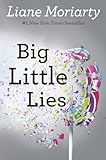
#5 — Big Little Lies by Liane Moriarty
The school-mom world of a coastal Australian town — coffee mornings, fundraising, the performance of perfect parenthood — contains a violence that surfaces at the trivia night where someone is killed. Moriarty’s novel shares Sharp Objects’s subject of domestic abuse hidden behind social performance, and the ensemble of three women with secrets gives the same sense of a community complicit in what happens inside its houses. Lighter in tone than Flynn, but the darkness underneath is genuine.
#6 — Little Fires Everywhere by Celeste Ng
Two families in Shaker Heights, the famous planned community outside Cleveland: the Richardsons, who have always followed the rules, and Mia Warren, an artist who moves from place to place with her daughter Pearl and seems to embody everything Shaker Heights cannot contain. Ng’s novel is about the violence that enforced respectability does to the people — mostly women — who cannot or will not conform to it. The community as primary antagonist, the daughters who suffer for their mothers’ choices, and the fire at the end: all of this is Sharp Objects territory, at a lower temperature but with more social precision.
Female Rage and Psychological Darkness
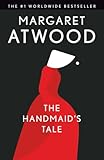
#7 — The Handmaid’s Tale by Margaret Atwood
Offred narrates her life as a Handmaid in the theocratic Republic of Gilead, where fertile women are forced to bear children for the ruling class. Atwood’s novel is not Gothic in the Sharp Objects sense — it is speculative and political — but it is the essential text on what women do with rage when the society will not permit its expression. Camille Preaker’s self-harm is one answer to that problem; the Handmaids’ subversions are another. For readers who want to understand the political structure that Sharp Objects takes for granted, this is the indispensable companion.
#8 — Picnic at Hanging Rock by Joan Lindsay
On Valentine’s Day, 1900, three girls from an Australian boarding school climb Hanging Rock for a picnic and do not come back. Lindsay’s novel is the purest Gothic mystery in the tradition: the landscape as force, the girls as victims of something that cannot be named or understood, the community’s inability to process a loss that refuses explanation. The atmospheric pressure — the heat, the rock, the teacher who also disappears — is the Australian version of what Flynn builds in Wind Gap. Neither novel fully explains what happened; both make that refusal feel like the point.
#9 — My Brilliant Friend by Elena Ferrante
Elena Greco and Lila Cerullo grow up together in a poor neighborhood on the outskirts of Naples in the 1950s, their friendship a battlefield of ambition, resentment, admiration, and love. Ferrante’s four-novel Neapolitan series is the most sustained literary examination of female friendship as survival strategy in contemporary fiction. The violence between women — the ways women hurt each other to survive the conditions imposed on them — is what Sharp Objects depicts in miniature, and Ferrante explores it at full epic length, with greater psychological complexity and even less comfort.
How to Choose Your Next Read
If you want more Gillian Flynn: Dark Places — the same family horror, a different massacre.
If you want the most disturbing literary parallel: We Need to Talk About Kevin — toxic parenthood at its most analytically precise.
If you want Gothic atmosphere and vanishing girls: Picnic at Hanging Rock — the uncanny feminine Gothic.
If you want female rage in political form: The Handmaid’s Tale — what happens when a whole society enforces Adora’s logic.
If you want the longest, richest version of these themes: My Brilliant Friend — female damage and survival at full epic scope.
For the Best Mystery and Crime Books
For the definitive guide to mystery and crime fiction — from Agatha Christie to Tana French — see our Best Mystery Books of All Time list.
More Psychological Thriller Reading Guides
- The Housemaid Books in Order: Freida McFadden’s Series
- Books Like The Girl on the Train: Unreliable Narrators
Affiliate disclosure: Links to Amazon on this page are affiliate links. We earn a small commission at no extra cost to you. This does not influence our editorial recommendations.
Frequently Asked Questions
Is Sharp Objects darker than Gone Girl?
Most readers find Sharp Objects darker in a different register. Gone Girl is cold and architecturally brilliant — its darkness is intellectual and structural. Sharp Objects is rawer and more visceral: it is about a woman whose body carries the literal marks of her childhood, whose mother is one of the most disturbing figures in contemporary American fiction, and whose hometown functions as a Gothic space that will not let her leave. The horror of Sharp Objects is more intimate and less plotted, which is why some readers find it more genuinely unsettling.
What is the TV adaptation of Sharp Objects like?
The HBO limited series starring Amy Adams and directed by Jean-Marc Vallée is widely considered one of the best literary adaptations in recent television. Vallée's use of slow editing and involuntary memory — brief flash cuts of Camille's past inserted into present-day scenes — captures the fragmented psychology of Flynn's narrator in a way that is genuinely cinematic rather than merely illustrative. Patricia Clarkson as Adora Crellin is one of the great television performances of the 2010s. The ending is extended beyond the novel and adds something the book does not contain.
What books are similar to Sharp Objects for readers who want Southern Gothic specifically?
For Southern Gothic specifically, start with The Virgin Suicides by Jeffrey Eugenides for the suffocating suburb that drives daughters to extremes, and Picnic at Hanging Rock by Joan Lindsay for the Gothic uncanny of girls who vanish in a landscape that will not explain itself. Carson McCullers's The Heart Is a Lonely Hunter is an older touchstone — a small Southern town, outsiders, violence beneath respectability — and Flannery O'Connor's short stories are the purest distillation of the Gothic Southern family Flynn is working in.