Books Like The Girl on the Train: Twisty Thrillers
Paula Hawkins's Rachel, who watches a couple from her commuter train and becomes entangled in their disappearance, launched a decade of unreliable-narrator domestic thrillers. These books share its claustrophobic tension, its female protagonists who can't be trusted, and its secrets hidden in plain sight.
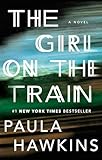
Paula Hawkins’s The Girl on the Train arrived in 2015 and did something remarkable: it took the template that Gillian Flynn had established with Gone Girl and made it commuter-friendly. Rachel Watson, divorced and still riding the train past her old house every day, watching a couple she has named Jess and Jason from the window, is one of the most vivid unreliable narrators in recent crime fiction — not because she is lying, but because she genuinely cannot remember. The gap at the center of the novel is a blackout, and the reader fills it alongside Rachel, revision by revision.
What made the novel a phenomenon was not just the twist but the atmosphere: the grey British commuter belt, the rows of houses with their exposed backs, the sense of lives lived in full view of strangers who can project whatever they want onto the people inside. Rachel’s observations of Jess and Jason are fantasies — a perfect life glimpsed from a distance — and the novel is partly about the violence of projection, the way we construct other people to serve our own emotional needs. That psychological specificity is what separates The Girl on the Train from its many imitators.
The books below share its core DNA: female protagonists whose perception cannot be fully trusted, domestic settings where the ordinary conceals the monstrous, and the slow revelation of what actually happened. They are grouped by what connects them most closely to Hawkins’s novel, and they range from direct successors to more literary cousins.
The Domestic Thriller at Its Best
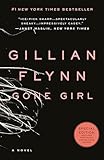
#1 — Gone Girl by Gillian Flynn
Nick Dunne comes home on his fifth wedding anniversary to find his wife Amy missing. The two-voice structure — Nick in the present, Amy in a diary — gives way to one of the most discussed mid-novel reveals in recent fiction. Flynn’s achievement is the portrait of a marriage as a system of mutual performance and resentment, in which both parties have been playing characters for so long they have lost track of who they actually are. Amy Dunne is the most fully realized unreliable narrator in the genre and the book that made all subsequent domestic thrillers possible. If you have not read it, start here.
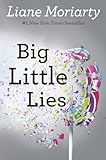
#2 — Big Little Lies by Liane Moriarty
Three women at a primary school on the New South Wales coast: Madeline, fiercely loyal and easily wounded; Celeste, beautiful and hiding something serious; Jane, new to town with a son whose father she will not name. Moriarty builds to a school trivia night where someone is murdered, then uses a structure of police interviews and retrospective narration to delay the revelation of who killed whom and why. The domestic secrets here involve abuse, class resentment, and the silence that communities enforce around private violence. Funnier and warmer than The Girl on the Train, but equally precise about the suburban surfaces that conceal darkness.
#3 — Behind Closed Doors by B.A. Paris
Jack and Grace Angel are the perfect couple — he is successful, she is beautiful, they adore each other. A neighbor who befriends them begins to notice that Grace is never alone, never without Jack, never permitted to speak freely. Paris’s novel is less about mystery than about dread: the reader understands the shape of the marriage early, and the engine is the question of whether Grace will escape it. The portraits of psychological control — the way coercive relationships are performed as love in public — are the direct Gothic version of what Hawkins does in realist mode.
#4 — The Silent Patient by Alex Michaelides
Alicia Berenson, a celebrated painter, shot her husband five times in the face and has not spoken a word since. Theo Faber, a criminal psychotherapist, has worked for years to get access to her — because he believes she is trying to communicate something. Michaelides constructs the novel around a single enormous twist that retrospectively reframes every scene, and the setup — a therapist who needs to know the truth, a patient who cannot or will not provide it — is the clinical version of Rachel’s alcoholic blackout. One of the most purely satisfying twists of the post–Gone Girl era.
Unreliable Female Narrators
#5 — The Woman in the Window by A.J. Finn
Anna Fox is an agoraphobic child psychologist who has not left her Manhattan townhouse in months. She watches her neighbors, drinks too much wine, and believes she has witnessed something she should not have through a window across the street. Finn’s novel is the most direct descendant of The Girl on the Train in its premise — a woman trapped by her own psychology, watching a neighbor’s life, misreading what she sees — and it wears its Hitchcock debts openly. The unreliable perception here is pathological rather than alcohol-induced, which gives the reveal a different flavor but the same satisfying structure.
#6 — Verity by Colleen Hoover
Lowen Ashby, a struggling writer, is hired to complete the remaining books in a bestselling thriller series after the author, Verity Crawford, suffers a debilitating injury. Staying at the Crawfords’ home to research, she discovers a manuscript — an autobiography that reads like a confession to something monstrous. Hoover’s novel crosses domestic thriller with literary metafiction: the manuscript Lowen reads is itself a piece of unreliable narration, and the novel asks whether authorship and self-invention can ever be separated from deception. Darker and more sexually charged than The Girl on the Train, but operating in the same space of domestic secrets and untrustworthy women.
#7 — The Secret History by Donna Tartt
A group of Classics students at a small Vermont college are bound together by their murder of one of their own. Tartt tells us this in the first sentence — the mystery is not whodunit but why, and how the narrator Richard Papen came to participate. The retrospective dread of The Secret History is the literary version of what Hawkins achieves commercially: both novels begin with a known death and reconstruct the events that led to it through an unreliable first-person consciousness that has reasons to withhold. Tartt’s prose is more demanding and more rewarding, and the novel repays re-reading in ways thrillers rarely do.
Psychological Suspense and the Twist
#8 — The Kind Worth Killing by Peter Swanson
On a flight from London, Ted Severson confides to the woman beside him that he suspects his wife is having an affair and fantasizes about killing her. The woman, Lily, says she will help. Swanson’s novel is constructed with the same elaborate care as Gone Girl, with multiple perspectives that reveal themselves to be less reliable than they first appeared. The plot is a machine of carefully concealed information, and the final revelations reframe the entire story. For readers who want the pleasure of a twist that is genuinely hard to see coming.
#9 — The Woman in Cabin 10 by Ruth Ware
Lo Blackwood, a travel journalist, is aboard a luxury cruise ship when she witnesses something — a body thrown overboard from the cabin next to hers. Except cabin 10 is officially unoccupied. Ware uses the enclosed space of the ship as Hawkins uses the commuter train: a setting where the same faces appear each day, where escape is impossible, and where what you think you saw may not be what happened. Lo’s perception is compromised by alcohol and recent trauma, and the novel is a precise variation on the Hawkins formula relocated to a more glamorous setting.
#10 — The Seven Husbands of Evelyn Hugo by Taylor Jenkins Reid
Aging Hollywood icon Evelyn Hugo summons an obscure journalist named Monique Grant to tell the story of her seven marriages — and Monique does not know why she was chosen. Reid structures the novel around a secret that reframes everything, and the delayed revelation of the true relationship between Evelyn and Monique has the same quality of retrospective reinterpretation that defines the best domestic thrillers. Less a crime novel than a Hollywood epic, but the architecture is identical: a narrator who does not fully understand the story she is in until the end.
How to Choose Your Next Read
If you want the closest structural match: The Silent Patient — a therapist and a silent subject, one enormous twist.
If you want the genre’s founding text: Gone Girl — the novel that made all of this possible.
If you want more warmth and ensemble: Big Little Lies — suburban secrets with humor and humanity.
If you want more literary ambition: The Secret History — the retrospective dread at a higher register.
If you want the most direct copycat: The Woman in the Window — the same premise, a different window.
For the Best Thriller Books
For the definitive guide to thriller fiction — psychological thrillers, legal thrillers, and spy novels — see our Best Thriller Books of All Time list.
More Psychological Thriller Reading Guides
- Books Like Sharp Objects: Gothic Domestic Suspense
- The Housemaid Books in Order: Freida McFadden’s Series
Affiliate disclosure: Links to Amazon on this page are affiliate links. We earn a small commission at no extra cost to you. This does not influence our editorial recommendations.
Frequently Asked Questions
What makes The Girl on the Train different from other psychological thrillers?
The Girl on the Train distinguishes itself through the specific texture of Rachel's unreliability. She is not concealing information from the reader — she genuinely does not know what happened, because she was drinking. Her blackouts create a gap that the novel fills slowly, and the revelation of what she witnessed and what she did is genuinely surprising because Hawkins has seeded the truth throughout in ways that only become visible in retrospect. The suburban setting — the commuter train, the ordinary houses, the ordinary-seeming people — gives the violence its particular charge.
Is The Girl on the Train part of a series?
No. The Girl on the Train is a standalone novel. Paula Hawkins published a second thriller, Into the Water, in 2017, which shares some thematic DNA — a small community, multiple female perspectives, a death that may or may not be what it seems — but features entirely different characters and settings. Most readers find Into the Water darker and less propulsive than The Girl on the Train, though it has genuine admirers.
What should I read after The Girl on the Train if I want something more literary?
Readers who want more literary weight should try The Secret History by Donna Tartt, which uses the same retrospective structure — we know a death occurred, the novel is about understanding how — but with a campus setting and a level of prose ambition well above the thriller genre. For something more contemporary and equally dark, Big Little Lies by Liane Moriarty has the same ensemble-female structure and suburban secrets but handled with more humor and social observation.