Books Like Red Rising: 12 Brutal Epic Sci-Fi Reads
If Red Rising's caste-warfare, brutal action, and emotional gut-punches hooked you, these epic SF and fantasy reads deliver the same intensity.
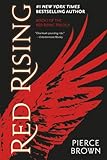
Pierce Brown’s Red Rising is not quite like anything else in science fiction. Mars has been colonized and stratified into a rigid color caste, with the lowest-born Reds toiling in underground mines they are told are necessary to terraform a planet that — as Darrow discovers — has been habitable for generations. When Darrow loses the person he loves most to the system’s indifference, he is recruited to infiltrate the ruling Gold caste: surgically reshaped, culturally educated, inserted into the Institute’s brutal competition where Gold children are forged into rulers. The premise invites comparisons to The Hunger Games, but the execution is closer to Gladiator by way of Greek tragedy — morally merciless, operatically emotional, and increasingly vast in scope.
What separates Red Rising from other dystopian fiction is Brown’s willingness to let his protagonist fail, compromise, and accumulate genuine moral debt. Darrow is not a clean hero. The revolution he catalyzes costs enormous amounts, and the series never lets him forget it. The books below share that same commitment to earned emotional weight — worlds built with enough internal logic that the violence and sacrifice inside them actually land. Some are science fiction, some are fantasy, and a few blur the line in exactly the way Red Rising does.
Books Like Red Rising at a Glance
| Book | Author | Best for |
|---|---|---|
| Ender’s Game | Orson Scott Card | Science fiction readers from teenage years |
| An Ember in the Ashes | Sabaa Tahir | YA fantasy readers |
| The Lies of Locke Lamora | Scott Lynch | Fantasy readers who enjoy crime fiction, Ocean’s |
| The Way of Kings | Brandon Sanderson | Epic fantasy readers ready for a 1,000-page |
| Prince of Thorns | Mark Lawrence | Readers who want grimdark fantasy at full |
| Shadow and Bone | Leigh Bardugo | Young adult fantasy readers drawn |
| Six of Crows | Leigh Bardugo | Fantasy readers who enjoy morally complex |
| Brave New World | Aldous Huxley | Readers of 1984 and other dystopian fiction |
| A Darker Shade of Magic | V.E. Schwab | Fantasy readers looking for an action-driven |
| Vicious | V.E. Schwab | Fantasy |
| Golden Son | Pierce Brown | Readers who have completed Red Rising |
| Morning Star | Pierce Brown | Readers who have completed the first two volumes |
Brutal Competitions and Caste Systems
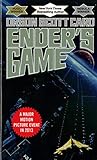
#1 — Ender’s Game by Orson Scott Card
Andrew “Ender” Wiggin is identified as a potential military genius and recruited into Battle School, an orbital facility where children train for war against an alien species that has nearly destroyed humanity twice. Like Red Rising, the novel centers on a competition designed to break and select its participants — and like Darrow, Ender navigates it by understanding the system well enough to subvert it. Card builds the moral complexity carefully: the adults manipulating Ender are not simply villains, and the ending reframes everything that came before in a way that is genuinely devastating. The intellectual precision of the prose is different from Brown’s visceral energy, but the emotional architecture is remarkably similar.
#2 — An Ember in the Ashes by Sabaa Tahir
Laia is a Scholar — a subjugated people — who agrees to spy for the resistance inside Blackcliff Academy, the brutal training ground of the ruling Martial Empire’s elite soldiers, in exchange for help rescuing her imprisoned brother. Elias is a Blackcliff student who wants out of a system that has made him into a weapon. Tahir alternates their perspectives through a story of empire, resistance, and individual cost that maps closely onto Red Rising’s concerns. The world draws on ancient Rome and the Mughal Empire, the violence is sustained and purposeful, and the series expands in scope with each volume in ways that Brown fans will recognize.
#3 — The Lies of Locke Lamora by Scott Lynch
Locke Lamora is a thief operating inside a stratified city-state, running elaborate cons against the nobility with a crew of specialists. Lynch’s Camorr is built with the same density of invention as Brown’s Mars — a place that feels like it existed before the novel began and will continue after it ends. The novel has Red Rising’s low-born-infiltrates-the-elite structure, but Locke’s methods are deception rather than combat. The prose is witty where Brown’s is earnest, but the emotional gut-punches — and there are several, delivered without warning — match anything in the trilogy. An essential read for anyone who responded to Darrow’s voice.
Revolution, Empire, and Political Intrigue
#4 — The Way of Kings by Brandon Sanderson
The first volume of Brandon Sanderson’s Stormlight Archive is the most ambitious fantasy series currently being written: a world battered by continent-scale storms, a rigid hierarchy of noble Houses and enslaved workers, and a slowly building revelation that the world’s history has been falsified. Kaladin begins as a slave soldier and rises through a combination of exceptional ability and refusal to abandon his people, which is Darrow’s arc transposed into secondary-world fantasy. Sanderson’s magic system is more elaborate than Brown’s science fiction, but the epic scale, the political complexity, and the sense of a carefully constructed world whose foundations are rotten are all present. The book is long; the payoff is proportional.
#5 — Prince of Thorns by Mark Lawrence
Jorg Ancrath is thirteen years old, leads a band of mercenaries, and is one of the most morally confrontational protagonists in recent fantasy. Lawrence’s Broken Empire trilogy is set in a post-apocalyptic Europe that has forgotten it was ever anything other than a feudal wasteland — the science fiction substrate emerges slowly and is used to devastating effect. If Red Rising occasionally softens Darrow’s methods, Prince of Thorns never softens Jorg’s. This is the recommendation for readers who specifically want the dark side of Brown’s moral ambiguity pushed further, and who do not require a hero they can straightforwardly root for.
#6 — Shadow and Bone by Leigh Bardugo
Alina Starkov discovers a latent magical ability that may be the only thing capable of destroying the Fold — a swath of permanent darkness dividing her country — and is immediately claimed by the Darkling, the most powerful Grisha alive, as both weapon and ward. Bardugo’s Grishaverse is rooted in Tsarist Russian aesthetics and deals directly in themes of power, manipulation, and the cost of being useful to powerful people. The series is less violent than Red Rising but shares its interest in protagonists who are instrumentalized by forces larger than themselves and must decide whether to serve those forces or destroy them.
Six of Crows and the Heist Structure
#7 — Six of Crows by Leigh Bardugo
Set in the same world as Shadow and Bone but functioning as a heist novel, Six of Crows follows Kaz Brekker — a criminal prodigy with a traumatic past — and his crew of specialists through an impossible job in a foreign city. The ensemble structure and the way each character’s backstory is revealed in layers that change how you understand their present behavior is reminiscent of how Brown builds his secondary cast. Kaz shares Darrow’s ruthlessness without sharing his idealism, which makes him a fascinating complement. The Crows’ loyalty to one another, earned across impossible circumstances, delivers the same kind of emotional reward that Brown’s brotherhood-under-pressure moments do.
When Science Fiction Reads Like Fantasy
#8 — Brave New World by Aldous Huxley
Huxley’s 1932 novel imagines a World State that has eliminated suffering by eliminating individuality, free thought, and genuine human attachment. Citizens are decanted rather than born, conditioned from infancy to love their assigned social function, and provided with a pleasure drug that smooths away any remaining discontent. Where Red Rising posits a caste system maintained by violence and propaganda, Brave New World depicts one maintained by engineering consent. The two books function as complementary dystopian visions — Brown’s world requires force because people are not satisfied; Huxley’s has engineered satisfaction itself. Bernard Marx and John the Savage represent different ways of failing to escape a system that has anticipated your resistance.
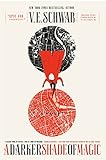
#9 — A Darker Shade of Magic by V.E. Schwab
Kell is one of the last Antari — rare magicians who can travel between the parallel Londons: Grey London, Red London, White London, and the destroyed Black London. He is also a smuggler, carrying contraband between worlds for private clients. When one delivery goes wrong, Kell and a thief named Lila Bard are thrust into a conspiracy that threatens all the Londons. Schwab’s prose has the same kinetic quality as Brown’s, and her worldbuilding — the different Londons each with distinct political structures and magical ecology — rewards the same kind of close attention. The series grows substantially darker as it progresses.
#10 — Vicious by V.E. Schwab
Victor Vale and Eli Cardale are college roommates who discover that near-death experiences can create individuals with supernatural abilities — and become rivals who spend a decade hunting each other. Vicious is a compressed, structurally inventive novel that asks whether the difference between a hero and a villain is anything more than perspective and circumstances. Brown readers who respond to Darrow’s moral complexity and the question of what revolution costs will find Victor Vale a fascinating dark mirror: a protagonist who is fully aware of his own villainy and proceeds anyway. One of Schwab’s best novels and a natural bridge between science fiction and fantasy.
Continue the Series First
#11 — Golden Son by Pierce Brown
If you have not read the second book in the trilogy, do that before going anywhere else. Golden Son expands from the Institute to the full political machinery of the Society — the Senate, the fleets, the inter-House warfare — and is by nearly universal agreement a superior book. The emotional sucker-punches hit harder because Brown has had an entire novel to make you care about the people he puts in harm’s way. The political complexity is closer to Dune than to YA dystopian fiction. Most readers who found Red Rising very good consider Golden Son exceptional.
#12 — Morning Star by Pierce Brown
The trilogy concludes with Morning Star, which is the payoff for everything established in the first two books. Darrow’s revolution reaches its full scale — interplanetary, factional, morally costly in ways that the first book only gestured toward. Brown earns his ending: nothing is given without being taken, and the final pages recontextualize the entire trilogy in a way that is both satisfying and genuinely painful. Readers who found Red Rising emotionally engaging will find Morning Star one of the most cathartic finishes in recent science fiction. Read the trilogy before branching to the other books on this list.
How to Choose Your Next Read
If you want the closest overall match in tone and structure: An Ember in the Ashes or The Lies of Locke Lamora.
If you want maximum epic scale: The Way of Kings — but commit to the series, not just the first book.
If you want the darkest moral register: Prince of Thorns.
If you want lighter but still intricate world-building: Six of Crows or A Darker Shade of Magic.
If you want the dystopian intellectual tradition behind Red Rising: Brave New World.
Red Rising: Complete Series in Order
For all six Red Rising novels, the Howler novellas, and the correct reading sequence, see our Red Rising Books in Order guide.
For the Best Fantasy Books
For the definitive guide to fantasy fiction — from Tolkien and Le Guin to Brandon Sanderson and George R.R. Martin — see our Best Fantasy Books of All Time list.
Affiliate disclosure: Links to Amazon on this page are affiliate links. We earn a small commission at no extra cost to you. This does not influence our editorial recommendations.
Frequently Asked Questions
Does the Red Rising series get better as it goes on?
Yes, significantly. Red Rising is an exceptional debut, but Golden Son and Morning Star are widely considered superior — the political stakes expand, the cast deepens, and the emotional payoffs are earned over thousands of pages. Most readers who finish the trilogy consider it one of the best science fiction series of the past decade. The follow-on trilogy beginning with Iron Gold continues the story with an even larger scope.
How dark is Red Rising?
Red Rising is substantially darker than most young adult dystopian fiction, despite sharing some structural similarities. The Institute sequences involve sustained violence, death, and psychological brutality among teenagers. The later books deal with genocide, torture, and the moral costs of revolution. Pierce Brown does not soften consequences. Readers who found The Hunger Games too intense should approach with caution; readers who felt it did not go far enough will find Red Rising more satisfying.
Should I read Red Rising if I liked The Hunger Games?
Yes, with the caveat that Red Rising is considerably more violent, more politically complex, and written for an adult audience. Both series use a brutal competition as the inciting mechanism and a working-class protagonist who becomes the face of a revolution. But where The Hunger Games maintains a YA register, Red Rising commits fully to the ugliness of what it depicts. Readers who aged out of Hunger Games or wanted more moral ambiguity will find Red Rising a natural progression.