15 Books Like The Psychology of Money to Read Next
Loved The Psychology of Money? These 15 books explore money mindset, behavioural economics, and wealth building with the same clarity and depth.
By Marcus Webb
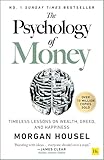
Morgan Housel’s The Psychology of Money became one of the defining personal finance books of the 2020s not because it tells you what to invest in, but because it explains why you make the financial decisions you do — and why those decisions are so often self-defeating. Housel’s insight is simple and profound: managing money well is less about knowing the right numbers and more about managing your own behaviour, emotions, and biases. That reframing changes everything.
The 15 books below were chosen because they share that same quality: they treat money as a human problem, not just a mathematical one. Some extend Housel’s behavioural lens with deeper psychology. Some translate the mindset into practical systems. Others offer classic frameworks that ground everything Housel discusses in a longer tradition. Together, they form a complete reading programme for anyone who wants to understand money the way it actually works.
Quick-Reference Table
| # | Book | Author | Why It’s Similar |
|---|---|---|---|
| 1 | The Psychology of Money | Morgan Housel | The source book — behavioural lens on wealth |
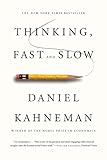
| 2 | Thinking, Fast and Slow | Daniel Kahneman | The cognitive science behind every money bias |
| 3 | Predictably Irrational | Dan Ariely | Why financial irrationality is systematic, not random |
| 4 | Die with Zero | Bill Perkins | Challenges conventional saving with a life-value lens |
| 5 | Your Money or Your Life | Vicki Robin | Reframes money as life energy — deeply values-driven |
| 6 | I Will Teach You to Be Rich | Ramit Sethi | Same accessible tone; adds actionable systems |
| 7 | The Simple Path to Wealth | JL Collins | Clear, behaviour-focused investing philosophy |
| 8 | Broke Millennial | Erin Lowry | Addresses money emotions head-on for younger readers |
| 9 | The Automatic Millionaire | David Bach | Automate behaviour so willpower isn’t required |
| 10 | The Total Money Makeover | Dave Ramsey | Structured debt elimination with strong behavioural framing |
| 11 | Rich Dad Poor Dad | Robert Kiyosaki | Mindset shift on assets vs. liabilities |
| 12 | The Millionaire Next Door | Thomas Stanley | Data-driven portrait of how wealth actually accumulates |
| 13 | The Intelligent Investor | Benjamin Graham | The classic on investor psychology and long-term thinking |
| 14 | The Richest Man in Babylon | George S. Clason | Timeless principles dressed in parable form |
| 15 | Atomic Habits | James Clear | Behaviour change systems that apply directly to money habits |
The Same Emotional Lens on Money
These books share Housel’s core argument: that feelings, stories, and psychology drive financial outcomes more than knowledge or intelligence.
#1 — Thinking, Fast and Slow by Daniel Kahneman
Kahneman’s landmark book is the scientific foundation beneath The Psychology of Money. His framework of System 1 (fast, emotional, automatic) and System 2 (slow, deliberate, rational) explains exactly why investors panic-sell in downturns, why we overweight recent events when planning, and why our intuitions about risk are consistently miscalibrated. Housel references these cognitive biases throughout his book; Kahneman is where those ideas come from. For anyone who wants to understand the research rather than just the applications, this is the essential companion.
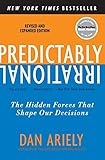
#2 — Predictably Irrational by Dan Ariely
Ariely’s behavioural economics research reveals something Housel also emphasises: our financial irrationality is not random noise but follows predictable patterns. We over-value what we already own (the endowment effect), we anchor to arbitrary reference prices, we respond to “free” in ways that override our actual preferences, and we systematically undervalue future rewards relative to immediate ones. Understanding these patterns makes it possible to design financial decisions that work with our psychology rather than against it.
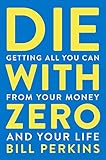
#3 — Die with Zero by Bill Perkins
Perkins makes an argument that feels almost heretical after decades of conventional savings advice: dying with a large net worth is a form of failure, because it means you traded life experiences for money you never used. This is not a book about spending recklessly — it is a book about timing the deployment of your wealth to match your actual capacity to enjoy it. Housel writes about money in service of a good life; Perkins pushes that idea further and forces a more precise reckoning with what a good life actually costs and when.
#4 — Your Money or Your Life by Vicki Robin
Robin’s foundational question — what is your life energy worth, and are you spending it wisely? — reframes every financial decision in terms of hours of your finite life. This is one of the earliest books to argue that personal finance is fundamentally a values problem, not a math problem. It sits alongside The Psychology of Money as a text that is more concerned with why you want money than with how to get it, and the combination of the two provides an unusually complete picture of what financial wellbeing actually means.
The Practical Mechanics
These books translate mindset work into systems — actionable frameworks that put Housel’s insights to work.
#5 — I Will Teach You to Be Rich by Ramit Sethi
Sethi’s book is the most direct bridge between Housel’s psychology and the practical how-to. It shares The Psychology of Money’s accessible, non-condescending tone and its scepticism of conventional frugality advice, but it adds six weeks of concrete steps: automating savings, optimising credit, choosing the right accounts, and setting up a system that runs without constant attention. Sethi is particularly good on the guilt and shame that surround money decisions — themes Housel explores at length. If you want to act on what Housel argues, start here. You can also find more recommendations in our guide to the best personal finance books for beginners.
#6 — The Simple Path to Wealth by JL Collins
Collins makes the investment case for simplicity with the same clarity Housel brings to the behavioural case. His central argument — buy index funds, avoid debt, stay the course — is as much a psychological argument as a financial one: complexity invites tinkering, tinkering invites mistakes, and the greatest enemy of investment returns is the investor’s own behaviour during downturns. The chapter on “Why I Don’t Like Your Complicated Investment Portfolio” reads like a practical application of Housel’s chapter on the dangers of greed.
#7 — Broke Millennial by Erin Lowry
Lowry’s book is distinctive in the personal finance space because it confronts the emotional baggage around money directly and without condescension. The opening chapters on your “money story” — the childhood experiences and family patterns that shape your adult financial behaviour — are the closest any practical finance book gets to Housel’s territory. Written for younger readers who are earlier in their financial lives, it pairs especially well with The Psychology of Money as an entry point for anyone who has recognised their money habits are driven by something other than rational calculation.
#8 — The Automatic Millionaire by David Bach
Bach’s core insight — that the problem with most financial plans is that they require ongoing willpower and discipline to execute — directly echoes Housel’s argument about behaviour. The solution is automation: pay yourself first automatically, automate your investments, automate your bills. A system that runs without conscious decisions removes the moment-to-moment emotional interference that Housel identifies as the primary source of financial self-sabotage. It is a short, practical book that functions as an implementation guide to the behavioural principles The Psychology of Money describes.
#9 — The Total Money Makeover by Dave Ramsey
Ramsey’s “Baby Steps” programme is more prescriptive than anything Housel would endorse — the two disagree on debt in particular — but the emotional intelligence underneath the framework is real. Ramsey understands that debt is not primarily a math problem but a behaviour problem, and his system is designed to produce psychological wins (the debt snowball, starting with the smallest debt regardless of interest rate) that sustain momentum. For readers who recognise themselves in Housel’s descriptions of financial self-defeat, Ramsey’s structured approach provides the guardrails to break the cycle.
The Behavioural Science Side
These books go deeper into the psychology and research that Housel draws on.
#10 — Rich Dad Poor Dad by Robert Kiyosaki
Kiyosaki’s foundational distinction between assets (things that put money in your pocket) and liabilities (things that take money out) is a mindset shift that echoes Housel’s argument about how we think about wealth versus income. Where Housel is measured and evidence-grounded, Kiyosaki is more motivational and anecdotal — the two authors would not always agree — but both books are fundamentally about changing the mental model you bring to financial decisions rather than optimising within your existing model. The contrast between how the two approach wealth is itself instructive.
#11 — The Millionaire Next Door by Thomas Stanley
Stanley and Danko’s research into actual millionaires — not the ones who look wealthy but those who have quietly accumulated substantial net worth — produced findings that read as empirical confirmation of Housel’s themes. The typical American millionaire does not drive a luxury car, does not live in an expensive neighbourhood, and does not have a glamorous career. They save consistently, live below their means, and avoid lifestyle inflation. The book provides the data that sits underneath Housel’s more impressionistic observations about how wealth actually accumulates.
#12 — Atomic Habits by James Clear
Clear’s framework for habit formation applies directly to financial behaviour in ways that The Psychology of Money gestures at but does not fully develop. Housel argues that good financial outcomes depend on sustained behaviour over long periods; Clear explains exactly how to build and maintain that behaviour. The four laws — make it obvious, make it attractive, make it easy, make it satisfying — map cleanly onto the practical challenge of building saving, investing, and spending habits that stick. Treat this as the operational manual for the behavioural philosophy Housel describes.
Classic Foundations
These are the older texts that established the ideas Housel and his contemporaries built on.
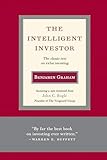
#13 — The Intelligent Investor by Benjamin Graham
Graham’s 1949 masterwork introduced the concepts of Mr Market and the margin of safety — both of which are fundamentally psychological ideas dressed in investment language. Mr Market, the irrational seller who offers you different prices every day based on his mood, is a direct precursor to Housel’s discussion of market volatility as an emotional test rather than a financial one. Warren Buffett called this “the best book about investing ever written,” and the sections on investor psychology remain as accurate and as applicable as they were seventy years ago.
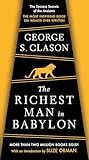
#14 — The Richest Man in Babylon by George S. Clason
Clason’s parables about ancient Babylonian merchants have been in print since 1926 because the principles they describe — pay yourself first, live on less than you earn, put your savings to work — have not changed. The parable format does something interesting: it removes the defensiveness that readers often bring to financial advice and lets the ideas land as stories rather than instructions. For readers who found The Psychology of Money’s storytelling approach more compelling than a conventional finance book, The Richest Man in Babylon works on the same register.
How to Choose Your Next Read
If you want the behavioural science foundations: Thinking, Fast and Slow or Predictably Irrational.
If you want a values-first rethinking of wealth: Your Money or Your Life or Die with Zero.
If you want practical systems to act on the mindset: I Will Teach You to Be Rich or The Automatic Millionaire.
If you want the classic investment wisdom: The Intelligent Investor or The Richest Man in Babylon.
If you want data on how wealth actually accumulates: The Millionaire Next Door.
For the Full Business Reading List
For the definitive guide to business books across strategy, management, investing, and entrepreneurship, see our Best Business Books of All Time list.
Affiliate disclosure: Links to Amazon on this page are affiliate links. We earn a small commission at no extra cost to you. This does not influence our editorial recommendations.
Frequently Asked Questions
What should I read after The Psychology of Money?
After The Psychology of Money, the most natural next reads are Thinking, Fast and Slow by Daniel Kahneman for the deeper behavioural science, Die with Zero by Bill Perkins for a fresh challenge to conventional saving wisdom, and Your Money or Your Life by Vicki Robin for a values-first approach to personal finance. All three share Housel's emphasis on the emotional and psychological side of money decisions.
Is The Psychology of Money a good starting point for personal finance?
Yes — The Psychology of Money is one of the best entry points into personal finance precisely because it does not begin with spreadsheets or tax strategies. It starts with behaviour and mindset, which is where most money problems actually originate. After reading it, beginners can move to our list of the best personal finance books for beginners for more practical next steps.
What is similar to The Psychology of Money but more practical?
If you want actionable steps alongside the mindset work, I Will Teach You to Be Rich by Ramit Sethi and The Automatic Millionaire by David Bach are the closest matches. Both share Housel's accessible, non-preachy tone but add concrete systems for automating savings, paying off debt, and building wealth. The Total Money Makeover by Dave Ramsey is more prescriptive but equally readable.
How does The Psychology of Money compare to Rich Dad Poor Dad?
The two books complement each other well but serve different purposes. Rich Dad Poor Dad by Robert Kiyosaki is primarily about mindset around assets, liabilities, and entrepreneurship — it is more prescriptive and aspirational. The Psychology of Money is more analytical and research-grounded, focused on why we make bad financial decisions and how to stop. Most readers find Housel more nuanced; Kiyosaki is more motivating.
Is The Psychology of Money related to behavioural economics?
Yes, closely. Morgan Housel draws heavily on behavioural economics research — the field that explains why humans deviate from rational financial decision-making. For readers who want to go deeper into the academic side, Thinking, Fast and Slow by Daniel Kahneman and Predictably Irrational by Dan Ariely are the essential companions. Both are cited directly or indirectly throughout Housel's argument.